




FW

According to Turkey Union of Chamber of Agriculture (TZOB) chairman, Shams Bayraktar, “Cotton imports has been continuously rising, owing to the absence of any measures against the import of cotton in the country.”
A statement issued by TZOB, the said the country imported 613,000 tons of cotton in 2012, which is a 442.5 per cent more compared to the 113,000 tons of cotton imported in 1995. Bayraktar said the cotton sector is one of the most strategic sectors in the country, as it facilitates the textile and apparel sector of Turkey. However, the positive and negative development in cotton sector is highly influenced by industry and trade policies as well as world markets.
The TZOB official said cotton production in the country has also been declining consistently, in 2012, cotton produced in the country was 2.32 million tons, this is expected to decline in 2013 by 2 to 1.7 per cent year-on-year. The TZOB official urged that it was necessary to take measures for supporting Turkish cotton growers for them to compete with international markets.
Innovation was an important part of Intertextile Shanghai Apparel Fabrics and Verve for Design proved this fact while showcasing original designs from Australia, France, Italy, Japan, Korea, Taiwan and UK. The zone offered opportunities for new designers to display their work which was a crucial element of Verve for Design, which was firmly embraced by Australia’s Longina Philips Designs. “We have introduced a new constantly evolving collection called ‘The Print Room’, which was created as a platform to facilitate design by young emerging designers and offered us a distinct edge in terms of the design work we can offer to our clients,” said Senior Designer Shannon Cheung.
Handmade designs was one of the main attractions for Chinese consumers particularly in the mid range market. Italy’s Lineastudio di Sartori Stuart & C SAS is on point with this trend, bringing both handmade and digital designs in a bid to meet the major textile players in the Asian market, said Stuart Sartori, President.
This zone was truly about expressing creativity and showcasing originality. As Dietmar Voegel, owner of UK-based Circleline Designs pointed out, “We work with people who are interested in original design and artwork and want to distinguish themselves from the mass market.”
- 1
- 2
- 3
- 4
- 5
- 6
- 7
- 8
- 9
- 10
Microsoft and Varaha transform India’s cotton belt with landmark carbon deal

In a transformative move aimed at decarbonizing the global fashion supply chain, Microsoft has inked a landmark agreement with climate-tech... Read more
Transit Under Tax: Why every apparel shipment to America is now a financial gamb…

The apparel business has always thrived on rhythm. Designers forecast seasons, retailers plan months ahead, and factories lock in orders... Read more
TEEM, Tex Eco, SME Growth Fund, India’s blueprint to be a textile powerhouse

India’s textile industry long powered by cotton, fragmented supply chains, and small manufacturers running on thin margins is stepping into... Read more
From Dubai to Riyadh how the Gulf became the global luxury epicenter

The Middle East has emerged as the global centre for luxury, with the regional market valued at approximately €15.02 billion... Read more
Asia sets the pace as casual wear rewrites the global apparel playbook

The global apparel industry is no longer dressing for occasions. It is dressing for continuity. What began as a pandemic-era... Read more
Double-Edged Sword: RoDTEP slashed amidst US tariff turmoil

Indian apparel and textile exporters are grappling with a "perfect storm" this week as the central government unexpectedly halved benefits... Read more
Bangladesh vs India: The 2026 EPA makes Dhaka Japan’s apparel powerhouse
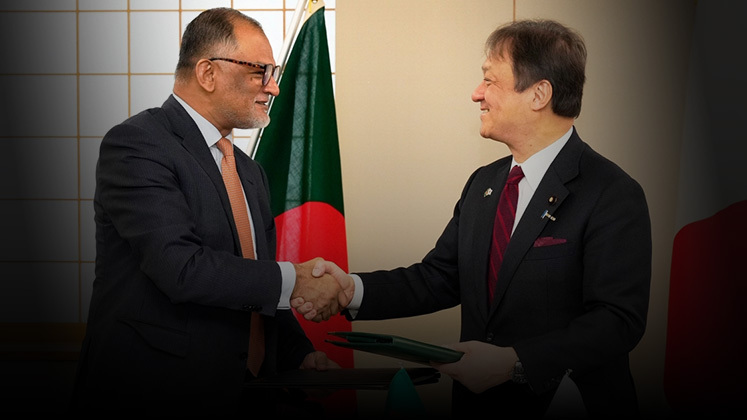
The signing of the Bangladesh-Japan Economic Partnership Agreement (EPA) on February 6, 2026, marks a transformative moment for South Asia’s... Read more
Ralph Lauren defies luxury norms with 10% revenue rise as peers falter

In a retail landscape increasingly defined by normalization, industry jargon for stagnant growth and cautious consumer spending, Ralph Lauren Corporation... Read more
A new chessboard in textiles, US, Bangladesh and India

In early February 2026, a landmark reciprocal trade agreement between the US and Bangladesh was concluded, marking a new chapter... Read more
18% deal gives India edge in US home textiles market

By early 2026, the mood across India’s home textile clusters, from Panipat’s terry towel hubs to Ichalkaranji’s spinning belts and... Read more

