FW
Bharat Tex 2024: A resounding success for the Indian textile industry
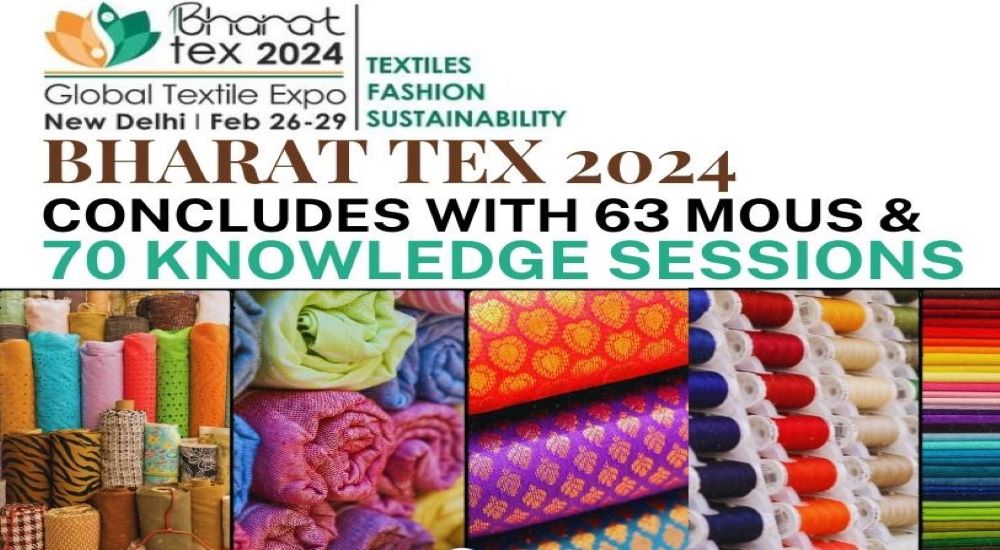
The just concluded Bharat Tex 2024, held from February 26th to 29th in New Delhi, proved to be a resounding success solidifying India's position as a global leader in the textile, apparel, and fashion industry. Organized by a consortium of 11 Textile Export Promotion Councils and supported by the Ministry of Textiles, the event served as a powerful platform to showcase India's prowess in the global textile, apparel, and fashion industry.
India's textile strength on display
As Union Minister of Textiles, Piyush Goyal, remarked during the event's inauguration, "Historically, textiles have a unique relationship with the development of civilization, and India has had a unique leadership position in the world for textiles." Bharat Tex 2024 served as a testament to this legacy, attracting leading manufacturers, exporters, and fashion enthusiasts from across the globe. This four-day event spread across nearly two million sq ft area, showcasing the entire textile value chain, attracted policymakers and global CEOs, 3,500 exhibitors, 3,000 buyers from 111 countries and over one lakh trade visitors.
Along with exhibitions showcasing the latest innovations in textile manufacturing, there were dedicated segments highlighting India's rich heritage of handlooms and traditional crafts. Visitors were treated to exquisite displays of Gadwal, Narayanpet, and Pochampalli weaves, alongside breathtaking displays of Banjara art and Bidri metalwork. As Rajesh Agarwal, Secretary, Ministry of Textiles said, "Bharat Tex 2024 is a welcome initiative...not just for showcasing India's unique textile products to the world but also as a platform for attracting investments into the textile and apparel sector."
Knowledge sharing and networking
Bharat Tex also emerged as a launch pad for various initiatives and projects such as IndiaTEX, launch of Textile Grand Innovation Challenge, announcement of 63 MoUs with international institutions focusing on collaboration in research, innovation, entrepreneurship, new product development, skilling and sustainability. The event also fostered knowledge sharing and industry collaboration through a series of seminars, thematic discussions, and government-to-government (G2G) meetings. Business-to-Business (B2B) networking events provided a platform for forging new partnerships and exploring business opportunities.
In fact, one of the event's key strengths was its focus on business development. B2B networking events facilitated connections between international buyers and Indian manufacturers, fostering new partnerships and trade opportunities. The signing of Memoranda of Understanding (MoUs) further underscored the event's role in propelling the Indian textile industry forward.
A celebration of sustainability
Sustainability was a major theme at Bharat Tex 2024, reflecting growing global concerns about environmental impact. Several exhibitors showcased eco-friendly fabrics and production processes, while seminars explored strategies for promoting responsible textile manufacturing. As a leading industry expert at the event said, "India's textile industry has a crucial role to play in leading the shift towards a more sustainable future"
The event also saw the launch of new products and collections by leading Indian textile and fashion brands. This not only generated excitement but also served as a launchpad for future trends in the global market.
The success of Bharat Tex 2024 paves the way for a brighter future for the Indian textile industry. As AEPC chairman Sudhir Sekhri said, “After the culmination of Bharat Tex 2024, the world’s largest textile show, we can proudly say this was a whopping success.” The Bharat Tex Expo will be an annual affair, he added
The event not only generated significant business leads but also positioned India as a leader in innovation and sustainability. As the industry moves forward, the focus will likely be on capitalizing on this momentum, attracting investments, and further integrating traditional crafts with modern technology.
MoU signed at Bharat Tex 2024 to promote upcycled textile products
In a significant move towards fostering sustainability in India's textile industry, a tripartite Memorandum of Understanding (MoU) was inked at Bharat Tex 2024, the country's premier global textile event. The signing ceremony, held at Bharat Mandapam, Pragati Maidan, New Delhi, saw the collaboration between the Textiles Committee, the Government e Marketplace (GeM), and the Standing Conference of Public Enterprises (SCOPE) for the promotion of upcycled products derived from textile waste and scrap.
Graced by Darshana Vikram Jardosh, Hon’ble Minister of State for Textiles and Railways, the event marked a crucial step towards integrating sustainability practices into the textile value chain. Joined by senior officials from the Ministry of Textiles, P K Singh, CEO of GeM, also lent his presence to the occasion.
Under the MoU, signed by representatives from each organization, including S P Verma from the Textiles Committee, Ajit B Chavan from GeM, and SubhRatna from SCOPE, the focus lies on upcycling textile waste to extend its lifecycle. Unlike traditional recycling methods that break down materials, upcycling aims to creatively repurpose discarded items into new, functional products, thus minimizing environmental impact.
GeM, through its extensive network, will facilitate direct market linkages for under-served seller groups, promoting upcycled products in public procurement. Additionally, the platform will undertake advocacy, awareness campaigns, and capacity building initiatives to engage stakeholders in the upcycling sector.
The initiative aligns with the global shift towards conscious consumption and addresses the Sustainable Development Goals of Sustainable Cities and Communities and Responsible Consumption and Production. GeM, since its inception, has played a pivotal role in streamlining government procurement processes, boasting a vast network of buyers and sellers across various product and service categories.
With sustainability at its core, the MoU signifies a collaborative effort towards a greener, more environmentally conscious textile industry, poised to make a positive impact on India's developmental agenda.
Since its launch in 2016, the portal has amassed 1.46 lakh Government buyers and over 21 lakh sellers and service-providers, spanning 11,980 product categories and 320+ service categories. In the ongoing fiscal year, it has processed 52.58 lakh orders, amounting to ₹3.52 Lakh Crore in Gross Merchandise Value (GMV).
Shima Seiki USA to unveil latest innovations at a North Carolina exhibition
The North American arm of Japan’s esteemed Shima Seiki Mfg, Shima Seiki USA is set to unveil its latest innovations at a private exhibition hosted at the Manufacturing Solutions Center in Conover, NC, from March 05-07, 2024. This showcase will feature cutting-edge machinery and software solutions revolutionising the world of flat knitting and knitwear.
A centerpiece of the exhibition is the SWG091N2 ‘Mini’ Wholegarment knitting machine, designed with versatility in mind. With its 13-gauge capability and 36-inch (90cm) knitting width, this machine is tailor-made for producing a diverse range of items, from accessories to childrenswear and smaller garments, all seamlessly crafted without the need for subsequent linking or sewing. Boasting features like the SlideNeedle, Rapid Response R2 carriage system, Top Tension, and Touch-sensitive control panel, the SWG Mini offers unparalleled precision and efficiency.
Another highlight is the revamped SPG-R 07G pile glove knitting machine, now equipped with a new sinker system and belt-driven carriage for enhanced color variation and design flexibility. This upgrade expands its potential beyond work gloves, enabling the production of warm, fashionable gloves and mittens with luxurious pile fabric. Available in gauges 7 and 10, the SPG-R guarantees durability and performance.
Complementing these machines is Shima Seiki’s renowned APEX4/APEXFiz Design System, a comprehensive suite empowering designers with advanced tools for planning, designing, and evaluating knitwear. From realistic fabric simulation to 3D virtual sampling, APEX4 and APEXFiz streamline the design process, minimising time and material waste traditionally associated with physical sampling. Furthermore, by seamlessly translating design data into machine instructions, these solutions facilitate seamless communication between design studios and production floors, ensuring accuracy and efficiency throughout the supply chain.
Incorporating virtual samples into retail channels, such as e-commerce platforms, allows for real-time consumer feedback, enabling demand-driven production and reducing excess inventory. By embracing digital transformation, Shima Seiki promotes sustainability by minimising wastage and optimising resource allocation.
Auro Textiles installs 28 Ultimax rapier machines in partnership with Picanol
A division of Vardhman, and India’s leading vertically integrated textile producer, Auro Textiles has installed 28 Ultimax rapier weaving machines from Picanol. These machines represent the inaugural serial batch of Ultimax units manufactured after their unveiling at the ITMA 2023 fair.
The installation underscores the shared commitment to innovation, quality, and sustainability in the textile industry. Kasiviswanathan Palanisamy, Director, Picanol India, expressed gratitude for Auro Textiles' trust and loyalty, affirming Picanol's dedication to support Auro Textiles' growth and development.
Sagrika Jain, Executive Director, Auro Textiles, highlighted the significance of discovering the Ultimax machine during a visit to Picanol's headquarters in Belgium. Impressed by its features, she anticipates that the Ultimax machines will boost productivity, efficiency, and profitability while meeting the evolving demands of customers.
Hailed for its revolutionary features, the Ultimax rapier machine offers three key benefits: unparalleled performance and high-quality output, readiness for future sustainability requirements, and user-friendliness facilitated by extensive digitisation. Integrated sensors in nearly every part of the machine contribute to its ease of use and efficiency.
The Ultimax weaving machines symbolise a pivotal advancement in Auro Textiles' manufacturing capabilities, aligning with their commitment to excellence and sustainability in textile production. The partnership between Picanol and Auro Textiles stands as a testament to enduring collaboration and shared values.
Women’s apparel market to grow to $1,280 billion by 2033-end: FactMR
Having surged to a staggering $863 billion in 2023, the global women's apparel market is projected to rise to $1,280 billion by 2033-end, growing at a 4 per cent CAGR over the coming decade.
As per a report by FactMR, encompassing clothing, footwear, and accessories, the women’s apparel market has witnessed remarkable evolution over the years. The market's dynamism is propelled by changing fashion inclinations, cultural shifts, economic fluctuations, and technological advancements.
Central to this evolution is the rise of sustainable fashion, spurred by increasing environmental awareness. Consumers now prioritise eco-friendly materials and ethical production practices. Moreover, the dominance of e-commerce has revolutionised retail, with a significant portion of sales now conducted online due to its convenience and vast product availability.
Inclusivity and diversity are also on the rise, with brands emphasising body positivity and offering size-inclusive options, mirroring changing societal norms and consumer expectations.
However, challenges persist, notably the impact of fast fashion on the environment and labor exploitation. Economic volatility can also disrupt consumer spending on non-essential items, including women's apparel. Rapid shifts in consumer behavior, driven by social media and cultural trends, present further challenges for brands striving to remain relevant.
Yet, opportunities abound with technological integration enhancing the online shopping experience through augmented reality and virtual try-on features. Driven by data analytics and artificial intelligence, personalisation is becoming increasingly important, tailoring recommendations to individual preferences and sizes.
Looking ahead, sustainable innovation is expected to flourish, with brands investing in eco-friendly materials, ethical production, and circular fashion initiatives.
India to reclaim position as leading global cotton producer
India is determined to reclaim its position as the world's leading cotton producer, necessitating a collaborative effort and the integration of advanced technologies.
However, in 2023-24, India experienced a 15-year low in cotton production, with yields plummeting by nearly 30 per cent from a peak of 572 kg per hectare in 2013-14 to approximately 396 kg per hectare, well below the global average of 675 kg.
Several challenges plague India's cotton fields, including the resurgence of the pink bollworm, unpredictable weather patterns, and inconsistent monsoons. The overreliance on Bt cotton, once a breakthrough crop genetically modified to resist bollworms, has led to stagnant and declining yields, sidelining crucial agronomic factors like soil health and water management.
To combat these challenges, a concerted effort is needed to develop new Bt cotton varieties and more effective insecticides. The next generation of genetically modified cotton should not only resist pests but also significantly increase yields, requiring collaboration among agricultural scientists, regulatory bodies, and the agrochemical industry.
Cotton is a water-intensive crop, making precision agriculture techniques crucial. Traditional flood irrigation methods are wasteful, whereas technologies like drip irrigation can save 20-30 per cent of fertiliser and 50-60 per cent of water, boosting cotton production. Precision agriculture also enables targeted delivery of nutrients critical to yield.
Digitisation offers immense potential to transform India's farmlands, including cotton fields. Drones can scan for signs of pest infestation, while satellites monitor and predict weather patterns, empowering farmers to plan interventions effectively. Robotics, AI, and sensor-based IoT inform farmers about the timing, nature, and quantity of interventions, optimising crop protection and nutritional strategies.
However, these modern approaches must be complemented by tried and tested agricultural practices. Up to 74 per cent of yields suffer due to weed infestation, emphasising the importance of early-stage weed management and practices like crop rotation, compost application, and green manuring to boost soil health.
Itema appoints Sameer Kulkarni as new Managing Director
Itema Weaving (India) has appointed Sameer Kulkarni as its Managing Director, marking a significant milestone for the company. With an extensive background spanning decades and a deep expertise in textile weaving, Kulkarni emerges as a seasoned leader in the textile industry. Over his illustrious 28-year career journey, he has assumed various roles, embodying the essence of a textile technocrat and visionary.
Kulkarni commenced his tenure with Itema India in 2012 and has since then been instrumental in steering the company’s growth trajectory. His strategic prowess and industry insight have played a pivotal role in navigating the company through dynamic market landscapes.
With its textile mills garnering global recognition in the weaving segment, Itema aims to strengthen its presence in the Indian subcontinent, targeting the mass market with innovative solutions and unparalleled service standards. The recent leadership transition underscores Itema's dedication to harnessing local talent and fostering a dynamic organizational culture geared for success.
Kulkarni's strategic vision encompasses enhancing after-sales services, bolstering brand equity, and surpassing sales targets. Despite facing challenges inherent in the current market landscape, Itema India exhibited commendable growth and sales figures in the previous fiscal year. Under Kulkarni's stewardship, Itema Weaving (India) is poised to navigate complexities and emerge stronger, solidifying its position as a frontrunner in the weaving industry.
Bangladesh to enjoy duty-free market access for 3 additional years post LDC graduation
Bangladesh's status as a developing nation will continue to grant it duty-free market access for three additional years beyond its graduation from least-developed country (LDC) status in 2026.
This decision was finalised during the 13th World Trade Organisation (WTO) Ministerial Conference in Abu Dhabi, where 166 member nations endorsed the extension after intense negotiations lasting over five days.
Originally joining the LDC group in 1975, Bangladesh's impending departure from this classification in November 2026 raised concerns about losing $7 billion annually in trade benefits due to the erosion of preferential trade agreements.
However, the extension guarantees stability until 2029, providing a crucial buffer for Bangladesh's economy, which was severely impacted by the Covid-19 pandemic and subsequent global crises.
The extension initiative was spearheaded by the LDC group, chaired by Djibouti, which advocated for an additional 12 years of market access for graduating LDCs to mitigate economic shocks. The recent Russia-Ukraine conflict further emphasised the need for sustained support for vulnerable economies.
While the WTO's decision grants relief, it's noteworthy that Bangladesh won't enjoy trade benefits in the US due to the absence of preferential duty programs for LDCs in the country.
Bangladesh's trade landscape heavily relies on LDC-related benefits, with 73 per cent of its exports currently enjoying duty-free access, positioning it as the world's second-largest apparel supplier. The nation stands as the highest beneficiary among 45 LDCs.
However, the extension doesn't address concerns regarding Trade-Related Aspects of Intellectual Property Rights (TRIPs), implying Bangladesh won't benefit from patent waivers for pharmaceutical production post-transition.
Despite the WTO's decision, uncertainties linger regarding whether the European Union will extend benefits beyond the customary three-year grace period typically granted to graduating LDCs. The EU emphasised the importance of enhancing special and differential treatment for all developing countries, signaling a commitment to equitable trade practices.
Bangladesh needs to invest $18 billion in non-cotton apparels: BGMEA study
Bangladesh's can export $42 billion worth of non-cotton garments by 2032 if it invests $18 billion in the segment, says a new study by BGMEA.
Titled ‘Beyond Cotton: A Strategic Blueprint for Fibre Diversification in Bangladesh Apparel,’ highlights the fact that Bangladesh currently holds the second top position in the global apparel market, predominantly exporting cotton-made garments. However, global trends indicate a shift towards non-cotton fibers, with 78 per cent of total fiber production constituting non-cotton items in the last five years.
The study identifies several challenges hindering Bangladesh's exploitation of its non-cotton potential, including the unavailability of local fabric, technical manpower shortages, dependence on imports, high manufacturing costs, and limited product ranges.
To realise the projected $42 billion worth of non-cotton garment exports by 2032, Bangladesh needs substantial investments across various segments of the supply chain. This includes $4.6 billion in fiber, filament, and yarn manufacturing, $9.2 billion in fabric manufacturing, and $4.2 billion in garment manufacturing.
Faruque Hassan, President, BGMEA emphasises the importance of government support, especially as Bangladesh faces rising production costs and impending graduation from the LDC status in 2026. Hassan advocates for policy incentives to bolster the industry's capacity and competitiveness in the global market.
The study recommends strategic initiatives to propel Bangladesh's non-cotton apparel sector forward, such as establishing special zones for value chain integration, enhancing industry-specific education and training programs, fostering research and development, and promoting collaboration with international players.
Despite challenges, Bangladesh has made strides in non-cotton garment exports, with a 4 per cent increase over the past three years, amounting to $15.6 billion in 2022. However, this pales in comparison to China's $116 billion non-cotton garment exports in the same period.
Moving forward, Bangladesh aims to increase its non-cotton apparel exports to diversify its product portfolio and secure a larger share of the global market.
VIATT 2024 concludes, signaling strong growth for Vietnam's textile industry
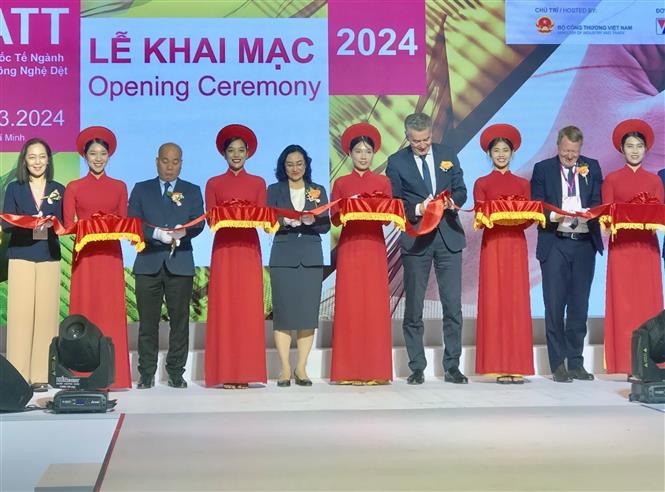
VIATT 2024, the inaugural edition of the Vietnam International Trade Fair for Apparel, Textiles, and Textile Technologies (VIATT) concluded, showcased the nation's rapidly expanding textile industry from February 28 to March 1 at the Saigon Exhibition and Convention Center (SECC). Organized by Messe Frankfurt and the Vietnam Trade Promotion Agency (VIETRADE), the event marked a significant milestone for Vietnam, offering a comprehensive platform covering three main product sectors: apparel fabrics, yarns and fibers, and garments; home textiles; as well as technical textiles and nonwovens, textile processing, and printing technology.
The expo, spanning 15,000 square meters, featured over 400 booths from 16 countries and territories worldwide, including the UK, Germany, the US, Switzerland, Japan, the Republic of Korea, China, Thailand, and India. One notable highlight was Vietnam's national brand pavilion, showcasing the strengths of domestic textile and garment brands with products ranging from apparel to home textiles, technical textiles, non-woven fabrics, and textile processing-printing technologies.
Detlef Braun, member of the Executive Board at Messe Frankfurt, emphasized VIATT's role as an event in the company's Texpertise Network, connecting over 500,000 people globally.
Economic Impact
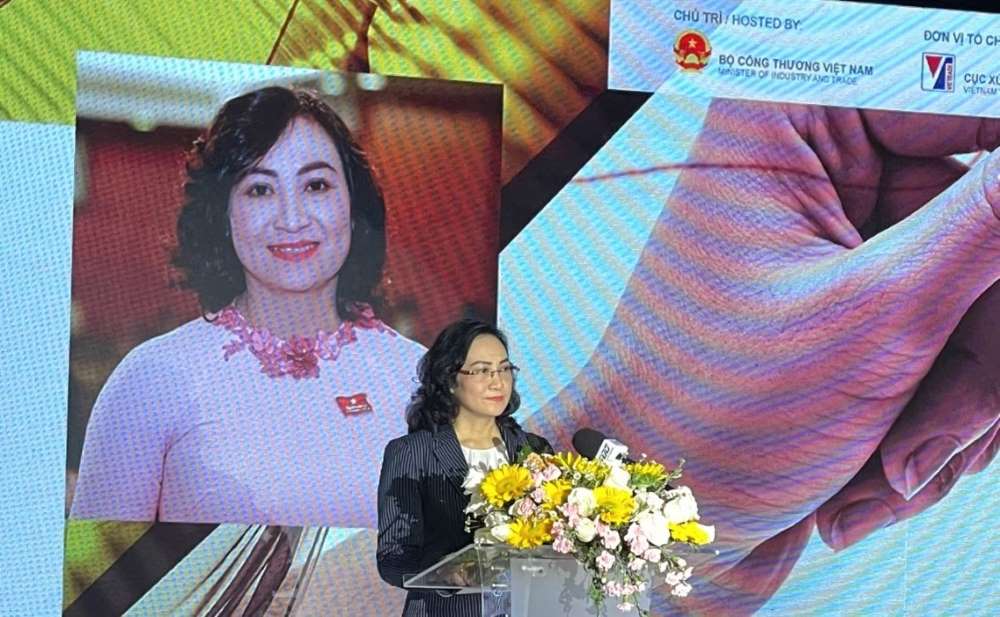
VIATT 2024 is expected to generate significant export orders for Vietnam's textile industry, further solidifying its position as a key player in the global textile supply chain. Deputy Minister of Industry and Trade of Vietnam Phan Thi Thang, remarked, "Events like VIATT are instrumental in propelling Vietnam's textile sector towards higher-value manufacturing and establishing the country as a reliable and sustainable sourcing destination. Among all current industrial export products, textile and garment is the industry with high export turnover and growth rate and is one of the key export industries, playing an important role in growth. of the economy, accounting for 12 - 16% of the country's total export turnover.”
During the inauguration, it was further highlighted the opportunity VIATT presented for businesses to seek partners, increase localization, meet diverse customer needs, enhance product value, and contribute to the development of Vietnam's textile industry in line with green and sustainable trends worldwide.
Knowledge Sharing and Inspiration
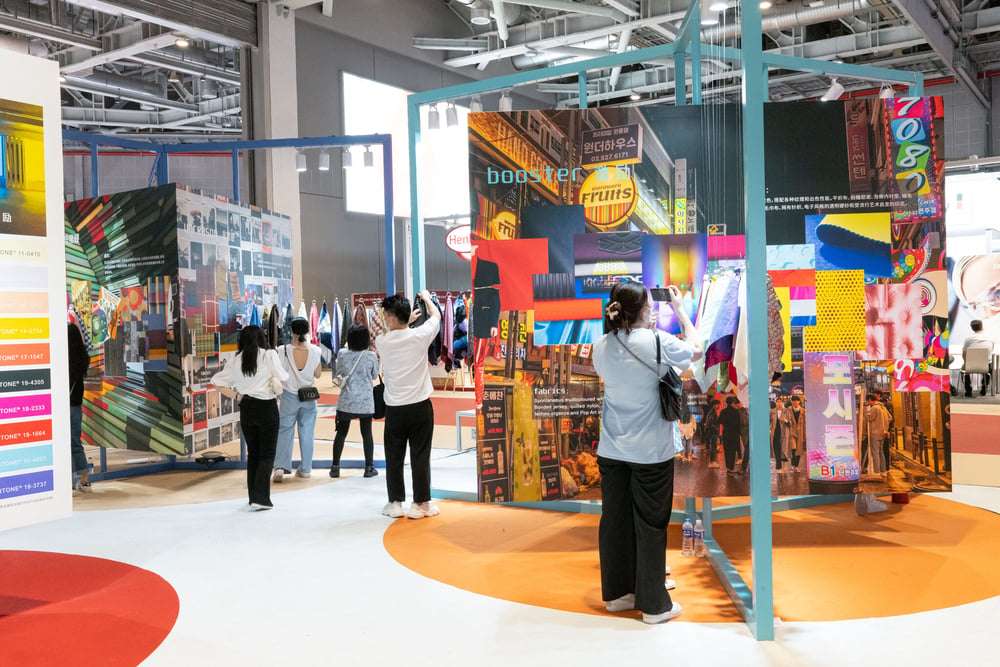
VIATT 2024 went beyond product showcasing by offering a comprehensive program of seminars featuring 14 symposiums where industry experts addressed critical topics such Sustainable Textile Production, The Future of Apparel Manufacturing in Vietnam and Leveraging Technology for Efficiency and Innovation among others, focusing on practical topics such as design and trends, market access strategies, and textile and non-woven fabric technologies. Participating major global brands were set to receive assistance in technology transfer and management experience to contribute to the development of supply chains in Vietnam.
Sustainability Takes Center Stage
The event emphasized sustainability in sourcing and production, with numerous exhibitors highlighting recycled materials and ethical manufacturing practices. VIATT 2024 placed a strong emphasis on sustainability, with over 100 exhibitors showcasing their commitment to sustainable sourcing that included the use of recycled materials and responsible sourcing practices and Ethical manufacturing, like fair labor practices and environmental consciousness were highlighted by many exhibitors.
This resonated strongly with international buyers, as H&M's Lisa Jones, Sourcing Manager, stated, "VIATT provided the ideal platform to connect with Vietnamese suppliers who align with our brand's commitment to sustainability."
The trade show facilitated on-site business deals, contributing to significant export orders for Vietnam's textile industry. VIATT 2024 showcased the country's commitment to sustainable practices, strengthening its position as an attractive sourcing destination in the global textile landscape. Nguyen Thi Mai, Director of a leading Vietnamese garment manufacturer, expressed satisfaction with Vietnam's growing reputation as a reliable and quality-conscious producer. International sourcing managers, such as one from a major European fashion label, commended VIATT as a platform aligning with their brand's sustainability goals.
Fashion Forward
The event culminated in a spectacular fashion show featuring the latest collections from renowned Vietnamese designers like Nguyen Minh Phuc and Tran Quynh Nhu. This showcase not only highlighted the creativity and talent within Vietnam's fashion scene but also served as a testament to the country's growing potential in the global fashion industry.
Looking Ahead
The success of VIATT 2024 signifies resurgence in Vietnam's textile industry, reflecting its growing global appeal, commitment to innovation and sustainability, and strengthening ties with international partners. With increased attendance, a focus on cutting-edge technologies, and a commitment to sustainable practices, VIATT 2024 positions Vietnam as a key player in the global textile market.