FW
Margins of Indian spinners may shrink this year
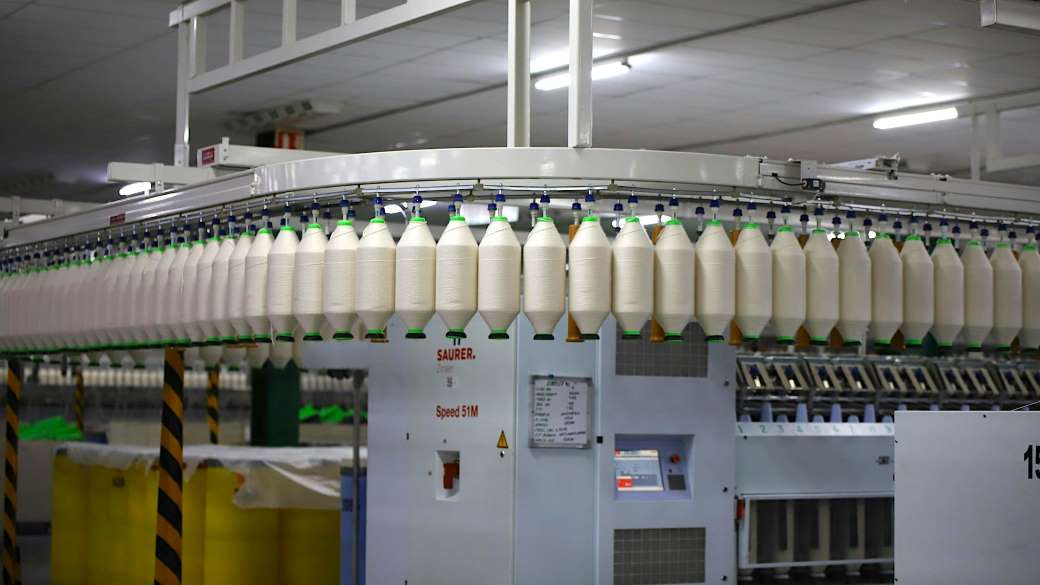
Operating margin of Indian cotton yarn spinners is expected to shrink by 200 to 400 basis points in fiscal 2020. Higher domestic cotton prices compared with international prices during April to October 2019, a sharp fall in exports, mainly to China and Pakistan, and the resultant domestic oversupply would lead to the squeeze. Mid- and small-sized spinners (having spindles less than 20,000) are likely to be impacted the most, as shrinking revenues and lower margins will impact cash generation. Also, their balance sheets are not as strong as some of the large players, which will impact credit metrics.
While domestic demand is expected to grow three or four per cent this fiscal, supply has been higher because of lower exports. The United States-China trade war has impacted demand for yarn in China, while India has banned yarn exports to Pakistan. China and Pakistan (accounting for 35 per cent and five per cent of yarn exports, respectively, in fiscal 2019) have reduced imports from India by 50 per cent to 60 per cent this fiscal. As a result, exports in the first seven months of fiscal 2020 are lower by around 38 per cent leading to higher domestic inventories and pressure on spreads.
India ITME Society’s completes 40 years of operations
"International Trade Centre (ITC), organised a three day programme from December 19-21, 2019 to celebrate 40 years of its operations. The event commenced with B2B meetings for exclusive delegation of women entrepreneurs from four African Nations looking at sourcing from India, kick started the Celebrations for India ITME Society"
 International Trade Centre (ITC), organised a three day programme from December 19-21, 2019 to celebrate 40 years of its operations. The event commenced with B2B meetings for exclusive delegation of women entrepreneurs from four African Nations looking at sourcing from India, kick started the Celebrations for India ITME Society. This B2B event was attended by 52 Indian Companies with 462 meetings during the day including interaction with Indian Institutes & Associations resulting in business amnd MOUs for student faculty exchange programme and also a promise for out bound delegation from India to Uganda. ITC also focused for this first time initiative of bringing an all women delegation to India in Partnership with India ITME Society. For completing its 40th Year of service, this activity was a step towardssupporting women empowerment by encouraging entrepreneurship in textile sector.
Apart from Business, this first time overseas delegation were also treated to a special Heritage walk of GPO organised& initiated by Ms. Swati Pandey, Postmaster General, Govt. of India.Among the activities offered to the betterment of the industry & for enhancing the quality of Education in Textile Engineering, a special Technical session was organized by India ITME Society. The technical presentation on "Digitisation and sustainability - Two drivers for the textile industry" by Dr.-Ing. Yves-Simon Gloy, Adjunct professor in Clemson University & RWTH Aachen Institute of Textile Technology, Germany was well received by the academic community, attended by 180+ faculty & students from various Institutes like, VJTI, ICT, DKTE, SNDT, NIFT, Kushal Institute, Bangladesh Textile Institute etc. Dr. Prof. JosphatIgadwaMwasigi, MOI University, Kenya, also made presentation & discussed collaboration with Institutes paving way for new partnership in sharing knowledge between India & Kenya. This also shall create avenue for students to explore placement opportunities with multinational companies functioning in Africa.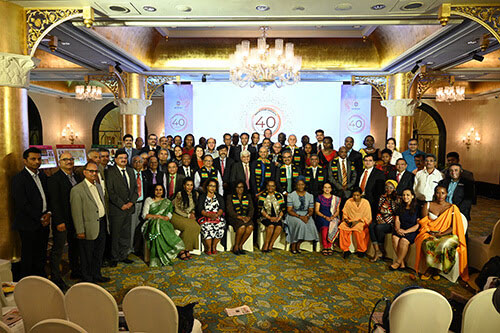
India ITME Society is not only about Textile & Textile Engineering, but functions as a culturally conscious organization promoting all aspect of India as a traditionally rich nation. To showcase rich textile heritage enraptured in our Postal stamps, India ITME Society organized philately exhibition for the invited guests from pan India & across the globe.
Every invited guest, whether from India or overseas had a take away from India ITME Society’s 40th year programme. The various Textile & Textile Engineering Associations renewed their collaboration with India ITME Society through MOUs & also shared their experiences, suggestions & way forward to improve trade relations with their respective countries &organisations in a highly interactive Global Connect session in the afternoon session. The panel of speakers consisted of Industry leaders from India & across the globe.
India ITME Society extended the mood of celebration for both young & old, across the social & business segments. Certificate of merit & a cash prize of 1500 (1 Lakh INR) were awarded to the winners of the contests organized by India ITME Society in various categories.
The evening brought together people from different walks of life, countries and culture, in knowledge, in business.
Rise of sharing economy fostering a circular model in fashion
"A pioneer of rental fashion is Rent the Runway- the first American company that started offering subscription-based fashion services in 2009. In a short time, the company grew rapidly by catering to the growing needs of a new consumer segment. It is currently valued at about $800 million and offers everything from eCommerce apparels to high-end, luxury clothing"
 Just as companies like Lyft, Uber and Airbnb have popularised the concept of car rentals across the world, the concept of rentable fashion is also becoming popular in the apparel market. The CGS 2019 Future of Fashion & Retail Consumer Survey notes, around 72 per cent of global consumers today prefer to rent their clothes rather buying them. They are even willing to pay $50 or more to rent apparels on a monthly basis. This rising affinity for apparel renting has broadened consumer’s access to clothes that earlier faced limited choices.
Other reasons that have lead to a rise in rental fashion include increase in the number of formal occasions such as weddings or black-tie events, an opportunity to explore new trends and accessibility luxury or premium brands that would be otherwise be inaccessible. A recent research from Nottingham Trent University reveals, subscription and rental businesses work exceptionally well for such occasions as most consumers still spend on a few staple items instead of exploring the fast fashion trend.
Pioneers of rental fashion
The traditional fashion and apparel industry segregated consumer segments based on their economic status. However, the sharing economy blurs these lines by attracting a variety of customer profiles. It enables middle-income consumers to indulge themselves and satisfy their gratification for luxury goods. These consumers can now own high-end couture either for a special occasion or for even weeks of months. 
A pioneer of rental fashion is Rent the Runway- the first American company that started offering subscription-based fashion services in 2009. In a short time, the company grew rapidly by catering to the growing needs of a new consumer segment. It is currently valued at about $800 million and offers everything from eCommerce apparels to high-end, luxury clothing. Other companies like Le Tote, Gwynnie Bee, Tulerie and Armoire too have jumped on the rental bandwagon, though with a slightly different philosophy.
For instance, Tulerie allows users to rent clothes, shoes and accessories amongst themselves through an app. The company first interviews its prospective participants and then allows them to list products from a predetermined designer list. This list includes established brands such as Gucci, Prada, Louis Vuitton, and upcoming trendy brands like Monse, Tibi and Zimmerman.
The advantages of such subscription-based services extend beyond cost. They enable consumers to express greater individualism and explore emerging non-commercial trends. This leads to enhanced support and patronage to boutique labels and designers, which improves the health of the industry overall.
A guilt-free shopping experience
A recent survey ‘CGS 2019 Retail and Sustainability’ revealed, around 68 consumers emphasise on sustainability in their products while purchasing them. The sharing economy will help these consumers in making their decisions as subscription-based models offer customers greater choice besides reducing the impact of the industry on the environment. They also foster a circular model which enables brands to provide fashion-conscious youngsters a guilt-free shopping trip.
Global denim segment take to organic cotton
The global denim jeans market is adopting organic cotton in a big way. Denim is on a sustainable journey that touches on every step from fiber and dyes, to finishes and trims. In 2019, mills turned their attention to developing indigo-dyed fabrics that consume less natural resources and use efficient finishing technology. Italian denim mill Berto introduced Sky, a new indigo cast that uses pre-reduced indigo, allowing brands to wash down to a lighter shade while using less water and chemicals. And Prosperity Textile was among the mills that dabbled in indigo-free denim with authentic wash-downs. The mill’s collection features a proprietary eco dyeing technology that is aniline-free, hydrosulfite-free and saves 60 per cent water.
Interest in non-traditional colors also widened the playing field for more sustainable dye techniques. Maritas Denim from Turkey showcased a product line made with clay-based pigments. The resulting earth-hued fabrics use 80 per cent less water, 35 per cent less energy and fewer chemicals than traditional dyeing systems. Tonello debuted a 100 per cent eco-sustainable dyeing system that uses only organic and compostable raw materials. The process uses plant and vegetable waste such as flowers, berries and roots, which are dried and infused with no chemical additives.
Authentic Brands Group purchases Barneys
Authentic Brands Group has purchased Barneys three months after Barneys filed for Chapter 11 bankruptcy. Luxury retailer Barneys has nearly a century-long history and has enjoyed a position of prestige as a provider of the finest luxury apparel. However, Barneys has not been immune to market conditions. Barneys has stopped e-commerce transactions on its websites.
Changes are happening in the US luxury retail space. LVMH has reached an arrangement to purchase Tiffany. The transaction is forecasted to close in the middle of next year. LVMH has amassed a sizable luxury brand portfolio in various retail sectors, from perfume to fashion. Its famous brands include Dom Perignon, Moët & Chandon, Louis Vuitton and Givenchy. Last year, the global jewelry market rose seven per cent. Tiffany is one of the biggest jewelers in the world. LVMH is looking to develop this brand with dedication and commitment.
E-commerce luxury reseller The Real Real went in for an initial public offering earlier this year. The company priced its shares above a target range. Used footwear, clothing and accessories represent a $10 billion market in the United States. At the same time, interest from young consumers who are conscious about sustainability has provided an opportunity for the industry.
Apparel and textile brands start looking at blockchain
Brands are experimenting with blockchain platforms. Blockchain is a decentralized database. This means it doesn’t live on any one computer. The digital ledger technology is designed to be immutable, rendering it nearly impossible to tamper with without leaving a trace. This is a critical milestone in the movement toward verifying where raw materials come from and how they are produced.
Some of retail’s and tech’s biggest names are trying to figure out how blockchain can get their supply chains under control. Alibaba is looking into how blockchain can work with other technologies, like cloud and Internet of Things, to create an industrial brain and facilitate the flow of cross-border goods, while Target is also investigating distributed ledger technology for use in its sprawling supply networks. Cellulose fiber producer Lenzing has undertaken a blockchain-based traceability pilot that monitors the journey of the Austrian firm’s tree-based raw materials from source to store. Apparel and footwear customers have successfully been tracing their goods with German blockchain startup Retraced’s platform.
Consumers are demanding greater transparency into the products they wear and are driving fashion brands to focus on assuring shoppers of an item’s ethical origin. Less than five per cent of the top 250 apparel brands can track their garments back to the fiber origin.
Reebok maternity offers active options
Reebok’s maternity collection offers options for an active lifestyle, including hitting the gym or running errands. To start with, the collection will include leggings and tank tops in sizes XS to XL, with high-stretch fabric. The core products, the Lux Maternity Tight and the Seamless Maternity Tank, are both built with softness, comfort and support in mind. The collection debuted with black and navy, but the company intends to offer more color choices soon. The goal was to create comfortable, supportive apparel for the active woman at every stage of her life. The collection is aimed at keeping moms-to-be feeling empowered and confident during any activity, whether they're at the gym or at work.
Maternity segment of the women’s market has traditionally been underserved. Maternity wear has become trendy, stylish, form-fitting, and designed to highlight a woman’s curves during pregnancy. The Asia-Pacific region is showing the strongest growth. Finding decent maternity wear is a challenge. As well as a perceived lack of glamour, many brands are reluctant to give headspace to maternity ranges, knowing that most women won’t spend much on clothes they will only wear briefly. But savvy brands are creating investment pieces designed to live long beyond pregnancy – and be worn by people who are not pregnant at all.
Thailand to host fashion event ICFIM
ICFIM (International Conference on Fashion Industry and Management) will be held in Thailand, February 3 to 4, 2020. ICFIM aims at bringing together leading academic scientists, researchers and research scholars to exchange and share their experiences and research results on all aspects of the fashion industry and management. It also provides a premier interdisciplinary platform for researchers, practitioners and educators to present and discuss the most recent innovations, trends, and concerns as well as practical challenges encountered and solutions adopted in the fields of fashion industry and management. Prospective authors contribute to and help shape the conference through submissions of their research abstracts, papers and e-posters. The event will feature high quality research contributions describing original and unpublished results of conceptual, constructive, empirical, experimental, or theoretical work in all areas of fashion and management. Abstracts, papers and e-posters will address themes and topics of the conference, including figures, tables and references of novel research materials.
The International Research Conference is a federated organization dedicated to bringing together a significant number of diverse scholarly events for presentation within the conference program. Events will run over a span of time during the conference depending on the number and length of the presentations. With its high quality, it provides an exceptional value for students, academics and industry researchers.
Kornit market cap doubles
The Israeli textile digital printing company Kornit has doubled its market cap. Looking for revenue growth, Kornit launched new products, expanded geographically, and expanded its workforce and its production capacity.
Kornit produces digital printing systems for printing on textiles (both the printers and the ink). Its share price has doubled in the past year. Kornit offers fashion and textile industry players the possibility of producing on-demand when they receive orders, and not according to forecasts, in a sustainable way, without waste or water. Its systems create no pollution. Even at the level of volatile organic compounds, it wants to reach a level of zero emissions. Kornit’s aim is to take a two per cent share of a market consisting of fifteen billion printings annually (mainly on shirts and trousers). This acceleration is based on the launch of new products with new applications and bringing new customers. This has taken Kornit into the fast growing field of printing on polyester. In addition the company has expanded its activity in Asia and Europe, and switched to direct management in the US. Another factor is the company’s entry into the brands market. All major brands use Kornit’s technology, whether through direct purchases of systems or through third parties.
New Delhi to host four-day GTE from January 10
GTE (Garment Technology Expo) will be held in New Delhi, January 10 to 13, 2020. This is India’s largest and most comprehensive exhibition on apparel and knitting technology. It is one of the most trusted brands as far as exhibitions related to garment technology are concerned. The biggest industry show in South Asia, it aims at offering a complete sourcing platform to apparel manufacturers. The exhibition will focus on a wide range of garment machinery, accessories and support services from India and different parts of the world. GTE provides a unique world-class B2B platform to its participants.
Initiated in 2001, this strategically structured industry platform has seen a journey of progressive growth and patronage. For this edition the show will focus on the latest technology, live demonstrations, and new product launches. The show is going to be environment-friendly with minimum use of plastic material and wastage.
India’s garment industry comprises over one lakh units and employs about six million workers, both directly and indirectly, in almost equal proportion. The indirect portion helps to sustain the direct production sector in the shape of items associated with garment industry production including sewing/embroidery threads, buttons, buckles, zippers, metal plates, cardboard sheets, plastic butterflies and packaging material.