FW
Bangladesh: Ongoing Yarn and Fabric Show attracts 370 exhibitors
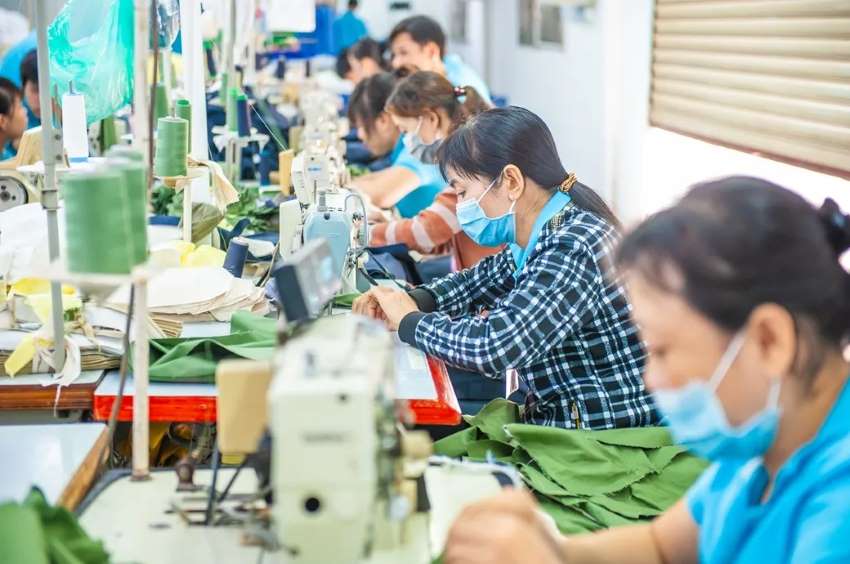
Bangladesh is hosting a yarn and fabric show from January 23 to 26. The aim is to introduce latest sophisticated yarn, fabrics, accessories and emerging technologies for textile and garment industries. Over 370 exhibitors from 22 countries are showcasing textile products that include latest trends and technologies in fabrics, accessories, ready-to-wear and industrial fabrics, innovative and smart fabrics and many more.
The exhibition will enable textile and apparel industry buyers to meet local and overseas textile and yarn manufacturers face to face for the best qualities and reasonable prices.
Bangladesh is recognised as a lower middle income country. The contribution of the industrial sector to national growth has been increasing. Considering purchasing power, Bangladesh is now the world’s 32nd largest economy. The garment sector contributed 81.23 per cent to total revenue in the last fiscal year. China is the top exporter of apparel products in the world while Bangladesh is in second place.
This year’s expo is taking place along with two concurrent exhibitions, Denim Show and Dye and Chem. There are seven garment factories in Bangladesh that are placed in the top 10 environmentally-compliant readymade garment factories around the world. The country has a target of reaching $50 billion in textile exports by 2021.
Victoria Beckham ties up with Reebok for an athleisure collection
Victoria Beckham is launching her full-fledged collaborative collection with Reebok after the small collection introduced by Beckham and Reebok with NBA player Shaquille O’Neal. Tapping the pulse of streetwear that generally gets associated with athletic fashion, the collection comprises work-to-workout ensembles for both women and men with pieces such as slouchy drawstring trousers, a short-sleeved hoodie and orange leggings. More gender centric items include styles such as sports bras and cropped tees.
The designer’s three strengths lifestyle, her husband’s professional soccer experience and her children’s near-constant-motion lives, dictate the design themes of the collection. The collection will be retailed at a microsite and other premium stores.
Raymond net profit up 30 per cent in Q3
For the third quarter Raymond’s consolidated net profit was up 30 per cent. Total income was up 12.69 per cent. Revenue from the textile segment was up 10.32 per cent. Revenue from the apparel segment was up 19.62 per cent. Revenue from the garmenting segment was up 13.65 per cent.
Raymond's total expenses were at Rs 1,639.03 crores as against Rs 1,471.38 crores in the year-ago period. Revenue from shirting was at 159.25 crores as against Rs 149.34 crores in the corresponding quarter last year.
Raymond now has four strong brands: Raymond, Park Avenue, Park and Colour Plus and the company is doing well and delivering a high double-digit growth. The company is currently in the right place with the right set of opportunities. The company is made up of many parts -- textile, apparel, B to C fabrics, engineering, auto components, FMCG. Every part has its own challenges and its own needs and desires.
For Raymond fabrics are a solid and legacy business, while apparels are growing strongly. It is a market leader in its space and has managed to enter the FMCG space. As for key focus areas of the company, the priority is to see exponential shareholder returns.
Mauritius re-emerges as the sourcing option for American brands
Mauritius is reasserting itself as a sourcing option for American brands and retailers thanks to a tenuous trade market and tensions with China over tariffs and the like that are seeing US companies look for alternate supply chain solutions. Mauritius enjoys duty free shipment for US-bound apparel and textiles under the African Growth and Opportunity Act (AGOA), a trade privilege program yet undisrupted by the Trump Administration, and one whose benefits are proving ideal at a time when trade is in the uncertain position it’s currently in.
Mauritius is known for its high level of quality and attention to detail in manufacturing, specialising in the medium to higher-end of the market. Brands like Asos, Monoprix and Calvin Klein make products in Mauritius. It is also one of the rare countries that have enjoyed positive economic growth consistently since 1983, according to Bucktowonsing. Between 2001 and 2018, the average economic growth in Mauritius was 3.89 percent. For 2018, estimates peg the growth at 3.9 percent.
Cambodia urges for a FTA with China
Cambodian PM Hun Sen has urged China to consider entering a free trade agreement with the Cambodia to spur trade and investment between the two nations. This will help Cambodia diversify its export market, currently dominated by the European Union and the United States. As a member of ASEAN, Cambodia benefits from FTAs signed between the regional organisation and other countries and regions, including Australia and New Zealand, and Hong Kong.
Trade between Cambodia and China reached $5.6 billion last year, a 12 per cent increase from 2017’s $5 billion. However, China’s share of the Kingdom’s export market is still small compared to those of the EU and the US, who jointly account for more than 70 percent of Cambodian exports.
From 1994 to 2016, China invested $14.7 billion in the Kingdom, mostly on four sectors – agriculture and agro-industry, manufacturing, infrastructure, and services and tourism, according to the Council for the Development of Cambodia (CDC). China also funded the Sihanoukville Special Economic Zone, which cost $3 billion and now hosts 108 enterprises and companies. In the tourism sector, China recently invested in two big projects, an international resort in Koh Kong province and a five-star hotel and resort in Preah Sihanouk.
Moreover, of the 23 companies investing in the mining industry, 10 are from China. China is also the largest foreign investor in the energy sector in Cambodia, with more than $7.5 billion invested in hydropower plants and about $4 billion in coal-fired power plants.
Sri Lankan export earnings cross $5 billion
Sri Lanka earned more than $5 billion from apparel exports in 2018. The aim is to enhance apparel exports especially to countries like India. Exporters feel bilateral FTAs are an ideal tool for market penetration to these countries.
The United Kingdom is considering the continuation of preferential treatment related to the EU GSP scheme for developing countries, including Sri Lanka, even after Brexit. And Sri Lanka hopes Brexit will not result in a disruption of trade with the UK. In addition, the industry in Sri Lanka looks forward to the right business environment, a decisive policy frame work with consistency and predictability on the fiscal regime, a proper trade policy and monetary policy, a shipping policy draft, a new procedure for monitoring of export proceeds, prompt export releases, all directed toward marketing the country’s products.
As of now the industry faces issues like ad hoc policies, a lack of consultative processes, no advance notice on cost increases, inability to adjust existing contractual obligations to new cost structures, and non-recognition of the importance of credit facilities given to buyers to sustain market access. Sri Lankan apparel exporters want their country to negotiate for sector-specific liberalisation through the Economic and Technological Cooperation Agreement.
Sri Lankan RMG makers sets sights on Indian consumers
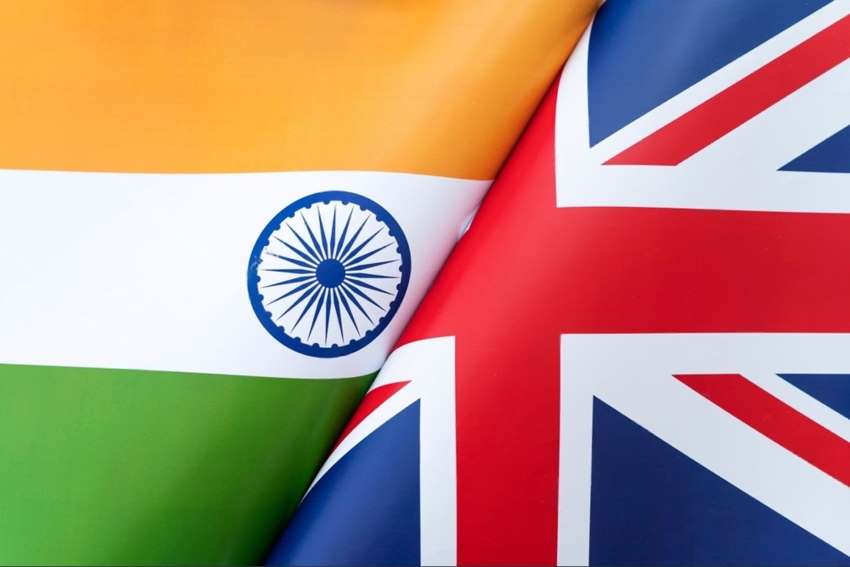
Sri Lankan apparel exporters want greater access to the Indian market. Sri Lanka’s apparel industry is fully committed to a comprehensive trade relationship with India. The industry is heavily dependent on India, not only for inputs such as fiber, yarn, and fabric, but on finished products too. Both countries share a rich textile tradition. Large Indian companies can encourage Sri Lankan companies to be part of their supply and value chains.
Sri Lanka is a garment making hub. A scenario where Sri Lanka sources from India and manufactures apparel and garments for the rest of the world could lead to a win-win situation for both countries. Sri Lanka has been urged to make use of fully-funded training opportunities in India under the Indian Technical and Economic Cooperation program, in which a number of slots is earmarked for textile related subjects.
India is one of Sri Lanka’s largest trade partners globally. Sri Lanka is among the top ten countries which import cotton fabrics from India. India has become a focal point for the fashion industry as its middle class consumer base grows and manufacturing sector strengthens. Fashion players are redoubling their efforts in this highly fragmented and challenging market, where an educated and tech savvy demographic rub shoulders with the poor and upwardly mobile.
Kornit offers modular and future ready garment printing machine
Kornit has introduced the Atlas a digital textile printing machine which can typically deliver 3,50,000 impressions a year and is suitable for highly productive garment decorators, mid to large size screen printers and other businesses looking to innovate.
The press comes with new recirculating print heads and comes with a newly developed ink, NeoPigment, which is capable of meeting retail standards for product quality and durability. The Atlas is the best and cost-efficient direct-to-garment printing technology for high-quantity and high-quality production requirements. It has been designed in a modular and future-ready way, driving quick and easy implementation of new developments in future.
Kornit delivered the Atlas on the collective feedback of thousands of Kornit systems’ operators and on the experience collected from hundreds of millions of printed garments. The new press comes ready for the manufacturer’s future releases of its cloud-based business intelligence, productivity analytics and optimisation software platforms, scheduled to be released in the second half of 2019. This will allow for easy future network connectivity required to support fleet management and optimization of global multi-systems and multi-site enterprises.
Kornit remains focused on constantly introducing technology that allows the industry’s leading brands to better connect with their customers and to adapt to the rapid changes in consumer preferences.
Tajikistan to establish cotton processing cycle by 2025
As per the development strategy of Tajikistan industry for the period until 2030, the country plans to establish a full cycle of processing of cotton produced in the country by 2025. The specialised departments have reported a significant increase in exports of textile materials and products in 2018. However, export statistics indicate that more than 70 per cent of this amount depends on the sale of raw cotton fiber abroad.
Last year, Tajikistan exported textile materials and products worth $226.45 million, registering an increase of 24.6 per cent compared to 2017. Of this around $1,653 million was generated from the sale of cotton fiber an increase of 36.6 per cent.
The increase in raw cotton exports continues against the backdrop of statements by relevant government departments and a full-cycle domestic fiber processing program. Until mid-2000, cotton was considered one of the two main export articles from Tajikistan (along with aluminum). In the 1980s, about 800,000 tons of cotton was harvested annually in Soviet Tajikistan.
India may relax 30 per cent sourcing rule for FDI in single brand retail
India may relax the 30 per cent local sourcing norm in the single-brand retail sector. The aim is to attract big foreign players. Big single-brand retail firms may also be permitted to open online stores before setting up brick-and-mortar shops.
Currently, online sale by a single-brand retail player is allowed only after opening of physical outlets. Single-brand foreign retailers may be allowed to adjust the incremental sourcing of goods from India for global operations during the initial ten years from the current five years against the mandatory sourcing requirement of 30 per cent of purchases from India.
The relaxation, however, would be subject to a condition that a foreign entity would have to bring foreign direct investment in excess of $200 million within the first two or three years. During April to June 2018, FDI in India grew by 23 per cent.
In January 2018, India allowed 100 per cent FDI in the sector, permitting foreign players in single-brand retail trade to set up their own shops in India without approval. The mandatory local sourcing requirement of 30 per cent was relaxed. A foreign retailer was allowed credit from an incremental increase in sourcing for its global operations from India toward the mandatory 30 per cent local sourcing requirement for its business in the country.