FW
Abercrombie does rebranding
Abercrombie & Fitch has invested in loyalty programs and developed its direct-to-consumer and Omni channel capabilities.
All of these steps have contributed to an improved top and bottom-line.
Although earnings are still expected to be in the red, an improvement in the metric is expected, along with a five per cent rise in revenues.
The company undertook a massive rebranding initiative in 2014, moving away from the reputation it had built over the past decade. The company’s store count has been reduced, stores now have a smaller footprint with larger fitting rooms, and are integrated with technology. The overpowering perfume, which filled the stores earlier, has also been modified to a fresher, cleaner fragrance.
In order to better engage its customers, the company is also improving its social media presence.
While the company has been focusing on right-sizing its store footprint in North America, it is dependent on international markets for growth through expansion. In Europe, the company sees a billion dollar opportunity across all channels. At present, the company has a modest 117 stores in the region. Consequently, its focus in the region is on increased penetration, shifting to smaller, more productive stores, and building a more local customer base.
EU does tit for tat
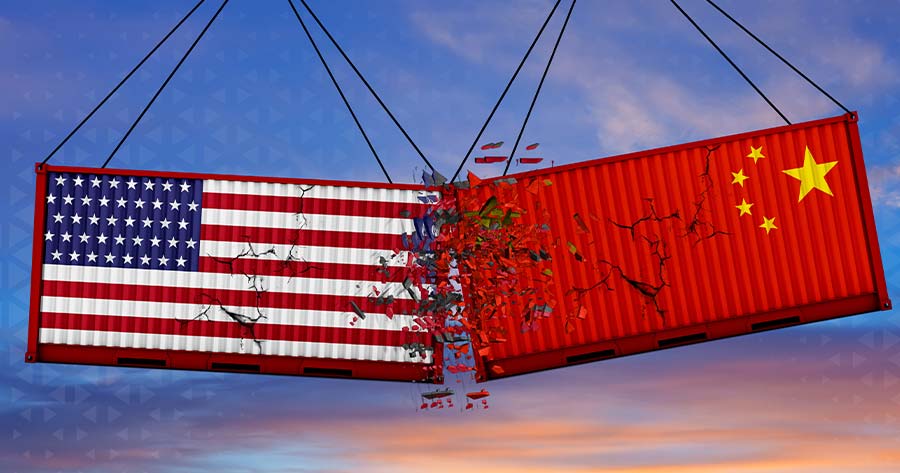
The European Union will slap 25 per cent tariffs on imports from the United States.
Those include men’s and women’s blue jeans, T-shirts, shorts, men’s synthetic woven industrial and occupational trousers, cotton woven bed linen that is not printed, and footwear with upper and outer soles of leather not covering the ankle.
This is in response to the US’ decision to place tariffs on aluminum and steel coming from some of the country’s closest trading partners: Europe, Canada and Mexico.
In many ways, the European Union’s imposition of tariffs on apparel is reminiscent of five years ago when the EU increased a tariff on women’s blue jeans made in the United States. That tariff rose from 12 per cent to 38 per cent due to another trade dispute, costing some Los Angeles denim makers as much as 2,50,000 dollars during a six-month period.
In 2017, the United States shipped 690 million dollars in apparel to the European Union’s 28 countries compared with 720 million dollars in 2014.
The other side of the issue is the cost of increased tariffs on aluminum and steel. Canada, Mexico and Europe account for more than half of the imports of those two metals coming into the United States. Anyone who uses aluminum or steel will see price increases.
Sustainability needs comprehensive strategy
Bangladesh’s readymade garment industry needs a comprehensive strategy to be sustainable.
Both industry owners and policy-makers need to understand the global impact of production and consumption patterns. Sustainability has to be evolved within the industry.
The garment industry needs to adopt cleaner and improved technology and management for better environment in order to achieve its goals.
Apparel buyers are focusing on eco-friendly ways of production.
Sustainability is an evolving issue for Bangladeshi entrepreneurs after the Tazreen and Rana Plaza incidents.
The goals of sustainable developments are cleaner water and sanitation, affordable and clean energy, industry innovation infrastructure, climate action and responsible consumption and production. Environmental sustainability consists of energy usage, water usage and chemical storage and handling.
The apparel industry has various impacts to the environment. It is polluting the environment in many ways. Environmental pollutions are wastewater discharge, solid and hazardous discharge, air emission and nuisances.
Energy efficiency relates to reducing energy use and maximising alternative energy resources. Water efficiency relates to reducing water use and maximising alternative water supply. Material efficiency relates to optimizing material flow and use and managing inventory and procurement.
Effective environmental management systems, monitoring auditing and environmental performance and complying with environmental systems are essential to improve management practices.
Training that enhances productivity
Bangladesh has a number of training programs for the apparel sector.
The apparel and textile sector is Bangladesh’s largest export industry. The courses aim at increasing the skilled workforce and build future leaders of the industry.
The programs help more than 120 graduates develop the skills needed to join the workforce in the garment manufacturing industry. Training is provided by experts. The programs are designed for both classroom training and shop floor skill enhancement learning to build a practical awareness of quality assurance testing within the textile sector. Through these programs the garment and textile workforce is strengthened. Students learn best practices that will allow them to achieve best in class performance in the workplace.
Bangladesh is preparing to graduate from least developed country status in 2024. Its readymade garment sector is much safer than in 2013 when the Rana Plaza disaster occurred. Dramatic improvements are taking place that are bringing the sector up to world-class standards.
Safety in the workplace has become a major priority in Bangladesh. A training program has been launched for some eight lakh readymade garment workers. This training is expected to contribute greatly to that goal as both workers and employers will benefit from improved safety practices.
Exports of Chinese textiles decline
Chinese textiles and clothing exports, according to WTO, have declined sharply from US$236 billion in 2014 to US$206 billion in 2016. Its share by value in the global textile and clothing market also declined from 38.6% in 2015 to 35.8% in 2016. As per Chinese customs data, exports of clothes and accessories fell by 0.4% in 2017, while textiles exports saw annual growth of 4.5% during the year.
Hit by the industry restructuring, big clothing brands in the country are struggling to retain margins and secure finance. Revenues are depleting at Fuguiniao, a Hong Kong-listed menswear and shoe manufacturer based in Fujian, since 2015. The company reported a net loss of 10 million Yuan (US$1.57 million) in the first half of 2017, a bond default this year, and it has debts piled up at 3 billion Yuan.
IKEA refuses to sign the 2018 Transition Accord
Globally operating retail giant IKEA has refused to sign the 2018 Transition Accord stating that its own code of conduct, ‘the IKEA Way’ (IWAY), is sufficient to ensure safety at the company's suppliers.
The 2018 Transition Accord has been signed by over 175 garment and home textile companies, including some of the main companies sourcing from Bangladesh such as Primark, H&M, C&A and Aldi. This covers more than 1,300 factories and approximately two million workers. The agreement offers any company sourcing garment, home textile or fabric and knit accessories from Bangladesh an excellent opportunity to guarantee factory safety through a collective and transparent scheme that pools resources and has proven itself.
IKEA claims to have has five main suppliers in Bangladesh. Research by FIOH reveals that only one of these suppliers in Bangladesh is covered by the Accord, meaning that workers in the remaining factories are still at risk.
Adidas overtakes Nike in world cup deals
German Sportswear brand Adidas has overtaken Nike by sponsoring 12 of the 32 participating teams, including strong contenders like Germany and Spain, along with hosts Russia. The brand, since the last tournament in 2014, has grown sales rapidly in areas other than soccer, capitalising on booming demand for its retro basketball sneakers and springy Boost running shoes to outpace Nike, particularly in the U.S. market.
Nike, on the other hand, which only got heavily involved in soccer in 1994, is supplying shirts for 10 countries, including Brazil, France and England. The brand expects 60 percent of all the players top wear its oots, including almost half the German and Spanish team and three-quarters of the Russians.
Dry conditions force brands to sell adulterated wool
With wool supply being tight this season due to the on-going dry conditions across northern and western New South Wales, smaller labels are either using less wool or blending finer wools with coaser ones.
The buyers — mills in China and Italy that process the raw wool into everything from the superfine fabric required for high-end suits, to the coarser wool used in military uniforms —are increasingly feeling the pressure. The soaring wool prices is also leading to unsold products like the Uniqlo's merino sweater which has remained unsold for the past three autumn/winter seasons.
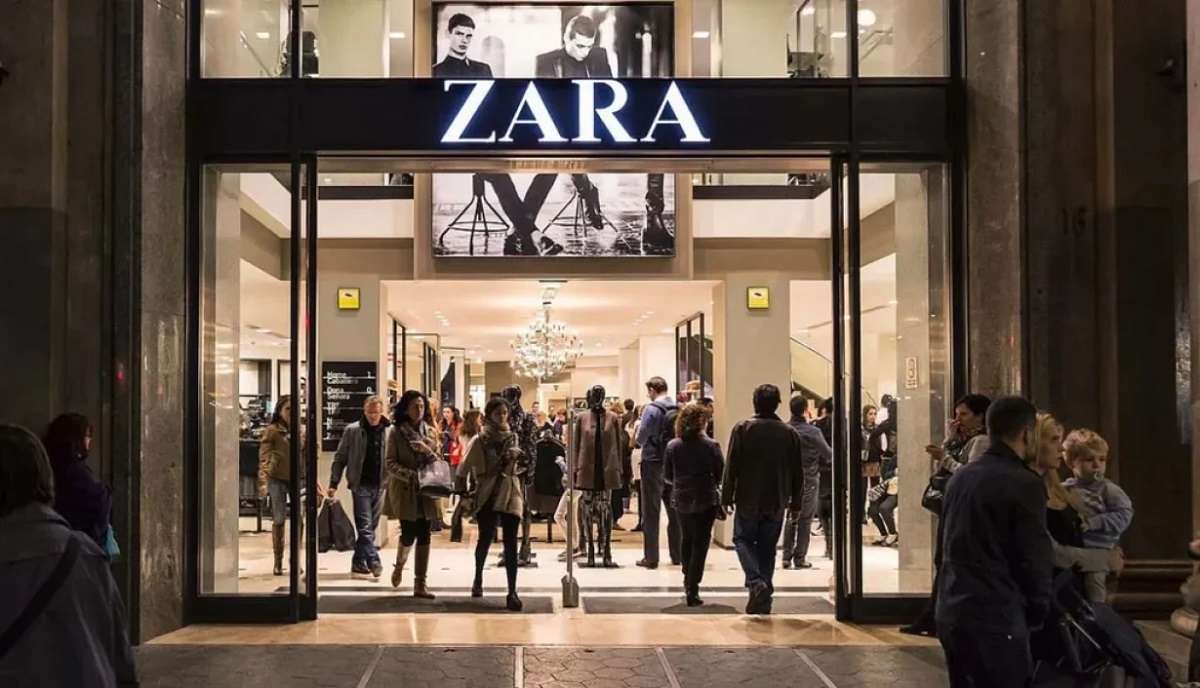
The financial success of the fast-fashion giants like H&M and Zara now dominating the landscape has been built on a supply-chain model with tiny margins that leave workers open to exploitation, sees tonnes of unwanted clothes filling landfill and damages the environment.
UAE and Ethiopia to protect rights of domestic workers
UAE and Ethiopia will formalise an agreement to protect the rights of domestic workers by this year end. The agreement is one of several that Ethiopia has made with other Middle Eastern countries after a series of high-profile cases in the region of abuse of domestic workers. It will be made legally applicable in the UAE and Ethiopia. Currently, domestic workers sign set contracts issued by the government in Ethiopia but the laws have no force once they travel overseas. The framework will ensure that workers rights are protected in both countries and that women are aware of these rights.
The Ethiopian government had banned its citizens from being employed as domestic workers in the UAE in July 2012 to protect them from abusive employers. But the migration continued and the ban was lifted with negotiations for a formal agreement commencing. Under the new arrangement, domestic staff will be required to undergo training in Ethiopia before travelling to the UAE.
US, EU can negotiate despite import tariffs
The United States and European Union could still negotiate a trade deal even if Washington imposes import tariffs on EU steel and aluminum.
EU leaders had agreed earlier in May to open discussions about market access for US products, but only if Washington grants the EU a permanent exemption from tariffs. The EU now has a temporary exemption, which expires on June 1, 2018.
US Commerce Secretary Wilbur Ross said that the EU had shown limited interest in serious trade negotiations with the United States until a threat of tariffs. The 28-member bloc shelved talks towards an ambitious EU-US trade deal known as TTIP after Donald Trump's presidential election victory in 2016.
Dutch Trade Minister Sigrid Kaag, on the same panel, said EU countries agreed that US trade measures designed to protect national security simply should not apply to them and they did not feel they should negotiate, even if China did.