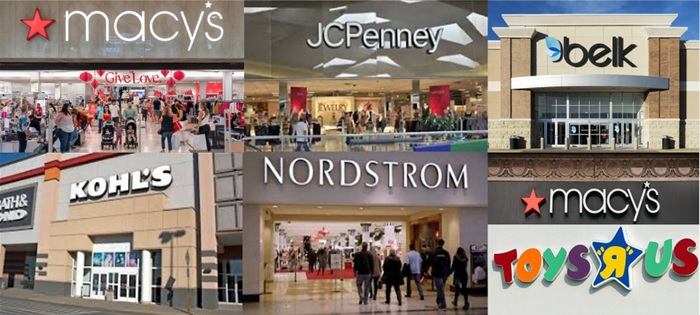
By early 2026, the American retail industry no longer resembles a single marketplace moving in one direction. It feels more like two different economies playing out on the same streets. On one side, value chains and essential retailers are racing ahead, adding stores at a pace not seen since the pre-pandemic expansion years. On the other, once-dominant department stores and luxury conglomerates are retreating, liquidating assets, shrinking footprints, and rewriting survival plans.
This is not a cyclical slowdown or a passing correction. It is a divide, a hard reset in how consumers spend, how retailers operate, and where capital flows. Shoppers, squeezed by persistent inflation yet unwilling to compromise on experience, are sending a clear message: buy cheap or buy exceptional. The middle ground is vanishing.
A new gold rush for value retail
If retail were a battlefield, discount chains would be the advancing army. Few illustrate this better than Dollar General, which plans to open 483 stores this year alone. Its strategy is neither flashy nor experimental. It is deeply pragmatic: dominate rural and semi-urban America where price sensitivity has become permanent, not temporary. These are not just cheap stores. They are hyper-efficient distribution nodes powered by predictive inventory, AI-led replenishment, and tightly controlled assortments. In many towns, Dollar General is increasingly replacing both grocery and apparel trips.
A similar logic is powering Aldi USA, which continues to add 168 stores, betting on private labels and a stripped-down cost model to convert middle-income households into loyal value shoppers. Meanwhile, specialty players are proving that scale doesn’t have to mean sameness. Tractor Supply Company and Barnes & Noble are expanding with formats that feel local, curated, and community-driven the antithesis of the old warehouse-style big box.
What binds these winners together is not just low pricing. It is proximity, relevance, and precision. Retailers are no longer opening giant stores and hoping demand shows up. They are using data to predict exactly where demand already exists.
When legacy retail turns defensive
At the other end of the spectrum, the story is starkly different. The department store model long dependent on malls, heavy overheads, and broad assortments is facing its most severe reckoning in decades. The tremors were most visible when Saks Global entered bankruptcy proceedings earlier this year. The group, which houses Saks Fifth Avenue, Neiman Marcus, and Bergdorf Goodman, is now dismantling much of its outlet arm. Nearly the entire Saks OFF 5TH fleet is being liquidated, with 57 closures planned. The reason is brutally simple: liquidity.
Court filings exposed millions in unpaid dues to luxury suppliers including Chanel, Kering, and LVMH underscoring how even prestige retail collapses when operational efficiency falters. The lesson is sobering: brand equity alone no longer guarantees survival. The divide becomes clearer when the year’s expansion and contraction data are placed side by side.
Table: The retail divide in 2026
|
Retailer Sector |
Leading Expander |
2026 Store Growth |
Leading Contraction |
2026 Store Closures |
|
Value/Discount |
Dollar General |
+483 |
Walgreens |
-1,200 (Multi-year) |
|
Apparel/Luxury |
POP MART |
+20 |
Saks OFF 5TH |
-57 (Liquidation) |
|
Legacy/Dept. |
Target |
+43 |
Macy's |
-150 |
|
Specialty |
Tractor Supply |
+100 |
GameStop |
-300 |
This data captures the industry’s new polarity. Growth clusters around necessity-driven or niche experiential formats. Contraction hits broad, undifferentiated models. Chains like Target Corporation are still expanding, but selectively favoring smaller urban formats over massive suburban stores. Meanwhile, players such as GameStop and Walgreens are aggressively rationalizing networks built for a pre-digital world. The old assumption that more stores equal more growth has flipped. Now, fewer stores often mean better profits.
Macy’s bet on shrinking to grow
No company embodies this philosophy better than Macy's. Once the symbol of American department store dominance, Macy’s is executing what executives call a strategic shrinkage. The plan: close 150 underperforming stores which is roughly a third of its fleet and remove nearly $700 million in low-quality sales. At first glance, it looks like retreat. In reality, it is margin engineering.
Instead of chasing volume, Macy’s is concentrating capital into higher-performing reimagine locations. These 350 upgraded stores emphasize curated assortments, service, and experiential layouts less clutter, more storytelling. Early data suggests these stores are outperforming legacy units. Simultaneously, the company is leaning into premium verticals, opening new Bloomingdale's locations and expanding Bluemercury. The shift is clear: fewer doors, higher spend per customer.
Why smaller is suddenly smarter
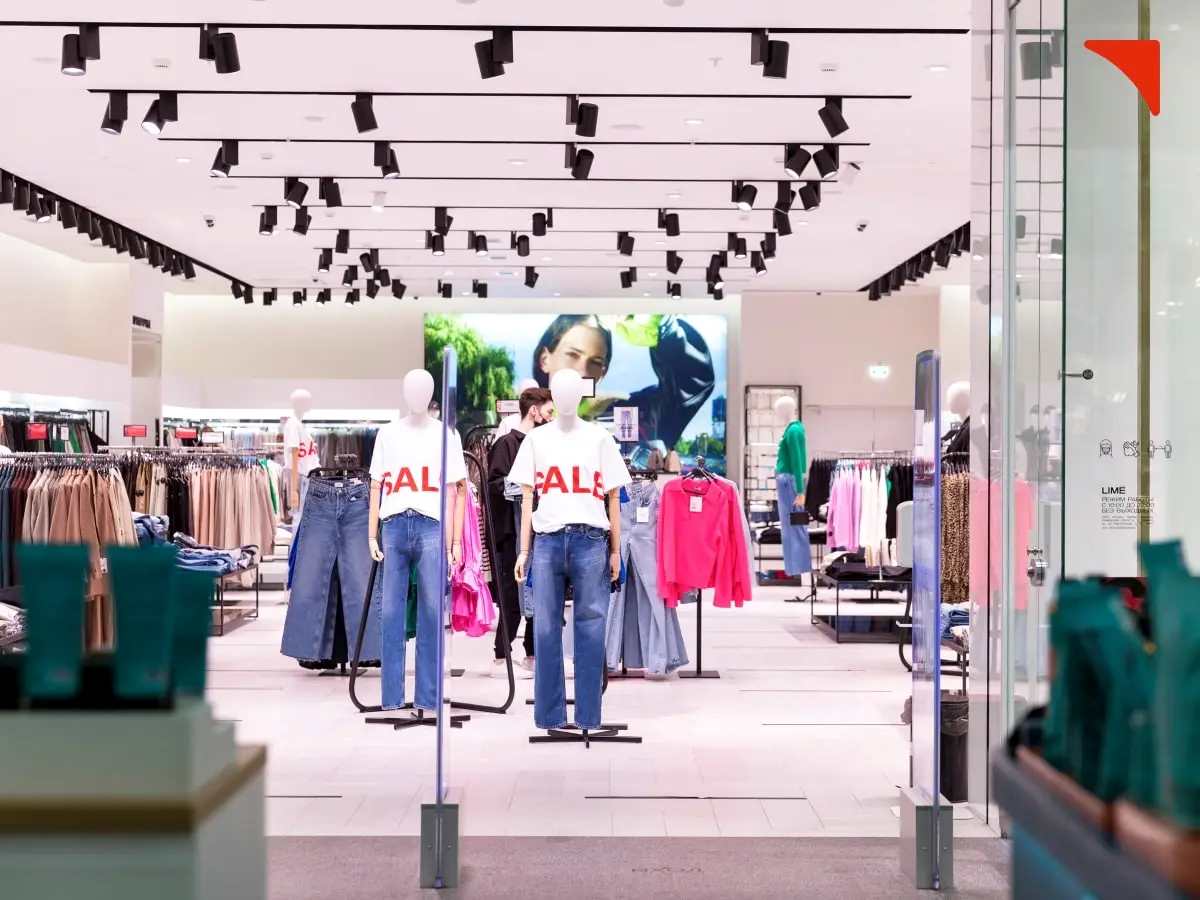
Across segments, one metric is quietly replacing store count as the true north star: sales per square foot. Retailers in 2026 are building: smaller stores, tighter assortments, tech-enabled personalization, neighborhood proximity. These outlets act as fulfillment hubs, experience centers, and community spaces all at once. The phygital blend is fast becoming standard. AI personal shoppers, real-time stock visibility, and digital product passports are reshaping how fashion and essentials are sold. For an apparel market projected to cross the trillion-dollar threshold globally, efficiency is no longer optional. It is existential.
A retail map permanently redrawn
Taken together, the industry’s transformation feels less like a phase and more like a permanent realignment. The winners are not necessarily the biggest names or the most glamorous brands. They are the retailers that understand one hard truth: Consumers have polarized. They either want the cheapest possible option or the best possible experience. Everything in between is being squeezed out. In that sense, 2026 may be remembered not as the year retail slowed, but as the year it split decisively into two separate worlds.