


FW
US and China try to end trade dispute
The United States and China are moving toward ending their trade dispute. The two countries have reached a broad consensus on alleviating the trade imbalances, but there are still some differences.
Negotiators are drawing up memorandums of understanding on structural issues: forced technology transfer and cyber theft, intellectual property rights, services, currency, agriculture and non-tariff barriers to trade. The MoUs covers most complex issues affecting the trading relationship between the two countries and are meant, from the US perspective, to end the practices that led the US to start levying duties on Chinese imports in the first place.
Work on the MoUs is a significant step in getting China to sign up both to broad principles and to specific commitments on key issues. The world’s two largest economies have slapped tit-for-tat tariffs on hundreds of billions of dollars of goods, slowing global economic growth, skewing supply chains and disrupting manufacturing.
The United States has accused China of forcing US companies doing business in China to share their technology with local partners and hand over intellectual property secrets. China denies it engages in such practices.
The US also objects to non-tariff barriers in China, including industrial subsidies, regulations, business licensing procedures, product standards reviews and other practices.
Increasing consumer demand forces brands to prioritise sustainability
"The future generation is always a step ahead of you just like the millennial and Gen Z shoppers are more vocal about their expectation of environmentally friendly practices from brands. Consumers’ are increasingly demanding sustainable fashion, prompting brands to prioritise sustainability and increase transparency in their efforts."
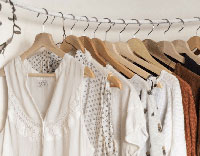 The future generation is always a step ahead of you just like the millennial and Gen Z shoppers are more vocal about their expectation of environmentally friendly practices from brands. Consumers’ are increasingly demanding sustainable fashion, prompting brands to prioritise sustainability and increase transparency in their efforts.
The curiosity of consumers is not limited to production only, they are equally curious about the authenticity of their supply. From how online purchases impact their carbon footprint to the specific textiles that make up their shoes and apparel, consumers are getting in every aspect of fashion. It’s therefore essential for brands to tread with caution and provide transparent insights into all aspects of production.
One of the top priorities of consumers today is invest in versatile, durable wardrobe staples that not only save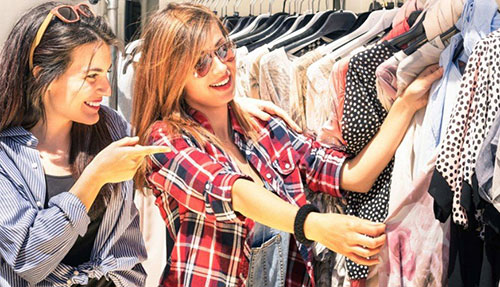 money but also conserve resources. This can be achieved by sourcing textiles that last beyond the normal 25 washes. Garments made from Sensil can be washed at least 50 times, with some garments tested up to 75 washes for durability and additional technical properties.
Reducing waste through shorter shipping time and recycling
As the fashion industry is responsible for approximately 5 per cent of all greenhouse gas emissions, consumers are opting for clothes that help reduce waste and carbon emissions. To achieve this, brands should reduce their shipping distance by setting up factories near their sourcing destinations. This would allow them to maintain smaller inventories and fight waste without impacting speed to market.
Additionally, brands can reuse materials that are discarded as waste. For instance, coffee charcoal derived from coffee bean shells can be added to fibers at the polymer stage. This will help garments to delay the loss of body heat, improve their functionality without sacrificing softness or durability. Coffee charcoal also acts as a natural deodorizer and aids moisture wicking.
Biostatic textiles minimise environmental impact
According to a recent UN report, antibiotic resistance is building into a global crisis. According to some researchers, the antibacterial or antimicrobial properties of textiles are a major cause of resistance. To counter this, brands have launched safer fabrics like Sensil BodyFresh. There are likely to more such innovations in the future bringing us close to achieving our sustainability. However, brands need to pay heed to their consumer’s demands for sustainability. Ignoring them would only mean putting their future at stake.
UK to impose tax on fast fashion brands/retailers
Fast fashion retailers in the UK may be taxed to fund an annual recycling program. The taxation and recycling program would reward retailers who make conscientious efforts to improve sustainability in their supply chains.
The UK consumes more clothing per person than any other country in Europe. Ten of the country’s biggest high-street brands have been asked to disclose their environmental impact. The appetite for clothes comes with a huge social and environmental price tag: carbon emissions, water use, chemical and plastic pollution.
While most of the onus will be on companies, citizens will be encouraged to learn how to repair and reuse what they already own, in part by reducing taxes on repair services and offering lessons in school on creating and mending clothing. Consumers will be encouraged to buy less, mend, rent and share more. The aim is to end the era of throwaway fashion by incentivizing companies that offer sustainable designs and repair services.
When it comes to fast fashion, few retailers have the speed and scale of the UK’s industry giants. But companies like Asos, Boohoo and Missguided may soon have to pay a price for the flood of new clothes and accessories they put into the world every year.
India to hold intense bilateral discussion with China on RCEP
Facing pressure to finalise its market opening commitments under the Regional Comprehensive Economic Partnership (RCEP) pact being negotiated between 16 countries, India will hold intense bilateral discussions with China on the sidelines of the ongoing round in Bali to narrow differences on import duty cuts and the implementation period that both seek under the trade pact.
RCEP, being negotiated between India, China, the 10-member ASEAN, Japan, South Korea, Australia and New Zealand, can potentially result in the largest free trade bloc in the world covering about 3.5 billion people and 30 per cent of the world’s Gross Domestic Product. Apart from goods, the areas being negotiated include services, investments, intellectual property and government procurement.
India has been holding discussions with China since January to come to an understanding on the level of import duty cuts it can promise but differences remain. New Delhi has tried to argue that it will not be possible for it to offer tariff elimination on more that 72 per cent of the traded items as apart from agriculture there were a lot of sensitive industrial goods that needed some protection.
Global sports apparel segment grows at five per cent CAGR
The worldwide market for sports apparel is expected to grow at a CAGR of 5.8 per cent over the next five years. The classification of sports apparel includes shirts, coats, pants, skirts and others. North America has the largest consumption share of nearly 30 per cent. Europe is the second largest, with a consumption share of 26 per cent.
Sports apparel are in amateur sport and professional athletics. The share of sports apparel in amateur sport is about 85 per cent. Technological developments designed to improve comfort and performance has also led to growth in sales of sports apparel. As a result sportswear is turning into a highly popular style statement and fashion trend.
Sportswear includes items such as yoga pants and active wear. Although performance sportswear takes the lead in terms of market size, sports-inspired is the category driving growth. Both sports-inspired footwear and apparel are growing at a rapid pace, registering ten per cent and six per cent growth.
Besides emerging markets such as India and Thailand, core markets such as the United States are also producing significant sports-inspired growth, despite its reputation as a performance-oriented market.
Growth is driven by a growing portion of the population living healthier life styles and stronger participation in sports and fitness activities.
PRGMEA lauds Saudi investment
Pakistan Readymade Garments Manufacturers and Exporters Association (PRGMEA) termed the visit of Saudi crown prince as a positive indicator for restoring the confidence of foreign and domestic investors in Pakistan which will help in reviving the national economy.
The huge Saudi investment will open new vistas of development and prosperity as well as attract investors of other countries. Due to negative travel advisory foreign buyers are reluctant to visit Pakistan for their business deals. The Saudi investment will reduce this negative trend.
The association urged the government to bifurcate the textile sector into three categories: raw material, home textile and apparel. The sector comprises many sub-sectors with different functions and their functioning are different sub-sectors.
PVH Corp to buy Australian subsidiary Gazal
PVH Corp has made an offer to buy Australia's Gazal, as the U.S. company looks to expand its direct control of businesses operated under the Calvin Klein and Tommy Hilfiger brands globally. Gazal and PVH first entered into a joint venture partnership in 2014, forming PVH Brands Australia. The JV holds licenses for PVH’s Calvin Klein, Tommy Hilfiger and Van Heusen brands, as well as the Pierre Cardin, Bracks and Nancy Ganz brands in Australia, New Zealand and other parts of Oceania.
With the deal set to close in the second quarter of 2019, PVH Corp has acquired the remaining interest in Gazal that it does not already own for A$6 per share, and the aggregate net purchase price for the 78 per cent of Gazal shares being acquired is approximately A$124 million. PVH affirmed that management at both Gazal and PVH would remain in their current roles for the next two years and would use approximately 25 per cent of their existing Gazal equity to subscribe for an approximate 6 per cent stake in the PVH subsidiary that is the parent company of the acquirer.
Salvatore Ferragamo S.p.A appoints new Creative Director
Salvatore Ferragamo S.p.A, the, parent company of the Salvatore Ferragamo Group, one of the world's leading players in the luxury sector, has appointed Paul Andrew s the Creative Director of the Salvatore Ferragamo brand. Andrew joined the company in September 2016 as Women’s Footwear Director and was promoted one year later to Women’s Creative Director. With this appointment, all design functions across the brand will be grouped under Andrew’s responsibility.
Guillaume Meilland will maintain his role as Men’s Ready-to-Wear Design Director and is entrusted with the additional responsibility of Studio Director, coordinating the development of all product categories under the leadership of the Creative Director.
Nike cuts water use in its supply chain
By working together with its supplier, Nike has managed to slash the use of water during cotton dyeing. Vertical Knits, a Mexican knitted textile supplier, has used innovative techniques and manufacturing process improvements to reduce its water use by a massive 85 per cent per kilogram of fabric – while halving its energy bill in the process. On an average, it takes approximately 200 liters of freshwater to dye and finish a kilogram of cotton.
Besides water saving, Vertical Knits has also realised almost 50 per cent reduction in energy savings. Vertical Knits and Nike was able to achieve these dramatic savings through close collaboration and a multi-faceted approach. With this partnership Nike has managed to slash the use of water during cotton dyeing to just 20 liters per kilo of cotton – ultra-low levels by conventional textile industry standards.
Vertical Knits, which opened in 2003, is a vertically integrated knitted fabric operation, which produces around 300 tons a month of knitted and dyed fabrics. It works with brands such as Nike and Patagonia. Nike, based in the US, is the world’s leading designer, marketer and distributor of authentic athletic footwear, apparel, equipment and accessories for a wide variety of sports and fitness activities.
Consumers prefer sustainable over fast fashion
A new survey by Fashion Retail Academy in London reveals, shoppers are increasingly opting for sustainable apparels against fast-fashion. Around 39 per cent shoppers in the survey chose expensive clothing that would last longer over cheaper options that were more fashionable. The population polled was between the ages of 18 and 35, encompassing some Gen Z and some Millennial shoppers.
And younger shoppers seem to be slightly less interested in fast-fashion with those in the 23 to 26 cohort being five per cent more likely to buy expensive, long-lasting clothing than 31- to 35-year-olds.
As evidence of a trend away from throwaway apparel, Lee Lucas, principal of the Fashion Retail Academy noted that Patagonia, a brand with a lifetime guarantee on its products, has been growing steadily in popularity.











