FW
Burberry reduces emissions by 43 per cent
During 2018-19, Burberry reduced its market-based emissions by 43 per cent. In the same period, the brand procured 58 per cent of its total energy (including 68 per cent of its electricity) from renewable sources. Burberry is now carbon neutral across the Americas region, its EMEIA retail stores and UK operations and aims at being 100 per cent carbon neutral by 2022. It has set two new, ambitious climate goals approved by the Science Based Target initiative for its own operations and extended supply chain. Burberry has partnered with UN Climate Change to launch the UN Fashion Industry Charter for Climate Action in 2018. The charter aims to drive change across the fashion industry with an initial goal of reducing aggregate greenhouse gas emissions by 30 per cent by 2030. Aligned with the goals of the Paris Agreement, the charter is looking at how fashion can address climate change, from reducing carbon impacts at production stage, selecting climate friendly and sustainable materials to exploring circular business models, improving consumer dialogue and awareness and working with policymakers to catalyse scalable solutions.
Burberry intends for every single product it sells to have at least one positive attribute by 2022. Some products might be made out of an environmentally-friendly material, like its newly introduced Econyl made from recycled fishing nets. Others might use traditional materials, but they are manufactured at a carbon-neutral factory.
Indian garment exports show slight increase
From April to September 2019 exports of readymade garments from India increased by just 2.2 per cent. Indian exports are not competitive. Textiles from India are around 10 per cent costlier than textiles from other countries. Also Bangladesh, Sri Lanka and Vietnam have low production costs and their exporters enjoy preferential duty access to key markets. In comparison Indian exporters face higher trade barriers in the US and the European Union. Bangladesh’s exports to the EU face zero per cent tariff and exports to the US face 3.9 per cent tariff. Indian textile exports face six per cent tariff in the EU and 6.2 per cent tariff in the US.
In an attempt to counter subdued exports, Indian readymade garment exporters are creating modalities to make a portal or a central database, where they can list their products according to categories to assist buyers. Buyers will be able to reach out to potential exporters easily through this mechanism. The software will send mailers/alerts to all exporters who produce such items and also to the importer; this would happen when an importer searches for a certain product. This is expected to increase buyer-seller interface and hence help exporters as well as importers.
Rains lower Gujarat cotton production
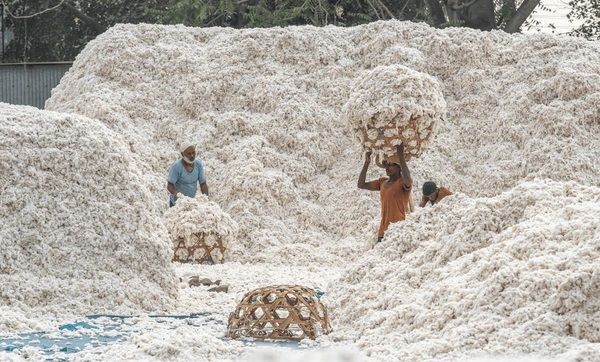
Gujarat’s cotton production may fall by 10 to 15 per cent. The main reason is unseasonal rains coupled with the menace of pink bollworm, an insect known for being a pest in cotton farming. Due to the unseasonal rains, the cotton crop is affected by higher moisture. As a result, farmers are selling their yield in the open market at relatively lower prices. Against the minimum support price of Rs 5550 a quintal, farmers are earning around Rs 4000 to Rs 5000 per quintal in the open market.
Gujarat accounts for almost 30 per cent of the total cotton production in the country. This ratio is expected to be maintained despite the adverse conditions as the sowing area of cotton in the state has gone up from 23 lakh hectares in the last season to over 26 lakh hectares.
At one time South Indian textile mills reduced their cotton procurement by around 40 per cent from Gujarat. The reason was increased adulteration in cotton. Faced with a growing demand, ginners in Gujarat reportedly started mixing comber waste in the cotton. This propelled many mill owners to tap other parts of the country for cotton procurement to meet the compliance norms set by buyers.
Inditex margin up three tenths
In the last quarter Inditex’s gross margin rose by three tenths compared to the same period of the previous year. The increase in margins also happened at the same time as a reduction in inventories for the second quarter in a row. This was the most profitable period of the year for the group. Efficiencies allowed operating expenses to be kept under strict control during the first nine months of 2019.
However, the recovery achieved in 2019, of three tenths compared to the third quarter of 2018, is moderate. In the fourth quarter of 2018 Inditex’s margin improved only 0.15 points compared to the same period of the previous year. From 2014 to 2017, when practically no one was paying attention to profitability, Inditex was repeatedly losing margin during the third quarter. In this period of 2014, the company’s gross margin stood at 61.2 per cent, almost one point less than a year earlier. This rose to 60.1 per cent a year later, to 59.7 per cent in the third quarter of 2016 and 59.4 per cent to the same period of 2017. In 2018, the group changed its evolution: in the third quarter of that year, margin recovered by more than one point, up to 60.5 per cent of revenue.
Lenzing brings its fiber brand Veocel to India
Lenzing has brought to India its beauty and body care fiber brand Veocel. Derived from wood, Veocel provides natural care, every day, and is committed to driving industry standards around sustainability and natural comfort in the nonwoven sector. Veocel fibers are certified clean and safe, biodegradable, of botanic origins, and manufactured in an environmentally responsible production process. Veocel offers a broad range of applications that cater to daily use, including beauty, baby care, body and intimate care and surface cleaning. Consumer applications such as face sheet masks, facial cleansing wipes, deodorant wipes, baby wipes, hand sanitizing wipes, intimate wipes, diapers, sanitary napkins, disinfectant wipes etc. made using Veocel branded fibers have distinctive features such as strength, absorbency, liquid management, biodegradability while giving additional features like comfort, cloth-like feel, and smoothness, making it a viable eco-friendly option to choose from.
Lenzing is known for its sustainable fiber brands such as Tencel and Ecovero. With changing consumer habits, more and more nonwoven producers are shifting their product pipelines towards natural and eco-friendly materials to enhance product appeal and open more business opportunities. Lenzing being a pioneer in innovation has helped in fulfilling these needs. Global beauty brands across Europe, the US and Asia have now been using Veocel fibers as part of their product range.
Six successful engineers bag awards for their outstanding works
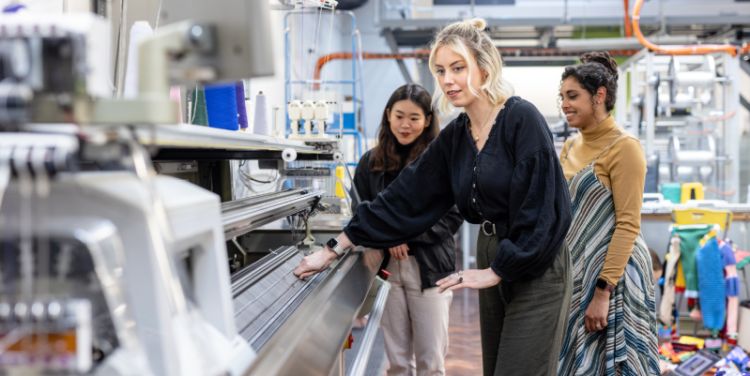
Walter Reiners Foundation, the VDMA Textile Machinery Association is actively involved in promoting young engineers. As a part of this initiative, six successful young engineers were recently awarded by Peter D Dornier,Chairman of the Walter Reiners-Stiftung (Foundation) for their outstanding work.
The award ceremony was a part of the Aache-Dresden-Denkendorf International Textile Conference, held in Dresden, Germany.
The award-winning work well depicted the strength of German textile machinery construction. These young engineers were honoured with creative awards for the cleverest bachelor or project work.
The winners Janina Elser, TU Chemnitz, Abdelrahman Elbayoumi, ITA Aachen and Hendrik Pötzsch, ITM Dresden, each were awarded with a prize money of €3,000 each.
Elser’s bachelor thesis dealt with the prototypical development of circular knitted knee bandages, whereas Elbayoumi’s work was a feedback control system for an over-braiding process. Pötzsch’s project focused on the production of carbon fibres using solvent wet spinning technology.
Tim Kaluza, ITM Dresden and Julia Eckert, ITA Aachen, were awarded 2 promotion prizes in the category diploma/master thesis with prize money of €3,500 each. Kaluza’s diploma thesis deals with the automated production of mesh-free multiaxial fabrics, while Eckert developed an environmental assessment system for the production of jeans for her master thesis.
Besides, Dr Stefan Heinrich, TU Chemnitz, was awarded with the promotional €prize of the German Textile Machinery Industry in dissertation category. Stefan received prize money worth €5,000 for his work on gear requirement in textile machinery, which will make a great contribution in engineering practice.
Slight increase in Indian cotton yarn production likely
India’s cotton yarn production is expected to increase only marginally in fiscal ’20.
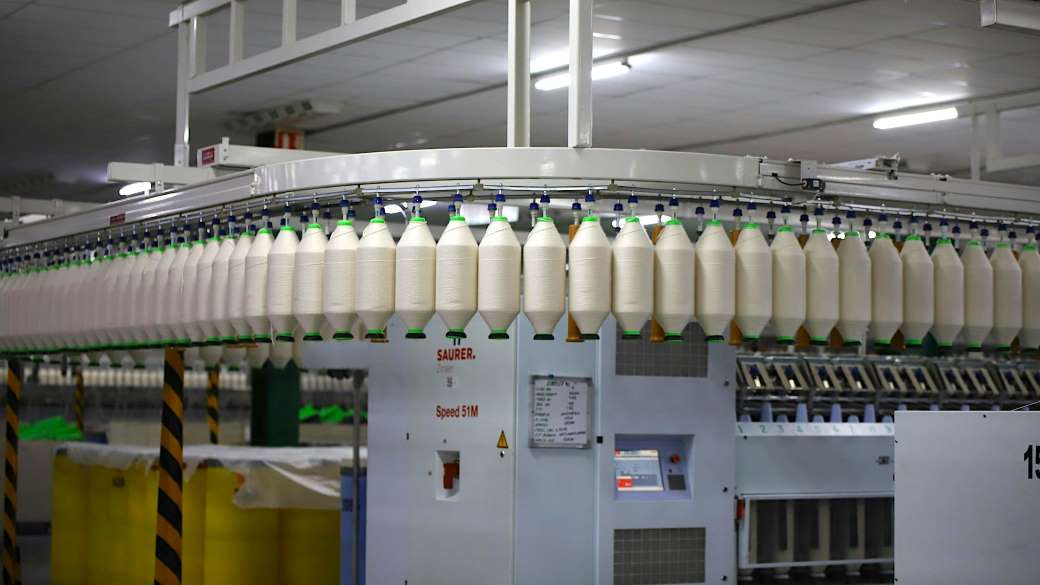
After remaining largely range-bound in fiscal ’18, cotton yarn production in India saw a three per cent growth in fiscal ’19. Overall export demand for cotton yarn remained strong during fiscal ’19 on account of high demand from China, coupled with competitive prices in the international market. However, domestic yarn demand continues to be sluggish with substitution taking place from manmade fibers. During the first half of fiscal ’20, cotton yarn prices witnessed a marginal uptick of about 2.7 per cent on the back of increased raw material prices in the market. However, yarn demand for domestic players remained subdued in the export market during the same period owing to higher domestic cotton prices compared to international prices of the fiber. Also, demand from China remained weak on the back of free trade agreements with Pakistan, which competes directly with India’s cotton yarn.
During fiscal ’19, as much as 40 per cent of the total cotton yarn was exported to China, followed by 18 per cent to Bangladesh, five per cent to Pakistan and to Egypt and three per cent or four per cent to Vietnam.
Insights from Australian Cotton Sector
An hour-long insightful discussion which had taken place with Dr. Kater Hake, Vice President for agricultural and environmental research at Cary-based Cotton Incorporated, revealed some of the successful management practices adopted by the Australian cotton sector. Hake has just returned from his trip to down under interacting with global cotton industry people and visiting farm country in Dalby region in Queensland, Australia.
Australian production this year for the season-ending in March 2020 is estimated to range from 0.7 million to 1.3 million bales. Discussions with Dr. Hake revealed four important takeaways are technology adaptation, value-addition to cotton byproducts, water use efficiency and resistance management of Bt traits.
With increasing labor costs, Australian cotton farmers are effectively utilising robotics. Hake pointed out that he had seen herbicide sprayer robots that have weather signaling systems in them. The sprayer senses wind directions and temperature and switches on and off enabling good environmental stewardship. As the Australian crop is irrigated, due to government restrictions in water usage, planting is limited to water availability during the growing season.
Australia has no oil crusher for oil hence, all cottonseed goes to feeding cattle. Interestingly, 25% of the cattle diet is cottonseed, which enriches the quality of meat, catering to high-quality export. Resistance management of Bt traits has helped the industry to have control bollworms. While the resistance issue is not a serious concern in West Texas, other parts of the United States face this situation. Some of the agricultural practices such as shallow tillage to disrupt the pupae is helping the Australian farmers stated Hake.
As the amount of available land in Australia for cotton is limited, with more acreage for cotton here, the United States is still the largest and reliable supplier of cotton in the export market.
In closing Hake stated, “The production systems between the United States and Australia are similar and the two countries can learn and help each other to move the industry forward.”
“We need to explore the manmade fiber segment”
 Ravi Kapoor, Textile Secretary expounds on the current scenario of Indian textile exports and reforms needed to boost them.
If India aims to be five trillion dollar economy, it needs to drive its exports first. “However, our exports are not very competitive on a global level, said Ravi Kapoor, Textile Secretary at Texcon 2019. “Our fears stem from the fact that we cannot sustain the onslaught of the most competitive country of a particular product in the domain,” he added.
Petroleum, gems and jewelry, engineering and textile constitute the chunk of India’s exports. “Out of this, we import petroleum, do a 6-7 per cent value addition on it and export the same to other countries,” added Kapoor. Similarly in case of gems and jewellery, we buy the gems, stones and diamonds from outside, do the cutting and polishing, add 5-7 per cent valuation to it and export the same. “It is only in the textile industry that we start from the fiber, do the entire processing, make the apparel and then export it to other countries, “he stated. 
Being an integrated industry in India, textile has the potential to be explored. Around 70 per cent of countries across the world now use manmade fibers. However, India is still stuck with cotton. Studies show that in the next 15 years, the world usage of cotton is likely to decline to just 20 per cent. “Therefore, we need to explore the manmade fiber sector. Besides, we need to rationalise our tax structure and neutralise the inverted duty structures. The issues of refunds, blocking of working capitals, unnecessary wasting of time, money etc. also need to be sorted out,” noted Capoor.
Out of the total 45 -46 billion dollar global exports, there are just 10 companies who export goods worth more than 1,000 crores in India. In Vietnam, there is a park called Randon across 4,500 acre whose export turnover is 3 billion dollars. If we compare this to export turnover of the entire country, it is significant. So it is important that we focus on growing our exports.
Turkey to lead performance-based textile market in future
"Turkey is not just the biggest textile producing country on the European continent but also the third largest textile exporter of Europe, the seventh largest apparel exporter in the world, the fourth largest apparel supplier of Europe, and the fourth interior textiles exporter in the world"
 Over the past several years, Turkey’s exports of performance-based textiles have increased significantly due to the thriving sportswear industry in the European and US markets. The country has established itself as a powerhouse textile exporter with over 4,200 textile and clothing companies operating in it. The recent advances in polymer and fiber science have allowed the country to meet modern-day performance demands, boosting overall market sales by 37 per cent since 2011.
Design-oriented approach, innovation exceed expectations
Today, Turkey is not just the biggest textile producing country on the European continent but also the third largest textile exporter of Europe, the seventh largest apparel exporter in the world, the fourth largest apparel supplier of Europe, and the fourth interior textiles exporter in the world. The country holds 3 per cent share in world textile exports and 4.5 per cent share in home and interior textiles; its share in technical textiles is 1.5 per cent.
Turkey’s design-oriented approach and innovation allows its industry to meet demands besides exceeding customer expectations. The country has been successful in meeting demands of the US market where consumers emphasise on the performance features of their clothes in all types of weather conditions. Turkish clothing such as T-shirts, jerseys, pullovers and special sportswear are in great demand in the country, boosting Turkey’s position as a leading textile exporter.
High quality, easy access, FTAs facilitate Turkey’s lead 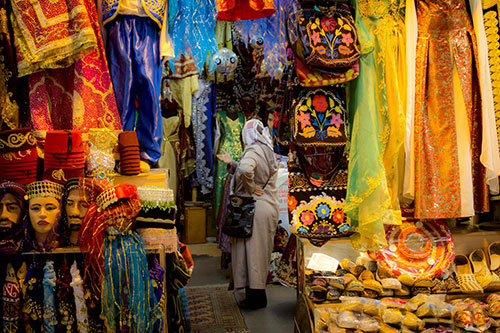
The performance-wear created by the Turkish manufacturers is of high quality and comfortable. It has the potential to protect against wind, rain, snow, extreme cold and heat, and high stress situations. Consumers wearing Turkish-manufactured sportswear can get high-quality, comfortable clothing that doesn’t restrict movement and still looks great.
Turkey offers several advantages in textile production as well as the supply of raw materials due to the easy access it provides to strategically important regions and major energy resources, making it a gateway country to European markets. The country is a rich source of raw materials used for the production. Its liberal trade policies equipped with the highly skilled labor force enables it to have a well-developed industry that can produce quality products.
Another advantage that Turkey offers is that it has entered customs union agreement with EU and free trade agreements with other countries. The country is also noted for its favorable working conditions and continues to invest in utilising advanced technologies to grow their industry.
A bright outlook for the Turkish Textile Industry
Due to these benefits Turkey is set to become the world’s leading performance-based textiles exporter. The country is promoting its goods in key markets of EU countries and the Unites States. It is also employing several other strategies like increasing brand exposure overseas, promoting their textiles to top brands, increasing shares in existing markets, creating strategies to strengthen the textile industry worldwide and encouraging industry best practices. As the country continues to showcase its high-performance sportswear and associated materials worldwide, more and more top brands are likely to enjoy the benefits of that the Turkish textile industry offers.