FW
Burberry Q3 sales up one per cent
For the third quarter Burberry’s like-for-like sales inched up one per cent. Reported retail revenue dropped one per cent and on a currency-neutral basis, it was down two per cent. During the quarter, sales in China were up in the mid-single-digits.
The company is continuing to shift consumer perceptions of the brand, driving increases in digital engagement and endorsement from key influencers. It is building brand heat through its festive campaign, Vivienne Westwood collaboration and B-series product drops.
The company is still in the first phase of its multi-year plan to transform and reposition Burberry. It is transitioning from the straight see-now, buy-now model to a more nuanced approach. It has used the monthly B-series to generate a continuous flow of limited-edition products and keep consumers coming back for more. Sold predominantly through social media, these collections resonated strongly with new and younger customers and have been endorsed by key influencers around the world. In China, the B Series was recognised as 2018's most exciting luxury campaign on WeChat.
The collection with Vivienne Westwood also saw strong global demand and attracted exceptionally high traffic to its digital platform. Burberry’s social media presence is growing, with more than a million additional followers across Instagram and WeChat.
Intertextile Shanghai Apparel Fabrics to have bigger product zones
The upcoming Intertextile Shanghai Apparel Fabrics to be held from March 12 to 14, 2019, will see larger product zones and country pavilions – proving the fair’s growing recognition from worldwide suppliers who view these zones as gateways to the apparel market. Intertextile Shanghai Apparel Fabrics is a global flagship for apparel sourcing. Exhibitors and visitors alike will benefit from product zones with clear themes, from high-end wool to original designs, as the one-stop locations aim to make it easy for visitors to locate more potential business partners.
Verve for Design, a product zone for original designs from all over the world, will see an increase in floor space this year and four new international exhibitors joining the zone. Verve for Design enjoys increased popularity among worldwide exhibitors who view Shanghai as a prime business platform.
The Milano Unica Pavilion will feature high-quality Italian exhibitors and has increased in size. Turkey zone will include more suppliers and new exhibitors. Bunyem will display jacquard and plain fabrics for women’s wear. Kotonteks has fancy woven fabrics for women’s wear. Ramnur will offer jacquard and brocade. Unlu Transfer will bring digital printed, coated, foiled and embossed fabrics.
Bangladesh RMG makers adopt latest technologies to boost production
Apparel manufacturers in Bangladesh are investing in machinery and technology to cut production costs. Almost 100 new factories are coming up every year fully equipped with new technologies, compliant with factory norms. Around 250 factories have been using modern machines and technologies to meet international demand. State-of-the-art equipment helps reduce production cost by almost 40 per cent and raises productivity.
The collar stays machine is an example of the benefits of the latest technology. It helps the collar to stand on the neck a bit before it folds downwards. Earlier, it used to take ten to 11 workers to make 70,000 pieces to 80,000 pieces of collar stays. But now the same production can be achieved by only three workers with the help of automatic machines. The higher cost is spread out because a machine can yield a large volume and eventually increase efficiency.
Similarly carton machinery used for producing packaging material are costly but efficient in the long run. It takes 50 workers to produce 8,000 cartons to 10,000 cartons with manual machines, whereas automatic machinery can produce 15,000 to 20,000 cartons with only 25 workers. Bangladesh is fast growing as a major apparel accessory-producing hub.
Bangladesh to export $100 billion worth of garments by 2024
According to the Bangladesh commerce minister, the country will be able to export $100 billion worth of garment items by 2024 as the international apparel retailers are placing an increasing number of work orders. The country, by 2021, will export garments worth $50 billion.
According to data from the Export Promotion Bureau, the country’s garment shipments, last fiscal year, fetched $30.61 billion. It is now in the second position in garment exports globally after China. However, for expansion, entrepreneurs need bank loans at lower interest rate. The government has been developing 100 special economic zones across the country. The local and foreign investors are allowed to invest in them and contribute to export receipts.
Mercedes-Benz Fashion Week Russian invites global designers as participants
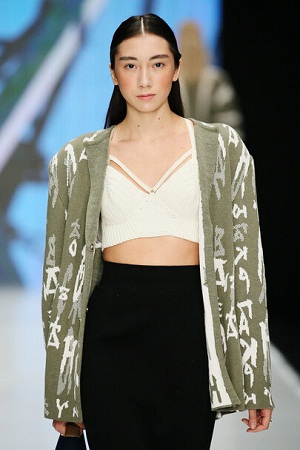 Mercedes-Benz Fashion Week Russia has called for emerging designers from all over the world to apply for a free participation in the catwalk schedule of the event. Emerging talents will be given an unique opportunity to show their collections to the world. Designers should have at least two years’ experience of operations, experience of at least three fully produced collections; a collection of at least 25 looks of the relevant season (fall/winter 2019).
Ten slots are available. The winners will get an individual fashion show time slot in the main Mercedes-Benz Fashion Week Russia catwalk program and organizational and logistics support. For the first time 10 selected emerging designers from different countries will be granted a show at the biggest fashion week in Russia and Eastern Europe.
Mercedes-Benz Fashion Week Russia is always looking out for new talents and has already launched a number of projects for young designers. The fashion week takes place in Moscow twice a year, in March and October, since 2000, showcasing over 150 designers. This edition will be held from March 30 to April 3, 2019. Each season, MBFW Russia is attended by over 55,000 guests, including thousands of buyers, journalists, and industry experts. The fashion shows are live streamed through hundreds of websites and media channels.
Karl Mayer unveils warp knitting machine at China event
Karl Mayer unveiled its new warp knitting machine with weft insertion at a well-attended in-house event which was held at its Chinese subsidiary in Changzhou, China, from January 15-18, 2019. Karl Mayer is a leading manufacturer of textile machinery for automotive, apparel, home, sports, and technical markets in Germany and all over the world.
Representatives from more than ten companies came every day to attend the machine presentation, and these included knitters and weavers, as well as finishers interested in moving into textile production. The guests travelled from all over China, mainly from Jiangsu and Zheijiang, as well as from Shandong and Hebei. They were all impressed by the cost:benefit ratio of the machines on show.
Two models of the TM Weft, 247”, E 24, were being demonstrated, both producing an interlining, that is, a traditional fabric with one guide bar and a version having a higher drapabiity for special applications with two guide bars, Karl Mayer said in a media statement.
Both machines were running at an impressive level of stability and at a high speed of 1,500 min -1. The entire concept was extremely well received.
Together with Steffen Trabers from Illies China, the company’s agent in the region, the sales manager of Karl Mayer had many conversations relating to specific projects. The first machines have already been sold and further orders are expected over the next few months.
With its features and conceptual direction, the TM Weft, as a basic model, is designed to complement the existing Wefttronic II HKS, which will continue to be available for the high-end market. Karl Mayer is, thus, extending its tried-and-tested two product line strategy in its technical textiles business unit. (GK)
Shima Seiki Italia to showcase state-of-the-art knitting solutions at Italy event
Shima Seiki Italia S.p.A, Italian subsidiary of leading Japanese computerised knitting machine manufacturer Shima Seiki Mfg Ltd, will be exhibiting at the 84th edition of the Pitti Immagine Filati exhibition in Florence, Italy. It will be showcasing hardware and software solutions for design, manufacturing and processing of knitted goods.
On display will be SVR123P, a computerized knitting machine that has a special loop presser bed, capable of producing hybrid inlay fabrics with both knit as well as weave characteristics. Furthermore it features new iPlating option that is capable of alternating yarn colours in any pattern thus producing jacquard like designs using plain jersey stitch. Plating can be performed within the same course and for individual needles for even greater diversity in knit design.
Moreover, the demand for such fabrics are very high across a wide range of applications starting from fashion apparel to sportswear, innerwear, outerwear, uniforms as well as home furnishings and technical textiles.
Besides this, the SDS-ONE APEX3 3D design system, company’s “Total Fashion System” concept will be another core area of attraction at the exhibition. APEX3 provides extensive support throughout the product supply chain, integrating production into one smooth and efficient workflow from yarn development, product planning and design to production and sales promotions.
The innovative solution improves on design evaluation process with its ultra realistic simulation capability where virtual samples minimize the need for actual sample making. This saves a lot of time, cost and material thus contributing to sustainable manufacturing.
It is worth noting that Shima Seiki is also the pioneer in complete garment manufacturing technology—called WHOLEGARMENT® —wherein an entire knitted garment is produced on the knitting machine without the need for linking or sewing after ward.
Shima Seiki to participate in Pitti Immagine Filati expo
Shima Seiki Italia S.p.A., Italian subsidiary of leading Japanese computerised knitting machine manufacturer Shima Seiki, is set to exhibit at the 84th edition of the Pitti Immagine Filati exhibition in Florence, Italy, in booth C18/19. The international event for the knitting yarn industry will be held from January 23-25, 2019, at Firenze, Italy.
The company will participate in the Fashion At Work section of the exhibition aimed at appealing to the technical and creative interests of visitors by providing hardware and software solutions for design, manufacturing, and processing of knitted goods, according to a media statement by Shima Seiki.
On display will be the SVR123SP computerised knitting machine that features a special loop presser bed, capable of producing hybrid inlay fabrics with both knit and weave characteristics. Demand for such novel fabrics are very high across a wide range of applications, from fashion apparel to sportswear, innerwear, outerwear, uniforms, and other functional clothing, as well as home furnishing and technical textiles. Knitted accessory items will also be presented to demonstrate the flexibility of knitting technology. SVR123SP at Pitti Filati furthermore features the new iPlating option, capable of alternating yarn colours in any pattern, producing jacquardlike designs using plain jersey stitch. Plating can be performed within the same course and for individual needles for even greater diversity in knit design.
The latest version of Shima Seiki’s 3D design system SDSONE APEX3 will also be exhibited at Pitti Filati. At the core of the company’s ‘Total Fashion System’ concept, APEX3 provides comprehensive support throughout the product supply chain, integrating production into one smooth and efficient workflow from yarn development, product planning and design to production and even sales promotion. Especially effective is the way APEX3 improves on the design evaluation process with its ultrarealistic simulation capability, whereby virtual samples minimise the need for actual sample-making. This realises significant savings in time, cost, and material, contributing to sustainable manufacturing.
Sensient Imaging launches digital dye sublimation inks
Sensient Imaging Technologies, a subsidiary of Sensient Technologies Corporation, has launched a new range of high performance digital dye sublimation inks for low-viscosity Epson printheads, ElvaJet Opal SB inks. Sensient Imaging Technologies is a leading supplier of inkjet inks for digital textile, industrial digital, and sublimation printing.
Following the extensive success of ElvaJet Opal SC inks for mid-viscosity printheads, ElvaJet Opal SB ink addresses the needs of low viscosity printheads, and allows customers of wide format printers to benefit from the revolutionary technology. ElvaJet Opal SB ink fulfils the need for a plug and print solution in this market. ElvaJet Opal SB ink is also certified for Eco Passport for Oeko-Tex, epitomising Sensient’s commitment to sustainability and responsible use of chemicals in the supply chain, according to a media statement by the company.
When Sensient launched ElvaJet Opal SC ink in January 2018, this pioneering ink gave users unparalleled benefits in terms of colour, sharpness, and superior release from coated and uncoated transfer papers as low as 18 grammes in weight. With ElvaJet Opal SB ink, Sensient resets the standard for sublimation printing in wide format systems. ElvaJet Opal SB ink defines ease of use with simple start-up, minimal maintenance, and maximised printing up time with further unique benefits for users.
“Users of wide format and industrial printers in the same print shop can now reproduce the same output on all machines because ElvaJet Opal SB and SC inks use the same colour reference. This standardisation offers unique options for production flexibility and a reduction of consumable costs. Early market tests show significant ink savings can be achieved by new customers switching to ElvaJetOpal SB ink,” Simon Daplyn, marketing manager of Sensient’s inks division said.
“By focusing on the needs of the market and our clients, ElvaJet Opal SB inks enhance the value of our offerings to print shops. Product that delivers peace of mind for our users is key. We are delivering reliable printing with outstanding results in terms of batch to batch colour consistency, sharpness of print detail, colour intensity, and high release from the paper, all with Eco Passport status providing further reassurance of brand compliance and sustainability in the supply chain,” Mike Geraghty, president of Sensient’s Color Group said.
The digital sublimation inks developed under the ElvaJet Opal platform are designed and manufactured in Morges, Switzerland, and have been formulated for use in Piezo-based printers for applications such as fashion, sports apparel, home textiles, and sign & display. Successfully printed on a range of wide format digital printers, these inks show exceptional print and colour performance.
Durst Strengthens Large Format Printing Division With New Dual Leadership And Central Management
BRIXEN, Italy – January 15, 2019 – Durst, manufacturer of advanced digital printing and production technologies, is expanding its high-revenue Large Format Printing (LFP) segment with a new leadership. Previously, the segment was divided into the areas of web-fed printing in Brixen and flatbed printing at the Lienz production site. With the introduction of the P5 technology platform and the future development of hybrid printing systems, the historically grown structure will be dissolved in favor of better efficiency in the daily dealings with Durst customers and the business unit will be controlled from the Durst headquarters in Brixen, northern Italy.
The new dual leadership will be formed by experienced Durst managers Christian Harder and Andrea Riccardi. Both employees have been with the company for more than 20 years and have helped shape the evolutionary stages of Durst inkjet technology in all its facets. As the new global sales director, Harder has cross-segment know-how and has been responsible for successful worldwide sales management for Ceramics Printing in recent years. Prior to that, he was responsible for sales in Eastern Europe and Latin America in the LFP segment. Riccardi, as the new head of Product Management, worked for many years in direct sales in the important LFP market Italy and since the end of 2016 has been responsible for the product portfolio in LFP web printing and the further development in Soft Signage/Fabrics Printing.
“The reorganization in the LFP segment brings together the building blocks we set in 2017 with the introduction of the P5 technology platform, the expansion of the Lienz and Brixen customer centers and the new headquarter in Brixen,” said Christoph Gamper, CEO of the Durst Group. “The new dual leadership has my fullest confidence and the best prerequisites for further developing the segment and consolidating our position as market leader. By concentrating the management function in the Group, we are also paving the way for optimal networking and integration with the relevant areas in development, software and services. The Lienz location will also benefit from the cross-segment technology transfer.”