FW
IAF 36th World Fashion Convention to be supported by Global Sponsors
The IAF 36th World Fashion Convention, to be held from November 07-09 in Antwerp, is being supported by global sponsors.
As per reports, sponsors for the convention include IHKIB, a major Turkish association strengthening the export capabilities of a major part of Turkish apparel manufacturers; QIMAone is a collaborative platform digitizing quality and compliance management for global brands, retailers, and manufacturers; Serai simplifies global trade by building more efficient supply chains; A&E, the foremost manufacturer and distributor of premium quality industrial and consumer sewing thread, embroidery thread and technical textiles; Fair Wear Foundation, a multi-stakeholder initiative helping companies to improve labor conditions in their supply chains and SIM brings innovative supply chain information systems from the food industry to the apparel industry. These organizations enable federations such as the IAF to host a high level industry-wide platform. Also, the event will be extensively covered by media partners just-style and FashionUnited and knowledge partners Fibre2fashion and Sourcing Journal.
The Convention will bring together senior apparel industry representatives from across the supply chain. The Convention’s theme ‘Transition of the Global Fashion System’ will therefore be consistently viewed through the lens of the necessary buyer-supplier collaboration to pull of the needed transition.
David Sävmann, Head-Supply Chain, H&M Group will discuss with various manufacturers from different parts of the world on this theme. Leading industry analyst John Thorbeck will present a current business case highlighting the strong link between a transition of business processes and improved sustainability. And the convention’s extensive coverage of the crucial topic of digitalization will be built around the interaction between brands, retailers and their suppliers.
Portuguese company impetus to launch new intimates collection
Leading Portuguese textile company Impetus is planning to launch a premium carbon positive and traceable intimates collection, made with cotton from the world’s first carbon positive Good Earth Cotton farm in Moree, Northern New South Wales, Australia.
Specializing in underwear, loungewear, beachwear, athleisure and technical textiles, Impetus is one of the core creative brands in Europe today, with its own licensed brands and private label.
As per an Innovation in Textiles report, Impetus has partnered with Singapore-headquartered FibreTrace to ensure the combination of physical and digital traceability to authenticate the raw cotton fibre from the farm and accurately report on environmental credentials to reduce impact.
Good Earth Cotton products will be introduced into Impetus Brand collections at the end of 2021, ready for market by 2022.
Gildan Actiwear’s new ESG report reflects key priorities
The 17th Environmental, Social, and Governance (ESG) report published by America-Canadian apparel manufacturer Gildan Activwear Inc, reflects the company’s key priorities towards continuing its vision of ‘Making Apparel Better.’
As per Apparel Resources, the company faced unprecedented circumstances in 2020 due to the impacts of the COVID pandemic and two back-to-back hurricanes in Central America.
Despite these challenging events, Gildan ended the year on a strong note, demonstrating that operating and financial performance combined with a focus on ESG creates value for all stakeholders.
In 2020, Gildan completed its second set of 5-year environmental targets. Some of the key achievements regarding environment include 33 per cent of Gildan’s total energy from renewable sources, 88 per cent of Gildan’s total waste being recycled or repurposed, 11.4 per cent reduction in water intensity achieved from 2015 to 2020 and 14 per cent decrease in Gildan’s total waste from 2015 to 2020.
In 2020, Gildan achieved the vast majority of its social goals and maintained industry-leading working conditions and labour practices by creating safe and healthy workplaces, respecting human and labour rights and employees’ freedom of association, empowering women and offering competitive benefits.
Former Adidas Head to launch zero-waste streetwear brand
Business of Fashion has reported that Eric Liedtke, Former Head-Global Brands, Adidas, is launching a zero-waste, zero-plastic streetwear brand called Unless.
Unless takes inspiration from the city of Portland and builds on the sustainability-focused work Liedtke is known for, which helped Adidas move into new territory with regards to materials and manufacturing.
The brand will maintain what it describes as a “zero plastic promise,” meaning—as touched on above—no waste will be left behind once a piece from the brand hits the end of the metaphorical road. Prospective buyers can look forward to a wide range of products including apparel, footwear, accessories, and more. The first drop is slated for this fall.
The brand is backed by Connect Ventures, a partnership between entertainment and sports agency Creative Artists Agency and venture capital firm New Enterprise Associates
Liedtke, a 25-year Adidas veteran, left the brand at the close of 2019. He was credited with guiding collaborations with Kanye West, Pharrell Williams and Beyoncé. He has been on the board of Parley for the Oceans, a nonprofit that works with brands on products made from recycled ocean plastic, since 2015.
Traffic on Carved in Blue increases 30 per cent during pandemic
During the pandemic, traffic on the Lenzing’s Carved in Blue platform increased by 30 per cent as it continued to meet market demands. As per a Sourcing Journal report, the platform pivoted to videos and a webinar series to help the industry stay connected
Since its launch five years ago, the blog has become a favorite communication platform of the denim industry. It not only amplifies the success stories of partners that use Lenzing’s fibers such as Tencel and Tencel x Refibra in their collections but also features news articles, social media, videos, webinars, ecommerce, a YouTube channel and a podcast series called Blue Cast.
The Content Marketing Institute awarded the blog with the ‘Best Topic Specific Blog’ award in 2020. The accolade affirms the platform’s creator’s belief in need for community building platform for the sector to bridge the supply chain gap with brands and consumers. The blog is also home to several popular content series such as ‘All in the Family,’ a collection of 25 profiles on family-owned denim businesses.
Guess Inc to launch Jeans Redesign-inspired collection
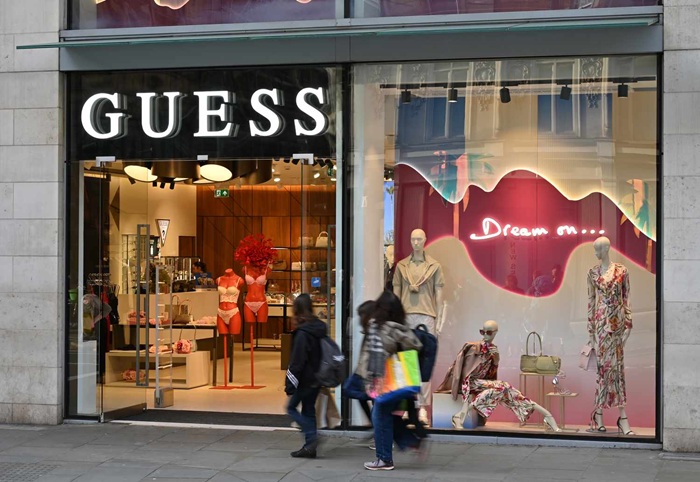
Guess plans to launch its first denim drop made in accordance with Ellen MacArthur Foundation’s Jeans Redesign guidelines. The company is continuously concetrating on Resourced, its jeans take-back program, and expanding Guess Vintage online to European shoppers to make authentic vintage Guess items more accessible.
Another focus is, expanding brick and mortar presence. The company plans to test new concepts, including pop-ups and stores dedicated to accessories, athleisure and the Marciano brand—with very limited lease terms and great potential for renewal. These stores will be set up in new locations in Russia, Germany, China, France and the US and Canada. They will have upgraded features like enhanced WiFi networks, extended payment methods and mobile check-outs. The company expects to complete these projects by the end of next year.
Encouraged by a strong demand for denim, Guess hopes to record $2.8 billion revenues by fiscal 2024. In Q2 FY 2022, the company saw 133.7 per cent surge in revenue from two years earlier, which Carlos Alberinim CEO and Director, attributed to expense management. Earnings from operations in the quarter increased 90 percent to $87.4 million from $46 million two years prior. Operating margin increased 7.2 per cent to 13.9 per cent from 6.7 per cent from two years prior, driven primarily by lower occupancy costs, higher initial markups and almost nonexistent promotional activity.
US buyers to increase sourcing from Bangladesh
Fashion firms and buyers in the United States plan to increase sourcing from Bangladesh in the next two years, according to the United States Fashion Industry Association’s (USFIA) “2021 Fashion Industry Benchmarking Study. As per Textile Focus, this decision is influenced by lower prices of Bangladesh produced textiles and garments. A garment product in Bangladesh was priced at $2.5 in July-May this year, while the global average price was $2.6. Respondents to the survey indicate Bangladesh offers the most competitive price, followed by China, Vietnam, Indonesia, India, and Cambodia.
Only China offers lower prices than Bangladesh. However, US purchasers seek to diversify their sourcing away from China to reduce various sourcing risks. The US-China trade battle has intensified sourcing cost concerns and financial challenges for US fashion companies. The average duty on apparels imported from China increased to 23.4 per cent for the US in 2020 from 16.5 percent in 2017.
To emerge as a major apparel exporter to the US, Bangladesh would have to improve its manufacturing flexibility and agility besides diversifying the export product structure. Rising exports are likely to increase competition among the thousands of Bangladeshi clothing suppliers, putting smaller and less competitive players at risk.
8th ITMA ASIA+CITME 2022 to be held from November 20-24, 2021
The eighth combined edition of Asia’s leading business platform for textile machinery, ITMA ASIA + CITME 2022 will be held in Shanghai from November 20 to 24, 2021. Hosted by Cematex (European Committee of Textile Machinery Manufacturers), the Sub-Council of Textile Industry, CCPIT (CCPIT-Tex), China Textile Machinery Association (CTMA) and China Exhibition Centre Group Corporation (CIEC), the combined exhibition will help global textile machinery manufacturers extend their reach into Asia’s vibrant textile manufacturing hub, particularly China.
The exhibition will be organized by Beijing Textile Machinery International Exhibition Co and co-organized by ITMA Services. Japan Textile Machinery Association will be a special partner of the show. The last edition of ITMA ASIA + CITME 2020 was held on 160, 000 square meter in June 2021.The combined exhibition hosted 1,237 exhibitors from 20 countries and regions and attracted visitorship of about 65,000 from 30 countries and regions over 5 days.
Pakistan to expand share of knitwear exports to 20 per cent
Pakistan hopes to expand its market share of knitwear exports to 20 per cent in 2021-22. In 2020-21, Pakistan’s knitwear exports increased by 36.57 per cent compared to 2019-20. As per a Textile Focus report, revenues from knitwear exports increased 25.83 per cent compared to revenues from export of woven garments. Knitwear exports earnings also surpassed earnings from bedwear by 37.68 per cent.
Globally Pakistan has 1.83 per cent share in knitwear exports, Bangladesh has 8.12 per cent share. For three years in a row, Pakistan’s knitwear garment business was ranked first among textile groups in terms of employment. Its knitwear business contributes significantly to the country’s textile industry’s value addition. The country is expanding its product basket of knitwear items to attract new innovations and incentives to increase exports.
Foreign brands in China go local as nationalist sentiments rule consumer choices
 A nationalist sentiment is shaping the way consumers shop in China. Instead of foreign-made goods, young Chinese shoppers are opting for products made by domestic brands and companies. A case in point is the Chinese sportswear brand Erke, which sold products worth over 100 million yuan worth in just three days through its social media platform Douyin.
One reason behind the brand’s recent sales surge is its 50 million yuan ($7.7 million) donation to flood-devastated Henan Province in the north last month, reports Asia Nekkei. Earlier mocked for its tacky designs and poor rebranding efforts, the brand has become a source of inspiration for consumers for its appreciation of Chinese cultural heritage.
Political climate reshaping domestic consumption patterns
The nationalist consumption trend in China is also being fuelled by changing global political climate, says Ivan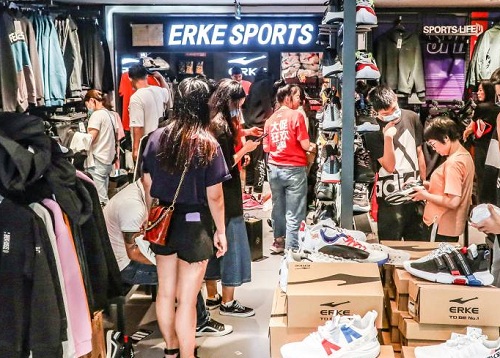 Su, Analyst, Morningstar. The US-China trade war and sanctions against Huawei have brought little-known domestic brands to the forefront and diminished the importance of foreign brands. In March, Western retailers including H&M, Burberry, Nike and Adidas faced widespread boycott in China for criticizing alleged forced labor in Xinjiang, home to the predominantly Muslim Uyghur people. Consumer searches for domestic brands on China’s largest search engine rose 137 per cent following the controversy,
Sales of brands Anta and Li Ning also rose 51.3 per cent and 71.9 per cent on Tmall, China's largest business-to-consumer online shopping platform, part of Alibaba Group. On the other hand, sales of Nike and Adidas fell 58.9 per cent and 79.4 per cent. Both brands also lost their endorsement deals with Chinese celebrities.
Growing demand for traditional designs
Shifting preferences of Chinese consumers are also giving rise to guochao trend, where the designs of consumer products feature strong Chinese elements. Domestic brands are increasingly focusing on indigenous design elements ranging from ancient patterns that originated in the Tang dynasty to high-tech symbols such as 5G and high-speed rail.
Chinese labels accounted for 75 per cent of most-searched brands on Baidu in the first four months of this year. Searches for Chinese digital products, apparel and beauty products emerged as the top three most popular categories. Increased demand for domestic Chinese brands spells trouble for foreign companies that consider China as an important market for them. To survive, these brands would need to keep up with the fast-changing tastes of young Chinese buyers.
The digital-first strategies of domestic brands are helping them surpass foreign competitors. The market share of national brands increased to 46.3 per cent in 2019 from 24.4 per cent, reveals China Insights Consultancy. Growth was fuelled by major e-commerce platforms such as Alibab’s Taobao, JD.com and Pindouduo, says Wang Gao, Professor-Marketing, China Europe International Business School.
Western brands launch limited editions at local festivals
International brands need to accelerate localization efforts to catch up with domestic brands in terms of both merchandising and marketing, explains Pablo Mauron, Managing Director-China, Digital Luxury Group. Some Western retailers have tried to boost their localization efforts by launching limited editions during major Chinese festivals. However, their designs were considered to be too disrespectful of Chinese tradition. Brands Burberry and Balenciaga have been panned by Internet users for their inappropriate use of Chinese phrases on luxury items.
Moroun believes, the growing popularity of gouchao brands is further likely to increase consumers’ skepticism toward Western brands. Foreign brands therefore, need to create new designs respecting local culture for the Chinese market.