FW

G-III Apparel Group, which reported a 36.1 per cent decline in Q1 sales, has shut down 200 stores as a result of disruption related to the COVID-19 pandemic. For the first quarter ended April 30, 2020, the company’s net sales totaled $405.1 million, declining from $633.6 million in the prior-year period. Quarterly net loss was $39.3 million, or $0.82 per share, compared to net income of $12.0 million, or $0.24 per diluted share, in the same period in the previous year.
G-III has taken specific measures to preserve its liquidity during the COVID-19 crisis, including the furloughing of a large portion of the company’s employee base, as well as significant temporary salary reductions for its senior management. G-III has also worked to reduce its inventory exposure. In addition, the group is conducting a comprehensive restructuring of its retail operations, which will involve the permanent closure of all 110 of the company’s Wilsons Leather stores and all 89 of its GH Bass locations.
The group has entered into agreements for the early lease termination of a large majority of these stores. Through these closures, G-III hopes to significantly reduce its retail losses and ultimately make the segment profitable. In the meantime, the company’s wholesale business, which achieved $2.86 billion in annual sales in the fiscal year ended January 31, 2020, will continue to be its “primary growth and profit engine.”
American Eagle Outfitters is receiving more than its share of pent-up demand. The brand’s sales are bouncing back quicker than expected amid the COVID-19 crisis. Its shares, that were initially falling, have shot up by over 15 per cent in trading. As the brand reopened its stores during the coronavirus pandemic, sales are averaging an impressive metric of roughly 95 per cent of their normal levels. The brand has reopened 556 out of its total 1,100 stores. Its strong recovery aligns with its sales bouncing back faster than expected.
American Eagle recently also collaborated with TikTok’s biggest star Charli D’Amelio for a video on its Aerie swim collection, receiving almost 2 billion impressions.
VF has started reopening its outlets, and now plans the mid-calendar year 2020 to reopen all stores globally. VF has since reopened its Asia Pacific retail stores including Mainland China.
VF has also begun a phased reopening of its retail stores in its Europe, Middle East and Africa region and is prepared to embark on a similar approach for North American stores, subject to local government guidance. E-commerce is still in the works.
Net revenues of retailer for the quarter ended March 28 fell 10.8 percent to $2.10 billion frtom $2.36 billion, with the decrease mostly due to lower consumer demand connected with the coronavirus outbreak and temporary store shutdowns as mandated by local authorities.
Gross margin for the period fell 150 basis points to 53.1 percent. That was driven by elevated promotional activity to clear excess inventory, but was partially offset by favorable mix shift toward higher margin businesses.
The organization reported a net loss of $483.8 million, or $1.22 a diluted share, against a year-ago net profit of $128.8 million, or 32 cents. The results of the quarter included a loss from discontinued operations, its workwear business and the spin-off of its jeans business which now operates under the name Kontoor Brands Inc. a year ago. In constant dollars, earnings per share fell 69 percent to 10 cents on an adjusted basis.
The company expects sales from the first quarter of fiscal 2021 to fall significantly more than 50 percent, and to reach $600 million in full-year fiscal 2021 free cash flow.
Spinnova, the sustainable fiber company, has entered long-term collaboration with the global chemicals company Kemira, to develop a highly eco-friendly inherent dyeing method of fiber.
Inherent dyeing in the Spinnova process means that the cellulosic fibre mass is dyed before extruding into filament. This avoids the excess use of water, energy, heavy metals and other harmful substances that go into dyeing fibre, thread and fabric as subsequent processes.
Spinnova’s sustainable fiber and the possibility of inherently dyeing could be an environmental game changer and could disrupt e.g. the denim dyeing process. The textile dyeing and finishing industry is one of the most chemically intensive industries globally, and one of the worst polluters of fresh water. The traditional textile industry uses thousands of chemicals in various processes of manufacture, including dyeing and printing.
In addition to being the most sustainable way of dyeing, the fiber maintains this in-built color really well. Spinnova’s innovation originates from the pulp and paper industry, which is also one of the areas of expertise for Kemira and an important focus in the company’s R&D work towards bio-based chemicals.
The International Apparel Federation (IAF) is expected to decrease apparel sales 50 per cent by 2020 as clothing retailers are trying to get back their feet on e-commerce or other strategies. The brands are already reopening stores in many countries. On the other hand, 65 per cent of consumers are cutting their apparel spending.
Retailers and brands are going forward with their strategies and manufacturers also getting new orders. But apparel manufacturers are the most sufferers because they are facing a significant crunch in liquidity.
To save theirs worker, the Pakistan government issued a concessional loan to partly cover 3-month salaries provided no layoffs moratorium on payment of principal. To prevent bankruptcies Pakistan took the resumption of work under strict SOP’s (standard operating procedure) with partial capacity utilization and extra overheads but without the help of brands’ receivables of payments, it will get tough.
The Re-Set of the supply chain will occur at the end of the pandemic. Fast fashion will go to slow fashion, change in order rhythm, e-commerce will go fast but it will take more time to replace shops, reconsideration of the sourcing strategy and the relationship between buyer and supplier will be re-balanced. Manufacturers around the world are taking a new initiative to get back on track again.
Likewise, RMG companies in Bangladesh reopened their factories and are receiving new orders. The garment sector in Bangladesh follows SOPs to maintain worker health security. In factories daily temperature control, proper sanitization and social distancing are provided.
The Garment Manufacturers Association in Cambodia (GMAC), the Cambodia Footwear Association (CFA) and the European Chamber of Commerce in Cambodia (EuroCham) recently requested the European Commission (EC) to postpone its withdrawal of the Everything But Arms (EBA) scheme for 12 months.
The letter said the Covid-19 pandemic has halted production and slowed global demand to a crawl, delivering a devastating blow to Cambodia apparel, footwear and travel goods manufacturers and workers.
It said some 250 Cambodian apparel, footwear and travel goods factories have had to suspend operations and more than 130,000 workers in the sector, most of whom are women, have lost their jobs and this number is likely to rise sharply.
In the first quarter of the year, the letter said, many buyers cancelled orders after they were completed or while in process. It is estimated that the Cambodian apparel, footwear and travel goods sales in the second quarter of the year will likely fall by 50 to 60 per cent on a yearly basis.
GMAC chairman Van Sou Ieng said that in this context the EC’s scheduled August 12 implementation of the decision to withdraw the tariff preference for 20 per cent of apparel imports, 30 per cent of footwear imports, and all travel goods imports from Cambodia would be a massive blow to the Kingdom.
The Bangladesh Garment Manufacturing and Exporters Association (BGMEA) has extended the deadline for blacklisting British clothing retailer Edinburgh Woollen Mill (EWM) to June 05 instead of the earlier May 29.
On May 21, the BGMEA threatened to halt production and any further orders with EWM over nonpayment of dues and demands for unreasonable discounts, despite concluded contracts.
In a letter sent to EWM owner Philip Day, the BGMEA president said the association’s step came after receiving dozens of complaints from suppliers that EWM was avoiding contacts with the suppliers that it owes money to for previous orders.
EWM Group, owned by the British billionaire Philip Day, has quite an impressive array of brands under its fold – Peacock, Jaeger, Austin Reed, Jacque Vert, Country Casuals, Windsmoor, Baumler of Germany, and Bonmarche & Ponden Home.
The Swedish retail giant, H&M, has supported the fight against racism by donating around $ 500,000 to various organisations that are fighting against racism including NAACP, ACLU and Color of Change.
The recent killing of George Floyd in Minnesota has sparked protests all around the world including Paris and London. The current protests have resulted in many arrests which may require money to seek bail.
Donating to such organisations has helped solidify H&M’s position as a global retailer and shows that they care about people and civil rights.
In its Instagram post which had ‘Let’s change’ as the words on a white background, the caption read ‘We believe in equal rights for everyone. We stand with and support the Black community – today and every day’ with the hashtag #blacklivesmatter.
 Retailers across the globe are reopening stores but continued rise in COVID-19 cases is dampening the spirits of consumers who now prefer to shop only for essentials through online sales channels.
Brazil upgrades malls even as digital sales surge
In Brazil, 10 per cent of malls reopened in April, reported Bloomsberg. The country’s largest mall operator BR Malls reopened four out of its 29 Brazilian stores by May 22. They also imported 104 cameras with infrared sensors to measure the body temperature of shoppers while Natura & Co tested drive-through and curbside pick-up in 30 shopping malls within Brazil.
The retailer also added beauty consultations via WhatsApp with all its brands which led to a 30 per cent surge in digital sales between mid-March and the end of April, revealed Brazilian e-commerce association ABComm.
Italy offering retail bonds to boost sales
One of the hardest hit by the Coronavirus, Italy began to reopen stores on May 18. However, as the country could reopen only one third of its stores, it is now offering inflation-linked retail bonds to investors as a way to jumpstart its suffering economy. However, e-commerce activities in the country increased by 81 per cent from February to April-end, reveals McKinsey.
Australia benefits from new apps
The May report of Australian Bureau of Statistics reveals that retail sales in the Australia fell by almost 17.9 per cent in April after 8.5 per cent spike in March. However, retailers benefitted using installment payment services. Fashion retailer the Cotton On Group was able to increase sales with its new app, iOS.
Sweden enhances e-commerce activities 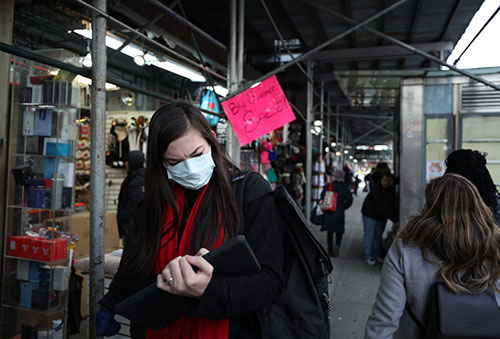
Instead of shutting their stores, retailers in Sweden simply emphasized on maintaining social distancing in stores and improving e-commerce activities. This led to a 39 per cent year-on-year decline in apparel sales in March in the country.
Global brands in some of the biggest malls in the country have temporarily closed stores based on recommendations from other countries. These malls are seeing lack of visitors as more shoppers are moving online.
Retail sales in South Korea increase by 3.9 per cent
South Korea’s retail market was hit especially hard by a lack of international visitors due to the outbreak in China. However, now there are signs of bounce-back as in April 2020, retail sales amongst the country’s 26 largest retailers grew by 3.9 per cent year-on-year, notes, the country’s Ministry of Trade, Industry and Energy. Korea is also witnessing a switch in its shopping patterns from offline to online with online sales in the country increasing by almost 80 per cent.
Discrepancies in rules harming German retailers
A survey of more than 600 non-food retailers, conducted in mid-May by Handelsverband Deutschland, a German retail trade association, found that about a third of the retailers in the country are doing only 50 per cent of the sales that they were doing last year. This is mainly due to the different rules set by each of the 16 German states for their consumers.
High COVID-19 cases leads to dramatic fall in UK retail
As a result of over 270,000 confirmed cases and over 38,000 deaths, retail sales in the UK have fallen dramatically. The Office of National Statistics reported that the total number of goods sold in the country dropped over 18 per cent in April. On the other hand, e-commerce sales increased by over 30 per cent. Big retailers like Tesco and Sainsbury led this e-commerce growth. Their sales increased by double-digit percents last month.
A survey titled “Sedex Insights Report: Covid-19 Impacts on Businesses’ reveals revenues of Bangladeshi export oriented apparel and footwear manufacturers declined 77 per cent due to the COVID-19 pandemic impact. The survey conducted on 3,300 buyers and suppliers across 118 countries showed the garment and footwear sectors have been worst affected by the pandemic. Of the total surveyed, 469 suppliers from garment and footwear industries are from China, India, Bangladesh, and Turkey. According to the findings, 68 per cent member countries reported a significant decline in their revenue while only 38 to 55 per cent on average reported its customers are being supportive during the pandemic.
Only 10 per cent respondents have seen an increase in or steady revenue, the survey added. Almost, 43 per cent respondents viewed disruption to supply chains and inability to get input of raw materials as the biggest challenged they faced. Reasons for this included delay in raw material delivery, suppliers stopping production, and higher prices of raw materials or transport. On the other hand, 20 per cent respondents have had orders cancelled by customers and 4 per cent experienced delayed payment terms, it showed.
The combination of squeezed production times and poor purchasing practices puts significant additional pressure on suppliers and workers, increasing the likelihood of poor working conditions, it added.