FW
Hong Kong to host Centrestage in September despite the odds
Hong Kong is set to host Centerstage from September 4 to 7, 2019. The fair will attract around 240 brands. The fair will continue its schedule as planned as per the organizers Hong Kong Trade Development Center despite the ongoing protests and riots in the metropolis. The fair’s motto this year is: ‘Future Tribes’ organized in three areas: Metro, for urban fashion; Iconic, for contemporary designs; and Allure, for craftsmanship. An opening runway show Centrestage Elits Opening Gala Show, where designers Anaïs Mak and Joseph Altuzarra will participate is also on the cards. It will also count with an award for young designers that has as a jury Kenzo Takada or Vivienne Tam, amongst others.
Meanwhile Hong Kong is looking forward to the upcoming free trade deal with Asean. Five Asean countries – Singapore, Thailand, Vietnam, Laos and Myanmar – have their free trade deals with Hong Kong taking effect very soon. Similar agreements with the rest of Asean members – Brunei, Cambodia, Indonesia, the Philippines and Malaysia – will take place a bit later. The Asean free trade arrangement will allow Hong Kong firms access to ten markets for goods, services, investments, economic and technical cooperation and dispute settlement. Asean is Hong Kong’s second largest trading partner, after mainland China. The pact with Asean would be a crucial alternative for Hong Kong companies that rely on traditional markets, such as the United States and the European Union. Hong Kong has provided billions of dollars in funding to subsidise ventures by small and medium-sized enterprises into new markets. The free trade agreements have material and virtual impact that give Hong Kong companies business links and new business positioning.
Indian exporters fear losses with no MEIS
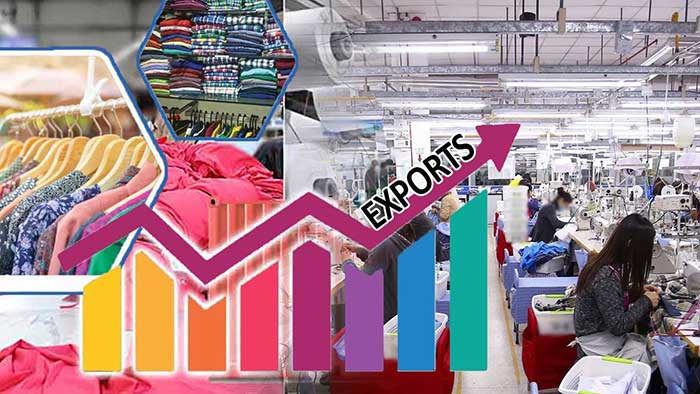
The withdrawal of the Merchandise Exports from India Scheme (MEIS) will hit the knitwear and garment industry badly. The scheme provides four per cent incentive to garment exporters. Its absence would mean an increase in prices of products. This will put exporters in a disadvantageous position in the highly competitive international garment market that is now flooded with cheaper apparels from countries like Vietnam, Sri Lanka and Bangladesh. Withdrawal of the incentive scheme would push up the prices of products which have been decided much in advance. Usually, advance orders are taken and a price is agreed on. If the incentive is withdrawn, and a price rise takes place abruptly, customers are under no obligation to buy since there are cheaper products available on the market.
India does not have free market access to the EU and the US – major buyers of garments – and this is a major problem being faced by Indian manufacturers since an entry tax is levied once goods reach the destination countries. After GST was levied in July 2017, exporters were left with just the four per cent MEIS as all other incentives in the form of duty drawback, rebate on state levies, and concession on service tax were withdrawn.
US cotton faces tough times due to trade war
American cotton is facing a tariff-induced crisis. Cotton was among the first round of agricultural commodities China hit with retaliatory tariffs in summer 2018. Prices have been slowly declining ever since. And, this summer, it dropped below the level most farmers need to make any money from their 2019 harvest.
Around 2011, China began buying huge quantities of cotton. The United States exported some cotton to China during that time. By the start of 2018, China had used up most of its cotton reserves and was preparing to ramp up imports. The US cotton industry was preparing to meet the anticipated increase in demand when the tariffs hit. For the 2018-2019 crop year, the US expected to export more than three million bales of cotton to China and ended up exporting 1.6 million bales. Instead of exploding, America’s sale of cotton to China shrank — along with the value of US cotton.
Other key cotton importing nations have started to demand lower prices for US cotton, aware that American companies are becoming more desperate to sell. Also cotton acres in the US have grown by 23 per cent from last year. The sudden increase in supplies has pushed prices down further.
China remains top sourcing spot as India, Bangladesh emerge strong
China has maintained its dominance in global sourcing, says Asia Inspection. But other than China, India and Bangladesh are increasingly given preference for textile sourcing, being lower-cost destinations. India is also a popular sourcing destination for homeware and promotional products. Due to major investments, Bangladesh has the potential to become one of the world’s largest economies in the years to come. This has come as a great boon to the country, which has benefited from this participation in the international business community.
In the coming year, businesses expect to worry more about managing product quality than they did in 2018, while regulatory compliance is expected to be less of a challenge. Cost of manufacturing and raw materials comes first among the top sourcing challenges in 2019 and the near future and a trend expected to continue into 2020. Politics is expected to have a more immediate impact than technology.
The average rate of supplier turnover is around 27 per cent but the largest companies shop around much more, replacing up to 42 per cent of their suppliers in a typical year. Businesses anticipate to be affected by tariffs, quotas, protectionism and embargos rather than automation and 3D printing.
Denim trade shop Bluezone to be held this month
Bluezone will be held in Germany, September 3 to 5, 2019. This specialised denim trade show will host more than 100 international exhibitors presenting their newest developments for fall /winter 2020-21 while increasingly focusing on transparency, environmentally friendly production and conscious consumption. More than 20 Bluezone exhibitors will join forces with designers to create an innovative vision of denim.
India’s Naveena Denim will present Zevolution, a denim made of environmentally friendly fibers instead of cotton, and Retrotech, a modern vintage cotton with a stretch mixture. Bossa will launch its new Eversoft fabric selection with new finishing technologies that deliver extreme comfort and supersoft touch. Tejidos Royo will present its foam indigo dyeing technology that cuts water consumption by 100 per cent, chemical use by 89 per cent and energy consumption by 65 per cent. The Carved in Blue project, a part of Tencel Denim, will present a new series of videos presenting experts’ vision about the market’s next challenges and focused on topics such as collaborations, cotton, alternative fibers and circularity.
New communication channels, transparent production chains and changing consumer behavior present the denim industry with fundamental challenges, but at the same time also offer great opportunities for a future-oriented blue industry.
G7 Fashion Deal to set up fashion transparency framework: Clean Clothes Campaign
Clean Clothes Campaign has welcomed the G7 Fashion Deal for sustainably produced textiles. The deal was launched by a coalition of 32 large companies pledging to protect the environment. However, Clean Clothes Campaign has stressed the time of on-committal promises is over and steps forward should be embedded in legally binding legislation and agreements as well as existing international frameworks.
For Clean Clothes Campaign it is clear that the past decades of voluntary certification, labeling, and brand level commitments have not brought genuine or lasting change to global garment supply chains. Therefore, the organisation believes instead of being an isolated or one-off initiative, the G7 Fashion Deal should contribute to the implementation of the UN Guiding Principles by setting up a framework of transparency, monitoring, and accountability of the sustainability of fashion.
The Fashion Deal must define clear and ambitious entry conditions for companies. This would mean companies may have access to the deal only if they can prove that they:
• Take ambitious and appropriate measures to avoid all sector risks in accordance with the Organisation for Economic Cooperation and Development (OECD) Guidelines for environmental and human rights due diligence in global textile supply chains. These include measures to implement the International Labour Organisation (ILO) core labour standards, preventive measures against gender-specific violence and measures that lead to wage increases aiming to reach living wages.
• Review and modify their business models, supply chain, and purchasing policies to ensure proper human rights and environmental due diligence in line with the UN Guiding Principles on Business and Human Rights and, at a minimum, ensure that prices paid to suppliers allow payment of living wages
AEPC to hold a seminar on Enabling Competitiveness in the Apparel Sector
AEPC in collaboration with ILO will hold a seminar on Enabling Competitiveness in the Apparel Sector on August 30, 2019. The seminar, to be held in Chankyapuri, New Delhi, will be inaugurated by the APEC Chairman. It will include the launch of the Compendium on Good Management Practices for the Apparel Sector.
The compendium has been developed with a focus on issues such as Workplace Co-operation, Quality, Productivity, Clean Production, Workforce Management, & Occupational Safety and Health (OSH). The project aims to benchmark apparel industry production, management practices and profitability to global standards. It will help the participating units to save the time and costs of their project. The session will include observations by Ajay Shankar, Former Secreatry, DIPP and a special address by Ravi Capoor, Secretary, Ministry of Textiles. It will conclude with a vote of Thanks by Balram Kumar, Secretary General, AEPC.
The first session of the seminar will discuss the strategies for developing enabling policy framework for promoting long term competitiveness. It will be moderated by Sudhir Kumar, Advisor, NITI Aayog.
The second session, to be moderated by Sudhir Garg, Jt Secy, Dept of MSME will highlight the various learnings from the industry initiatives and experiences.
The third and the final session will include a panel discussion with the BEWG representatives on brand perspectives. It will be moderated by Gautam Nair, Managing Director & CEO, Matrix Clothing. This session will include a presentation on the Good Practice Manual by Sudipta Bhadra, Director ILO & Kelvin Sergeant, Specialist Enterprise, ILO Decent Work Team for South Asia and Country Office for India. It will also include an interactive session with the representatives of BEWG on the Compendium.
The seminar will conclude with discussions on the way forward for the industry in the India
SDC International, ISFT College, KDCL collaborate for ITMACH 2019
The SDC International, ISFT College and KDCL have collaborated to organise four seminars and a grand fashion show at the ITMACH 2019, to be held from December 5 to 8, 2019 in Ahmedabad. The event will be the largest confluence of textile technology, textile professionals and policy makers in the country.
The event will highlight challenges faced by textile professionals in color communication, coloration and compliance; encourage collaborations between fashion and textile coloration and provide a platform for innovators, users and compliance organisations to engage in and collaborate for a ‘greener’ coloration industry.
Denim becomes up market with new luxury features
"A new luxury or premium look is giving the traditional five-pocket denim a life beyond basics. New denim makers are responding to the changing mindset of consumers who now prefer brands that offer comfortable styles and designs besides using sustainable fabrics and adopting responsible manufacturing practices."
 A new luxury or premium look is giving the traditional five-pocket denim a life beyond basics. New denim makers are responding to the changing mindset of consumers who now prefer brands that offer comfortable styles and designs besides using sustainable fabrics and adopting responsible manufacturing practices.
Increased focus on consumer experience
Though athleisure products such as leggings and track pants briefly diverted the consumer’s attention from denim, jeans have still retained their counter-culture connotation, making them relevant for the moment. And Sharon Graubard, Creative Director of MintModa points out athleisure items don’t have the classic appeal of jeans as jeans are sexy and modest, casual and elegant, and be paired with anything from a simple T-shirt to the most extravagant brocade jacket. In addition, customers can also personalise their denims by modifying their designs and styles.
Susan Lee, Designer and Fabric Merchandiser at Twin Dragon feels luxury has evolved from being driven by brands and a price range to the kind of experience it offers to customers. It now focuses on the end-product and the benefits it offers to consumers. As per Tricia Carey, Director of Global Business Development for Denim at Lenzing Fibersb the ‘street to runway’ trend has resulted in brands including Gucci, Louis Vuitton and Michael Kors transforming the use of the indigo base cloth in a unique way.
This is evident from the works of Lenzing, which uses Tencel in its denim to give them a more fashionable look. Tencel offers denims a sheen or luster that is more reminiscent of higher-end or dressier styling. It also offers longevity to these denims as such jeans are worn often, washed infrequently, can be repaired and last a long time.
New fabrics, fittings add to comfort
Many luxury makers are primarily using cotton with small amounts of modal, polyester or elastane in their denims. They are also adopting certain blends with other natural fibers like linen, flax and even wool. Brands like Off-White, 6397, ReDone, Chloe, Brock Collection, R13, Frame, Mother, The Great specialise in denim though they also offer collections that include denim in the mix.
MM6 offers subtly innovative silhouettes and washes and treatments. Barneys also has an excellent jeans department. Similarly, boutiques in downtown Manhattan like 3×1 in SoHo and Self-Edge on Orchard Street celebrates the craft of denim, which fits into the current passion for all things artisanal.”
Self-Edge offers an innovative denim range ‘Strike Gold,’ which uses indigo-dyed thread for the warp and a beige dyed thread for the weft in a 17-ounce fabric. The 634S by Iron Heart is the flagship model that brings the brand’s signature 21-ounce selvage denim to a straight-cut jean made with hand-picked U.S. cotton that offers a “super soft hand” in an “ultra sheen” finish.
Move towards sustainable denims
Sustainability, which has become the primary criterion for most denim consumers, is being increasingly adopted by new age brands who are also discussing about the impact that their choice of fabrics has on the environment. A case in point, the brand Twin Dragon, which uses powdered indigo in place of liquid indigo for saving water. It also uses laser techniques instead of traditional washing and also turned to recycled and sustainable fibers for its denims.
GOTS Bangladesh Seminar 2019 to be held on Sept 08, 2019
The GOTS Bangladesh Seminar 2019 is scheduled for September 8, 2019 at the International Convention City Bashundhara (ICCB) in Dhaka, Bangladesh. The theme for the seminar will be ‘Connecting for Success and it is expected to be attended by 250-300 industry leaders from up to 150 different organisations and businesses.
The one-day seminar will address key issues relevant to the organic textile industry. Delegates will learn about best practices and know how related to the biggest opportunities – and challenges – to help transform their supply chains. The seminar will consist of four sessions including: Sustainable retail: Recent trends, priorities, and experience of conscious buyers; GOTS technical criteria and its implementation: Latest criteria and experiences from implementation partners for technical aspects of the standard; Connecting on the job - workers and management: Exploring working conditions at garment (and other) factories in Bangladesh, connecting workers and factory owners to discuss relevant social compliance issues; Connecting supply chain partners: Connecting key supply chain partners including garmenting, wet processing, testing, certifiers, and chemical suppliers.