FW

The UK Joint Apparel Association Forum has requested the Ministry of Development Strategies and International Trade to immediately approach the UK authorities to recommence a dialogue on preferential arrangements as an extremely high priority trade agenda item. If a negotiated trade deal takes place, then a 21-month transition period up to December 31, 2020 has been agreed upon by both parties to put everything in place and allow businesses and others to prepare for the moment when the new post Brexit deal between the EU and UK begins. In fact, during this period, UK can negotiate any trade deals.
In the absence of a bilateral preferential agreement, the UK will rely on WTO rules to deal with all countries. On the other hand if there is no deal by the given date or the proposed deal, if any, is rejected by the British Parliament, UK will simply withdraw from the European Union with no transitional arrangement in place.
Over a quarter of retailers worldwide are deploying AI today, an increase of 17 per cent since 2017. These retailers represent 23 per cent of the global retail market by revenue. They feel using AI in customer-facing functions will reduce the number of customer complaints by up to 15 per cent, while 99 per cent expect AI to increase sales by up to 15 per cent.
These are the results of a survey by the Capgemini Research Institute. It finds there is a billion dollar opportunity for those retail companies that are able to scale and expand the scope of their existing deployments. However, just one per cent of use cases by retailers have achieved this level of deployment as on date.
Lack of scalability is likely caused by retailers focusing on more complex, higher-return projects. Deployments to date have also lacked a focus on customer usability. The driving forces behind current AI implementations are cost and ROI while customer experience and known customer pain points are significantly lower priorities.
There is a clear imbalance of organisations prioritising cost, data and ROI when deploying AI, with only a small minority considering customer pain points also. These two factors need to be given equal weighting if long-term AI growth, with all of the benefits it brings, is to be achieved.
"Bolt Threads’ recently entered into a collaboration with Ecovative for growing faux animal leather from mycelium, mushrooms’ underground root structure. They grow the cells with other nutrients in corn stalk beds, compressing the structure into a two-dimensional material, and then tanning it with English breakfast tea instead of caustic chemicals. It takes 10 days to grow Mylo, unlike the years it takes to raise a cow. The leather-like slab is cut into thinner pieces, giving a supple feel. The material is biodegradable. "
 Bolt Threads’ recently entered into a collaboration with Ecovative for growing faux animal leather from mycelium, mushrooms’ underground root structure. They grow the cells with other nutrients in corn stalk beds, compressing the structure into a two-dimensional material, and then tanning it with English breakfast tea instead of caustic chemicals. It takes 10 days to grow Mylo, unlike the years it takes to raise a cow. The leather-like slab is cut into thinner pieces, giving a supple feel. The material is biodegradable. Bolt Threads partnered Stella McCartney on a handbag for a Victoria & Albert London exhibition, "Fashioned from Nature" and plans to sell the bags.
Piñatex fiber from Pineapple leaves
A not for profit company Ananas Anam uses Pineapple leaves to make the Pinatex fiber. This fabric is used by Hugo Boss to make sneakers. Piñatex is commercially available and next year, H&M will introduce the material into a collection. The fiber is priced about the same as mid-range leather and is biodegradable. It is first extracted in the Philippines, and then sent to Barcelona, Spain for finishing.
Chicken feathers: Still in academic research stage, Yang’s lab is trying to make protein fibers out of chicken feathers. The 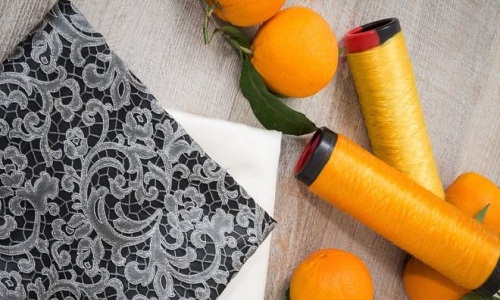 structure is the same as wool .
Sustainable businesses for income generation
The new materials aren’t necessarily a replacement for cotton, wool and polyester rather a supplement for them. These companies are generating income for the farms supplying their raw materials, even if the materials would otherwise go to the landfill. It's important for these businesses to be sustainable, not just from a carbon dioxide point of view, but also in terms of payment of salaries and reinvesting profits.
"Mohammad Ali Khokon was recently elected president of Bangladesh Textile Manufacturers Association (BTMA) for a two-year term (2019-2020). As the President of BTMA, Khokon plans to work in the woven and knit sectors by filling demand gaps. Besides pushing the government to announce weaving as a separate sector and provide special incentives for it. BTMA also plans to work in the denim sector. As Bangladesh currently faces scarcity of raw materials, technological inefficiency and skilled manpower, the association has urged the government to take the initiative in growing raw materials and efficient workforces."
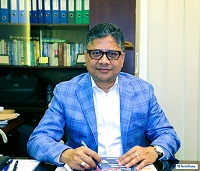 Mohammad Ali Khokon was recently elected president of Bangladesh Textile Manufacturers Association (BTMA) for a two-year term (2019-2020). As the President of BTMA, Khokon plans to work in the woven and knit sectors by filling demand gaps. Besides pushing the government to announce weaving as a separate sector and provide special incentives for it. BTMA also plans to work in the denim sector. As Bangladesh currently faces scarcity of raw materials, technological inefficiency and skilled manpower, the association has urged the government to take the initiative in growing raw materials and efficient workforces.
More policy support for trade with Africa
The cotton that BTMA imports from India and China is not even original. It is very difficult to get original cotton from these countries. African countries can be a good alternative for cotton import. If Africa produces more cotton, it will be helpful for Bangladesh. Currently Bangladeshi mills source cotton from countries like India, the United States, and Africa. The country sources around 20.88 per cent of its total cotton demand from African countries. BTMA is urging the government, to give it policy support to import more cotton from Africa.
BTMA also plans to combat the issue of illegal import of Chinese and Indian yarn and fabrics under bond licenses that are 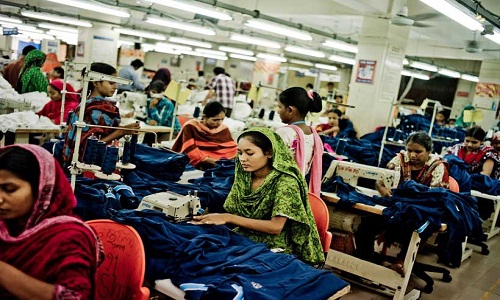 illegally sold in the domestic market at low prices. To overcome this situation, the association will inform the matter with NBR.
LNG import to increase expenditure
Bangladesh plans to import LNG from Qatar, Oman, and Switzerland to add to the national gas grid. This move will increase expenditure in the industry and commercial sectors as the cost of electricity generation will be increased. The imported LNG will be three times more expensive than the locally extracted natural gas.
BTMA does not prefer using Mongla and Chattogram ports as transit points to access India’s Northeastern states for trade. It plans to establish another port at Payra for ensuring smooth business operations.
"Organised by the Hong Kong Trade Development Council (HKTDC), the 50th edition of Hong Kong Fashion Week for Fall/Winter started today at the Hong Kong Convention and Exhibition Centre. The four-day event will continue till January 17, 2019. In 2018, the Fashion Week attracted 14,000 buyers from 76 countries and regions, reinforcing Hong Kong’s position as a key sourcing hub for global fashion traders and retailers. This year’s fair has drawn 1,400 exhibitors from 11 countries and regions."
 Organised by the Hong Kong Trade Development Council (HKTDC), the 50th edition of Hong Kong Fashion Week for Fall/Winter started today at the Hong Kong Convention and Exhibition Centre. The four-day event will continue till January 17, 2019. In 2018, the Fashion Week attracted 14,000 buyers from 76 countries and regions, reinforcing Hong Kong’s position as a key sourcing hub for global fashion traders and retailers. This year’s fair has drawn 1,400 exhibitors from 11 countries and regions.
The Corporate Fashion and Uniforms Zone at the fair showcases uniform collections from some of Hong Kong’s top designers including Allan Chiu, Barney Cheng, Kurt Ho & Nelson Leung, LuLu Cheung and Mountain Yam.
The World of Fashion Accessories brings together items ranging from shoes and bags to fashion jewellery, scarves and shawls. New entrant, The Federation of Hong Kong Footwear Ltd showcases its latest shoe designs with a fashion parade. Special product zones such as: Fashionable Sportswear, Thermal Clothing, Bridal & Evening Wear and Intimate Wear & Swimwear, feature the latest designs. Incorporating the designs of 60 designers from different countries and regions, the International Fashion Designers’ Showcase presents fashion masterpieces from around the globe under one roof.
Fashion Launderette
The theme is a spin-off from fashion brands who are repurposing launderettes and bringing them back into style. The concept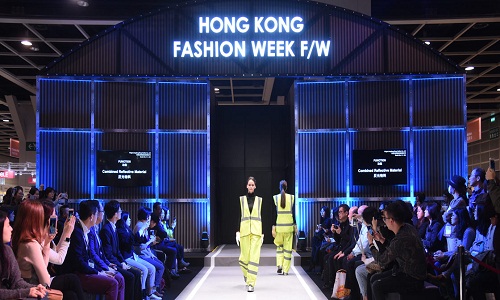 is less about a wash and more about a ‘refresh’. As more people invest in sustainable and better-quality clothing, fashion launderette can add confidence that quality products are safe. Brands and designers are trying to extend their business to other steps of the product journey, including its care.
FASHIONALLY presentations to showcase local fashion designers
Six Hong Kong fashion designer labels will be present at “FASHIONALLY Collection #13” and three “FASHIONALLY Presentation” sessions during Fashion Week. Yeung Chin, Jane Ng, and Alee Lee displayed their latest collections at FASHIONALLY Collection #13 today. The FASHIONALLY Presentation showcases design of local fashion designers Arto Wong , Jason Lee and Carrie Kwok through theatrical storytelling. Yam Chan, a theatre personality, is also collaborating with FASHIONALLY for showcasing his handcrafted dolls MICH at the MICH ▪ ALLY Exhibition on Jan 16-17 Jan, 2019.
Forums, seminars provide effective information platform
Buyer forums, trend-forecasting seminars and sharing sessions on the latest production technologies at the fair will provide effective platforms for the industry to gather market information and exchange ideas. Leading international fashion trend forecaster Fashion Snoops organised a seminar on “The Visionary Fashion Trends for Spring/Summer 2020”. Other seminars will feature industry leaders and experts addressing issues such as rapid footwear prototyping, the sustainable development of the fashion industry, the cotton market outlook and the latest cotton textile technologies, as well as online-to-offline (O2O) retailing strategies.
HKTDC has arranged 90 buying missions from 43 countries and regions, bringing more than 3,800 companies to the show. Participants of the mission include representatives from fashion brands, major chain stores and distributors from both traditional and emerging markets, such as: Czech Republic’s Zoot, Indonesia’s The Goods Dept, Japan’s LEON International, Korea’s Lotte Department Store, Russia’s Forward, the United Kingdom’s Temperley London, and 3NT from the United States.
App offers seamless access to the fairground
HKTDC recently launched the new Exhibitor e-Badge that offers seamless access to the fairground. This initiative, together with the Buyer e-Badge introduced last year and the e-Business Card function, enables exhibitors and buyers to link up digitally simply by scanning each other’s QR code.
HKTDC has been organising the Hong Kong Young Fashion Designers’ Contest (YDC) to unearth talented local designers since 1977. This year’s competition will be held during Centrestage in September 2019.
Texworld Paris will take place from February 11 to 14, 2019.With around 1000 exhibitors, Texworld offers professional buyers from all over the world a rich variety of products from basics to creative high-end fabrics of excellent quality. It is a must for manufacturers specialising in cotton, denim, drapery and tailoring, embroidery and lace, jacquard, knitted fabrics, linen and hemp, prints, shirting, silk, silky aspects, sportswear and functional fabrics, trims and accessories, wool and woolen materials.
Last year, the show attracted more than 1,850 exhibitors from 30 countries and around 29,000 visitors from 110 countries. Master Textile Mills from Pakistan does cotton, T-400, bi-stretch, dobby, yarn dyed, denim fabrics and garments.
Duckwoo, one of the largest woven fabric mills in Korea, is famous for its new developments, every season, following the fashion trends. From light weight fabrics for blouses, the company produces heavy weight fabrics for blazers and dresses as well.
Er & Ez Textile from Turkey offers cotton for women’s wear and kids’ wear. The company is Oeko-Tex 100 certified and its activities cover weaving, dyeing and finishing. The company produces women’s clothing (pants, dresses, blouses, jackets) within an integrated facility. The machinery and machine parts are state-of-the-art. The company supplies fabrics to global brands.
Inaugurating a four-day buyer-seller meet in Hyderabad organised by the state textile ministry recently, handlooms and textiles joint director Purnachandra Rao informed that Telangana has allotted Rs 500 crore for modernisation of powerlooms in the textile town of Sircilla to boost the textile industry and weavers in the region.
Subhash Agarwal, President, Hyderabad Cut Piece Cloth Merchants Association stressed on the need for modernisation of state's textile industry in a big way. He noted that though government schemes are helping the market to some extent, lack of processing units and inadequate marketing opportunities are an impediment
The European Commission has launched an in-depth investigation into whether Nike unfairly benefitted from tax rulings in the Netherlands.The Commission will investigate carefully the tax treatment of Nike in the Netherlands, to assess whether it is in line with EU State aid rules.
The Dutch government determined, over five rulings made from 2006 to 2015, that the royalty would be calculated based on a limited operating margin that was based on sales in the country. The Commission said those rulings “may not reflect economic reality” and that the tax breaks Nike receives in the Netherlands are higher than what independent companies would normally negotiate based on market terms in harmony with the arm’s length principle.
The Netherlands has already agreed to an update of its tax code. The Commission revealed that the Dutch government has announced plans to reform and tighten requirements for tax rulings on international structures—especially if the ruling is meant to allow that structure to avoid EU or Dutch taxes.
The Commission has made a number of high-profile rulings on tax codes in recent years, often going after American companies like Apple, Starbucks and McDonalds. In 2017, for one, the Commission found that Amazon had skirted Irish tax laws, and, in turn, it recovered 282.7 million euros ($325.25 million) from the company.
India’s factory output growth crashed to its slowest in 17 months in November 2018. The previous low was in June 2017. Manufacturing production shrank 0.4 per cent while electricity and mining output grew 5.1 per cent and 2.7 per cent respectively. Items that recorded the steepest contraction included television sets, bodies of trucks and trailers, and raw materials for drugs.
The Indian economy is headed for a slowdown in the second half of the year ending March 31. With the economy already recording a 7.6 per cent GDP growth in the first half of the current fiscal, this implies growth is likely to slow at around 6.8 per cent in the second half.
While the adverse base and post-festive season winding down of momentum along with fewer working days had been expected to lower index of industrial production (IIP) growth, the magnitude of the correction has been sharper than expected.
Tighter domestic financing conditions may also have played a part. Going forward, incrementally improving liquidity, normalization post festive-related disruptions and election-related spending could get growth supportive enabling higher prints versus today’s IIP number. However second half average growth will be lower than first half growth. GDP growth in the third and fourth quarters is expected to be well below seven per cent.
London Textile Fair was held on January 9 and 10, 2019. London Textile Fair is the UK's premier platform for fashion fabrics, clothing accessories, print studios and vintage garments. It provides manufacturers and their agents with the opportunity to showcase their products to the most influential British buyers and designers.
There were more than 500 exhibitors, up from 472 last season. Most came from Europe – among them were textile manufacturers from Turkey, Italy, Portugal and the UK. There is a strong textile market in Turkey and a strong garment manufacturing market. Because of the small distances people choose to do both in the same place to save transport costs, and lots of mills now are also manufacturers.
Buyers from several big-name brands and retailers attended, including River Island, Karen Millen, Oasis, Ted Baker, Jaeger, John Lewis, Boden, Mr Porter and Gieves & Hawkes. Demand for sustainable fabrics was one of the biggest trends at the show. Interest in sustainable alternatives was at an all-time high. There was a surge in interest for recycled fabrics and for BCI cotton. Teal was a trend for this season.
The next edition of the London Textile Fair will be on July 16 to 17, 2019.