FW

J Crew has partnered with Cotton Incorporated on a program that recycles denim into affordable home insulation. All consumers have to do is contribute a pair of previously owned denim apparel to Blue Jeans Go Green, a denim recycling program run by Cotton Incorporated, at a participating J Crew location.
With every donation comes a discount shoppers can use on brand new denim—and J Crew’s touting its new Eco Jeans Collection as an option. The retailer’s Eco Jeans are specially engineered for reduced environmental footprint thanks to water-saving cotton-dyeing technology and a manufacturing process fueled by renewable energy.
As for where the denim ends up after consumers drop off their well-worn pairs for new, sustainable versions, Cotton Incorporated handles that side of the transaction. Blue Jeans Go Green has produced four million square feet of insulation to date.
An entire home can be insulated with just 2000 pairs of recycled jeans. The UltraTouch Denim insulation is environmentally safe and itch-free, unlike fiberglass insulation, which benefits workers building the houses. It showcases extraordinary thermal performance and 30 per cent better sound absorption than fiberglass. It also features a mold and mildew inhibitor to keep the insulation viable for a long time.
The UK is due to leave the EU on March 29, 2019, with or without a deal. But the uncertainty that has hung over the UK economy since the country voted to leave the European Union in a referendum two-and-a-half years ago and now after its rejection in the British Parliament continues.
The uncertainty comes at a tough time for the UK’s retail sector. It’s already contending with higher prices because of the dampening impact of Brexit uncertainty on the value of the pound, as well as the broader challenges facing the global retail market.
The industry has suffered through a mixed holiday season, with online competition continuing to challenge traditional retailers, but even hot internet-based companies have struggled in the UK. The fashion sector, which relies heavily on imported materials and international talent, is particularly vulnerable to Brexit-related headwinds. The UK fashion establishment has opposed the country’s separation from the EU.
For the industry, the main areas of concern are the impact leaving the European Union could have on trade, investment and access to skilled international workers. The worst scenario for the fashion industry would be that the UK crashes out of the European Union with no deal at all. That would likely mean sharply higher import costs and could potentially lead to labor shortages and goods stuck outside ports of entry on both sides of the border, as freedom of movement and trade guaranteed by EU membership could be abruptly suspended.
Monarch, one of the leading suppliers of high-end circular knitting machines and Belgium based BMSvision have entered into a co-operation agreement for the development, marketing, installation and service of a state-of-the-art Manufacturing Execution System (MES) for the circular knitting industry. The system, which is based on the proven BMSvision KnitMaster architecture, is marketed as MMS – Monarch Monitoring System.
Using the LAN interface board of the Monarch machine, all production data is automatically collected and sent to the MMS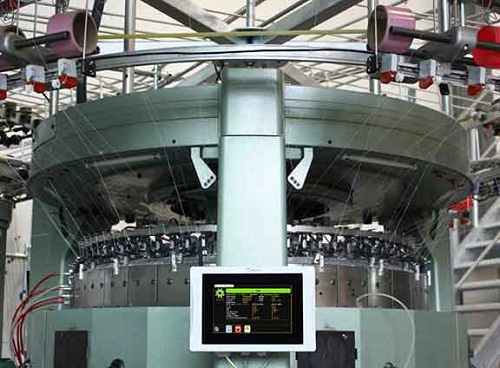 server for real-time analysis and reporting. An additional interface has been developed with the LGL feeders on the machine providing real-time information of yarn tension and yarn consumption in the MMS monitoring application. Older machines or machines from any other brand are connected by means of one of BMSvision touch screen based data collection terminals.
These powerful analysis tools allow quick identification of bottlenecks resulting in optimal usage of production capacities. In case a problem is detected on a certain machine, such as high stop level, deviation in yarn feed, automatic alarm messages are sent to the supervisors allowing an immediate reaction and correction of the problem. Managers can build their own personalized dashboards for a quick and transparent analysis and evaluation of their KPIs.
The integrated job scheduling module automatically, calculates the time needed for every single job and updates it based on real-time information such as actual speed, efficiency and stop level of the machine. By means of simple “drag & drop” functions, the planner easily assigns jobs to machines.
MMS is available in three versions: MMS Basic for machine monitoring, MMS Plus which includes also a complete scheduling software module and MMS Advanced as the full option MES system.
With this co-operation, Monarch wants to support its customers in their path to digital, paperless production and offer them customized solutions for better utilization of their machines as well as for increasing their overall equipment effectiveness (OEE).
Hong Kong Digital Printing Association recognizes color vibrancy and print quality of a neon neck pillow, made from polyester and printed on Kornit Allegro
 HONG KONG, Jan. 14, 2019 /PRNewswire/ -- Kornit Digital (NASDAQ: KRNT), a global market leader in digital textile printing innovation, has announced that the company reaped a silver level "Hong Kong Digital Printing Award 2018 (Special Material Category)" bestowed by the Hong Kong Digital Printing Association. The award was presented in affirmation of the color vibrancy and print quality of a neon neck pillow printed on the Kornit Allegro using the company's unique NeoPigment™ Intenso Neon Inks.
The print job on the polyester neck pillow was produced on one of Kornit's most innovative printing solutions. The Kornit Allegro is a single-step, waterless printing solution equipped with NeoPigment™ Intenso Neon Inks. These inks -- which are the only pigment-based Neon inks in the digital textile printing industry -- can be used in several print modes, for example to replace process colors or to extend the color gamut of a printed design. The NeoPigment™ Intenso Neon Inks open-up a wide array of new applications, allowing Allegro users to tap into new market segments and to increase solution utilization, for example in fashion, sportswear and children's costumes.
An important feature involved in printing the winning sample was the adjustable head height mechanism of the Allegro: users can easily adjust the print heads to accommodate the thickness of the printing substrate and produce high-quality, sharp and saturated prints on the delicate substrates.
The Kornit Allegro roll-to-roll digital textile printing solution demonstrates its unparalleled flexibility as the only stand-alone, one step, no-pretreatment, digital printing solution. In fact, the Allegro can produce a finished fabric from the digital file in less than seven minutes. Kornit's NeoPigment™ printing process works on both natural and synthetic fabrics. Unlike typical digital technologies, the Allegro offers an innovative solution that eliminates the need for multiple steps of pre-press and post-press treatments. Kornit's technology is leading in sustainability with a 100% waterless process utilized in all the company's printing solutions. All the latest developments are geared towards making digital textile printing more competitive, profitable and straightforward. That way, Kornit gives garment decorators, textile producers and web-to-print players the tools that they need in today's demanding markets.
The Hong Kong Digital Printing Association introduced this awards program in 2003 to spotlight the innovative technologies, products, and systems emerging in the digital printing industry. The Hong Kong Digital Printing Award 2018 recognizes the best print works produced within the year, and this prestigious award ceremony honors the most esteemed digital printing vendors and promotes excellence across the plethora of digital printing services and solutions. The award is a truly prestigious accolade for every digital printing vendor across Asia.
About Kornit Digital
Kornit Digital (NASDAQ:KRNT) develops, manufactures and markets industrial digital printing technologies for the garment, apparel and textile industries. Kornit delivers complete solutions, including digital printing systems, inks, consumables, software and after-sales support. Leading the digital direct-to-garment printing market with its exclusive eco-friendly NeoPigment printing process, Kornit caters directly to the changing needs of the textile printing value chain. Kornit's technology enables innovative business models based on web-to-print, on-demand and mass customization concepts. With its immense experience in the direct-to-garment market, Kornit also offers a revolutionary approach to the roll-to-roll textile printing industry: Digitally printing with a single ink set onto multiple types of fabric with no additional finishing processes. Founded in 2003, Kornit Digital is a global company, headquartered in Israel with offices in the USA, Europe and Asia Pacific, and serves customers in more than 100 countries worldwide. For more information, visit Kornit Digital at www.kornit.com.
Sensient Imaging Technologies, a leading developer and manufacturer of digital inks, is delighted to announce that it has entered into a distribution agreement with Spot Uluslararasi Tekstil for the Turkish market. Founded in 1991 and based in Istanbul, Spot Uluslararasi Tekstil will help promote Sensient’s range of high quality digital textile inks throughout Turkey.
“Spot Uluslararasi Tekstil is an experienced partner with a strong reputation for quality and service that matches the values of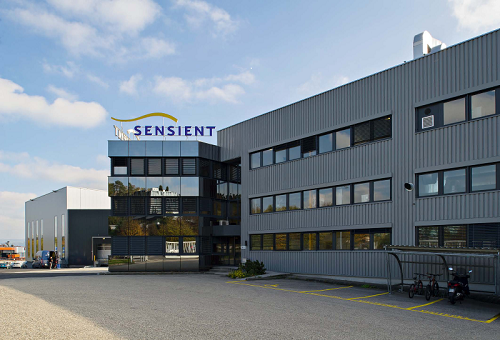 Sensient and the professional service and commitment we expect for our clients. We believe that this appointment will make Sensient a leading provider of digital textile inks for the Turkish markets and allow existing and new customers to truly experience the quality of Sensient” notes Jerome Jeanneret, Managing Director of Sensient Inks Europe.
In addition to its agreement with Spot Uluslararasi Tekstil, Sensient will maintain its direct supply of products to strategic partners and has appointed a Turkish sales manager to ensure the very best communication and service to all of its customers.
“We recognize the importance of the Turkish market as a center of excellence in textile printing with strong growth potential. By adding local management and a quality-focused distributor to launch our new ranges of innovative inks, we are demonstrating Sensient’s commitment to the success of our customers in Turkey” observes Mike Geraghty, President of Sensient Colors.
Automation, individualisation, customisation and sustainability. The range of technologies at the coming Texprocess is more comprehensive than ever. Four months before its start, the leading international trade fair for the processing of textile and flexible materials is almost booked up.
Trade visitors from the fashion and clothing industry, upholstered-furniture manufacturers and all processors of textiles will find at Texprocess, from 14 to 17 May 2019, an even broader range of machinery and methods for processing textile and flexible materials. Once again in its level of bookings Texprocess is exceeding the results of the previous event.
“The coming Texprocess will be taking off even further. While on all sides people are talking of Industry 4.0, at Texprocess we are now talking of Impact 4.0. Trade visitors will find an impressive range of technologies which in every respect are having formative effects on the way we manufacture and process textiles, effects which will continue in future”, says Olaf Schmidt, Vice President Textiles and Textile Technologies at Messe Frankfurt.
With exhibitors currently from some 29 countries, Texprocess will be showing the whole range of textile-processing technologies – from design, to layout, to cutting, making, trimming, digital textile printing, conditioning, finishing, textile logistics and textile recycling. Among the exhibitors registered will be all international market leaders, including Amann, Brother, Dürkopp Adler, Human Solutions, Juki Central Europe, Morgan Tecnica, Pfaff, Tajima, Veit and Vetron. Following a temporary absence, Sunstar will be one of those represented at Texprocess again. Among those which have registered for the first time are Browzwear Solutions, Lasembor, INL International Technology, Siruba Latin America and Summa NV. China, Japan and Taiwan have registered for national pavilions.
Micro-factories show integrated production processes
Micro-factories – an approach to textile processing which is fully networked and allows individualised products, while working rapidly, flexibly and locally – will be the focal subject at the coming Texprocess. Texprocess currently features four micro-factories:
The Digital Textile Micro-Factory at Texprocess and Techtextil, in collaboration with the Denkendorf Institutes for Textile and Fibre Research (DITF) and partners from industry, will be presenting three production lines in Hall 4.1 alone – one each for the manufacture of clothing, a 3D knitted shoe and for processing technical textiles, e.g. for the automotive or furniture industry.
RWTH Aachen University, jointly with various partners from industry and research, will be producing a smart cushion in its Smart Textiles Micro-Factory in the passage between Halls 4.1 and 5.1, thus demonstrating the industrially compatible production of a smart textile, from design to finished product, to serve as an example of the process. The prototype of the cushion will have been showcased previously at Heimtextil 2019.
Six firms working in several fields – visualisation, CAD cutting systems, automated body-mass calculation, layout and process automation have also come together under the umbrella concept “World of Digital Fashion.” In Hall 4.0 they will be jointly showing the ways in which their products can be integrated and combined in various different workflows within the value-added chain, making the digital process chain into a live experience. The focus will be on the customisation of clothing and fashion.
Additionally, Efka, a manufacturer of industrial sewing-machine drive systems, and CAD specialist Gemini will be showing how to produce individually designed football shirts. The micro-factory presents an easy solution that most companies can implement using existing resources and structures.
Focus on sustainability
Sustainability is one of the central themes of the upcoming Techtextil and Texprocess. For the first time, the two fairs will be showcasing their exhibitors’ efforts towards sustainability. The Techtextil and Texprocess Innovation Awards give prizes for sustainable textile innovations and processing approaches. In addition, the Texprocess Forum will offer a thematic block exclusively around the theme of sustainability in the textile and fashion industry, with an offshoot of Fashionsustain, Messe Frankfurt’s conference about sustainable textile innovations.
Techtextil and Texprocess sharing a hall for the first time
For the first time Techtextil and concurrent Texprocess will be sharing an exhibition hall in 2019. In Hall 4.1 Texprocess will be showing its Digital Textile Micro-Factory, with one production line each for clothing, shoes and the processing of technical textiles. In addition exhibitors will be featuring product preparation, finishing, textile logistics, internal materials flow and textile conditioning, plus suppliers of sewing solutions. The Texprocess Special Treatment Area will also be located there, with exhibitors from the effect-finishing segment.
Also in Hall 4.1, Techtextil will be showcasing some of the suppliers of woven, laid web, braided and knitted fabrics, coated textiles, and nonwovens, as well as selected suppliers of textile machines. Suppliers of functional apparel textiles mark the transition to Texprocess. In the shared hall, visitors will get an insight into the entire production process, from raw material to finished product.
Complementary programme with talks and awards
The Texprocess Forum in Hall 4.1 on every day of the fair will be featuring talks by experts on current topics in the industry. Once again the Forum will be organised in collaboration with the Textile-Clothing Dialogue (Dialog Textil-Bekleidung (DTB)), the International Apparel Federation (IAF) and the World Textile Information Network (WTiN). For the first time Messe Frankfurt will also be bringing a section from its conference at Berlin Fashion Week to Texprocess in Frankfurt, in the shape of Fashionsustain Berlin, thus providing a bridge to the sustainable end product.
For the fifth time Messe Frankfurt will be honouring the best new technological developments through its Texprocess Innovation Award. Entries for the prize are possible up to 18 February 2019 at www.texprocess-award.com. Entry is open to both exhibitors at Texprocess 2019 and also to all firms, institutes, universities, polytechnics, and individuals not exhibiting. The prizes in the various categories will be awarded during the joint opening event of Texprocess and Techtextil on 14 May 2019. At the same time a special exhibition area will be showcasing all prize-winning Texprocess products.
Visitors will also find new IT solutions for the clothing industry at IT@Texprocess. Among the presentations to be shown by exhibitors will be software for customer relationship management (CRM), enterprise resource planning (ERP), product life-cycle management (PLM) and supply chain management.
Sewing and clothing technology with a further sales plus
According to information from VDMA Textile Care, Fabric and Leather Technologies, a partner in the Texprocess concept, in 2017 German manufacturers of sewing and clothing technology earned 7 percent more in real terms compared with the previous year, making this the highest export result since 2003. “With export sales of € 603 million, Germany comes in third place among exporting countries, after China and Japan”, says Elgar Straub, general manager of VDMA Textile Care, Fabric and Leather Technologies. “Our member firms’ technologies are in international demand. Our firms are constantly building up their competitive position. That is because they are continually developing and innovating.”
At the last Texprocess, in May 2017, 312 exhibitors from 35 countries showed 13,718 visitors from 109 countries the latest developments in the processing of textile and flexible materials. Moreover 11,399 visitors to Techtextil found information about the range at Texprocess. The two fairs in all welcomed 1,789 exhibitors from 66 countries and over 47,500 visitors from 114 countries.
The textile industry is an immensely global value chain that has a great impact on every country in the world either directly or indirectly. For example, solid waste problem generated mainly in the west from the ‘Fast Fashion’ trend has created a demand of establishing ‘Circular Fashion’ and the whole textile world is likely to feel the corresponding changes. The advent of ‘Industry 4.0’ and its impact also will not only be confined in its developers mainly the European country.

So whether it is a problem or an innovation, everything has to be shared globally in the age of globalization. So, the global platforms are very important which are setting the trends and changing businesses of the future. In addition, whether it is sustainability or anything else, all the stakeholders in the textile industry are looking forward to ITMA 2019 to be held in Barcelona, Spain.
ITMA has been called, as the Olympic of textile machinery is the world’s most important textile and garment machinery exhibition since 1951. It has been a catalyst for changing and competitiveness for the industry over the years. This time the exhibition will be held from 20 to 26 June 2019 at Fira de Barcelona, Gran Via venue where over 1,600 exhibitors will exhibit their latest technologies and sustainable solutions.
Why sustainability is the center focus
In recent time, sustainability issues are getting priority in all aspects of the textile and apparel industry. The drive towards sustainability in the entire textile and garment value chain is increasingly integrated with enlightened business practices, and innovative technology holds the key to environmental sustainability.
Sustainability to-do is not only about reducing economic, environmental and social risks it also means to integrate things in a single objective for living a better life. Thanks to the latest developments in science and engineering and more in data processing, communication and digital integration of concepts and processes which are giving industries a complete change. In addition, the next generation textile industry is going to be completely different because of below-mentioned technologies. Everything, which not even we can imagine, is to be showcased in ITMA 2019.
ITMA to set new trends
Industry 4.0
Innovation is vital for the textile and apparel industry’s success as Industry 4.0 gains momentum in the manufacturing world. The use of artificial intelligence, processing of big data and connecting the dots together in quick and fast decision-making would be the key changes in the industry.
Companies will shift towards open innovation and so will result in the increased exchange of knowledge and new types of cooperation among educational institutions, research organizations, and business.
And so technology providers are ready to showcase their latest developments in integrating the concept of Industry 4.0 and presenting the outlook of next-generation machinery. All are likely to break the earth in ITMA 2019.
Maria Ludovica Murazzani, Commercial Consul of Italy in Shanghai recently has told that the Italian government has set up a clear vision for Industry 4.0 and Italian companies are making significant progress in this by the legal and others support from the Italian government. Alessandro Zucchi President, ACIMIT further confirmed it and declared that many of those amazing developments will be showcased for the first time in upcoming ITMA 2019 to be held in Barcelona. Companies from Germany, Switzerland, and the UK will not fall short as well.
Every company’s solution need to complete in a digital way, which aims to maximize profits while achieving zero inventory loss, zero leftover stock, and zero, lost sales opportunity and most importantly zero waste through smart, speedy and sustainable production. Without automation and integral decision making it won’t be possible.
Machinery companies are continuously working on bringing new featured machinery making things digitalized connected through smart devices. They will be showcasing the latest technology for better productivity to cope up with fast fashion trends as automation can offer cost reduction and value-addition in garments products.
Automation, especially in an integrated textile and garment manufacturing chain, will help address the fashion and clothing industry’s current concerns of short production cycles and sustainable business practices, according to CEMATEX, the European Committee of Textile Machinery Manufacturers.
What is new in ITMA 2019?
ITMA innovation lab is the main attraction of the people aims at driving industry focus on technological research and development. Innovation Lab will provide an opportunity to connect and exchange ideas with a truly international gathering of expert researchers and academics who are involved in a vast range of textile-related projects.

Christine Karin Schmidt, Chair of the CEMATEX working group of the ITMA Innovation Lab, and Technical Director of VDMA Textile Machinery Association explained, “There is much more to be discovered at the ITMA Innovation Lab. The Innovation Video Showcase will spotlight the most groundbreaking exhibits at ITMA 2019.
“By presenting these latest innovations in a video format at the Speakers Platform, CEMATEX aims to further promote excellence in R&D and make the Innovation Lab a hotspot that will inspire visitors from all sectors of the textile and apparel making industry.”
Automation and Industry 4.0 are one of the key focus areas in Europe, and Germany’s Institutes of Textile and Fibre Research Denkendorf (DITF), for example, has recently been involved in the multi-company co-ordination of digital textile micro-factories. These have involved fully automated and interlinked textile production lines for ‘make on demand’ products – from design through to the finished and printed garment.
Many major textile institutions from across Europe, organizations will also be present at the show from North and South America, Asia and Australia. Adding to the vibrancy of the area will be a number of first-time participants, such as Fundació Eurecat, Leitat Technological Centre, Manchester Metropolitan University, Mittelstand 4.0-Kompetenzzentrum Textil Vernetzt, Thomas Jefferson University, and Universidad De Buenos Aires’ Fadu, Cátedra Nirino Diseño Textil.
Within Europe, some key research trends in individual countries are notable, even as the European Union’s comprehensive research programs strive towards encouraging co-operative projects across borders.
In both France and Germany, for example, there is a strong emphasis on the further development of textile technologies for the composites industry, backed by major end-user organizations such as Airbus, as well as car brands such as BMW, Daimler, Peugeot-Citroen, Renault and Volkswagen.
Reinforcements for composites involve a wide range of technologies, which will be displayed at ITMA 2019, including weaving and knitting, as well as nonwovens manufacturing, embroidery and braiding.
One nerve center for developments in this area is RWTH Aachen University, where more than 20 university institutes focus on state-of-the-art production techniques and are cooperating with machinery makers, robotics companies and software developers to make manufacturing processes efficient enough to allow high-wage countries such as France and Germany to compete on a global level.
Another intriguing development from a German research institute is the Fibre Dynamics Simulation Tool (FIDYST), which makes it possible to simulate the movement of fibers in turbulent air currents for the first time. This was developed at the Fraunhofer Institute for Industrial Mathematics, another R&I Pavilion participant, and will have a very positive effect on the process planning of nonwoven manufacturers.
Download Nulled WordPress ThemesFree Download WordPress ThemesDownload WordPress ThemesDownload Best WordPress Themes Free Downloaddownload udemy paid course for freedownload redmi firmwareDownload Best WordPress Themes Free Download
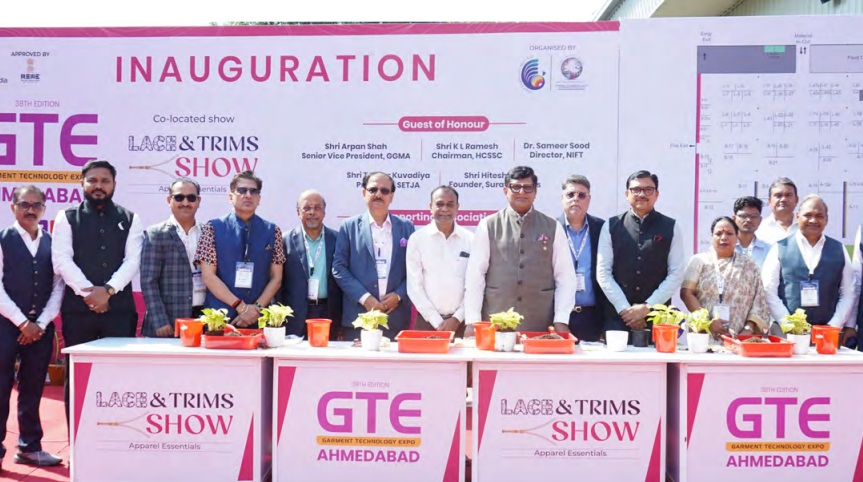
The second edition of the global textile technology and engineering show, GTTES 2019, will be held from January 18-20, 2019, in Mumbai. GTTES 2019, organised by India ITME Society, is ready to start a new successful business year with new optimism, opportunities, and prospects for the textile industry with more than 400 exhibitors from around 48 countries.
GTTES has grown in size and numbers and has achieved 26 per cent growth rate attracting about 168 companies as first time participants who have never participated in any ITME events. This is a remarkable response to the second edition of GTTES, indicating that this event has achieved its place as a reliable international business platform for both domestic and overseas companies. It is very attractive for start-ups and small, medium companies from non-metro cities due to its low cost participation charges and focused exhibit chapters, according to a press release on the event.
First time participation from Sri Lanka & Slovenia and countries like Belgium, China, France, Germany, Italy, Japan, Spain, Turkey, UK, USA, Taiwan, Algeria, Djibouti, Kuwait, Azerbaijan, Kyrgyzstan, and Senegal, is a testimony to global reach of GTTES as a trusted opportunity for business and gateway to India.
Apart from this, GTTES 2019 will facilitate interaction with all export promotion councils, which will help industry to know more about export opportunities, various government subsidies, market initiative schemes available for Indian manufacturers, and help gain information and develop new opportunities for exports from India.
The road shows are a very important part of visibility and one-to-one connect with textile hubs in various parts of the countries as well as globally. A total of 18 promotional activities has been conducted over the last six months in India and overseas. Visitor registration is much higher than the first edition GTTES and the number of countries sending the business delegates to attend the event has also increased.
As a trend setting exhibition organiser, India ITME Society takes care to address trending topics as well as the topics which needs attention. Conference sessions by Indian Technical Textiles Association Society on ‘International Conference on Nonwoven Technical Textiles’ & by Society of Dyers & Colourists International India on ‘Educating the Technology Innovations in Textile Colouration’, will be held on January 19 and 20, 2019.
There will also be industry interactive session on January 18, 2019 to facilitate government / industry interaction. Surina Rajan, IAS, director general, Bureau of Indian Standards (BIS) shall be available for open interaction with industry members. This shall help the industry in direct representation towards formulation of policy for standardisation, promoting exports / imports, control proliferation. The main points of discussion will include, overview of standardisation work done by BIS in the field of textile machinery and accessories; issues related to noise emissions and safety aspects of textile machinery, and adoption of related ISO standards & inputs required for identified new subjects such as embroidery machines and baby diaper making machines.
Bangladesh will continue to grow as a major textile machinery market as local textile millers are expanding business riding on higher demand for garment items from international consumers, industry people said yesterday.
Local fabrics makers, textile millers, spinners and garment manufacturers spend a few billions of dollars every year to buy machinery.
“Bangladesh is the biggest machinery market for Chinese textile and garment machine manufacturers,” said Chen Ji, secretary general of the China Sewing Machinery Association.
Ji said Chinese sewing machinery manufacturers exported equipment worth more than $1 billion to Bangladesh every year.
“The textile and garment business will continue to grow in Bangladesh over the next many years as the demand is increasing every year both in the international and local markets,” Ji told The Daily Star at the 16th Dhaka International Textile & Garment Machinery Exhibition 2019, also known as DTG 2019. The Bangladesh Textile Mills Association (BTMA) and Yorkers Trade & Marketing Services Co. Ltd, Hong Kong jointly organised the four-day exhibition at the International Convention City Bashundhara in Dhaka. This is the largest textile machinery exhibition in Southeast Asia, the organisers said.
This year 1,200 exhibitors from 37 countries are showcasing latest machinery in the textile and garment sectors at 1,650 booths set up at the venue. Last year, 1,100 exhibitors from 36 countries took part.
Judy Wang, president of Yorkers Trade & Marketing Services Co., said every year the number of participants was increasing as renowned textile and garment manufacturing companies in the world wanted to sell their goods in Bangladesh.
Local spinners can meet 80 percent of the demand of the knitwear sector, while only 35 -40 percent of the woven sectors' demand can be met by local suppliers, she said.
“So, there is room for further big investment in the woven sector where local entrepreneurs will need to install machinery worth of billions of US dollars,” she said.
Wang said the DTG was a very good platform to invite international buyers targeting the woven sector, which has immense potential to grow.
BTMA President Mohammad Ali Khokon, in his inaugural speech, said buyers of textile and apparel products now recognised Bangladesh as one of their major sourcing destinations.
“Textile machinery manufacturers value Bangladesh as the centre of textile and clothing machinery business hub,” he said.
Shafiul Islam Mohiuddin, president of the Federation of Bangladesh Chambers of Commerce and Industry, urged the government to continue policy support and political stability.
"We need predictable and consistent policies. We want to know what the price of energy would be in the next 10 years. We do not want any erratic policy in the financial sector.”
Stay updated on the go with The Daily Star Android & iOS News App. Click here to download it for your device.
"One of the most popular types of clothing around the world, denim is also one of environmentally hazardous garments. A case in point is the river delta in China whose water turned blue from the washing of jeans from thenearby denim factories. Lately, many brands trying to arrive at a common consensus on the issue of sustainability. Individual companies are spending on safety and sustainability certifications, like the Higg Index, Cradle to Cradle, or ISO 9000. However, there’s still no high-level awareness or data collection on the industry as a whole as every company and manufacturer has different standards. Levi's has separate requirements for a denim product than J.Crew, BLK DNM or Gap. And it's up to the mills creating these jeans to meet each requirement."
 One of the most popular types of clothing around the world, denim is also one of environmentally hazardous garments. A case in point is the river delta in China whose water turned blue from the washing of jeans from thenearby denim factories. Lately, many brands trying to arrive at a common consensus on the issue of sustainability. Individual companies are spending on safety and sustainability certifications, like the Higg Index, Cradle to Cradle, or ISO 9000.
However, there’s still no high-level awareness or data collection on the industry as a whole as every company and manufacturer has different standards. Levi's has separate requirements for a denim product than J.Crew, BLK DNM or Gap. And it's up to the mills creating these jeans to meet each requirement.
No clear knowledge on certifications
In order to differentiate themselves from competitors, mill owners are acquiring all the sustainability and manufacturing certificates available in the market. Nobody has a clear understanding about which certifications matter to consumers or how they all stack up against each other.
The industry needs to examineeach of these standards and find overlapping areas. This will also lead to dropping the costly third-party audits and standards altogether.Once a single standard is adopted, the industry needs to implement a system that allows it to track how people are following the standard.
Blockchainpayment system to streamline transactions
A blockchain-based system benefits everyone in the denim industry. This system allows companies to usea payment system that incentivises good behavior. As each participant in the supply chain achieves its goals, like meeting the new standard, it can automatically receive discounts or rewards that incentiviseit to continue working in a sustainable, ethical manner.
A blockchain payment system also streamlines transactions and automates the incentive system through smart contracts.Companies can prove the sustainability of their products by putting manufacturing records on the blockchain.
Increased efficiency and beneficial data leads to sustainable future
In this system, companies design files to autonomous machines at different locations, where customers wait while the clothing is quickly made on-site.As production is done on-demand and on-site, companies will spend less of their time and money in chasing down audits and looking for the latest certification. Over time, the blockchain ecosystem will provide increased efficiency and more beneficial data leading to a more sustainable future for denim.