FW

"The recent Apparel Sourcing Show, hosted in Paris, noted that China's dominance of the global clothing manufacturing sector might soon come to an end. Bangladesh, with its lower production costs, will overtake China, with many Chinese manufacturers shifting their production facilities to the South Asian nation. As Michael Scherpe, President of Messe Frankfurt France points out, attendance at the 2018 show declined 2.6 per cent from the earlier event. However, still around 29,000 fashion aficionados visited the show's five dedicated display halls – Avantex, Leatherworld, Shawls&Scarves, Texworld and Texworld Denim. Focus on the textile micro-factory phenomenon."
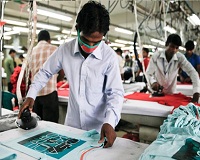 The recent Apparel Sourcing Show, hosted in Paris, noted that China's dominance of the global clothing manufacturing sector might soon come to an end. Bangladesh, with its lower production costs, will overtake China, with many Chinese manufacturers shifting their production facilities to the South Asian nation.
As Michael Scherpe, President of Messe Frankfurt France points out, attendance at the 2018 show declined 2.6 per cent from the earlier event. However, still around 29,000 fashion aficionados visited the show's five dedicated display halls – Avantex, Leatherworld, Shawls&Scarves, Texworld and Texworld Denim. Focus on the textile micro-factory phenomenon.
In addition to the hundreds of stands, daily conferences and catwalks shows also engaged the show's attendees. One such round-table conference, within Avantex – the event's dedicated high-tech and smart fibres zone – focused on the textile micro-factory phenomenon, a development that has been driven by growing demand for localised production facilities and more reactive supply chains.
One of the most high-profile contributors to this particular discussion was Christian Kaiser, Project Research Manager for the Deutsche Institute fürTextil und Faserforschung (DITF), one of Germany's largest textile research centres. He highlighted the role high-tech design systems had to play in the development of such micro-factories. The panel also discussed the impact a new generation of large-format inkjet printing systems – particularly with regard to polyester and pigment sublimation for cotton and mixed – had on creating flexible opportunities for small-batch production.
China retains a robust presence
Chinese companies retained a robust presence throughout the event, most notably via a memorable showcase of the work of a number of mainland fashion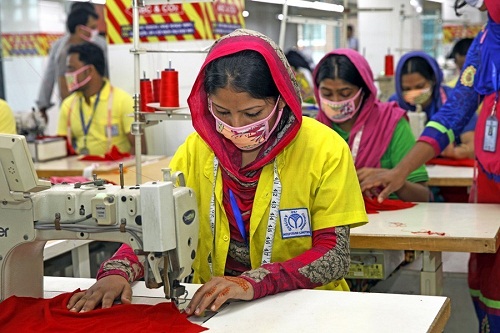 designers over on the Premium Brands Ready to Wear stage. One particularly dazzling sequined jacket came courtesy of the Ningbo-based Aiyimei Group, which employs 3,200 people across a range of disciplines, including garment making, textile printing / dyeing and knitting.
China Textile Information Centre (CTIC), a Beijing-based trade body, installed several outsized 'silent salesmen' booths, information points designed to showcase the mainland's many strengths across the garment manufacturing sector. Pre-eminent among these was the Fabrics China Trend Forum, a range of displays designed to position China as a global leader in innovative textiles manufacturing.
In addition, the Hong Kong Trade Development Council (HKTDC) hosted its own bespoke Hong Kong Pavilion. This year, it focused on six of the SAR's clothing businesses in particular – Asia Smart Industrial, Asiatex Enterprise, Come Base, Eto Knit Company, Hi-Style Manufacturing and the Yester Group.
China put in a particularly impressive show in the fashion accessories sectorwith Zhejiang Golden Point Textile attracting particular attention. The company now provides finished textiles to a number of leading international brands from our Shaoxing facility.
Emergence of Bangladesh
There were clear signs of Chinese manufacturers moving their production facilities out of China at the conference. Leading among these was the Hong Kong/Guangdong-based Yester Group.
Overall, Bangladeshi investment into the textile industry has propelled the country to be the second most preferred sourcing option, transforming the fortunes of many local businesses, including Zaber&Zubair Fabrics. The Noman Group company, one of the largest vertical operations in South East Asia, now outputsover 110 million metres of textiles every year.
In 2018 the total export turnover of Vietnam’s textile and garment industry was up 16 per cent year on year.
With the results achieved in 2018, Vietnamese textile firms have witnessed positive signals for orders in 2019. Many businesses have already received orders for the first six months of 2019 and even the whole year.
The upcoming enforcement of new generation free trade agreements is a positive factor supporting production and business activities of the sector in 2019.
In 2019, the Comprehensive and Progressive Agreement for Trans-Pacific Partnership (CPTPP) is hoped to create a boost for many industries of Vietnam, including the textile and garment sector. In addition, the textile and garment sector is also waiting for more orders shifted from China to Vietnam due to the US-China trade war.
Domestic enterprises will be enabled to choose orders with highs prices and easier requirements when orders are moved from China to Vietnam. In order to catch up with these opportunities, local businesses need to gradually improve technologies and invest more in new technologies.
The targeted export turnover for 2019 is 10.8 per cent higher compared to 2018. The sector is expected to enjoy a trade surplus of 20 billion dollars and create employment and increase income for 2.85 million workers.
An interdisciplinary research team at Manchester Metropolitan University has conducted an extensive evaluation process to determine the true levels of precision and performance that a carbon dioxide laser etching technique can deliver. Developed as a less environmentally-harmful alternative to traditional bleaching methods, the laser technique’s potential in yielding highly precise denim effects while not compromising the quality, color, feel or strength of a garment – has now been scientifically assessed.
This method of distressing denim avoids traditional bleaching techniques which, according to the study’s authors, have a very poor environmental reputation due to using a range of physical, chemical and mechanical finishing methods that can pose severe risks to both the planet and the wellbeing of those exposed to it.
In the study undertaken by Manchester Fashion Institute and the School of Healthcare Science, light, medium and heavy weight indigo dyed 100 per cent cotton denim fabrics were exposed to a CO2 laser at various power and intensity levels.
Subsequent color change was investigated using a Spectrophotometer, a morphological structural analysis was carried out by Scanning Electron Microscopy, and attenuated total reflectance Fourier transform Infrared spectroscopy (ATR-FTIR) was used to monitor the loss of indigo dye and degradation of cellulose fibres.
Bangladesh has revised wages in six grades for garment workers. This resolves the unrest in the country's largest foreign export earning sector. Unrest hit the sector in 2016 when workers began protests demanding a new wage board. Around 350 unions for more than 4,500 active garment factories is a scanty number. Factory managements do not encourage formation of unions.
Cordial industrial relations have been missing in the sector for over 40 years since garment trade took off in the country. In almost every factory, the elected participation committees are present for the sake of compliance. In most cases these participation committees are inactive and only exist on paper under pressure from buyers.
The latest spell of protests against disparity in wages was not guided by union leaders and it was evident when the demonstrating workers refused to return to work despite repeated calls from the leaders. After the last pay hike in 2013, many factories increased production target for workers and the work pressure built up tremendously. So relentless was the pressure that workers did not have even a minute to drink water or use the restroom during their shift. Bangladesh has emerged as a key hub for garment manufacturing, as prices in China have increased dramatically in recent years.
Kornit Digital has launched a super-industrial, next-generation direct-to-garment printing platform. Called Atlas, it is designed for high-volume production, delivering the highest productivity and the most impressive standards of top retail print quality and optimized cost of ownership.
Kornit Digital is a market leader in digital textile printing innovation. Atlas is the first instance of the company’s next-generation direct-to-garment printing platform, providing garment decorators and screen printers a unique tool for mastering the current and future challenges of the textile supply chain.
The Kornit Atlas is a heavy-duty system created for super-industrial garment decoration businesses. It was designed to deliver a typical annual production capacity of up to 350,000 impressions, optimizing production efficiency and cost of ownership. It is aimed at highly productive garment decorators, mid to large size screen printers and innovative businesses looking to combine state-of-the art technology with the lowest cost of ownership.
The system is equipped with new recirculating print heads and comes with a newly developed ink, NeoPigment Eco-Rapid. Featuring an enhanced version of Kornit’s HD technology, it is complemented by a professional raster image processing software solution and produces prints that meet the highest standards of retail quality and durability. The all-new Atlas will allow for easy future network connectivity required to support fleet management and optimization of global multi-systems and multi-site enterprises.
Archroma has innovative and sustainable solutions for denim and casual wear manufacturers and brands. From fiber to finish, Archroma offers textile manufacturers and brand owners tailor-made solutions.
Denisol is a newly developed pre-reduced liquid indigo solution that is manufactured in Archroma’s zero liquid discharge manufacturing plant in Pakistan. The new aniline-free Denisol Pure Indigo 30 can be used together with Archroma’s dyeing auxiliaries for customised dyeing system solutions. Archroma’s Advanced Denim dyeing technology allows savings of up to 92 per cent in water, 87 per cent in cotton waste and 30 per cent in energy compared to a conventional denim dyeing process.
The technology has been adopted by prestigious brands including Patagonia. Archroma, a leader in color and specialty chemicals, challenges the status quo with the aim of making the industry sustainable and offers solutions that are safe, efficient and enhanced.
Diresul RDT Ocean Blues is a collection of vibrant, ocean-themed bright sulphur blue dyes. These dyes and their auxiliaries bring out the best of indigo, improve workability, dyeing consistency and process safety. They can be combined with the Denisol Indigo range in bottoming/topping manufacturing routes – to create exciting avant-garde blue styles. Diresul Fast Black RDT is an exclusive sulphur black dyestuff technology that is fast to chlorine and resistant to the strong oxidative agents applied on home laundry.
Cotton Council International (CCI), in collaboration with the Indonesian Textile Association (API), CCI presented a seminar titled: Advantages of US Cotton Textiles Products and Future Fashion Trends in the Global Market. The seminar attended by Jane Singer, Director & Head-Market Intelligence, Inside Fashion Group stated that 2019 fashion trends cover everything from coral to tie-dyed denim. Singer shared the results of his observations about the main changes that occurred in the retail market and changes in consumer attitudes.
He underlined the important role of the quality of materials used by factories to produce clothing, in order to validate brand or brand quality claims. He further emphasised that role of good quality products in determining the brand value. According to him, American cotton is the right choice for entrepreneurs as a basic material for textile production and materials for fashion creations that will be created this year.
COTTON USA ™ technology innovation is very useful for fashion production according to this year's fashion trends. Then, customers today tend to be willing to pay extra for functional clothing.
While in his presentation, Andy Do, Representative of CCI Indonesia's Program said that COTTON USA ™ is always committed to assisting manufacturing industries in understanding fashion trends. Another concern is the use of the latest technology, and the advantages of using American cotton to create new opportunities and other benefits for entrepreneurs and more broadly, for the Indonesian textile industry.
A yarn and fabric show will be held in Bangladesh from January 23 to 25, 2019. The aim is to introduce latest sophisticated yarn, fabrics, accessories and emerging technologies to the textile and garment industry. Over 370 exhibitors from 22 countries will showcase textile products that include the latest trends and technologies in fabrics, accessories, ready-to-wear and industrial fabrics, innovative and smart fabrics and many more.
The exhibition will enable textile and apparel industry buyers to meet local and overseas textile and yarn manufacturers face to face for the best qualities and reasonable prices. There are seven garment factories in Bangladesh that are among the top 10 environmentally-compliant readymade garment factories around the world. The country has a target of reaching $50 billion in textile exports by 2021.
Currently Bangladesh imports viscose worth billions a year which can be easily saved by producing it in the country. Production of viscose fiber has proved more profitable than production of readymade garments. Bangladesh has made a deal with China for building a plant to make viscose fiber from jute using Chinese technology and finance.
China is the top exporter of apparel products in the world while Bangladesh stands second.
Bangladesh may fail to meet readymade garment export targets. Reasons include: rising cost of doing business and mounting conflict between workers and owners on wages. Workers’ protests have sparked clashes between police and workers and killed at least one worker and wounded dozens more.
The country’s readymade garment industry accounts for 80 per cent of Bangladesh’s merchandise export earnings and serves some of the biggest brands in the world. Bangladesh raised the minimum monthly wage for the garment sector’s four million workers by 51 per cent from December. But workers say their raise was less than this and unions, which warn the strikes may spread, say the hike fails to compensate for price rises in recent years.
Wages were hiked after five years. But in five years the cost of living has increased more than the wage hike. However, rising trade disputes between the US and China have opened the window of opportunity for Bangladesh to increase exports. China, the world’s largest exporter of apparel, is seeing its apparel companies migrate to countries with cheaper labor costs. US sanctions on Chinese technology companies are expected to accelerate the trend. Another advantage Bangladesh has is cheap labor costs.
MODA, to be held from February 17-19, 2019 in Birmingham, NEC will attract an array of sought-after footwear and accessories brands. It will include the UK launch of the AW19 Alexa Chung collection for Superga. The new collection will be launched in collaboration with Alexa Chung, as well as a host of new colors, animal prints, fluoro colourways, sport luxe trainers for women, and corduroy and military styles for men.
Superga launched the Classic Superga 2750 style in 1911in Italy. The 2750 became established as “the People's Shoe of Italy”, and Superga increased its product line with technical sport shoes, rubber rain boots and a growing range of colours and styles.
Delivering a high quality and cost-effective platform for mid-market brands and a commercially viable and convenient buying environment for retailers across the UK and Ireland, MODA will bring together over 1,200 collections under one roof at the NEC Birmingham from brands including: Geox, Loake, Birkenstock, Chatham, Fly London, Steptronic, Rieker, Hotter, Bugatti, Lunar, Alpe, Suzie Blue, Zohara (bags), Gabys, Tilley & Grace, Suzanne Bettley, Max & Ellie, Tempest Designs, Whiteley Fischer Hats, and Pineapple Island.