FW
British labor experts urge companies to be more transparent
Labor experts in Britian urged the country's top 100 companies to be more transparent and lead by example. The average combined score of the 100 companies - 47 per cent - shows they are generally failing to take meaningful anti-slavery action and spur better practices in the private sector. Major retailer Marks & Spencer topped a list recently ranking Britain's biggest businesses on their efforts to tackle modern slavery.
Supermarket Tesco and British American Tobacco ranked second and third on the first Global Governance FTSE 100 League Table, which judged firms based on their compliance with Britain's landmark anti-slavery law, and overall human rights practices.
Under Britain's 2015 Modern Slavery Act, companies with a turnover of more than $47.5 million must produce an annual statement outlining the actions they have taken to identify and stop forced labour in their supply chains. Big brands in Britain and beyond are facing growing pressure from regulators and consumers alike to ensure that their global operations and products are not tainted by modern-day slavery.
While most companies on index were found to be largely compliant with the requirements of the law, only one in four of the companies were fully in line, the research found.
Hitesh Sharma becomes IFKT president
Hitesh Kumar Sharma is the new president of the International Federation of Knitting Technologists. He has been with the organisation since 1999 and has more than 25 years of working experience in the knitting industry. He and has worked in a senior techno-management position in global multinational companies in the US, Canada, Italy and North India.
It is expected that with his familiarity with the knitting sector in a wide North America perspective, he will be a great asset to IFKT. The number of American and Canadian members is gradually increasing due to his presence in the organization. The International Federation of Knitting Technologists, founded in 1956, was conceived to establish friendly ties between works managers, technicians and knitting specialists from different countries and thus promote the general interests of the knitting industry and its further technical development.
The organisation holds annual conferences. Countries that have held such conferences so far are Austria, Belgium, Bulgaria, Croatia, Czech Republic, Germany, Great Britain, France, Hungary, India, Israel, Italy, Poland, Russia, Spain, Sweden, Switzerland, and the US.
IFKT is present in Austria, Bulgaria, Croatia, Czech Republic, Germany, Hungary, Israel, Italy, Poland, Romania, Russia, Slovenia and Switzerland. In addition, there are individual members in Canada, Egypt and Taiwan.
Welspun’s chairman now becomes president of Assocham
Welspun’s chairman Balkrishan Goenka is the Assocham president and Niranjan Hiranandani, Co-founder and MD, Hiranandani Group, is the senior vice president.
Goenka is one of India’s most dynamic business leaders. Under his leadership, Welspun has grown exponentially to become one of the most notable corporates in the global arena with a presence in over 50 countries. Welspun has a diversified portfolio of businesses spanning large diameter line pipes, home textiles, infrastructure, oil and gas, advanced textiles and flooring. The textile firm sees a positive growth momentum in volumes and is confident of achieving its annual guidance for revenues and profits.
Welspun continues to pursue its differentiation strategy based on branding, innovation, sustainability and its patented traceability solution. The company is seeing substantial growth in e-commerce.
The Associated Chambers of Commerce and Industry of India began its journey in 1920. It has always been an important partner with the government in shaping India’s growth story. To continue this partnership, it has formulated a new vision called 4-Sight based on the pillars of entrepreneurship, digitisation, women empowerment and sustainability. Within each of these areas it will have a focused approach so that it can play an important role with industry and government.
For Indonesia FTAs is the way forward for apparel industry
Indonesia is hoping for a series of trade agreements. Eight are in the process of negotiation, three are under revision and two are in the process of negotiation. One agreement is with Australia. Another is the Regional Comprehensive Economic Partnership, a proposed free trade agreement between Asean and China, India, Japan, South Korea, Australia and New Zealand. Yet another is the European Free Trade Association. Agreements with Mozambique, Tunisia and Morocco are expected to be completed this year.
For Indonesia, trade agreements with partner countries can increase the export value and increase market share. With such agreements in place Indonesia expects its exports of textile and textile products to increase three-fold. The cooperation agreement with Japan has helped increase Indonesia’s exports. Till now lack of market access has been a constraint for the textile industry. Meanwhile, textile products from neighboring countries, such as Vietnam, can enter with zero per cent import duty.
At present, the market share of new domestic textile products is around 1.8 per cent while in Indonesia the textile industry has been integrated from upstream to downstream so that the potential for development is still large. The industry in Indonesia wants downstream products to be protected from the onslaught of imports.
Sao Paulo Fashion Week features new formats
The ongoing Sao Paulo Fashion Week from, October 21 to 26, 2018 features a new venue, a new format, and debuts four new labels. Novelties include workshops, presentations and panel discussions. Familiar names in Brazilian fashion festival such as Oskllen and Reinaldo Lourenco made an appearance.
Just like previous Sao Paulo Fashion Weeks, Brazilian designer Ronaldo Fraga stood out with a runway show that offered much more than just clothes and the latest trends. This time Fraga displayed a collection he said is a reflection on intolerance -- strongly influenced by the Israel-Palestine conflict he observed during a 2017 trip to Tel Aviv.
At the end of the show, Fraga’s runway moved to center around a large banquet table with models and invited spectators sitting around it. He once again presented a diverse line-up of models, reflecting the reality of the city of Sao Paulo. The austere collection heavily featured blue embroidery work with minimal patterns.
First-time presenters Piet, Cacete Company, Torino and Bobstore arrived in full force. The fashion week will have offered a total of 31 shows by its end. It has a focus on design and identity, creating a legacy of value and transformation.
Mayer & Cie receive repeat order for Spinitsystems
Leading German circular knitting machine manufacturer Mayer & Cie. has received the first repeat orders for its revolutionary spinitsystems, combined spinning and knitting technology.
The Spinit 3.0 E spinning and knitting machine was presented for the first time ‘in the flesh’ in China at this year’s ITMA Asia + CITME. Mayer & Cie. had anticipated strong interest in the spinning and knitting technology, because of its relevance in established textile markets such as China, and expectations had been exceeded.
With spinitsystems, knitted fabrics are manufactured not from yarn but straight from fibre based rovings. The three process steps of spinning, cleaning and knitting are combined in one machine and the rewinding process that was previously required has been eliminated. The single jersey knit production process can therefore be shortened significantly.
The technology requires fewer machines, reduces capital expenditure, saves space and energy and reduces yarn storage whilst producing less waste. It can reduce production costs and CO2 emissions considerably.
Coach to go fur free
Luxury brand Coach will soon become fur-free. The ban will be applied on all types of animal fur, comprising coyote, mink, fox, and rabbit. However it is yet to include other animal products such as shearling, mohair, and angora.
Coach has been committed to advancing sustainable practices for many years, with the introduction of its corporate responsibility goals in 2015. Back then, it laid the groundwork for prioritizing social and environmental initiatives. The last 18 months have seen an unprecedented number of fashion’s biggest brands going fur-free. The decision to go fur-free is a meaningful milestone for the brand. It joins key players like: Diane Von Furstenberg, Burberry, Gucci, Michael Kors, Jimmy Choo, Versace, Furla, BCBG, Gap, Inditex, H&M and ASOS.
In fact, London Fashion Week was the first of the major fashion weeks to go entirely fur free on the runway front. Online retailer Net-a-Porter has outright refused to stock fur products. Los Angeles became the largest US city to ban fur sales recently.
Coach is part of the fashion conglomerate Tapestry, which also includes major brands such as Kate Spade and Stuart Weitzman. Coach, based in the US, began in 1941 and sells leather goods like bags, wallets, flask-holders.
Apparel companies pledge to tackle forced labor
More than 100 global apparel and footwear companies have pledged to tackle forced labor risks for migrant workers in supply chains. Signatories, including Adidas, Levi’s, Eileen Fisher, Nike, New Balance, Ralph Lauren and Patagonia, have committed to a treaty drawn up by the American Apparel & Footwear Association and Fair Labor Association.
The commitment provides an industry effort to address potential forced labour risks for migrant workers, with each signatory committing to working with partners to create conditions where no worker pays for their job; where workers retain control of their travel documents and have full freedom of movement; and where workers are informed of the basic terms of their employment before joining the workforce.
The signing companies also agree to work to “seriously and effectively” implement these practices, to incorporate the Commitment into their social compliance standards by December 31, 2019, and to periodically report actions through sustainability and/or modern slavery legal disclosures.
Loss of AGOA benefits to impact Sri Lankan economy
The unprecedented shift in US foreign policy following the election of Donald Trump as the President has contributed to further volatility on the political economy with particular implications for Sri Lanka vis-a-vis the US potential retraction from the African Growth And Opportunity Act (AGOA). If GSP plus is compromised, the potential loss of rival economic benefits such as provisions of AGOA would create considerable dent in Sri Lankan export market.
Sri Lankan apparel companies have begun operating in Ethiopia and Kenya to gain duty free access to the US market under the provisions of AGOA. In 2015, Iran agreed on a long-term deal on its nuclear program with the group of world powers. Under the accord, Iran agreed to limit its sensitive nuclear activities and allow international inspectors in return for the lifting of economic sanctions.
However, President Trump’s administration announced that US will leave the deal indicating that Washington will begin to reinstate sanctions. In addition to sanctions imposed by US on Iran in August, 2018, the remaining sanctions will be imposed in November this year. Accordingly, port operators, ship builders, petroleum related transactions and transactions of foreign financial institutions with central bank of Iran will be mainly affected.
Nearshoring gains ground with focus on speed to market
A McKinsey and Germany's RWTH Aachen University study states, Western countries sourcing from across Asia will shift production to neighboring countries. Western companies expect more than half of the clothes they source to come from "nearshoring" by 2025. British fashion brands like Burberry and others moved some of their production back to England as the tag ‘Made in England’ became attractive to luxury buyers after an import boom in the 1990 and early 2000. Hugo Boss, the German fashion label, has started selling a ‘Made in Germany’ collection, produced completely in Metzingen, the company's corporate seat.
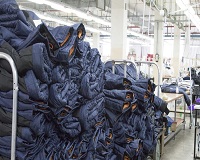 A McKinsey and Germany's RWTH Aachen University study states, Western countries sourcing from across Asia will shift production to neighboring countries. Western companies expect more than half of the clothes they source to come from "nearshoring" by 2025.
Resurgence of domestic markets
British fashion brands like Burberry and others moved some of their production back to England as the tag ‘Made in England’ became attractive to luxury buyers after an import boom in the 1990 and early 2000. Hugo Boss, the German fashion label, has started selling a ‘Made in Germany’ collection, produced completely in Metzingen, the company's corporate seat.
However, this strategy is not attractive for low-priced and mid-range clothing producers who have to constantly compromise between low production cost and a short time to market. These producers, in recent years had moved their production to cheaper countries such as Vietnam and Bangladesh; in 2017, China's share of apparel imports dropped both in the European Union and the US.
Failure to respond to consumer demand may result in huge volumes of unsold clothing. Producers must treat short lead times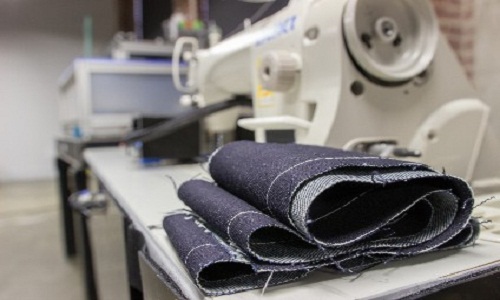 as the No. 1 priority. Fast fashion is giving way to ultra-fast fashion, as practiced by online retailers such as Boohoo, Asos and Lesara. This doesn't work well with shipping from Asia: Delivery to big Western markets takes about 30 days by sea.
Need to focus on quick delivery
Eventually, producers in China, Vietnam and Bangladesh will need to concentrate on delivering quickly to markets in their immediate neighborhood, creating capacity shortage for Western buyers.
As McKinsey states cheaper freight and lower duties make it less expensive to produce a pair of basic jeans in Mexico than in China for the US market and in Turkey for the German market. But Bangladesh still significantly undercuts Turkey for the European market and matches Mexico's costs for the US and moving production home -- to the US and Germany -- is still a non-starter; it increases cost by 17 per cent in the US and by 144 per cent in Germany.
But as lead times gain importance, shortening them compensates for some of the labor cost disadvantages by increasing the share of clothes sold at full price. Raising it by 6.1 per cent for a garment that takes 60 minutes to produce would justify the transfer of production from China to the US.
Automation to reduce costs in Western countries
Automation can drive down the cost in Western countries. Now, sewing a pair of jeans takes an average 19 minutes, more than half of the total production time. McKinsey and RWTH Aachen figure robotics can cut that time by 40 to 90 per cent. At another important step, distressing jeans, technology exists to cut the time necessary from about 20 minutes to 90 seconds: Levi's does it with lasers.
Almost 82 per cent of sourcing managers surveyed by McKinsey say production of simple garments will be fully automated by 2025. If they're right, production is coming back -- but jobs aren't. And China isn't likely to fritter away its current advantage even as it becomes more expensive: Chinese garment companies are building factories in cheap labor countries closer to Europe such as Ethiopia. With these caveats, it's likely that buyers of mass market clothes, not just expensive designer threads, will be dressing in garments from geographically closer countries soon.