FW
Textile care, fabric sales upto August 2018 rises by11.4 %
As per VDMA Textile Care, Fabric and Leather Technologies meeting of trade associations in Munich, sales in the textile care, fabric and leather technologies sector rose 11.4 per cent in real terms from January to August 2018 compared to previous year. The German Engineering Federation (VDMA) represents more than 3,200 primarily medium-sized companies in the capital goods industry, making it the largest industrial association in Europe.
Elgar Straub, Managing Director, VDMA revealed exports by the sector, which brings together manufacturers of sewing and garment technology, shoe and leather technology as well as laundry and dry cleaning technology, increased 6.2 per cent in 2017 from €1.049 billion in 2016 to €1.114 billion in 2017.
Protectionist measures in the US and other parts of the world are exacerbating the free trade debate. The export-oriented mechanical engineering industry is dependent on open markets, especially small and medium-sized enterprises, which cannot react by relocating production.
European firms support signing of EVFTA
European businesses expressed their support for signing and ratification of a free trade agreement between the European Union (EU) and Vietnam (EVFTA). The FTA will benefit European firms in many areas, including pharmaceuticals. It will strengthen multi-faceted partnership between the EU and Vietnam, bringing benefits to enterprises and people of both sides.
European investors in Vietnam will enjoy better assurances thanks to the Investment Protection Agreement (IPA), which has been separated from the EVFTA. As opportunities for business cooperation between the two are increasing due to their diversity and supplementary strengths, consumers on both sides will benefit from the process.
EU has supported Vietnam, through independent consultation experts, in building action plans and programmes to implement commitments stated in the deal. Both EVFTA and IPA have been translated into languages of EU countries and Vietnamese to be submitted to the European Commission (EC) and the Vietnamese government before the ratification process is undertaken in the European Parliament and Vietnam’s National Assembly.
Ethiopia to start development three textile parks before July 2019
Ethiopia will begin the development of three textile parks before July 2019. These centers will be built in: Aysha and Semera near Djibouti border and Assosa, next to Sudanese border. These parks will play a critical role in Ethiopia’s plan to transform its still largely agrarian economy into an industrialised one by 2025, using the textile and garment sector as a key component.
In addition to these facilities, Ethiopia will also develop four agro-industrial parks to capture more value from Ethiopia’s farming output. These will be built in the north eastern regions of Amhara, Oromia, Tigray and SNNPR.
Ethiopia has based its industrialisation effort on the development of low-carbon, tax-exempt “plug & play” industrial parks along development corridors. Ethiopia plans to increase the number of operational industrial parks from the current four to around 30 by 2025, increasing the share of the economy contributed by manufacturing from 5 per cent to 22 per cent.
Employment in US textiles down four per cent
Employment in the US textiles sector declined four per cent in 2017 from 2013. Reshoring has taken place in recent years, although on a modest scale. Total capital expenditures in plants and equipment for the textile sector increased 36 per cent from 2013 to 2016. Much of the new investment is by foreign firms, including new investments by Chinese and Indian firms, as well as by firms from Mexico, Canada, Turkey, and Saudi Arabia.
Firms are upgrading and modernizing their manufacturing processes and focusing their operations on different products. Employment in the apparel sector steadily declined during 2013-17, down 21 per cent. Labor productivity also declined during 2013–16.
Advantages of producing textiles in the United States include local and state incentives for investment, and the benefits afforded by free trade agreement preferences that encourage the use of US-produced inputs in downstream production in FTA partner countries, energy cost and the availability and reliability of high-quality cotton.
Advantages of producing apparel in the United States include improved lead times, better quality control, and more flexible production. The adoption of various automation and digital technologies to accelerate the process of product development improves the fit of the final product and reduces the need for skilled sewing operators.
Fashion firms adopt eco-friendly initiatives
Amid mounting social criticism, fashion businesses are adopting eco-friendly initiatives to preserve their brand value. Popular brand Stella McCartney, in its 2019 Spring/Summer Collection in Paris, has created an invitation that explains its use of environmentally conscious materials in the format of comics. The brand makes its clothes from sustainable materials such as recycled nylon.
Upcoming brand Marine Serre has used the upcycled method to create a new dress out of unsold clothing and material. Designers, in the current age of clothing abundance, feel no need to use new materials. For them, it is possible to create outstanding clothing with materials already available.
On September 6, Burberry announced it would no longer engage in mass disposal of unsold products. The BBC and other media outlets had reported in July that in fiscal 2017 alone Burberry disposed of products such as clothing and perfume worth about ¥4.2 billion, bringing significant criticism.
The LVMH conglomerate, with 70 brands under its umbrella, touts reducing carbon dioxide emissions and raising the use of renewable energy. H&M will use environmentally conscious materials in all of its products by 2030.
Eastman develops cellulosic fiber -- Naia
Eastman has developed a new eco-friendly cellulosic fiber named Naia. Naia can transform into luxurious, soft, and easy-to-care-for fabrics, garments made from Naia can be laundered at home, have excellent wrinkle recovery and pilling resistance, all without compromising its luster and silky hand.
The fiber is produced in a safe, closed-loop process where non-hazardous chemical solvents are recycled back into the system for reuse. This optimized, low-impact manufacturing process has a third party verified Life Cycle Assessment certification. Naia has a lower impact than other fibers such as generic modal, viscose and triacetate.
Eastman, based in the US, is a producer of advanced materials and specialty additives. With a portfolio of specialty businesses, Eastman delivers innovative products and solutions while maintaining a commitment to safety and sustainability. As a globally diverse company, it serves customers in more than 100 countries. The company employs approximately 14,000 people around the world. It is committed to improving sustainability in the textile industry and providing choices to designers seeking out sustainable yarns.
With Naia, sustainability does not mean compromising on design. This yarn is made with no hazardous solvents. In terms of greenhouse gas emissions, water use and impact on the ecosystem Naia has significantly lower environmental impact compared to natural fibers such as cotton and silk.
Bangladesh diversifies product basket to offer value-added products
Over the last few years, Bangladesh has successfully diversified its product basket to offer value-added, innovative, and fashionable items to attract buyers from across the globe. And the cases in point are names like US-based brand Southpole and the Russian fashion brand Oodji that have not only started sourcing from the country but are also aiming to increase their order volumes significantly in coming days.
Aimed at catering to the young consumrs, Southpole® is the flagship brand of Wicked Fashions founded by David Khym and Kenny Khym. Starting as a premium urban brand, Southpole with its legendary puffy ‘bubble’ jacket and 4180 ™ relaxed fit denim pants, influenced the beginning of urban fashion in American street culture. The company has five brands under its portfolio and sells its products through its stores AAO (Against All Odds) as well as other stores like Sears, Burlington, etc.
Kick-starting Bangladesh operations in 2010, Russian fashion brand Oodji has so far been procuring 15-25 per cent of its requirements from Bangladesh while Uzbekistan accounts for another 20 per cent and the rest comes from China. However, with China increasingly getting expensive owing to spiralling labour costs and Bangladesh maturing as a manufacturing destination while being able to maintain and leverage its cheap and abundant workforce— things are set to change as far as Oodji is concerned.
China increases apparel exports to the US
Despite its ongoing trade war, Chinese apparel exports to the US increased to 31.68 per cent of total world exports till August. OTEXA’s data reveals, Vietnam, Bangladesh and India lost share in US exports to 14.90 per cent, 6.72 per cent and 5.02 per cent respectively from Jan. to Aug. ’18. China might have increased its share on a monthly basis but its share on the yearly note plunged 1.04 per cent in value terms.
Shipments from Vietnam increased 5.85 per cent to $8,125 million on a monthly basis during the period. Bangladesh and India too increased their exports to $3,664.15 million and $2,741.44 million respectively. Exports from Indonesia on the other hand, declined to 5.57 per cent on a yearly basis in the corresponding period of 2018. On a monthly basis, the country’s exports declined 5.66 per cent.
China keeps its position as a textile industry leader
"Though the fast-paced recovery of global economy and increased domestic demand led to the strong growth in Chinese textile industry in the first half of 2018, the US-China relationship posed great challenges. As the latest statistics of the General Administration of Customs of China indicate, Chinese textile and apparel exports in the first half of this year amounted to $127.524 billion representing a year-on-year growth of only 3.24 per cent. Exports of textile yarns, fabrics and end products, in particular, amounted to $58.332 billion, a YOY growth of 10.28 per cent, while export of garments and accessories decreased 2.03 per cent YOY."
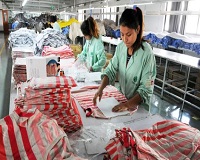 Though the fast-paced recovery of global economy and increased domestic demand led to the strong growth in Chinese textile industry in the first half of 2018, the US-China relationship posed great challenges. As the latest statistics of the General Administration of Customs of China indicate, Chinese textile and apparel exports in the first half of this year amounted to $127.524 billion representing a year-on-year growth of only 3.24 per cent. Exports of textile yarns, fabrics and end products, in particular, amounted to $58.332 billion, a YOY growth of 10.28 per cent, while export of garments and accessories decreased 2.03 per cent YOY.
Rapid growth of domestic market
China’s domestic textile and apparel market continued to grow at a fast pace with both physical stores and e-commerce channels registering high level of sales. As the country’s National Bureau of Statistics indicate, the sale of clothing, shoes, hats and knitting products from January to May 2018 increased 9.1 per cent over the same period last year. Meanwhile, e-commerce channels continued to maintain rapid growth. The sales of clothing on these channels from January to May increased 24.9 YOY, representing a higher growth rate when compared with the same period in the previous year.
As per latest statistics from the Office of Textiles and Apparel US, China’s textile and apparel exports to the US totaled $38.74 billion in 2017, of which 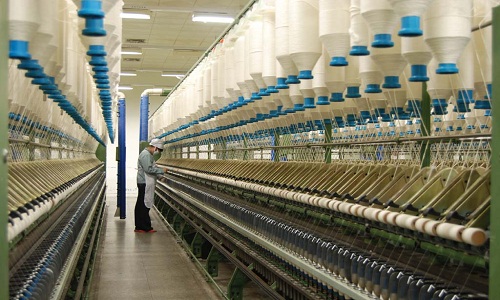 apparel exports was $27.03 billion and textiles and finished product exports was $11.71 billion.
From July this year, the US imposed 25 per cent tariffs on Chinese products worth $36 billion. China took counter measures. Meanwhile, the Office of the United States Trade Representative (USTR) further announced 25 per cent tariffs on another list of Chinese imported products worth $16 billion on August 7. The Customs Tariff Commission of the State Council of China responded by imposing an extra 25 per cent tariff on US imported products also worth $16 billion.
An extra 10 per cent tariff on $200 billion worth of Chinese imported products was announced by the USTR recently. This list of over 5,000 products includes textile related products, such as textile raw materials, yarns, fabrics, carpets, technical textiles, leather, etc. As per CNTAC, the value of annual exports to the US amounts to about $4 billion.
Shift in global supply chain
A recent survey by the US Fashion Industry Association indicates, nearly 70 per cent of fashion industry executives plan to restructure sourcing from China over the next two years. At the same time, China’s latest tariff imposition on US imports led to many Chinese textile enterprises and traders shifting their sourcing to other countries.
The foundation for the development of Chinese textile industry in 2018 remains strong. To achieve this growth, the industry needs to upgrade production technologies and product quality, grasp the opportunities of the Belt and Road Initiative and transform into the world’s true textile industry leader.
Innovation in focus at latest edition of CHIC Shanghai 2018
"The recent edition of CHIC held from September 27 to 29, in Shanghai, was attended by over 58,400 visitors from all sectors of the trade. Commenting on the exhibition Chen Dapeng, President, CHIC Shanghai and Executive Vice President, CNGA says, "The meaning of ‘Made in China’ has changed. The focus of the Chinese apparel industry has shifted from quantity to quality, innovation and upgrading are key factors in the competitiveness of fashion brands in response to market changes."
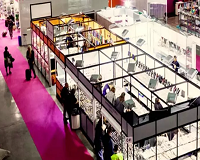 The recent edition of CHIC held from September 27 to 29, in Shanghai, was attended by over 58,400 visitors from all sectors of the trade. Commenting on the exhibition Chen Dapeng, President, CHIC Shanghai and Executive Vice President, CNGA says, "The meaning of ‘Made in China’ has changed. The focus of the Chinese apparel industry has shifted from quantity to quality, innovation and upgrading are key factors in the competitiveness of fashion brands in response to market changes."
This edition featured 719 exhibitors from 825 brands across 14 countries who presented new S/S ’19 collections. China’s most famous sportswear brand Li Ning impressed with a fashion show, at the At the Sustainable Development Zone.
Hi-fashion with comfortable casual wear
CHIC Shanghai presented 10 clearly structured trade fair segments covering the entire spectrum of fashion and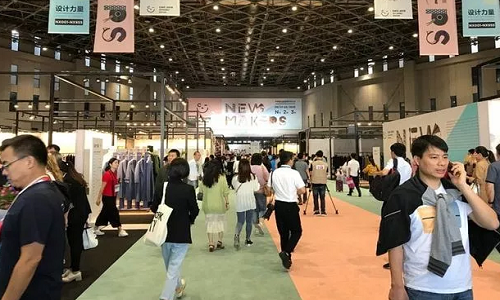 lifestyle: Urban View, New Look, Impulse, Fashion Journey, Heritage, Secret Stars, Bags & Shoes, CHIC Young Blood, Superior Factory and Future Link.
The Urban View section featured over 60 exhibitors including E-Fashion Town supported by the China National Garment Association. Other noteworthy exhibitors included the world-famous couture designer Guo Pei and Supin who presented a collection for the Globetrotter comprising comfortable casual wear combined with travel gadgets such as neck pillows and teapots.
The Kid’s Paradise section displayed leading brands such as eton kidd, which focused on school uniforms, among others; xtep- kids, which incorporated many Chinese elements into its kidswear collection; Beijing Jiaman Dress Co which displayed brands like Hush Puppies, Hazzys and Souhait; Solocote which presented trendy down jackets for kids.
Italian brands make a splash
The Fashion Journey sector included companies and brands from Italy, France, Norway, the UK, Poland, Australia etc. Italy recorded the largest European group participation with 10 men's and women's accessories brands like Collirossi, Giovanni Fabiani, Fabiani, Mychoice, Sara Kent, Primigim, Made in Italy, Thierry Rabotin, Tr1, Thierry Rabotin Couture and Tiffi showcasing their products.
Norwegian shoe brand Swim attracted attention with loafers, rain boots, umbrellas and bags and the UK brand UKPiers with hand-sewn classic men's shoes. Buenos from Australia enthused with exclusive women's shoes in the finest lamb leather, made in Turkey.
Sales and networking opportunity
More than 120 brands used CHIC as a network and sales platform. Hennessy Bear expanded its customer network and found new agencies. Hasuptam bagged an order worth €30,000. Stetson and Ruediger Accessories expanded their distribution network; Future Link offered solutions for an efficient and sustainable garment production, led by exhibitors Suntole, Anok And Hikari.
CHIC as a service partner provided information about current market developments through CHIC Talk which discussed topics like: Big data, iFashion Cloud, retail evolution and trend analysis. CHIC Shows presented the International Brands' Show. CHIC Matching focused on the management of purchasing/trade key accounts.