FW
Vietnam’s Son Ha Garments inducts Coats Digital’s GSDCost
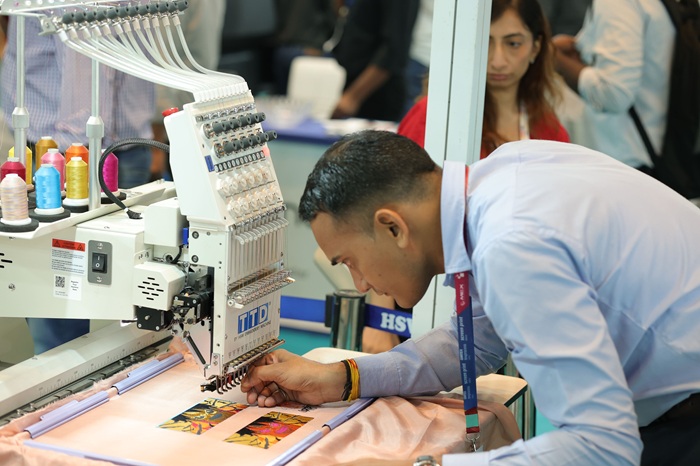
Son Ha Garment has implemented Coats Digital’s GSDCost and seen significant improvement in efficiency. The implementation has greatly reduced unnecessary staff hours that were wasted on demanding and burdensome manual tasks; improved on-time deliveries; significantly increased production efficiencies and ensured that a fair wage can be negotiated into accurate and transparent costing proposals. The adoption of GSDCost has also meant that Son Ha can factor in a fair wage into all its new, fact-based cost negotiations with its customers.
Son Ha Garment is a Vietnamese leisure and sportswear manufacturer. Coats Digital is the software business of Coats, the world’s leading industrial thread company and a trusted industry player. GSDCost is the international standard for establishing and optimizing accurate method-time-cost benchmarks for sustainable garment cost optimization and manufacturing excellence.
Coats Digital’s GSDCost method analysis and pre-determined times solution is widely acknowledged as the de-facto international standard across the sewn products industry. The solution supports a more collaborative, transparent and sustainable supply chain, in which brands and manufacturers establish and optimise International Standard Time Benchmarks using standard motion codes and predetermined times. This use of a common language and standards supports accurate cost prediction, fact-based negotiation, and a more efficient garment manufacturing process.
US Cotton Trust Protocol sets the stage for use of sustainable cotton across the globe

In November 2021, the COP26 summit held in Glasgow held up a red flag for global fashion industry and the need to act fast and now. According to McKinsey report, under the current trajectory, the fashion industry will overshoot greenhouse gas emissions needed to achieve a 1.5º C global warming pathway by over one billion metric tons.
Need to focus on sustainable cotton
Given this scenario, sustainable cotton plays a major role as one of the most used fibers. The US has been in the forefront of sustainable cotton cultivation for over three decades and in 2020, the country established the US Cotton Trust Protocol. It envisions setting a new standard in production of sustainable cotton where full transparency is at the core and continual development to establish a green footprint is a must. The US Cotton Trust Protocol has its origins in recognizing that the US cotton industry had an important role to play in the protection and preservation of the planet and that it must do so via a system that was measurable and quantifiable.
The US Cotton Trust Protocol recognizes growing expectation of brands and retailers to provide goods that have highly transparent supply chains and a robust sustainability profile and also provide evidence of this. This is becoming important as governments are imposing stringent regulations for the fashion and textile sectors about origin, source and sustainability of fibers in use.
A farm level, science-based program that sets a new standard in more sustainably grown cotton, the US Cotton Trust Protocol brings verifiable goals and measurements to cotton production – driving improvements in land use, soil carbon, water management, soil loss, greenhouse gas emissions and energy efficiency.
And as Gary Adams, president of the US Cotton Trust Protocol says, “The Trust Protocol measures, evidences and verifies sustainability credentials. With the Trust Protocol we are providing access to more sustainability grown cotton for brands and retailers, and science-based, data-led assurances that their consumers can have confidence in – something that has been lacking in the industry to date.”
Benefits for mills, manufacturers
Indeed, mills and manufacturers gain a lot when they join the Trust Protocol. The important benefit is being identified as part of a fully transparent supply chain and selected by brands and retailers as they look to source US cotton. In its two years, the Trust Protocol welcomed more than 800 mills and manufacturer members from Pakistan, Bangladesh, India, China, Latin America, Thailand, Indonesia, Vietnam, Turkey, Korea, Japan, Taiwan, the US and Western Europe. The program also added 40 global brands and retailers including J. Crew, Madewell, Levi Strauss & Co. and, Gap Inc. as well as global apparel manufacturer Gildan.
As per Mike Quinn, Vice President of Operations, Gildan/Frontier Yarns Inc, “As brands and retailers respond to customer demand for sustainability, mills are now joining the conversation. Membership in the program enables us to show we are an approved supply chain partner for brands and retailers who are sourcing more sustainably grown cotton.” Having set the benchmark, the US Cotton Trust Protocol is an inspiration for cotton-growing regions worldwide.
Egypt aims at doubling garment exports
Egypt is planning to double its garment exports. The clothing sector brings in $2.5 billion in exports annually. The plan is to increase annual exports by 8 to 15 per cent. An initiative will be launched to bankroll big and middle-sized industries with a five per cent interest rate, in the hope that this would help secure finances needed by the clothes sector.
Egypt’s textile exports increased 28 per cent during the first nine months of 2021. Exports of fabrics were up 17 per cent. The higher exports were driven by the gradual easing of restrictions in markets and the high vaccination rates across the world. Egypt wants to have stronger trade relations with Africa. Steps include taking part in international exhibitions in the African continent and setting up an Egyptian-African free trade zone.
The main countries Egypt is interested in are: Kenya, Zambia and Ivory Coast. Egypt plans to develop its textile industry with the objective of becoming the next textile factory of the planet. Machinery will be renovated and workers will be trained. The vision is to quadruple exports of textiles and garments by 2025. The aim is to support Egypt’s private sector upstream manufacturers’ competitiveness in the world markets.
Green Machine wins ITMF sustainability award
Green Machine has won the ITMF Awards 2022 in the sustainability and innovation category. Green Machine is the Hong Kong Research Institute of Textiles and Apparel’s research project. Green Machine is a hydrothermal treatment process that separates cotton polyester blends at scale by using only heat, water and a biodegradable green chemical. It has won a total of five awards since its launch in 2016.
Green Machine solves long-term challenges in recycling blended textiles. Everything going through the hydrothermal process can be reused. The separated fibers are ready for re-spinning. The cellulose powder decomposed from cotton can be turned into functional finishes or raw materials for textile application. The cellulose powder can even be transformed into a water retention agent for agricultural use. Green Machine has great potential to speed up the journey of sustainability and bring significant benefits to the textile industry and society as a whole.
ITMF Awards are organized by International Textile Manufacturers Federation which was founded in 1904 and which celebrates works of merit and notable achievements in the textile field. The category sustainability and innovation recognises achievements in the industry that have a focus on innovation, design, development and production. Such achievements must comply with the strictest standards of sustainability and respect for the environment.
Bangladesh eyes bigger share of South Korean garments market
Bangladesh aims at hiking apparel exports to South Korea. South Korea currently sources 34 per cent of apparel items from China but due to rising costs, apparel production is increasingly moving out of China and Bangladesh’s entrepreneurs now have an opportunity to capture the South Korean market.
Bangladesh’s apparel shipments to South Korea have seen positive growth over the past five years despite the pandemic-led slowdown. But a big push will be taken this year to capture a bigger share of the market with diversified items such as underwear, denims, shirts, jackets and pullovers as South Korea has a great demand for high-value winter clothing and denim. Other potential products that have good demand in the country include non-leather footwear, home textiles, jute and jute products etc.
And South Korean buyers and brands are also showing interest in increasing sourcing from Bangladesh as the country can offer competitive prices. Bangladesh will also offer South Korea joint cooperation in manufacturing manmade fiber-based products. Among South Korea’s apparel imports, China is the largest export source, followed by Vietnam, Italy, and Indonesia. South Korea happens to be Bangladesh’s 20th largest export partner out of 202 destinations.
Textile Association of India to organize digitalization conference in October
The Textile Association of India is organizing a conference on digitalization at Mumbai, October 14, 2022. The conference will look at how digitalization is shaping up and transforming the global textile business and will discuss the major challenges faced by the textile industry in today’s digital marketplace and identify practical steps to be taken to digitalize the value chain. A galaxy of speakers will throw light on this very challenging subject. This high profile conference will be attended by 500 participants where they will get the rare opportunity to listen to such quality experts. Participating delegates will benefit from this conference and will be convinced that digitalization is not a choice but a necessity. Many global textile machinery manufacturers have already adopted digitization and subsequently digitalization.
Enhanced technology, digital systems and automated processes will make it possible for manufacturing quality products with high productivity and at optimum cost. Industry 4.0 includes cyber-physical systems, the Internet of Things, cloud computing which would create what is being defined as smart factory.
The Textile Association (India), Mumbai unit, the largest unit of the association with around 4,000 members, organizes events of topical interest both at the national and the global level.
Shanghai Fashion Week returns to physical format
Shanghai Fashion Week (SFW) will be held in September. After being forced to go digital due to the two month long lockdown last season, the show is returning with a physical edition. The spring 2023 edition will host more than 64 shows with a focus on local designers.
Stricter screening protocols have been set in place as China sticks to its zero Covid policy. Show staff must show proof of 24-hour Covid tests for five consecutive days ahead of the event while fashion showgoers will be required to show 24-hour valid Covid test results to enter SFW venues.
At Ontimeshow, the largest fashion trade show during SFW, sites will be disinfected daily. For many brands, hosting fashion shows offsite became a popular option in previous seasons, but as the hurdle to gain event approval from local authorities became highly difficult due to Covid related restrictions, sticking with the official venues became the safer option. Ontimeshow will expand to nine show venues covering more than 29,000 square meters. Its Room Room showroom will feature nine new brands, such as Self-portrait, Qiuhao and Private Policy.
India’s textile and apparel exports fall in first five months of this fiscal
India’s exports of textiles and apparel fell by one per cent during the first five months of the current fiscal. The yarn market and entire value chain are witnessing a slower demand. India’s exports of cotton yarn, fabrics, made-ups, handloom products fell 16 per cent in April 2022 to August 2022. Export of carpets fell 15 per cent. Handicrafts (excluding handmade carpets) also eased 29 per cent in the first five months of the current fiscal. Total textile exports fell 13 per cent. However, apparel exports grew 17 per cent because of better performance in the previous months of this fiscal.
Exports of all the products in the textile segment registered a decline in the month of August. International trade, especially of discretionary products like garments and home textiles, is facing a slower demand. The global economy is facing challenges such as the Russia-Ukraine war, which has disrupted global trade and supplies of not only textiles and apparel but also food grains and many other important commodities. High inflation all over the world has left the consumers without money for discretionary expenditure, which in turn has dried up demand for many consumer items including textiles.
Lenzing suspends 2022 earnings guidance
Lenzing has suspended its guidance for the development of earnings in the 2022 financial year. This has been due to the drastic market deterioration in the current quarter. In light of the current distortions in the energy and raw material markets, and their impact on consumer climate, Lenzing sees itself confirmed in its long-term corporate strategy and will continue to drive specialty fiber growth and the implementation of its ambitious climate and sustainability goals, including the transformation to a circular economy model.
Based on current assumptions for energy and raw material costs, Lenzing also sees the achievement of its medium-term guidance for 2024 at risk. The group is currently experiencing unprecedented distortions in the energy and raw material markets, which are burdening consumer climate and significantly limiting visibility on short to medium-term business development. However Lenzing’s long-term growth prospects for its wood-based, biodegradable specialty fibers remain positive.
Lenzing, the world’s leading supplier of wood-based specialty fibers for the textile and nonwovens industries, is a partner of global textile and nonwoven manufacturers and drives many new technological developments. Lenzing’s fibers form the basis for a variety of textile applications ranging from elegant clothing to versatile denims and high-performance sports clothing.
Isko opens German product development center
Isko has opened its second product development center in Germany and the other one is in the UK. Called Creative Room, it is a division of Isko devoted to offering streamlined and simplified solutions for all denim requirements – from fabric to finished garment.
With a focus on sustainable washing and finishing techniques, customers of Creative Room will be able to work in parallel with Isko’s experts to achieve their desired denim looks. Creative Room Germany will also be the central point for its customers’ full product development, ensuring the whole process is agile and more efficient. By utilizing Isko’s patented recycling technology, they are now able to develop brand new garments by using fibers from post-consumer denim, finally closing the loop and giving a new and cutting-edge circular supply solution for their customers. As well as a hub for customers, Creative Room Germany will also act as a platform for the wider denim community to share knowledge, create new and innovative ideas and to bring them to life. The center will develop innovative washing and finishing techniques that meet the highest quality and sustainability standards with a significantly lower environmental impact.
Isko is the textile division of Sanko and has a strong global presence in 35 countries with 60 international locations.