FW
Woolmark launches campaign against synthetics
Woolmark has launched an anti-synthetic fiber campaign to raise awareness of the use of fossil fuels in textiles and promote wool as a natural, renewable alternative.
The campaign centers on a 60-second film showing three people struggling to swim through a pool filled with oil with a caption that reads “Every 25 seconds an Olympic-sized pool of oil is used to make synthetic clothing.” The models then peel off the oil to reveal wool outfits while walking through rolling green landscapes and a caption that reads “wool is 100 per cent natural, 100 per cent biodegradable and 100 per cent renewable”.The film is accompanied by additional digital outdoor advertising displays and a microsite.
Woolmark is a professional body that promotes and protects the interests of Australian merino wool including a certification scheme to ensure suppliers meet certain standards.
Most people don’t know that synthetic fabrics are derived from fossil fuels. Synthetics account for 1.35 per cent of global oil consumption and are expected to increase from 60 per cent of all fiber use to 73 per cent by 2030. Synthetic fabrics, such as polyester, acrylic, rayon and spandex, are responsible for 35 per cent of microplastics in our oceans.
RCEP boosts Chinese exports
The Regional Comprehensive Economic Partnership (RCEP) pact has facilitated the sound growth momentum of China’s exports to other member countries of the agreement.
RCEP came into effect in January2022. During the first six months, exports and imports between China and other RCEP countries accounted for about 32 percent of China’s total trade.China’s exports to other RCEP member countries grew 14 percent year-on-year, which was 2.3 percentage points higher than the average annual growth rate of China’s exports to other RCEP member countries in the past 20 years.
Chinese exports to other major RCEP member countries have increased significantly during the first half, except for Vietnam and Japan. Other RCEP countries’ contributions to China’s exports have also increased during the period, and the share of non-RCEP member countries in China’s outbound shipments dropped by 1.11 percentage points from a year earlier. In addition, shares of most RCEP countries in China’s exports have all risen, except for Japan, Vietnam and New Zealand.
The RCEP has facilitated China’s exports to Japan and South Korea. The implementation of the trade pact has for the first time established direct free trade relations between China and Japan, and Japan will eventually remove 88 percent of tariffs on Chinese imports.
Pakistan to import cotton
Pakistan will import cotton after an estimated 1.4 million acres of the area where the crop is cultivated have destruction due to floods.
Date and sugarcane crops have also seen massive destruction while issues are being faced in transporting tomatoes and onions to major cities of Pakistan, which is in turn driving their prices upward. As a result Pakistan has suspended duty and taxes on import of onions and tomatoes. Already import of onion from Afghanistan resulted in reduction of its price in many parts of the country.
The US and Pakistan are working to help resolve issues relating to production of cotton and its trade between the two countries. The US is Pakistan’s largest trade and investment partner. There will be a technology transfer of high-yielding cotton seeds to Pakistan. The US will introduce improved, genetically modified, and certified seeds in Pakistan and share information on weather forecast. Pakistan will be updated on the best global practices in cotton and textiles being adopted by various countries. Mutual cooperation between American cotton growers and Pakistan’s textile industry is seen as offering a win-win situation for both countries where raw cotton imported from the US is converted into manufactured textile products and exported back to the US after enormous value addition.
India plans seven textile parks
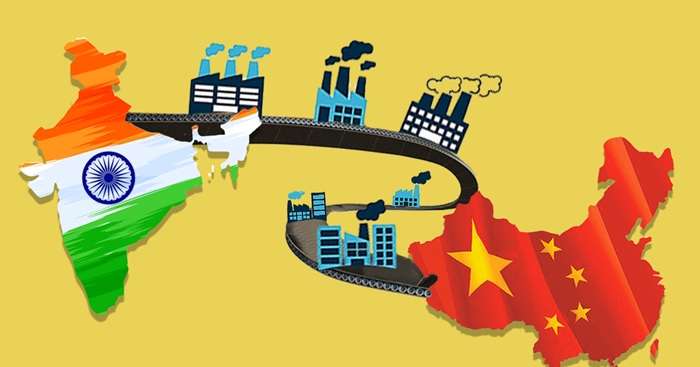
Seven mega textile parks will be set up under the Mega Integrated Textile Region and Apparel (MITRA) scheme.
The states where these parks will be set up have almost been finalized but they have been asked to provide a long-term projection for power tariffs that would be charged at these parks. The centre is trying to get a few things from the states by way of concessions and is trying to get states to agree to a better power regime. In some states, the cost of power is quite high, which the centre would like to see reduced. The states have been asked to submit a long-term roadmap— say, 15 years—of the power tariff that would be charged at these textile parks and they have been requested to refrain from raising power charges for 15 years.
The Mega Integrated Textile Region and Apparel scheme was announced in budget 2021 to make the textile industry globally competitive. It was given a budget of Rs 4,445 crores (0.55 bn) for seven years.
India’s textile and apparel exporters complain that a largely fragmented supply chain and higher logistics costs push up the cost of production—one reason export orders have steadily moved to countries such as Bangladesh and Vietnam. These mega parks are aimed at helping return textile orders as a result of a planned integrated textiles value chain—including spinning, weaving and processing —at a single location.
Textech Bangladesh held expo after two years
Textech Bangladesh International Expo 2022 was held from August 31 to September 3, 2022.
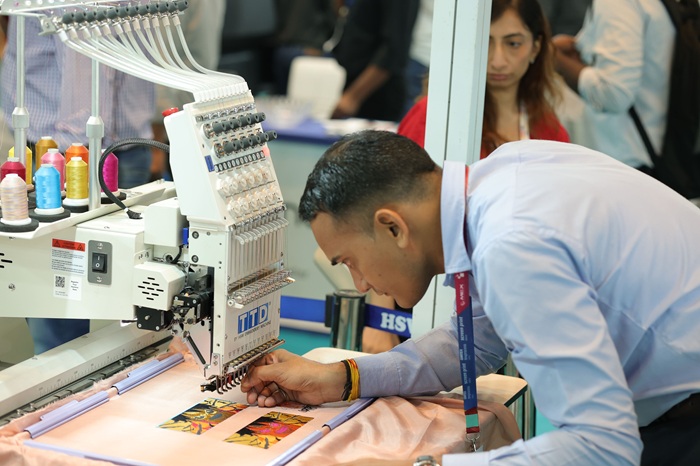
The expo focuses on international textile apparel technology and the machinery industry of Bangladesh.A total of 300 companies from 12 countries, including many from China, showcased their products.Spinning, weaving, knitting machines and yarn processing equipment, chemicals and dyes, embroidery and sewing materials among other products were on display during the event, where sector insiders got tips straight from professionals to discover ways to improve efficiency in their factories.
This edition of the show was held after two years of pandemic-induced doldrums.This annual exhibition plays the role of a bridge. It offers many things in one place, right from fabric to accessories.Conference and Exhibition Management Services, an event management company, organized the exhibition through its Bangladesh wing. Some 14,000 visitors attended the exhibition.
International suppliers of yarn, fabric, dye chemicals and machinery are eying to grab the growing apparel sector of Bangladesh by increasing their supplies.
India ITME to present awards in December
The India ITME (International Textile Machinery Expo) awards will be presented on December 8, 2022, a part of the event to be held between Dec 8-13.
The awards recognise the significant contributions that have influenced positive change in the textile engineering sector of India. The winners will be felicitated with cash awards, trophies, and certificates depending on the award category.The awards aim at recognising talent and felicitating winners in the categories of ginning, spinning, weaving and weaving preparatory, processing and finishing, garmenting, printing, accessories for textiles and technical textiles. They also cover technology for pollution control, textile engineering and research excellence.
The ITME society has brought on board reputed leaders from different sectors of the textile industry to be part of the jury for awards selection. Members of the jury panel include Sanjay Jayavarthanavelu, chairman and managing director at Lakshmi Machine Works and a former chairman of India ITME Society; Uday Gill, group chief strategy officer for fibers, Indorama Ventures, a top textile fiber expert having a knack for identifying hidden gems from across the globe and successfully leading acquisitions; Updeep Singh, president and CEO for Sutlej Textiles and Industries, a genius in textiles and a resourceful personality in textile technology; Manohar Samuel, advisor R&D for Reliance Industries, an expert in core dynamics of fibers and a passionate researcher, brand developer, and value chain builder.
Hong Kong to host Centrestage
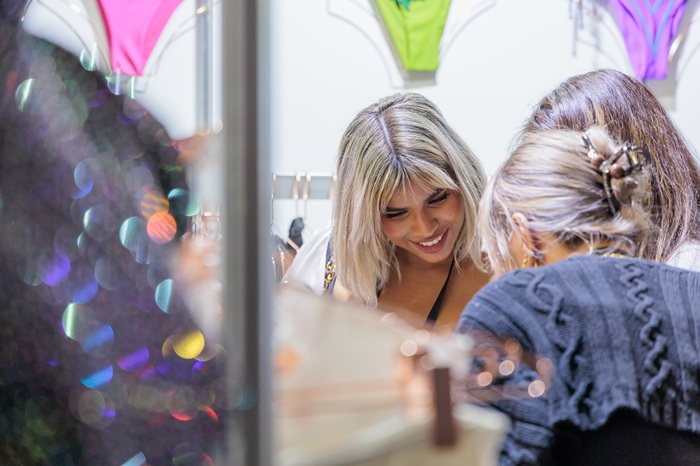
Centrestage will be held in Hong Kong, September 9 to 11, 2022. This is one of Asia’s most anticipated annual fashion events. More than 240 fashion brands and designer labels from 15 countries and regions will take part in the three-day fashion presentation, promoting a wide variety of ready-to-wear apparel and accessories.The show will see the global launch of the latest collections from designer brands Derek Chan, Demo and Children of the discordance.
This year’s Centrestage revolves around the theme of inclusion and diversity, inviting visitors to express themselves boldly through fashion and at the same time celebrate the differences among bodies, cultures and ideologies. The show will host more than 30 fashion events in these three days, including a series of brand shows and seminars. Centrestage will again be open to public and trade visitors for free throughout the entire show period, providing an ideal platform for visitors to share the joy of exploring fashion and shopping. A wide array of interactive experiences empowered by AR and VR technologies will be offered at the fairground to enrich visitors’ experience, including the brand new Centreverse, a custom-built metaverse where visitors can interact and participate in fashion events using personalised avatars.
Uster ensures clean nonwovens
Uster offers solutions for removing contamination from nonwovens.
Nonwovens applications such as medical, hygiene and cosmetics demand two non-negotiable rules: zero-tolerance and reliability. Contamination control is the supreme discipline in producing nonwovens for sensitive applications. The Uster contamination sorter masters this essential job with ease and security. It ensures customer satisfaction and a perfect experience for the final consumer – whether the end-product is made of natural or synthetic fibers. Drylaid nonwovens producers operate to the most stringent quality levels – with zero-tolerance standards for defects bigger than 1 mm. In this nonwovens segment, end-product quality depends absolutely on the efficiency of contamination sorting early in the process.
Bales of cotton typically contain various kinds of contamination – none of which should get into the final product, and ideally should be removed at the earliest stage of production.Eliminating contamination during fiber preparation – and before the contaminants are shredded into smaller particles by further processes – improves the quality of the raw material and reduces waste. The Uster Jossi Vision Shield N contamination sorter ensures the best possible detection and removal of contamination.
Conventional camera-based systems cannot match the performance of the top-level spectroscope technology from Uster. These spectroscopes can find contamination even within the invisible range of IR and UV light.
Fashinza has new directors
AI-driven business-to-business fashion marketplace Fashinza has appointed Neil Topiwala as its new director in the UK and Pushkar Kumar as its UAE director as the business plans further international expansion.
Following its recent $100 million Series B funding round, Fashinza is focusing on expanding its fashion business into the US, Middle East, Europe, and UK. As part of this plan, Topiwala and Kumar will use their decades of experience in fashion to harness data and cloud-based technology to enable the business to form a more transparent, ethical, and sustainable production and supply chain.
Pushkar and Neil have more than 20 years of experience in the industry and have worked with top brands, retailers, and buying offices, including Inditex, Next, Primark and Landmark. Fashinza expects to be able to make great strides in the US, UK, and European markets with their vast experience and knowledge on both the demand and supply sides and is confident their leadership skills and their extensive experience across different sectors will help Fashinza scale in both demand and supply by bringing in more enterprise clients from the international markets.Fashinzais looking forward to scaling its international business to new heights with the duo of Neil and Pushkar.
Prym continues with Sri Lanka
Prym, a German apparel manufacturer, is reputed for producing accessories for the global lingerie industry.
Prym Fashion has launched eco-friendly snaps. The snaps, available in EcoWhite or EcoGreen, offer earth-friendly solutions for sportswear, outdoor performance apparel and children’s and babies’ wear manufacturers. The EcoWhite snaps are made from recycled water bottles. The EcoGreen snap is green in color but also green because it is sourced from plant materials, such as potato starch. As a result, this snap is both biodegradable and recyclable. An EcoBlue snap is on the horizon, which will source recycled ocean plastic for production.
The fashion industry is well-known for wasteful practices in manufacturing, including excessive water consumption and chemical run-off. As brands and retailers in the textile industry continue to raise their sustainability goals, details like trim will become increasingly important. Prym Fashion is committed to making snaps that make a difference.
Prym is a company with a rich legacy of close to 500 years, including over two decades in Sri Lanka. Despite the current economic crisis in Sri Lanka, the island has been an ideal destination for the apparel manufacturer. Prym will continue to expand its presence in the country by investing in more machinery and training the local teams to increase their production capacity.