FW
Bangladesh remains top sourcing hotspot for apparels
In spite of COVID-19, major clothing brands have no plans to reduce their sourcing targets from Bangladesh. In fact, one company has placed five per cent more work orders in Bangladesh compared to last year. Besides, the timing of the spread of the virus is an opportune in a way: stores have started to put out their spring/summer collections, so Bangladesh’s apparel manufacturers have already shipped out a big chunk of their work orders. Most international clothing retailers and brands have extended the period of execution of work orders for two weeks due to the virus. Bangladesh stands to benefit from the fallout of the Coronavirus. The reason being most of the globally renowned companies are planning to shift their work orders from China to other Asian countries, including Bangladesh.
As of now, Italy is in lockdown, and Spain, the second most affected country, is considering following suit. China, where the virus originated from and the apparel sector's source for 46 per cent of the raw materials, has got the novel virus under control and is on course to restarting production. Things are improving in the supply chain with China. Bangladesh imports machinery, cotton, dyes, chemicals and other industrial raw materials from China.
The after effects of COVID-19 to be felt by global fashion industry till mid-2021
"Though Coronavirus (COVID-19) has led to some designers cancelling Milan Fashion Week shows, the fashion industry is yet to feel the full brunt of the repercussions of the global pandemic. So far, the outbreak has led to cancellation of some presentations in Paris. It has also resulted in an increase in the sale of face masks including ones being custom-designed for the fall ’20 Chanel show."
 Though Coronavirus (COVID-19) has led to some designers cancelling Milan Fashion Week shows, the fashion industry is yet to feel the full brunt of the repercussions of the global pandemic. So far, the outbreak has led to cancellation of some presentations in Paris. It has also resulted in an increase in the sale of face masks including ones being custom-designed for the fall ’20 Chanel show.
American fashion editors have been advised to self-quarantine for two weeks. Most local fashion houses in New York have declared a work-from-home policy for employees. They are either cancelling or postponing their shoots, press previews, dinners, and work-related travels.
Impact on small, direct to consumer brands
Not just large, publicly owned companies but also small, direct to consumer brands are suffering. Traffic at Le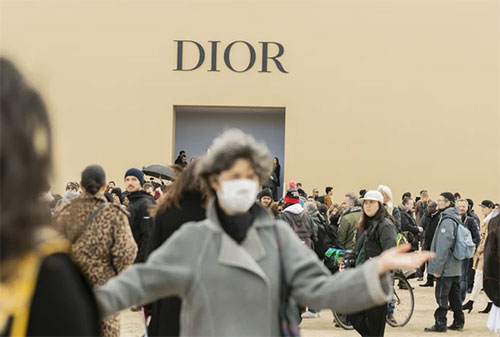 Point, a San Francisco-based multi-brand concept store has slowed as people have been told to avoid large groups and stay indoors. Similarly, the epidemic has delayed the restock of China-based brand Yan Yan by a few weeks, thus affecting its ability to supply to demand. As a health and safety requirement, the brand is monitoring the temperatures of its factory workers daily besides compelling them to wear masks. Employees also have to sanitise their shoes before entering office besides washing their hands before handling product and packages.
Government orders compel brands to shut stores
Fashion brands in Italy and China have begun to close their stores as governments in both countries have advised their residents to avoid public spaces. Italy has also forbidden its citizens to gather in public. Capri Holdings, which owns Michael Kors, Versace, and Jimmy Choo, has closed 150 stores in China.
As most Chinese workers have been advised to stay at home, production at all brand factories has stopped. This is likely to delay order inventories of factories in China. As Gary A Wassner, CEO of Hildun Corporation and Chairman of Interluxe told Time magazine recently, companies selling private labels or brands sold specifically to one store, are likely to face a major hit due to their quick turnarounds.
Unsold inventory to impact sales till mid-2021
Confindustria Moda president Claudio Marenzi predicts a tough year for the industry. The slowdown will also affect the first semester of 2021. Though the spring 2020 season will be most dramatically hit by this crisis, there will be a few repercussions on the fall 2020 and spring 2021 seasons too. Though the virus could be quelled by then, sales will continue to be affected till June 2021 as brands will be saddled by a lot of unsold inventory.
ICRA expects moderate profits in Indian apparel exports
ICRA expects Indian apparel exporters to report moderate profits in FY20, with pressures likely to sustain at least in the near term, and turnover growth to be subdued, except for a few larger players with an established client base. The industry is facing numerous challenges like increased bargaining power of buyers amid intense competition, cost-side pressures emanating from disruptions in procurement of raw materials and consumables (such as colours, chemicals, accessories/trims etc) from China and write-backs of export incentives booked previously – all of which are expected to adversely impact profitability.
Exporters facing internal, external pressures
As per Jayanta Roy, Senior Vice-President and Group Head, Corporate Sector Ratings, ICRA, “In addition to sustained pressures on liquidity owing to delays witnessed in clearance of the government dues, we expect a correction of around 100-150 bps in the operating profitability of Indian apparel exporters in FY2020, which is expected to result in a moderation in debt coverage metrics. The impact is likely to be more pronounced for leveraged and smaller companies, with limited bargaining power with customers, modest liquidity cushion and/or less financial flexibility to absorb the impact.”
Indian apparel exporters are passing through testing times, with several internal and external challenges. External issues primarily stem from an unfavourable demand-supply scenario. Demand in key markets remained subdued, with impact heightened by the rapid spread of COVID-19 across regions in recent weeks. While demand from the EU remained weak, recent trends in the US apparel imports have also been discouraging, corroborated by a volumetric decline of 12 per cent Y-o-Y in apparel imports by the US in Q3 FY20 and an overall decline of 0. per cent Y-o-Y in nine months FY20. This follows an 17 per cent and 5 per cent Y-o-Y decline in domestic retail sales of clothing and clothing accessories (in value terms) in the US in Q3 FY20 and nine moths FY2020 respectively. Besides affecting order flows, this could potentially result in renegotiation of realisations as well as an elongated receivables cycle for the exporters. Further, competition from peer nations is intensifying with increasing penetration of free trade agreements (for instance, Bangladesh has duty-free access to the EU markets under the Everything but Arms scheme, while the EU-Vietnam Free Trade Agreement is in advanced stages of execution, tilting the market in their favour.
While external challenges are proving to be growth headwinds for companies, internal challenges are constraining profitability and liquidity of players across the spectrum. These pertain to recent retrospective revision in and continued uncertainty on structure of export incentives as well as delays in clearance of previous dues and input credit refunds.
The H&M group’s sales increase by 8% in Q1 2020
In the first quarter 2020, H&M group’s net sales increased by 8 percent to SEK 54,948 m (51,015). In local currencies, the company’s net sales increased by 5 percent. Its sales development in the second half of the quarter was negatively impacted by the outbreak of the COVID-19 virus, particularly in China. From 1 December 2019 to 23 January 2020 sales in China increased by 27 percent in local currency.
However, demand then decreased significantly as a result of the rapid development of the virus and therefore H&M group’s sales in China decreased by 24 percent in the quarter as a whole. At its peak, 334 of the group’s 518 stores in China were closed in February.
Excluding China, Hong Kong, Singapore, Macau, Japan and Taiwan the H&M group’s sales in the quarter increased by 7 percent in local currencies.
So far in March sales have been negatively affected mainly in Europe as a consequence of the continued spread of the virus. The situation in every country is changing rapidly. Following decisions by the authorities, all of the group’s stores are temporarily closed in Italy since the past few days and during the weekend all stores were also closed temporarily in Poland, Spain, the Czech Republic, Bulgaria, Belgium, France and partly in Greece. All of the group’s stores in Austria, Luxembourg, Bosnia-Herzegovina, Slovenia and Kazakhstan are closing from Monday. The online store remains open. In China sales have gradually started to recover as the situation in the country has improved.
The H&M group is working extensively to manage the COVID-19 situation, the highest priority being the safety of employees and customers. While the H&M group’s transformation work continues at full speed, all activities in the company are now being carefully evaluated – including from a cost and risk perspective – so as to be able to mitigate the negative effects associated with the virus as far as possible. Further information will be provided when the interim report for Q1 is published on 3 April.
12 Swissmem companies participate in ITME Africa
 Swiss textile machinery companies made a major impact at the inaugural ITME Africa trade show, with 12 member companies from Swissmem (the Swiss Textile Machinery Association) presenting their latest technologies. The event, staged in the Ethiopian capital Addis Ababa from February 14 to 16, featured more than 170 exhibitors from 15 countries. It was organized by India ITME Society, as an extension of its existing trade shows in India.
Post-show reports from the Swissmem companies indicated a high level of satisfaction with the organisation – and the positive impression made by the attractive design of the Swiss Pavilion. The business prospects were also said to be upbeat, with Ethiopia and neighbouring East African countries increasingly viewed as fertile ground for technological and commercial developments in textile production. The region is widely viewed as an emerging option for global apparel sourcing.
Machinery and know-how from Switzerland offers the innovative and quality-focused boost that these markets could utilise to raise their competitiveness and broaden their appeal to international customers, according to Cornelia Buchwalder, Secretary General of the Swiss Textile Machinery Association: “Our member firms together have more than 4,000 years of cumulative experience, covering the entire textile value chain,” she said. “That means we have the power and the technological expertise to help textile manufacturers in these markets take the next step in their development.”
There were suggestions that attendance at the exhibition was affected somewhat by travel restrictions and uncertainty related to the corona virus outbreak, but reactions from the Swiss participants also included comments such as “promising”, “potential” and “exciting” – while some mentioned new sales leads and even concrete proposals.
The Swissmem exhibitors were: Amsler Tex,Benninger,Jakob Müller, Hunziker, Grob,Loepfe,Rieter, Bräcker, Graf, SSM, Saurer and Steiger Participations.
Rieter’s sales chief for this Asia-Africa region, Gerald Steiner, praised the Swiss Pavilion design and open-booth layout, as well as the visitor response: “We had good discussions with existing and potential customers and could generate new leads, “ he said. “Besides Ethiopia, East African and South African countries were also represented by visitors, while students from various textile universities were present to be updated about the latest innovations in the industry. On the whole, ITME Africa 2020 was a very satisfying event.”
Steiger Participations, the Swiss manufacturer of flat knitting machines, attended ITME Africa to introduce its own products and represent its shareholder Ningbo Cixing Co Ltd China. Steiger sales and marketing executive Carlo Corradi said: “The market of Ethiopia, with a population of more than 100 million, is considered to have good potential for the mid to long term. Various foreign textile manufacturers have already installed production units in Ethiopia, with the attraction of low production costs.” “Taking into account that it was the first international textile machinery exhibition in Ethiopia and in Africa, the quality of the various meetings with customers from Ethiopia and other East African countries was considered as very good and promising for the future. Some concrete projects are already under discussion.”
“Steiger Participations will follow up the various contacts made at this exhibition as a ‘landmark’ in the promising new markets of Ethiopia and East Africa in general. Participation at this exhibition in Africa is an investment for the future.”
Russian Fashion Council cancels March events due to Coronavirus
 Russian Fashion Council, in cooperation with partners and participating fashion designers of Mercedes-Benz Fashion Week Russia, has decided to cancel events that were scheduled to be held from March, 31 till April, 4, 2020 at Moscow’s Manege.
Over the past thirty days, the organisers from Russian Fashion Council have been closely monitoring and analysing the worldwide spread of the COVID-19 virus on a daily basis. Russian Fashion Council has conducted extensive consultations with The Federal Service for Surveillance on Consumer Rights Protection and Human Wellbeing (Rospotrebnadzor) in Russia, as well as Moscow's Health and Safety services to prepare a set of preventive measures for the upcoming event. However, due to the deteriorating situation on the global scale, the final conclusion is that the only completely safe way to move forward is to cancel the in-person event entirely to ensure well-being of all those involved.
Russian Fashion Council carries an overwhelming sense of responsibility, as there are over 1,500 people working on #MBFWRussia every season - organisers and partners, designers and their teams, makeup artists and hair stylists, models, technical staff, security staff, not to mention the larger number of journalists, buyers and bloggers. “We are hereby announcing that we are moving all activities of this Fashion Week to an online-only basis for this season. That way, we can guarantee a non-contact, completely safe way to provide our designers with the showcase space they need for this season,” said Alexander Shumsky, President of Russian Fashion Council.
Russian Fashion Council and Fashion Fund will stream a set of online events starting April-May, 2020 that will best support Russian fashion designers and safely demonstrate their newest runway-ready collections. The 40th season of Mercedes-Benz Fashion Week Russia will therefore take place online, through a virtual streaming service at www.aizel.ru - the leading Russian online designer fashion retailer.
Coronavirus halts retail growth across the globe
 As COVID-19 spreads globally, health and safety of workers and customers has become top priority for fashion retailers. Brands like Levi's and many others are not only closing their stores in China but also restricting employees from travelling into and out of the country. Supply chains are being disrupted as factories within China are shut. The epidemic has also hit Amazon employees as the retailer operates in the Seattle area where a few US cases are clustered.
Global supply chain to be disrupted
Though concerns around the virus' impact on supply chains were brewing for the last few weeks, these have now mounted as sellers on Amazon's marketplace are struggling to bring goods into the country. The outbreak has also rendered almost 9 per cent of Chinese container shipping fleets inactive. It has hit manufacturing indices in the country to their lowest point since the Great Recession. As a result, manufactures have shut operations stayed since the Lunar New Year break.
The outbreak has also slowed travel across China affecting apparel supply chains in the country. Moody's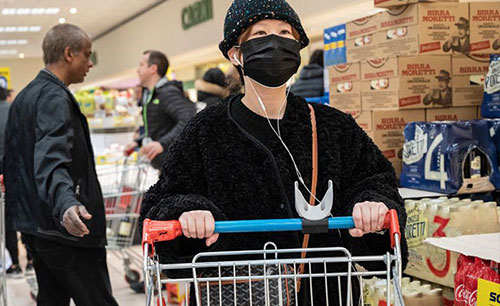 analysts predict that if this outbreak intensifies further, it may materially disrupt the global apparel supply chain, hurting companies reliant on China for sourcing.
Walmart, Target feel the heat
Mass merchants like Walmart and Target, face multiple and countervailing effects from the outbreak. Not only could it disrupt their supply chains and decrease casual shopping amongst their consumers, it could also lead to a shortage of groceries and disease-fighting essentials that consumers are stockpiling.
Walmart is revamping its assortment and promotional and presentation plans. The retailer issued a memo to employees in late February stating the best practices for avoiding the spread of infection.
Luxury players’ plans slowdown
Luxury brands and retailers are also scaling back their expansion plans. Luxury stores are being shut and designers are cancelling their participation in fashion weeks. Recently, a number of designers dropped out of Paris Fashion Week, including Chinese brands Shiatzy Chen, Calvin Luo, Masha Ma, Maison Mai and Uma Wang. Additionally, LVMH Moët Hennessy Louis Vuitton canceled a reception for its 2020 LVMH Prize for Young Fashion Designers. Luxury brands like Burberry, Tapestry, Capri and LVMH closed their stores In China. They are requesting their stylists and personal shoppers to stay in contact with their customers and send them notes, reminders and private offers.
Decline in footfall at malls and shopping centers
A recent Coresight research reveals around a quarter of respondents are avoiding public areas and another 58 per cent plan to if the outbreak worsens. More than 40 per cent are avoiding or limiting visits to shopping centers/malls and more than 30 per cent are avoiding stores in general.
GlobalData forecasts, APAC duty-free sales are likely to decline by 19.1 per cent this year to $35.2 billion, due to the COVID-19 crisis. Sporting events and concerts are also likely to sell lesser merchandise. As shoppers stay away from physical retail, digital sales will increase. Delivery volumes are likely to increase by over 30 per cent as people will prefer working from home to avoid crowds.
According to IHL Group founder and President Greg Buzek, the crisis will spur investments into omnichannel technologies. There are likely to be significant increases in remote tools, moves to decentralize the supply chain and AI/machine learning, Forecasting technologies, and Analytics.
Luxury players will be the biggest losers as they haven't fully embraced e-commerce. They may reconsider their decision now.
GST council defers hike on textiles
The current economic slowdown and impact of coronavirus has compelled the GST Council to defer the proposal to hike GST rates on fertilisers, footwear and textiles.
On the other hand, the council has increased the tax rate on mobile phones and specified parts to 18 percent. Currently, mobile phones attract a GST rate of 12 percent, while its inputs are taxed at 18 percent.
The Council, chaired by union finance minister Nirmala Sitharaman, has also given relief to domestic maintenance, repair and overhaul (MRO) services, by slashing the rate to 5 percent with a full input tax credit (ITC).
Earlier, GST Council nominated fitment committee had proposed to provide level playing field to domestic MRO industry vis-à-vis foreign MROs. The recommendation is to reduce GST on MRO services to 5 percent with full ITC and change Point of Supply (PoS) for B2B MRO services to the location of recipient. Currently, Indian MROs are paying 18 percent GST.
In another move, the Council has decided to extend the deadline for filing of GSTR9, GSTR9C for FY18-19 till June 30, 2020. Also, the filing to be mandatory for taxpayers over Rs 5 crore of annual turnover. The earlier deadline was March 31 and turnover limit was Rs 2 crore.
COVID-19 has Italian fashion industry in a squeeze
Italy’s fashion sector is at risk due to COVID-19 , stores of fashion companies in the country such as H&M, Inditex and Uniqlo have been closed.
Spanish group Inditex has 390 stores across Italy, of which 101 stores are that of Zara. Stradivarius, another Inditex brand, has 84 stores, followed by Bershka, which has 67 points of sale. Oysho, Zara Home, and Pull & Bear operate with 41, 33 and eight stores respectively. Inditex entered the Italian market in 2002 and the territory remains a key market for the company. H&M operates 181 points of sale and Primark has five stores.
Fashion sales in Italy are five per cent of the Gross Domestic Product. The country is home to many luxury brands such as Prada, Dolce & Gabbana, Versace, Armani, Valentino, and many more. Brunello Cuccinelli counts 15 stores in the country. Italy is currently the country that is most affected by the Covid-19 in Europe. The number of fatalities now amounts to more than 800 and the number of people infected has increased to 10,500. The situation continues to escalate with a nationwide lockdown. The shuttering excludes those that meet basic needs such as pharmacies, supermarkets, and food stores, as well as kiosks and tobacconists.
Textile Forum on schedule despite COVID-19
Exhibitors noted a quiet yet positive turnout as the latest edition of fashion fabrics trade show Textile Forum defied Coronavirus panic by going ahead as planned. The show took place at One Marylebone, London from March 11-12, 2020. Despite Brexit challenges to the fashion market and the new threat of Coronavirus, mood remained quietly positive.
Around 40 exhibitors – mills, and manufacturers of textile products, trimmings and buttons – showcased at the event. They ranged from specialist lace manufacturers and leather producers to luxury garment makers, who were exceptions at the textile-focused show. Sustainability remained a buzzword across the show and shimmery tweeds, heavy textures, lace and florals were popular trends.
Although exhibitors said the show was much quieter show than usual, as a result of travel fear stemming from the coronavirus outbreak, they were positive about the buyers and businesses that they had seen. Most buyers in were from UK-based small-to-medium-sized businesses, and exhibitors were pleased with the presence of interesting start-ups. Bridal buyers made a notable appearance – despite fears over whether upcoming shows in their market would be going ahead.
For the third season running, the UK Fashion and Textile Association supported a manufacturing zone, where brands looking for UK product of garments and accessories could find those offering development and production services.