


FW
Egypt cotton exports up, domestic consumption down
The Egyptian cotton exports increased 50.6 per cent during the second quarter of the agriculture season for the year 2017-18, during the same period of the during the period between September 2017 and February 2018. According to a report by the government-run Central Agency for Public Mobilisation and Statistics (CAPMAS), the total exports of Egyptian cotton reached 508,000 metric kantars during the period between September 2017 and February 2018, up from 337,000 kantars during the same period last year. CAPMAS attributed the hike to the abundance of the ginned cotton crop.
A metric kantar is equivalent to 45 kilogrammes.
CAPMAS added that during the same quarter, the total amount of domestically consumed cotton reached 47,200 kantars, compared to 127,600 kantars last year, a 63 per cent decline caused by an increase in cheap cotton imports.
The amount of ginned cotton reached about 800,000 kantars between December 2017 and February 2018, compared to around 400,000 kantars in the same period of the previous season, marking a production increase of 107.6 per cent.
The Egyptian Ministry of Agriculture and Land Reclamation pointed to a significant increase of 500,000 acres in the size of the country’s cotton cultivated area.
Fast Fashion needs fast action
"Fashion is responsible for 92 million tons of solid waste dumped in landfills each year. The fashion industry is also the second biggest consumer of water, producing 20 per cent of wastewater while also generating more greenhouse gas emissions than all international flights and maritime shipping combined. The equivalent of one garbage truck of textiles is wasted every second. Around a lakh of marine animals are killed each year by plastic waste, including microfibers. It’s up to apparel brands to take responsibility for the waste they’re creating. Brands need to address head-on the chemicals, use of textiles waste and synthetic fabrics that don’t break down, and unfair working environments in the clothing industry. "
 Fast fashion has been responsible for more collections as well as more consumption, leading to more wastage and global resource consumption. There are an estimated two billion new consumers waiting to buy the latest trends. The average number of clothing collections in Europe more than doubled between 2000 and 2011.
Waste and Global Resource Consumption
Fashion is responsible for 92 million tons of solid waste dumped in landfills each year. The fashion industry is also the second biggest consumer of water, producing 20 per cent of wastewater while also generating more greenhouse gas emissions than all international flights and maritime shipping combined.
The equivalent of one garbage truck of textiles is wasted every second.
Around a lakh of marine animals are killed each year by plastic waste, including microfibers. It’s up to apparel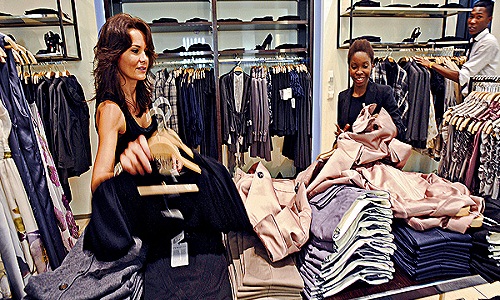 brands to take responsibility for the waste they’re creating. Brands need to address head-on the chemicals, use of textiles waste and synthetic fabrics that don’t break down, and unfair working environments in the clothing industry.
What should be done?
The no-waste economy must be applied to fashion, just as it is in the food industry. There is need for action at each stage of the supply chain, starting with sustainable sourcing of fabrics, through to design, exploration of possible alternatives to distribution, and recovery and recycling of clothing.
Poorer countries need to be included in more sustainable manufacturing models so they can produce clothing locally and more sustainably.
Taiwan gets into developing smartwear
Taiwan’s two major garment suppliers, Quang Viet and Makalot, are pouring resources into development of the latest smartwear technologies.
Since 2016, Quang Viet has been working on research and development for a smart jacket that integrates temperature control and GPS tracking functions. The company’s customers include North Face and Under Armor.
Makalot is seeking certifications for its latest functional wear featuring graphene, a material that helps devices detect and monitor electrical activity in the wearer’s heart more accurately. Makalot caters to Gap, Kohl’s and Target. The company aims to differentiate itself from its local peers by providing high-end products that can be used for medical purposes, as technical thresholds and gross margins for this type of product are usually higher.
In addition to its existing customers, Makalot is in talks with hospitals in Taiwan and China regarding applications of its smart clothing.
Taiwan's textile industry has evolved from a mass production textile supplier to a textile innovator.
Brands like Nike, the North Face, Adidas, Under Armour, Columbia, Lululemon, Jack Wolfskin and others rely on Taiwanese companies for innovation and eco-friendly products.
As one of the leaders in chemical fiber, Taiwan has developed various functional and eco-friendly textiles for the global market, thereby being recognized as an international sourcing hub.
Net sales for G-III up 16 per cent
For the first quarter net sales for the New York-based G-III Apparel Group rose 16 per cent. G-III Apparel Group is the company behind DKNY, Donna Karan, Vilebrequin and GH Bass.
The group believes long-term growth opportunities have never been more compelling and it remains focused on capturing market share, driving growth, improving profitability and creating exceptional value for shareholders.
G-III has begun the year with a solid quarter across the board. That gives the company increased confidence in its outlook for the remainder of the year.
In line with its strong sales in the first quarter, G-III has also raised its full year guidance for fiscal 2019. The company now expects net sales to total around 2.97 billion dollars, compared to a previous forecast of approximately 2.94 billion dollars, while net income is now anticipated to be between 112 million dollars and 117 million dollars as opposed to the range of 97 million dollars to 102 million dollars previously reported.
For the second quarter of 2019 ending July 31, 2018, G-III is expecting net sales to reach approximately 590 million dollars and net income/loss to be between a net loss of 3.5 million dollars and net income of 1.5 million dollars.
Itema turnover up 15 per cent
For the first quarter Itema’s turnover increased by 15 per cent compared to same period last year. Itema is a provider of weaving machines, spare parts and integrated services. It invests three per cent of its turnover every year in research and innovation.
The company’s main textile markets are China, Turkey and India.
Since 2012 Itema has succeeded in more than doubling the sales of its weaving machines.
In 2017 Itema acquired a majority interest in Lamiflex, a leading supplier of technical composite products for the textile, aeronautical and medical industries. The acquisition of majority stakes in Lamiflex is the first in a series of important operations meant to ultimately accelerate the continued expansion and secure the long-term profitability of Itema by diversifying into complementary, high-growth markets through stakes in innovation-driven companies.
With i Saver, Itema has pushed the boundaries of innovation in the weaving industry. For the first time since the launch of the industrial weaving machine Itema introduced a breakthrough innovation able to completely eliminate the waste selvedge on the fabric left side leading to substantial, real and measurable savings for denim weavers.
Itema will concentrate its extensive R&D efforts on offering better, smarter, faster solutions, increased performances, reduced consumption and enhanced user-friendliness.
Indonesia fiber industry up eight per cent
During the first quarter of 2018, Indonesia’s fiber and filament yarn industry grew eight per cent on an annual basis.
The Indonesian industry has proposed the provision of textile-specific clusters to improve the competitiveness of domestic products.
The domestic textile industry is also constrained by logistics problems because the upstream and downstream industries are located in dispersed areas. Fiber and yarn producers are in one area, clothing manufacturers are elsewhere.
Industry players want the upstream and downstream industries integrated in one region. In terms of production, in the period of January-March 2018, the textile industry increased by eight per cent on an annual basis. The growth is driven by domestic demand as there is still a tightening factor in wholesale imports and other imports, so domestic consumers are still looking for local products.
Indonesia hopes to triple textile and textile product exports in the next five years. If this happens, this sector will be Indonesia’s largest non-oil export contributor and create jobs for six million people.
However the market is flooded with imports.
Indonesia is one of the world’s largest textile manufacturers and exporters . At present, the US is the largest clothing importer from Indonesia.
Production of Dyneema, world’s strongest fibre increases
DSM, based in the Netherlands, is increasing production capacity for Dyneema, the world’s strongest fiber.
DSM Dyneema is the world’s largest UHMwPE fiber and UD manufacturer with a backward integration into UHMwPE polymer production.
DSM will also make improvements to existing production lines to expand Dyneema UD and Dyneema fiber capacity, incorporating the latest technologies.
In addition to expanding capacity, DSM Dyneema will also further improve its carbon footprint, delivering on its brand promise Dyneema, the Greenest Strength. Applications made with Dyneema already deliver the lowest carbon footprint for the performance specified from cradle-to-grave compared to other materials and DSM is committed to further improve this.
Dyneema UD is a composite unidirectional laminate that offers excellent energy absorption and enhanced protection. It is accessible as a hard and soft ballistic material.
Dyneema products are finding use in a broad and ever-increasing range of markets and applications in which lightweight strength is of the essence, for instance best-in-class protective ballistic vests, inserts and helmets.
The global production capacity of Dyneema UD will be increased by more than 20 per cent. This capacity increase will further strengthen DSM’s product leadership under the Dyneema brand. Ongoing innovation by DSM will continue to be lighter, newer, and better performing material.
HK RITA driving innovation in the Hong Kong industry
Hong Kong Research Institute of Textiles and Apparel (HKRITA) drives the innovation and re-industrialisation of the textile and clothing industry in Hong Kong.
It develops sustainable and practical technologies to enhance the competitiveness of the industry and benefit the living standards of the community at large.
One such project is an AI-based production order prediction algorithm. The project has developed a color productivity prediction model by integrating sales, pricing and branding to best meet operational needs such as product planning and inventory management. The model makes use of fashion color-related posts from the print and social media, as well as product prices, market events and brand positioning, to predict future sales of fashion items of different colors.
Another of the institute’s projects is a separation and recycling technology for combinations such as cotton and polyester blends. This project has developed an efficient hydrothermal treatment method to decompose cotton into cellulose powders, enabling the separation of the polyester fibers from the blends. The quality of the polyester fibers is maintained, permitting fiber-to-fiber recycling.
Yet another project is a novel bioprocess which makes use of textile waste for the sustainable production of different value-added products, such as glucose, synthetic fiber, bioplastics, bio-chemicals and bio-surfactants. The process consists of pre-treatment, enzymatic hydrolysis and melt-spinning.
Pak cotton imports face customs duty again
Pakistan has reimposed customs duty on cotton imports.
The aim is to maintain stability in cotton prices in the country, give farmers a confidence for better management and investment in the existing crop, thus helping in improving yields. The duty was brought back under the fear that if cotton imports were to continue, an imbalance in cotton stocks in the country would result and in turn exert a downward pressure on cotton prices in the beginning of the current season, thus jeopardizing the interest of farmers.
Pakistan produces around 13 million bales of cotton while it imports about a million bales to meet the gap between consumption and production. Additionally, one to 1.5 million bales Extra Long Staple (ELS) cotton per annum is also imported as this quality is not produced in the country. Cotton production in 2017-18 witnessed a 12 per cent increase over the past year.
But the area under cotton in Pakistan has witnessed a decline over the last few years. Price advantage and support price of other commodities are among the main reasons for this decline.
So customs duties and sales tax were reimposed on the import of cotton prior to the arrival of cotton in the market.
Canada and the EU retaliate
US textile exports are now facing retaliatory tariffs from Canada and the European Union.
This is in response to the US’ decision to place tariffs on aluminum and steel coming from some of the country’s closest trading partners: Europe, Canada and Mexico.
The EU has threatened tariffs on US products including cotton bed linen, various fabrics, cotton blankets and traveling rugs, and down or feather-filled bedding. The European Union will slap 25 per cent tariffs on imports from the United States. Those include men’s and women’s blue jeans, T-shirts, shorts, men’s synthetic woven industrial and occupational trousers, cotton woven bed linen that is not printed, and footwear with upper and outer soles of leather not covering the ankle.
Canada plans to retaliate by imposing its own countermeasures against imports of selected US products equal to the value of Canadian goods affected by the US tariffs.
Canada has also issued a list of threatened retaliatory tariffs on US exports. The list includes table cloths, sleeping bags, napkins. Canada is also proposing to respond to the US’ imposition of tariffs on Canadian products by targeting US mattresses sent to Canada.
Mexico will also issue a list that includes several agricultural, steel and aluminum products although there has been no mention of textile or home fashion products.











