Textiles (143)
Mimaki will participate at Texprocess and Techtextil, Germany, May 9 to 12, 2017. The manufacturer of wide-format inkjet printers and cutting systems will showcase its TS300P-1800 with sublimation inks and the Tx300P-1800 printer with pigment inks during the large-format inkjet printing step of the micro-factory, involving sublimation printing on polyester and pigment printing on cotton and mixed fibers.
Both have been developed for the textile print industry. The TS300P-1800 wide format, high-speed dye sublimation textile printer delivers cost-effective printing while maintaining high quality and productivity and is designed to print onto the thinnest of transfer paper. The Tx300P-1800 direct textile inkjet printer delivers high-quality printing on a wide range of textiles and is ideally suited for applications such as fashion, furnishing, soft signage and exhibitions.
Texprocess serves the international garment-manufacturing and textile processing industry while Techtextil brings together technical textiles and nonwovens showing the full range of potential uses of textile technologies. The events will allow Mimaki to demonstrate its textile inkjet print technologies and educate a wide audience. There will be a roundtable discussion on high speed dye sublimation printing which will explain the difference between sublimation transfer and direct dye sublimation printing, and how each technology can be beneficial for home textiles and interior design.
Soorty Denim receives innovation award at Munich Fabric Start
Written by FWSoorty Denim, a well know integrated denim manufacturer from Pakistan, has been given the Hightex innovation award for its new Denim Active concept at the Keyhouse event, during Munich Fabric Start last month. The new concept dims the border between casual wear and sportswear, linking the two lifestyles.
“Denim Active” contains Coolmax eco-made® fiber which ensures moisture management and is made from 97 per cent recycled resources such as plastic bottles. While working out, body temperature increases, Coolmax helps to evaporate sweat, it keeps cool and dry. The 360 degree stretch in a light weight fabric allows one to make free body movements. Denim Active is soft and comfortable yet still maintains the actual denim look and feel in a specially engineered second skin silhouette.
The new Keyhouse is a revolution and proficiency centre for textiles, presenting future-oriented and business-related concepts in a concentrated manner. This collaborating trade fair format forms a backdrop for smart textiles, future fabrics and technologies, with a high degree of integration in textile products and high fashion. Pioneering showcases, sustainability and new technologies are put in the spotlight in this trade fair area in the context of cross-sector macro trends, rounded off by expert workshops and seminars on trends, technology, finishing and research.
Fitch Ratings believes China's sportswear industry would expand
Written by FWWith the segment proving to be resilient amid the country's challenging retail environment due to shifting consumer behaviour and preferences for more differentiated shopping concepts, China's sportswear industry should see continued expansion over the next few years, says the Fitch Ratings.
Following the issues of store overexpansion and excess inventory having been resolved since 2012Both international and domestic brands have benefited from the expansion of China's sportswear industry which Fitch accredits to increased investment and higher sports participation.
The State Council aims to develop China's sports industry to CNY5 trillion by 2025 and increase the area available for practising sports. Greater interest in fitness and sports has also become more apparent with more people taking an interest in running, for instance that a total of 328 marathons were registered through the Chinese Athletic Association in 2016.
This attracted approximately 2.8 million participants, and representing an increase of 85 per cent compared with the previous year. Likewise, according to a news report the number of participants at private gyms across China's 70 major cities has increased by 4 to 5 million each year since 2011.
The China market is led by international brands adidas and Nike. While adidas reported over 20% constant currency growth for China in 2016, Nike also saw double digit growth in Greater China.
However, Fitch believes local brands can also benefit, since they offer consumers a competitive value-for-money proposition. For instance, local brand 361 Degrees International Limited (BB/Stable) saw over 7 per cent y-o-y same-store sales growth in 2016 and its trade-fair orders for 3Q17 achieved a high single-digit increase.
Seventy one companies upgrade for benchmarking against sustainable programme
Written by FWLinking their efforts to the UN Sustainable Development Goals (SDGs), as many as seventy one companies have got themselves up to the mark and put their names forward for benchmarking against their peers and competitors in the Textile Exchange Preferred Fibre & Materials (PFM) Benchmark programme.
61 per cent of companies have set targets for switching to a more sustainable source of cotton, three quarters having a specific target for organic.
Said Liesl Truscott, Materials Strategy Director for Textile Exchange, millions of people including cotton farmers, foresters and other textile feedstock providers form the base of the textile supply network and are impacted by the decisions brands and retailers make every day. Influencing improvement in fibre and material production is one of the greatest opportunities textile brands and retailers can contribute to securing a sustainable future.
Preferred is another way of saying more sustainable. Textile Exchange defines a preferred fibre or material (PFM) as one that is ecologically and socially progressive and has been selected because it has more sustainable properties in comparison to conventional options.
The mix of fibres in your product range can be just as important as the sustainability profile of each fiber,” Truscott added.
Textile Exchange recommends a portfolio approach building a suite of preferred fibre and materials from a choice of preferred options by way of the consideration of impacts and product range priorities. The goal is that PFMs are produced to a globally accepted standard, with strict criteria that qualifies the product as preferred, and can be traced through the supply chain.
One of the partnership is with the Appachi ECO-LOGIC Cotton Project in India which brings together a value chain from the farmers to the customers. The key is the partnership and working together – and we see this as pivotal for the entire industry. Seventy one companies, up from 57 last year, ranging from Adidas to Woolworths, completed a bespoke online survey and have received confidential company feedback reports revealing their individual results.An Industry report containing the combined results of all participating companies will be released this week.
Spinning mills in south India can expect stable cotton prices and supplies.
The cotton production for the 2016-17 season will probably be more than adequate to meet the demand from spinning mills. This should check a further rise in the price of cotton. Moreover international prices are expected to be benign as well thanks to a bumper crop in Australia, an 18 per cent increase in production in the US and restricted imports by China.
If cotton prices remain stable from here on, it will help contain raw material costs for a few quarters ahead. Meanwhile, higher domestic demand for textiles and garments and higher exports will improve demand for yarn.
Leading mills such as Vardhman Textiles, KPR Mills and Ambika Cotton Mills have reported double-digit year-on-year growth in sales over the past three quarters, although exports have been subdued.
And despite the high cotton prices and the challenges related to demonetization, these companies managed stable operating margins over the past three quarters in the range of 18.5 per cent to 20 per cent. Thanks to the robust performance, stocks of these firms have rallied substantially in the past year and are now trading close to the 52-week high prices.
Intertextile Shanghai Apparel Fabrics, excels at generating new business once again
Written by FWAfter three days of steady business between March 15-17, 2017, new discoveries and networking amongst global industry, the world’s largest apparel fabrics and accessories trade fair for Spring/Summer closed its doors with record number of exhibitors. Nearly, 3,341 exhibitors from 26 countries and regions made the most of Intertextile Shanghai Apparel Fabric’s global platform, a 5.9 per cent increase compared to 2016 (3,155 from 27 countries).

After three days of steady business between March 15-17, 2017, new discoveries and networking amongst global industry, the world’s largest apparel fabrics and accessories trade fair for Spring/Summer closed its doors with record number of exhibitors. Nearly, 3,341 exhibitors from 26 countries and regions made the most of Intertextile Shanghai Apparel Fabric’s global platform, a 5.9 per cent increase compared to 2016 (3,155 from 27 countries). The buyer number remained steady, with around 71,000 visitors from 103 countries and regions attending (2016: 71,163 from 100 countries and regions). This included buyers from concurrent Yarn Expo, CHIC and PH Value fairs who also attended Intertextile Shanghai.

As Wendy Wen, Senior General Manager, Messe Frankfurt (HK) Ltd said, “This fair is one of the most important events for worldwide textile market, and the strong business results for exhibitors and buyers this edition once again validates this. The amount of new business that was generated here this week, as expressed by many exhibitors, was the most pleasing aspect for us. This is due in part, , to our efforts over the last few editions to improve the quality of buyers sourcing at the fair, as well as a strong focus on our product zones which target the growth areas of the market. We have also continued our work with the venue to ensure service standards continue to improve, which has provided a more conducive environment all-round for business to take place.”
Happy Exhibitors
Amongst the many exhibitors reporting strong results were two world-renowned brands returning to the fair. With long participation at Intertextile Shanghai, they managed to meet new, quality buyers in this edition. “Although we are always exhibiting here, we still see new people at the fair and can always find potential customers,” Eberhard Ganns, MD, Union Knopf (HK) Ltd, Germany, explained. “Many companies in China are growing in size as well as quality, so they are interested in our products. Around 70 per cent of people at our booth have been new and interested customers, so Intertextile Shanghai is the show to be and is an absolute must! We are telling everyone if you want to be serious in this business then you have to be here.” Ganns also said they didn’t just receive interest from Chinese buyers, who anyway have significantly increased in recent years, around 20 per cent of visitors were from overseas including Asia, Europe and the US.

Korea’s Hyundai Chemical has been participating in the Spring-Autumn editions of the fair for four years, with Youn Seok Jang, Overseas Sales Team Manager, explaining the reason for returning is Intertextile Shanghai’s ability to attract the right buyers. “We obtained over 50 business contacts from both new and existing clients over two days. A large number of contacts were domestic Chinese buyers, while buyers from the Americas and Europe also showed genuine interest in our latest products. The fair keeps getting better year after year, and we are able to connect with enough new buyers every edition to make it worthwhile for us to come back repeatedly.”
Unbeatable sourcing platform for global industry
Returning American buyer Steven Fuller, Director Men’s Woven’s, Tommy Bahama, was at the fair to source unique and innovative fabrics. “I have been to many previous editions and this is one of the most comprehensive sourcing platforms for our company to gain contacts. There is no place in the region that has these many suppliers to choose from. I met companies who develop their own fabrics, and have also had the chance to speak with the product developers, which is helpful in explaining the nature of their product. This also makes Intertextile a central meeting hub for key industry players. This edition we connected with over 20 suppliers, while having already placed orders with four of them, including from China, Korea and Taiwan. Overall, I am pleased with the fair and like every year, it is able to fulfil our sourcing needs. We will definitely be back again this October.”
Autumn edition next October
Intertextile Shanghai Apparel Fabrics-Spring Edition 2017 was co-organised by Messe Frankfurt (HK); the Sub-Council of Textile Industry, CCPIT; and the China Textile Information Centre. The next edition, Intertextile Shanghai Apparel Fabrics – Autumn Edition 2017, will take place from October 11-13.
Yield of cotton growers in Georgia set to increase this year
Written by FWCotton growers of Georgia can expect to make at least 5 to 6 cents more per pound than they received this time last year, according to Don Shurley, University of Georgia Cooperative Extension cotton economist.
The escalation of the price is due to many factors, but the main cause is the increase in exports. Most of the cotton now is exported of which about three-fourths is shipped overseas, said Shurley. The country’s exports are doing really well. The quality that is liked by the U.S. especially here in the Southeast has been just excellent in recent years, she added.
Shurley has been with UGA Extension for more than 26 years and believes that this year hr cotton produce is the best quality of cotton Georgia has produced in that time. Much of the improved quality is attributed to newer varieties and technology associated with those varieties.
However, some of the last year’s yield potential was lost due to the late-season drought. The lack of rain prevented some of the yield at the top of the plants from fully developing. But because of the extended drought, growers were able to get into the fields and harvest the crop in a timely manner.
Thanks that the country didn’t have any rain or wind that reduces the quality. Hence the harvest conditions were really very good,” Shurley observed.
Additionally, cotton acreage was up last year when Georgia planted 1.18 million acres compared to 1.17 million acres in 2015, according to the UGA Farm Gate Value Report.
This year, however, the acreage in Georgia may decrease due to estimated high peanut prices, Shurley predicted.
As for the cotton seed, Shurley is still trying to calculate the data and average them together. However, he hasn’t seen an increase in the price of seed or technology fees in recent years. The differences in prices from year-to-year result from the different varieties of cotton seed combined with newer technology, Shurley maintained.
Prices may be higher next year, but it would be because a new variety or new technology has been introduced to the market and not because of an overall price increase determined by dealers and seed manufacturers.
Ethiopia is attracting foreign investors. And what’s attracting them is the prevalence of peace, smooth business transaction, a conducive custom and tax system. In addition development of infrastructure such as roads railway and energy is playing a crucial role in encouraging investment flow. Among the investors are, Chinese, Indian and Turkish industries taking the lion's share. Investments from these nations are gaining momentum.
For more than a couple of decades, Ethiopia has been registering high economic growth. As the second most populous country in Africa, Ethiopia provides investors the necessary facilities like labor, land and infrastructure. Industrial parks have been built with customs and banking services, electricity, energy and water services and sewage systems. The availability of air transport, cheap labor and tax holidays provided to investors have made the country attractive for foreign investment.
As a result, job opportunities are being created for hundreds of thousands of people. As a developing country, Ethiopia exports agricultural products and imports capital goods for its industrialization process. The nation needs foreign currency to meet its development ambitions and for that mobilising hard currency from various sources is being done.
34th Season of Mercedes-Benz Fashion Week Russia Finished In Moscow
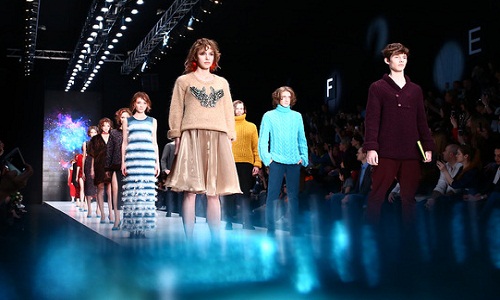
Written by FW"From March 12 to 17 Moscow saw the Fall/Winter 2017-2018 season of Mercedes-Benz Fashion Week Russia. As part of the major Fashion Week in Eastern Europe more than 50 designers from Russia, Italy, Georgia, Kazakhstan and other countries presented their collections on the runways of the Manege Central Exhibition Hall. The season also featured several debuts of young designers, among them were awardees of the Russian Fashion Council's grants."

From March 12 to 17 Moscow saw the Fall/Winter 2017-2018 season of Mercedes-Benz Fashion Week Russia. As part of the major Fashion Week in Eastern Europe more than 50 designers from Russia, Italy, Georgia, Kazakhstan and other countries presented their collections on the runways of the Manege Central Exhibition Hall. The season also featured several debuts of young designers, among them were awardees of the Russian Fashion Council's grants.
This season MBFWRussia has brought together a number of representatives of international media outlets, such as Vogue USA, Vogue UK, The Huffington Post, Forbes USA, The Issue Magazine, Fashionista, Fucking Young, Dazed, Observer, BuzzFeed and many others.
The main business event of Mercedes-Benz Fashion Week Russia deserves special attention. The two-day Fashion Futurum International Conference was held with the support from the Russian Fashion Council, Moscow's Department of Culture, Ministry of Industry and Trade of Russian Federation, Agency for Strategic Initiatives and Skolkovo Foundation. The program of the event included panel discussions, public talks, workshops and presentations of startup projects in several zones of the Manege Central Exhibition Hall. More than 30 global fashion industry experts from 9 countries gathered in Moscow's downtown to discuss modern trends and the current challenges the industry is facing. The main topic of the conference was the destruction of fashion industry stereotypes, its transformation under the influence of the scientific and technological revolution.
Karim Rashid (Designer, USA), Pascal Morand (Executive President, French Federation of the Haute Couture and Pret-a-porter, France), Carlos Espinosa de Los Monteros (High Government Commissioner for the Spain Brand, Spain), Michael Burke (Head of Industry, Fashion, Sports & Toys, Google, USA), Scott Emmons (Head of the Innovation Lab, Neiman Marcus, USA), Danilo Venturi (Dean, Polimoda, Italy), Covadonga O’Shea (Founder, ISEM Fashion Business School, author of the bestselling Zara Phenomenon, Spain) and many other experts participated as speakers and mentors of the conference.
For the first time Fashion Futurum featured a fashion industry and retail Innovation Show. The Russian Fashion Council and Skolkovo Foundation choose 30 projects for the central display of the Manege Central Exhibition Hall. Among the most interesting startups are Style Counsel, ShareCloth.con, Cloudburst, 3D Footwear Brutally, Posh, SC-TEK, Bundlesapp, Cardberry, Try. Fit, Preloved.
"Despite the fact that fashion technologies in Russia are only at the development stage there are no industrial standards in this area, so Russian companies have an opportunity get their share of this market," Alexander Shumsky, President of Mercedes-Benz Fashion Week Russia and Russian Fashion Council, said.
On March 17, 2017 a closed runway show by Firdaws was staged separately, at the Petroff Palace. Rippling floor-length dresses decorated with beads and embroidery, slim fit tops and soft pastel palette were characteristic of the Firdaws runway show. Refined silhouettes and silk kerchiefs decorated with lacework highlighted the chastity and kingliness of the images presented. Many Russian and international guests attended the show, among them were Alla Verber (Mercury), Vyacheslav Zaitsev (Designer), Anastasia Stotskaya (Singer), Sati Kazanova (Singer), Irina Tchaikovskaya (society columnist), Yulia Baranovskaya (TV host), Anna Khilkevich (Actress), Maria Lisowska (Fashion TV), Giulia Pirovano (Instituto Marangoni), Princess Beatrice D’Orleans (President of the Spanish Luxury Association, Ambassador of Dior), Pascal Morand (Executive President, French Federation of the Haute Couture and Pret-a-porter), Sylvie Ebel (L’Institut Francais de la Mode), Ahmed Abdulrahman Al Saati (Bahrain's Ambassador to Russia) and Jae Suk Kim (Illustrator).
Some 60,000 guests, more than 30,000 photos on Instagram with #MBFWRussia, live streaming of all fashion shows on dozens of websites and social networks pages, sketches by fashion illustrators, with each season we only improve our performance.
Major photo agency, Getty Images is the international partner of Mercedes-Benz Fashion Week Russia. Photos and videos from the Fashion Week will be available for download to 60,000 media outlets across the globe.
Ethylene prices declined sharply in the first week of March in Northeast Asia as demand dropped for downstream styrene monomer while other derivatives like poly ethylene weakened significantly. The European ethylene market was bullish as the material remained tight amid firm demand.
Paraxylene prices declined in Asian markets amid weakness in both up and downstream sectors. In the US, paraxylene spot was down as mixed xylene slipped. European paraxylene contract price for March was fully settled at a roll over while spot declined on the week.
Mono ethylene glycol prices dived in Asian markets on urgent sales with sellers lowering offers to avoid incurring port costs. In China, port inventories continued to swell while the supply in the domestic market was abundant this week. European MEG prices also fell as demand softened and March contract price settling at a rollover, thus ending the huge price increases. US MEG prices retreated from their 21-month, pushing the assessment of its highest level since July 2, 2015.
Polyester staple fiber prices moved down further in China with raw material costs dropping continuously while they remained stable in India and Pakistan. Polyester filament yarn prices declined in China while they rose in Pakistan. In India, partially oriented yarn offers were generally held stable amid thin spot trades as downstream buyers purchased on a need basis to maintain production.
More...
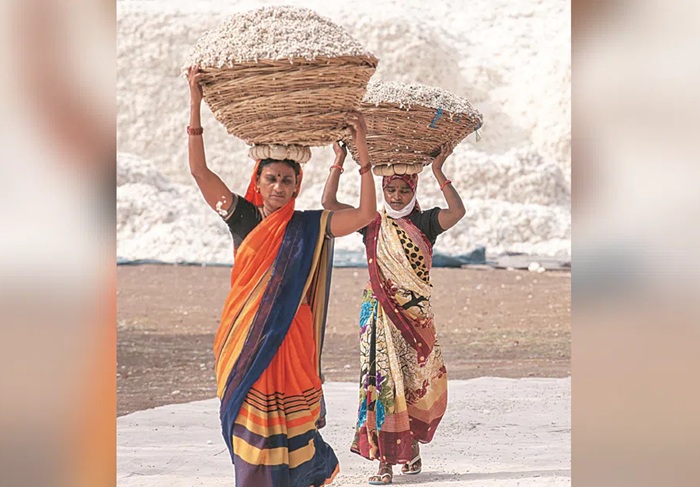
The cotton market in India seems to be stable. Domestic demand and prices are firm. Cotton prices vs yarn prices have settled. Volatility is more or less absent. Spinners, ginners and farmers are realising reasonable prices since February. Spinning mills suffered over the last two years and many closed doors due to cotton price volatility and weak yarn prices. This trend seems to have reversed.
In India, 65 per cent of the season’s cotton crop has arrived and if the price stability is maintained it will be a win-win for the cotton and textile sectors. However, if cotton prices skyrocket, spinners would face difficulties. The view from the spinning mills is that yarn prices are stable and there is demand for yarns and made-up goods such as bedspreads in export markets. This increases cotton demand and helps push up the price of cotton.
Indications are that cotton price this March is going to be steep when the peak arrival season ends in India. Overall, the agriculture market is expected to be bullish in the coming months. Pakistan, Bangladesh, China and Vietnam are key buyers of Indian cotton. Textile mills in southern India have contracted cotton for shipments in March and April.
Outlook Plus Latin America was held in Brazil fro, March 7 to 9, 2017. This event covers the nonwoven personal care industry. There were presentations on market, product, and technology intelligence for hygiene and personal care. Market leaders in the nonwoven and film markets for these products shared their vision of the future. Regional demographic and consumer trends of relevance to the industry were highlighted. A session was dedicated to the use of nonwovens in healthcare and infection prevention applications and future opportunities.
More than 270 participants joined the conference and more than 25 companies took the opportunity to promote their products and services through tabletop exhibits. Nonwoven fabrics are broadly defined as sheet or web structures bonded together by entangling fiber or filaments (and by perforating films) mechanically, thermally, or chemically. They are flat, porous sheets that are made directly from separate fibers or from molten plastic or plastic film. They are not made by weaving or knitting and do not require converting the fibers to yarn.
Nonwoven fabrics provide specific functions such as absorbency, liquid repellency, resilience, stretch, softness, strength, flame retardancy, washability, cushioning, filtering, bacterial barriers and sterility. These properties are often combined to create fabrics suited for specific jobs. They can mimic the appearance, texture and strength of a woven fabric, and can be as bulky as the thickest paddings.
Synthetic fibers have a 62 per cent share of the world fiber market. Synthetic fibers are used in sectors like fashion and apparel, healthcare, aerospace, packaging, electronics and automotives. Rapid industrialization, low production cost, changing consumer preferences for textiles, and increasing disposable income are projected to drive the global synthetic fiber market over the next few years.
Weak supply of natural fibers such as cotton and wool is another factor driving the global synthetic fiber market. Synthetic fibers refer to textile fabrics that are manmade, such as nylon, acrylic, polyester and carbon fiber. Apart from their superior characteristics of adaptability, durability, elasticity, and strength, synthetic fibers are cost effective to make and easier to maintain as compared to other natural fibers such as cotton and wool.
China is the biggest manufacturer of synthetic fibers in the world. India is the second largest. India surpassed Taiwan and the United States as a fiber powerhouse in the mid-2000s, thanks to its huge polyester fiber capacity increase. The demand for synthetic fibers is still high in North America, especially in the US, making it the leading market for synthetic textile fibers produced in Latin America and Europe.
Functional changes are being incorporated in synthetic fibers with little or no hazardous impact on the environment.
Second day of the new season of Mercedes-Benz Fashion Week Russia
Written by FW"The second day of Mercedes-Benz Fashion Week Russia was opened with the show of KOMOD. Alain Nega presented her collection “Living In a Dream” giving the sense of tranquility and winging. Asymmetric floor-length dresses, exposed shoulders and low-cut necklines, basques and zephyrian translucent textures – this line of images is accomplished in somber colors: classic black, medium grey, powdery color with attractive silver accents."

The second day of Mercedes-Benz Fashion Week Russia was opened with the show of KOMOD. Alain Nega presented her collection “Living In a Dream” giving the sense of tranquility and winging. Asymmetric floor-length dresses, exposed shoulders and low-cut necklines, basques and zephyrian translucent textures – this line of images is accomplished in somber colors: classic black, medium grey, powdery color with attractive silver accents. The evening gowns from "Flying Butterfly Collection" by Anastasia Mishina were all covered with butterflies, a well-known symbol of rebirth, reincarnation and freedom. All dresses were made of pieces of fabric that smoothly transformed into peculiar trendy images.
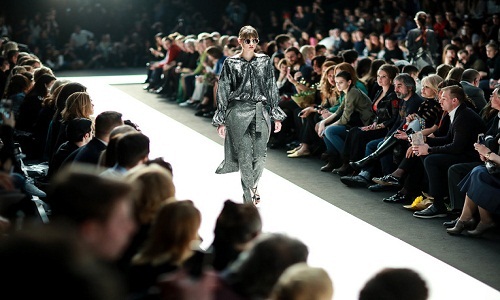
Femininity, elegancy and pageantry – this is all about the collection by BLUE JASMINE. The dresses both in shape and color reminded of morning rosebuds. The tenderness of the gowns was emphasized by translucent sleeves and veiling cascade skirts that advantaged in contrast with asymmetric jackets and heavy flower-embroidered dress trains. Boys were offered checked slacks with single color shirts and hats.
The women’s collection BGN styled by Alexandr Rogov is non-pretentious casual in restrained colors, without eye-catching or loud accessories. The collection included both formal images and cocktail and promenade gowns. Girls choosing BGN parlays individuality and comfort.
Fall/Winter 2017/18 by IVANOVA “The Lady / The Hooligan” embodies the ambiguity of the modern woman’s nature. The designer gallantly experiments with shapes and textures, and plays with various fabrics – moreen, tweed, knitted jersey and silk are used to create elegant shapes retaining the illusion of softness and lightness. The designer uses neutral shades of gray with some pink and jade.
The brand of wedding dresses Speranza Couture by NADEZDA YUSUPOVA presented transparent zephyrian dresses embroidered with crystals and laced flakes. This time the designer turned to tales of the East. She chose the shades of precious stones to color her collection up – amethysts, topazes, sapphires, morganites and diamonds. All the lines are traced with so much love to a woman’s body and the charming effect it provides on her chosen one. Low-cut necklines beautifully emphasize back and decolette zones, and trumpet skirts accent thighs and slim wastes. The ensemble is completed with luxurous embroidered trains. Novel and up-to-date images carry on the subject of eternal charm of love that inspires Nadezda.
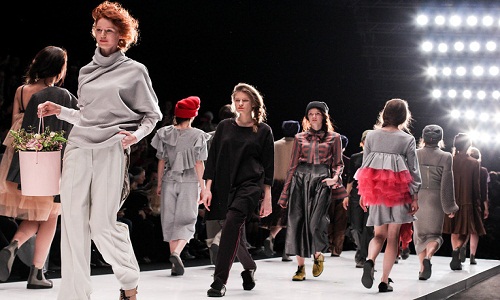
Ksenia Knyazeva was inspired by female omnitude. The hero of her collection, Jeanne d’Arc, embodied fragility and belligerency, transparency and enigma. This combination was presented in minimalistic slim-fit dresses, sweatshirts and wrapper coats finished with feathers and decorated with embroidered roosters. Formal long vests and culotte’s ensembles were attenuated with scandalous shirts, sword-knots, lacing and fishnet tights, adding some Gothics into the image. The Medieval theme was supported by aquarelle floral elements reminding of tinted glass.
Julia Dalakian presented her magical collection hypnotizing with its modest shimmering radiance. Deep copper and radiant metallic were complemented with paillettes and insolent inclusions like chains or fur bracelets emphasizing the model’s fragile vulnerability. There were also asymmetry, translucent and velvet fabrics and provocative bold cuts.
Consistent elegance expressed with simplicity and accuracy was the feature of the show by ISABEL GARCIA. This collection was a true berry cocktail. It started with embroidered rowanberries on formal suits and was followed by cranberry romantic A-line chiffon dresses. The final accord were clingy blackberry milk dresses and streamy skirts with cascade flounces.
All the collection by Bella Potemkina was made of Kanecaron modacrylic fibers that are used to make high quality eco-fur. The colors were bright and various – fuchsia and purple accompanied classic black and white, and the brand hero was bold, brave and ready to experiment. All images demonstrated deliberate negligence, easiness, sexuality and gloss. Cut-offs, bodysuits, over-knee boots, enameled leather, paillettes and double-breasted dresses – no superstitions, only bold visualization.
During Kazakhstan Fashion Week four brands presented their collections. The show started with evening gowns by AELITA. Besides relevant powdery, classic black and white colors there was languid raspberry. Multilayer flounces, trumpet and veiling skirts were a tribute to tendencies, whereas the brand surprised the audience with the variety of sleeve models and stunning corsets.
Minimalism, comfort and color coding are three pillars supporting the philosophy of DiSiitova. Pastel and sandy shades contrasted black and dark blue denim. Regular and pinafore dresses, overcoats and waist bags added new colorful layers and made complicated ensembles of simple elements. To go out in the evening the designer offered paillette dresses with slashed sleeves.
The collection by LIBАS Atelier celebrated youth and feminine charm. Fine organza dresses were covered with multiple flounces and drapes transforming into flowers and bouquets. The color palette repeated the ambience: brightness of fresh greens, transparency of brooks, first twilight shades.
ZHEREBTSOV presented bright street-style images, both brutal and dramatic. Metal was the main motive – clutch bags had chain handles, large studs decorated coat sleeves, shorts and knee-high socks. Metal elements contrasted red checked fabric and tie-dye denim. The designer used the classic epatage approaches like enlarged shoulders, guys dressed in fur coats and yellow shirts, zebrine trouser stripes.
In the presentation corner F.GENE, the St. Petersburg brand, demonstrated its hand-made eco-leather bags for tablets and notebooks. Light backpacks, shoulder bags and clutch bags were decorated with animalistic and geometric prints. In the brand’s Web-site the designer offers to make a personalized bag online – you can choose the length of handles, the color, the shape and the decorations.