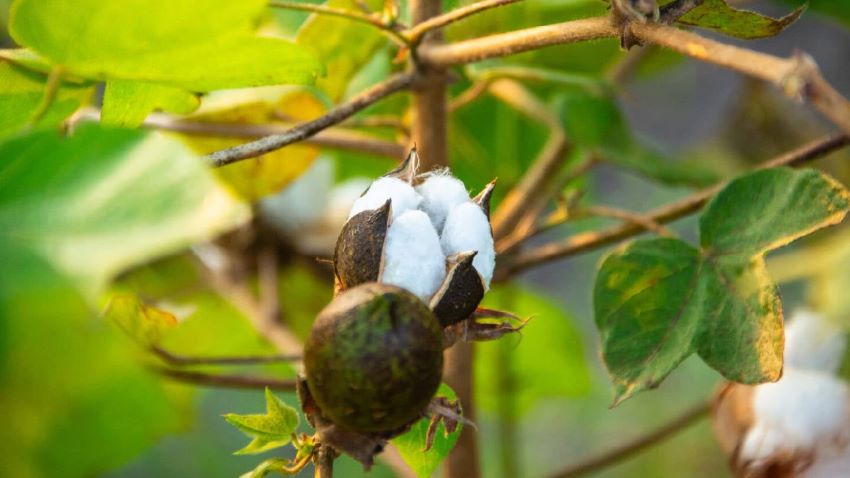
India is facing deficient rainfall in major cotton growing areas. While the middle, northern and eastern parts of India received above normal rainfall, the western and southern parts remained deficient. So, farmers are fearing a decline in yield. They had achieved record productivity and got better prices last year despite lower acreage. Encouraged by last year’s realisation, farmers have slowed down the speed of cotton sowing after over 50 per cent increase in acreage early this season.
The crop is projected to get delayed by at least a month and the yield prospect has got affected due to a delay in sowing. A delay in upcoming crop may prompt immediate bargains. The demand for cotton has been good. Therefore, cotton prices may rise further and may sustain the prevailing range of Rs 42,500 to Rs 44,500 a ton.
Farmers have increased sowing of cotton. During most of last year, cotton prices remained above the minimum support price. Prompted by last year's realization, farmers have increased their cotton sowing area by a staggering 45 per cent so far this season. There may be re-sowing of cotton seeds in the areas where rainfalls remained have deficient so far this season and crops damaged thereupon.

- 1
- 2
- 3
- 4
- 5
- 6
- 7
- 8
- 9
- 10
India-UK CETA: Tariff-free UK access puts India's textile sector on growth track
India's textile and apparel industry is ready for one of its biggest export opportunities in decades as the India-UK Comprehensive... Read more
AI tailoring gains momentum as custom suits transforms premium apparel retail
Technology is reshaping one of fashion's oldest categories menswear. AI, digital body scanning and automated manufacturing are replacing conventional tailoring... Read more
Can trade deals and manufacturing reforms deliver India's textile vision?
India's textile and apparel industry has entered one of its strongest revival phases after several difficult years marked by pandemic... Read more
Women’s wear power global apparel growth as big brands rework retail strategies
For years, the world's largest apparel companies built their businesses around men's denim, workwear and outdoor clothing. That strategy is... Read more
The End of Fibre Blends: Why retailers are moving toward 100% recyclable apparel
The apparel industry is entering a redesign phase as sustainability goals, regulatory pressures, and resource security unite around one central... Read more
Recycled polyester’s next growth phase will be driven by data, not fiber
For much of the last decade, recycled polyester was one of the easiest sustainability wins available to brands. Replacing virgin... Read more
Lefties becomes Inditex's new weapon against Primark and Shein
While much of the global apparel industry has focused on the rapid rise of digital-first retailers such as Shein and... Read more
Bangladesh’s apparel export model hits a breaking point as price wars reduce mar…
Bangladesh's apparel industry, long regarded as the world's manufacturing hub for affordable, high-volume garments, is facing one of its most... Read more
EU textile labeling crackdown exposes apparel supply chain compliance risks
The European apparel industry is facing a major compliance challenge after a coordinated market surveillance exercise by the European Commission... Read more
Can Surat overcome raw material volatility to become a global MMF hub?
Surat remains the undisputed heart of India's man-made fibre (MMF) textile industry. The Gujarat cluster produces nearly 65 per cent... Read more