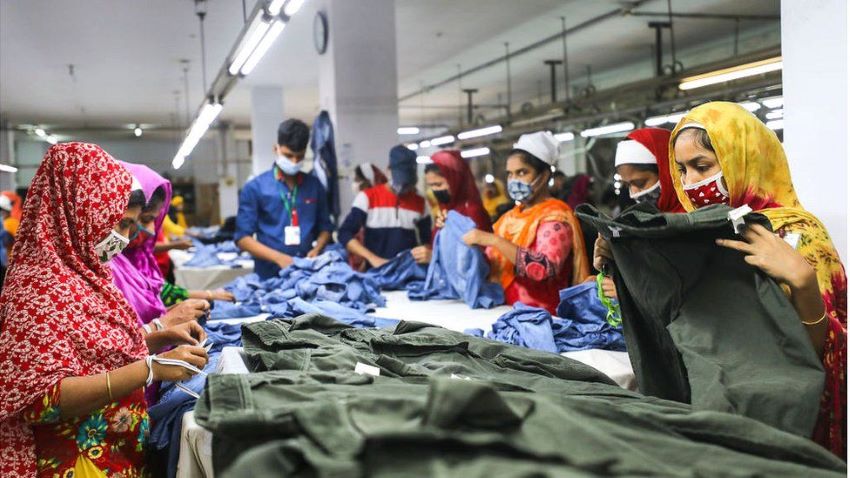
In Myanmar, the EU’s preferential trade tariffs have helped lift thousands out of poverty and reduce inequalities. Since 2015, Myanmar’s exports to the EU have grown by over 230 per cent. The EU’s enhanced engagement with Myanmar focuses more broadly on compliance with human rights conventions and labor rights. Partly thanks to GSP, countries like Myanmar are making constructive efforts to improve on labor rights, child rights and adherence to universal values. However, there are a number of areas where the EU will continue to encourage Myanmar to make urgent efforts, like democratic reforms, freedom of expression, cooperation with the UN and the rights of the Rohingya. The EU imports twice as much from least developed countries like Myanmar as the rest of the world does. Myanmar has shown a constructive attitude and engagement on the issues of concern raised by the EU.
The European Union will continue to engage with countries, including Myanmar, that fall under its Everything But Arms (EBA) trade initiative. EBA is an initiative under which all imports to the EU from least developed countries are duty-free and quota-free, with the exception of armaments. The initiative is part of the EU Generalised System of Preferences (GSP) aimed at encouraging development of the world’s poorest countries.
- 1
- 2
- 3
- 4
- 5
- 6
- 7
- 8
- 9
- 10
The Hormuz Effect: Why a distant war is shaking Bangladesh’s garment exports
The immediate impact of the Iran- Isarel-US conflict is being felt in the logistics arteries that connect Bangladesh’s factories with... Read more
The rise of localized luxury, MEA, North America, and India lead growth
The global luxury industry is no longer defined by relentless expansion. The ‘2025 Global Luxury Brandwatch Report’ highlights a sector... Read more
Hormuz blockade sends shockwaves through India’s textile chain as polyester cost…
What began as a geopolitical escalation in the Gulf has rapidly metastasized into a full-scale industrial disruption for India’s textile... Read more
India’s National Fibre Scheme decouples textiles from global supply risks
For decades the Indian dominated spinning, weaving, and garment exports while remaining paradoxically dependent on imported man-made fibres and specialty... Read more
From London to Tokyo, premiumization redefines retail and office markets
Global real estate landscape has changed. Gone are the cautious narratives of recovery that defined the post-pandemic years. Today, flight... Read more
Compliance drives India’s $176 bn textile shift
India’s textile economy is no longer selling fabric alone; it is selling proof. As compliance rules harden across export markets,... Read more
The second life economy gets a boost as resale outgrows traditional apparel reta…
For decades, resale existed in the margins of the apparel economy, thrift stores, peer-to-peer marketplaces, and charity bins quietly absorbing... Read more
Rising polyester costs shake India’s textile manufacturing hubs
India’s synthetic textile industry is confronting a sudden and destabilizing price shock that is reverberating across its vast manufacturing ecosystem.... Read more
Cotton markets hold firm as tariffs, higher supply reshape global fiber economic…
In a year marked by tariff escalations, geopolitical brinkmanship and a recalibration of global trade flows, the international cotton market... Read more
Beyond Cotton How Kapok could redefine sustainable insulation in textiles
In the lush, humid heart of Southeast Asian rainforests stands a giant, a silent sentinel of the forest canopy. Growing... Read more