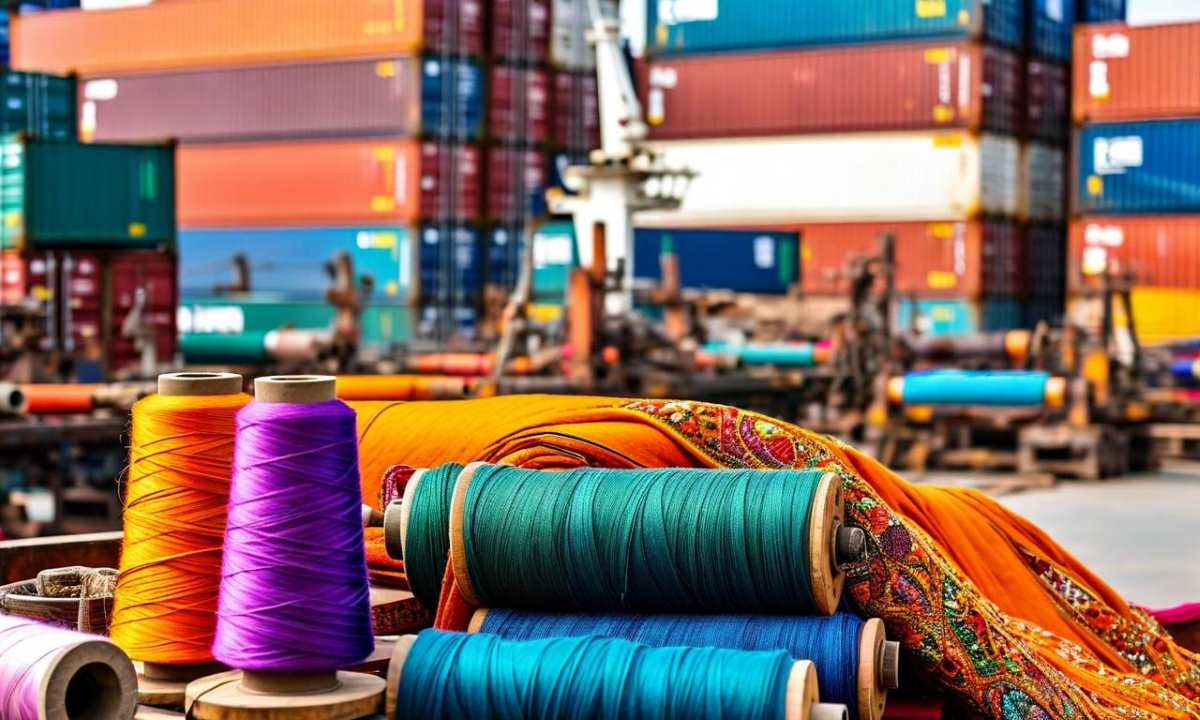
The textile, clothing and footwear industry in Fiji is gearing up for bigger growth. Fiji’s niche is specialised products in small volumes. It is close to its main markets of Australia and New Zealand. The developing country preference offered by Australia at the beginning of this year has also opened some new doors as it offers better rules of origin.
SPARTECA (South Pacific Regional Trade and Economic Co-operation Agreement ) is a nonreciprocal trade agreement where Australia and New Zealand offer duty-free and unrestricted access for specified products originating from the developing island member countries of the Pacific Islands Forum. However, low cost Asian competitors continue to attract bulk orders because of lower pricing. The challenge now is to convince buyers to come back to Fiji.
The industry is working on increasing exports and creating more employment. There has been a significant growth in employment numbers in the garment manufacturing factories with close to 8,000 staff now directly employed. This increase is attributed to the expansion of current manufacturers and a few new factories opening up. Work on revamping training facilities for the industry is going on. Meanwhile raw material inputs for the textile, clothing and footwear industries have been made duty-free. Sewing machinery, spare parts are duty-free as well.
- 1
- 2
- 3
- 4
- 5
- 6
- 7
- 8
- 9
- 10
India’s legacy buying houses confront existential challenge as FTAs reshape supp…
The Indian apparel sourcing is being reshaped with a a series of new Free Trade Agreements (FTAs). It is changing... Read more
ICRA sees apparel export recovery in FY27 as margin pressure eases, FTAs gain tr…
India’s apparel export sector is moving out of a year defined by tariff-led disruption and into one shaped by market... Read more
From Price to Purpose: India’s textile leaders chart a sustainable future at CMA…
The Indian textile industry is standing at a historic crossroads. For decades, the sector has been fueled by its reputation... Read more
Industrial automation and AI take center stage at Garment Technology Expo (GTE) …
The conclusion of the 39th Garment Technology Expo (GTE 2026) in Greater Noida has signalled a decisive shift in South... Read more
The End of Geographic Masking: Shein and peers reclaim Made in China as a strate…
The era of the corporate ghost is ending. For years, the world’s most aggressive retail disruptors operated under ambiguity, relocating... Read more
$120 Crude, Zero Margin: How India’s textile hubs are paying the price
For India’s textile clusters, the current West Asia crisis is no longer a distant geopolitical headline. In Surat’s polyester corridors... Read more
Luxury under pressure as stagflation and geopolitics redefine the winners’ circl…
The 2025 earnings for Europe’s listed luxury majors have delivered a verdict that has far more implications than the prevailing... Read more
Luxury resale goes global, sneakers, handbags, archival fashion redrawing border…
The luxury resale market in 2026 is no longer a monolithic global block. According to the RB Insights January 2026... Read more
China out but can India deliver? The realities of the global sourcing shift
With the US imposing a flat 15 per cent tariff on Chinese imports under Section 122 as of February 2026,... Read more
Luxury in Retreat: Why the aspirational consumer is gone for good
The global luxury industry is confronting an unprecedented situation. The active consumer base, which peaked at 400 million in 2022,... Read more