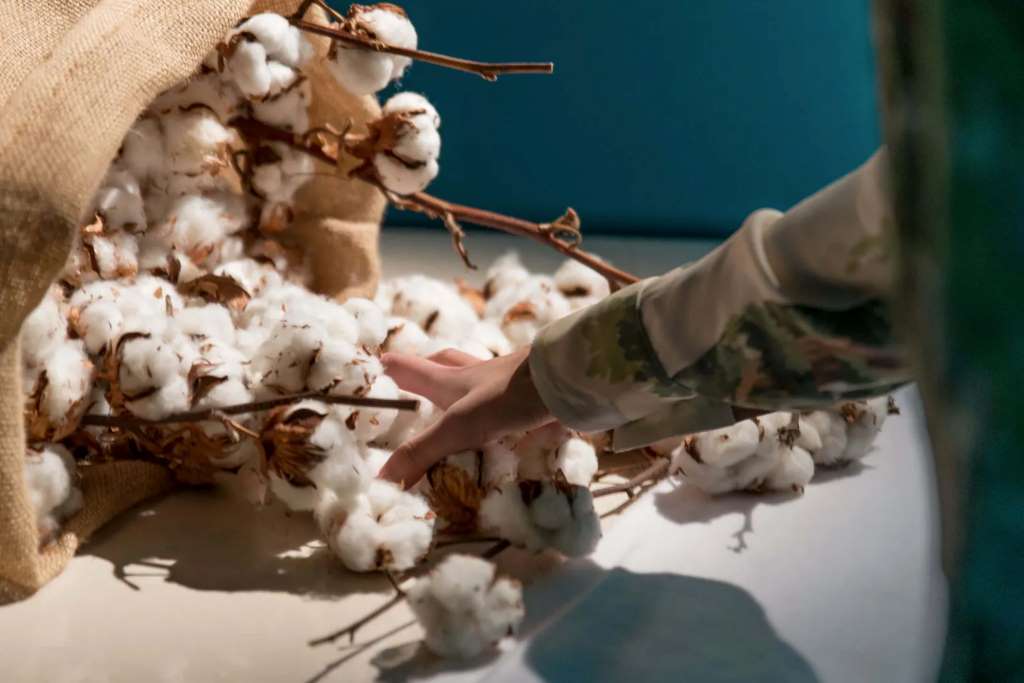
Brands are turning to sustainable clothing in a big way. Denmark’s Denim Project is aiming to save 70 million liters of fresh water over the next two months as part of a plan to drive innovation in the resource intensive industry. It says that 15 per cent of cotton is wasted every year during the manufacturing process, enough to produce three T-shirts for each person on the planet. Cotton is very water intensive. Waste cotton equates to 38.5 billion liters of fresh water, which could provide drinking water to 25 million people a year.
Subsequently, Denim Project has designed a fabric made of 98 per cent production waste, with stretch fabric, the remaining two per cent, being the only new material. Waste material, leftover from the clothes manufacturing process, is sorted into color and spun into yarn, which is then reused to make the new garment. The process uses no dyes and saves a kilogram of cotton per item, which the company estimates is equivalent to 11,000 liters of water.
On same lines, high street fashion brand H&M’s new denim styles are made using cotton recycled from textiles collected at the brand’s stores. Currently it is able to use 20 per cent recycled cotton from collected clothes but is investing in new technology that will enable it to increase this share.
- 1
- 2
- 3
- 4
- 5
- 6
- 7
- 8
- 9
- 10
H&M finds growth below revenue line as margin discipline pays off
H&M Group’s latest quarter signals a decisive shift in global fast fashion: scale is no longer the primary reason for... Read more
As Europe cuts orders, India sees a rare export window post-FTA
The sharp dip in EU apparel imports is not, at first glance, the kind of headline exporters celebrate. January’s 15.48... Read more
The Death of the "Stockpile" Model: Inside the Digital Textile disrupt…
For decades, the global textile industry has been a game of high-stakes gambling: manufacture thousands of identical garments, ship them... Read more
Fuel crisis, rising costs the geopolitical shockwave hitting Indian textiles
The hum of textile machinery in Panipat has gone dead. Over 400 dyeing units have put their shutters, not because... Read more
Price wars, fast fashion, diamond money leads to Surat’s industrial shake-up
The sound of Surat’s diamond polishing wheels, once the city’s heartbeat, is fading. In its place, the relentless pulse of... Read more
India’s textile market nears Rs 15 lakh cr as domestic demand rewrites growth
India’s textile and apparel economy is no longer being driven merely by population growth or festive consumption cycles. It is... Read more
China Discounts, Bangladesh Bleeds: Inside Europe’s new apparel sourcing crisis
Europe’s fashion imports opened 2026 with a hard jolt. Fresh Eurostat-linked trade data for January shows the European Union’s apparel... Read more
Geopolitical volatility triggers sharp decline in global textile confidence: Sur…
The global textile industry is grappling with a sudden and severe downturn in sentiment as regional conflicts disrupt essential trade... Read more
India’s legacy buying houses confront existential challenge as FTAs reshape supp…
The Indian apparel sourcing is being reshaped with a a series of new Free Trade Agreements (FTAs). It is changing... Read more
ICRA sees apparel export recovery in FY27 as margin pressure eases, FTAs gain tr…
India’s apparel export sector is moving out of a year defined by tariff-led disruption and into one shaped by market... Read more