

"
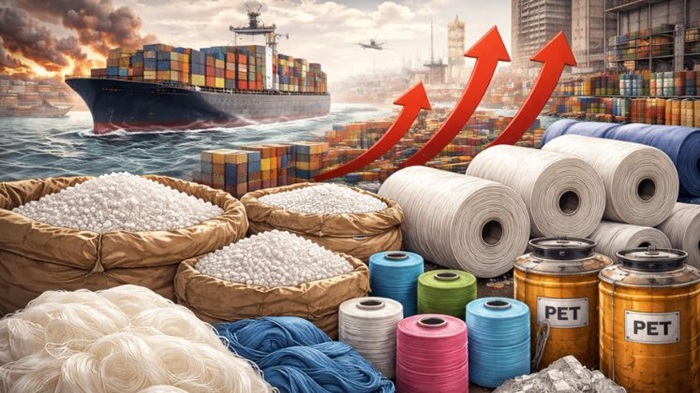
" The global polyester market has seen a reset that extends far beyond crude-linked volatility. Polyester, now accounting for over half of global fiber consumption, is no longer governed solely by input costs or cyclical demand. Instead, it is being reshaped by a concentrated supply chain centered on Purified Terephthalic Acid (PTA), the critical feedstock underpinning polyester production. What was once a diffuse, globally distributed industry is evolving into a tightly controlled system, where geographic concentration is redefining pricing power, margins, and long-term competitiveness.
Asia’s capacity lead
The most decisive shift lies in the overwhelming concentration of new PTA capacity within Asia. Nearly nine out of every ten tonnes of incremental capacity are now being added in the region, with China leading the expansion at an unprecedented scale.
Table: Asia’s new PTA capacity distribution
|
Region |
Share of new PTA capacity |
Current capacity status |
|
China |
57% |
Dominant Leader |
|
Rest of Asia (India, S. Korea) |
32% |
Rapidly Expanding |
|
Rest of World |
11% |
Stagnant / Retracting |
With global PTA capacity estimated between 93 and 95 million tonnes, this imbalance is no longer marginal, it is systemic. The Asia-Pacific region has effectively become the nucleus of polyester feedstocks, eroding the neutrality that once defined global supply chains. For producers outside Asia, the implication is clear: access to raw materials is mediated by a single regional bloc, altering both cost structures and negotiating leverage.
The overcapacity strategy
Unlike traditional commodity cycles, where oversupply triggers production cuts, the current polyester landscape is defined by sustained high utilization rates despite weakening demand. Large integrated producers, particularly in China continue operating at utilization levels exceeding 80 per cent, even during downturns. This is not inefficiency; it is strategy. By maintaining output, these firms protect market share and exert downward pressure on global prices, effectively forcing less integrated competitors into lower margins.
The result is a persistent wall of supply that distorts pricing signals. Polyester feedstock prices may appear low, but the underlying volatility makes forward planning increasingly difficult for yarn spinners and fabric manufacturers. This dynamic marks a departure from conventional market logic. Pricing is no longer purely demand-driven; it is influenced by industrial policy, scale economics, and integration depth within dominant producing regions.
The defining competitive advantage in this new scenario is vertical integration. Major producers, particularly in eastern China’s industrial clusters, have built end-to-end control across the value chain—from crude refining to paraxylene (PX), PTA, and downstream polyester products. This integration allows companies to redistribute margins internally. Losses at the PTA level can be offset by gains in downstream textiles, enabling firms to sustain aggressive pricing strategies that independent players cannot match.
The mega-refinery model
Between 2023 and 2024, several large-scale integrated complexes in China completed their expansion cycles, creating what can be described as ‘mega-refinery ecosystems’.
Table: China’s mega refinery ecosystem
|
Segment |
Independent producers |
Integrated mega-refineries |
|
PTA Margins |
Highly volatile |
Absorbed internally |
|
Feedstock Costs |
Market-linked |
Controlled via transfer pricing |
|
Downstream Competitiveness |
Margin-constrained |
Cost-advantaged |
|
Earnings Stability |
Cyclical |
Relatively stable |
While global PTA margins declined sharply during this period, integrated players reported stable earnings. Their downstream polyester and textile units benefited from internally priced feedstocks, effectively insulating them from market shocks. For independent spinners in regions such as Turkey and Vietnam, this creates a disadvantage. They must procure feedstocks at market rates while competing against finished products priced on integrated cost bases.
The ripple effects extend beyond manufacturing into the global apparel and home textiles sectors. Brands have historically relied on diversified sourcing strategies to stabilize input costs. That assumption is increasingly fragile. As PTA and polyester production consolidate geographically, pricing power shifts upstream. Brands and retailers now operate in a system where raw material costs are indirectly influenced by the strategic priorities of a concentrated group of producers. This introduces a new layer of risk. Even in scenarios where crude oil prices stabilize, supply chain disruptions and pricing volatility can persist due to capacity concentration rather than demand fluctuations.
The petrochemical nexus
At the core of this transformation is the coming togehter of petrochemicals and textiles into a single industrial system. Large players across the Asia corridor including China, India, and parts of the Middle East are investing heavily in integrated complexes designed to extract maximum value from hydrocarbons. These investments are not limited to conventional polyester. They extend into recycled fibers and sustainable variants, positioning integrated producers to dominate both volume and innovation in the next decade.
The implications are profound. Control over feedstocks is no longer just a cost advantage; it is a strategic lever that shapes global trade flows, pricing benchmarks, and competitive dynamics across the textile value chain.
The ongoing increase of PTA capacity into Asia signals a broader realignment of the global textile economy. Polyester is no longer a neutral commodity responding to market forces it is becoming a managed resource. For producers, the path forward will depend on integration, scale, and geographic positioning. For brands, it will require a reassessment of sourcing strategies and risk exposure. The era of fragmented supply chains is giving way to one defined by concentration and control. In this new order, the balance of power in the polyester market is no longer negotiated in trading floors it is engineered in industrial corridors.











