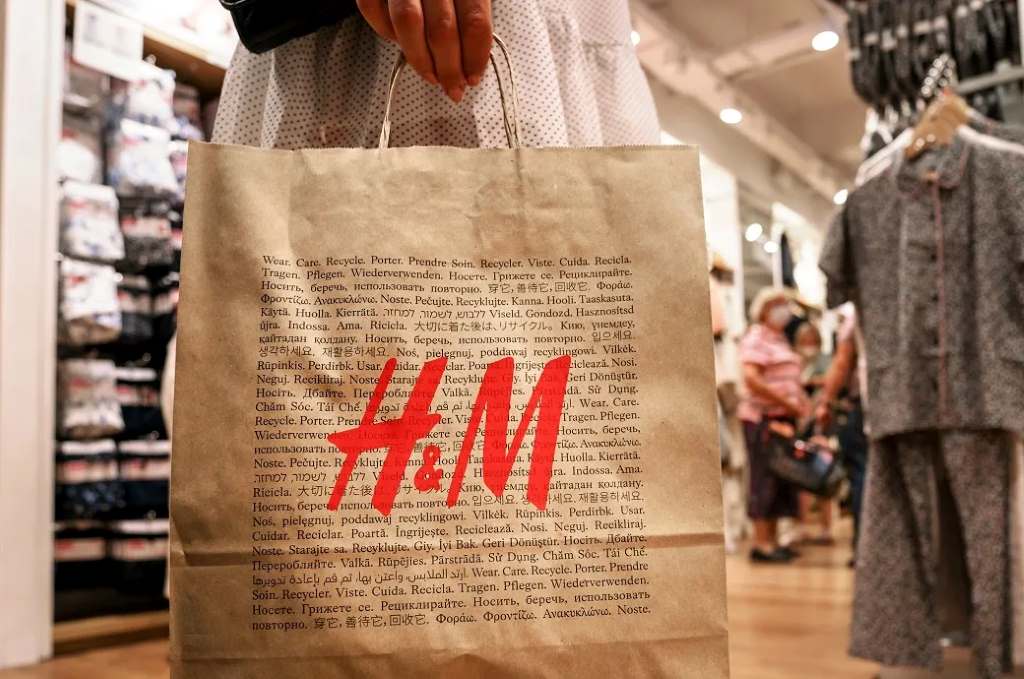
The UK’s aggressive pursuit of independent Free Trade Agreements (FTAs) is no longer just a diplomatic exercise; it has become the primary catalyst for a structural overhaul in how British fashion retailers move goods. Since it moved out of the European Union, the UK government has maintained a high-velocity sprint to secure market access, a move that is forcing apparel giants and boutique labels alike to recalibrate their sourcing maps.
This trade-led restructuring comes at a time when the British retail sector is seeking margin relief as traditional manufacturing hubs face rising labor costs. By lowering or eliminating tariffs with strategic partners, these new deals are effectively subsidizing a shift away from over-reliance on a single geographic region.
Duty-free incentives challenge traditional hubs
Apparel sourcing is now shifting more towards countries that have secured preferential status under the UK’s new trade architecture. With standard import duties on garments often hovering around 12 per cent, the ability to bypass these costs through an FTA provides an immediate bottom-line advantage.
|
Hub |
Status (Jan 2026) |
projected apparel export growth to UK |
Category |
|
India |
CETA Implemented |
+45% |
Cotton & Intricate Embellishments |
|
Vietnam |
UK-Vn FTA / CPTPP |
+15% |
High-Tech Outerwear & Footwear |
|
Bangladesh |
DCTS (Preferential) |
Stable (Facing Cost Pressures) |
Mass-Market Basics |
|
UAE |
Strategic Partner |
+20% |
Re-export Hub / Luxury Logistics |
The India corridor, a 2026 growth engine
The most significant development in early 2026 is the full implementation of the UK-India Comprehensive Economic and Trade Agreement (CETA). For decades, Indian exporters faced 9.6 per cent tariff disadvantage compared to competitors like Bangladesh. The CETA has dismantled this barrier, offering duty-free access for 99 per cent of Indian goods.
"The math has changed for the mid-market," says Marcus Thorne, a senior supply chain analyst. "A 12 per cent saving on landed costs is often the difference between a profitable season and a loss-making one." Experts estimate that Indian apparel exports to the UK will rise to $2.8 billion by the end of this year from the $1.4 billion average seen in previous years.
Navigating the rules of origin maze
However, the transition is not without hurdles. The primary hurdle remains the Rules of Origin (RoO), which dictate exactly how much value must be added within a partner country to qualify for zero-tariff entry. Compliance is no longer a back-office task; it is a strategic necessity. Firms that fail to track the journey of their yarn or fabric risk being hit with retrospective duty claims. To mitigate this, many retailers are investing in digital ledger technologies to prove double transformation ensuring both fabric production and garment assembly happen within the FTA zone.
For example, the mid-sized British label Apex Apparel recently shifted 30 per cent of its knitwear production from traditional hubs to Vietnam and Turkey. By leveraging the UK-Vietnam FTA, they eliminated a 12 per cent tariff and reduced lead times by three weeks. This shift protected their inventory from recent Red Sea logistics bottlenecks, proving that trade policy is now a tool for operational agility.
Resilience through diversification
The UK’s FTA sprint also acts as a hedge against geopolitical instability. The China Plus One strategy is being realized through the UK's accession to the CPTPP, which strengthens ties with Southeast Asian partners. Vietnam, now the world's third-largest apparel exporter, is targeting $50 billion in global turnover this year, with a significant portion of its UK growth coming from high-value items like technical sportswear and green garments.
The UK retail sector is a £100 billion+ powerhouse, transitioning from a European gateway to a global design and ethical manufacturing hub. With a recovery projected for 2026, major brands are expanding digital footprints in Commonwealth markets. Performance is buoyed by a 5.7 per cent rise in imports and a renewed focus on premium, trade-optimized supply chains.