In a move described by European Commission President Ursula von der Leyen as the “mother of all trade deals,” India and the European Union (EU) officially signed a historic Free Trade Agreement (FTA) today. This landmark pact, concluding nearly two decades of negotiations, creates a free trade corridor for approximately two billion consumers and aims to double bilateral trade to $200 billion by 2030. For India’s fashion, apparel, and textile industry, the country’s second-largest employer, the deal provides a critical competitive edge at a time when global trade faces significant fragmentation and high U.S. tariffs.
1. The Core Shift: Eliminating the "Tariff Handicap"
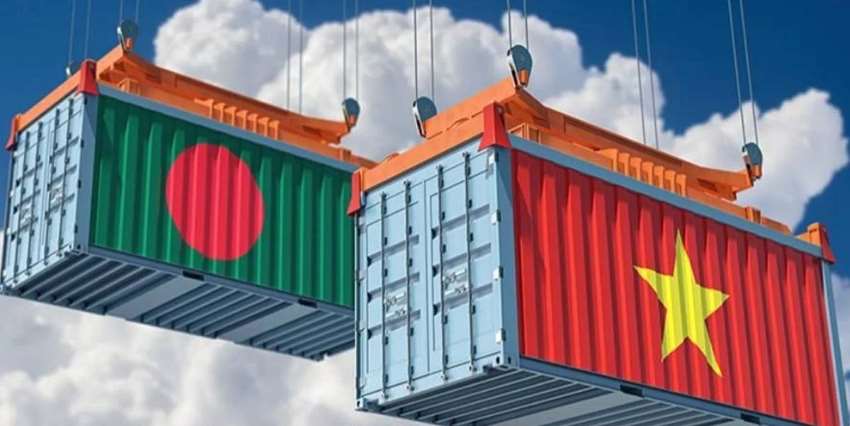
Historically, Indian apparel exporters operated at a distinct disadvantage, subject to duties of approximately 9.6% to 12% in the EU, while competitors like Bangladesh and Vietnam enjoyed duty-free access. The FTA eliminates these barriers, providing a definitive timeline for tariff removal across the value chain.
Tariff Transformation Table
The following table outlines the transition from high MFN (Most Favoured Nation) rates to the new FTA regime:
|
Category |
Pre-FTA Duty (Avg) |
Post-FTA Duty |
Timeline |
|
Ready-Made Garments |
12% |
0% |
Immediate / EIF* |
|
Cotton Yarns & Fabrics |
4% – 10% |
0% |
Immediate / EIF |
|
Home Textiles |
10% – 12% |
0% |
Immediate / EIF |
|
Synthetic/Man-Made Fibres |
8% – 12% |
0% |
Phased (3-5 years) |
|
Luxury European Apparel |
25% – 35% |
10% - 15% |
Phased (7-10 years) |
*EIF: Entry Into Force (expected early 2027 following legal scrubbing).
The immediate removal of the 12% duty on RMG and 10% on cotton products is expected to be the primary catalyst for growth, while the phased reduction for Synthetic and Man-Made Fibres allows the domestic industry time to scale up production to meet European technical standards.
Industry Reactions: Voices from the frontlines
The signing has been met with rare unanimous praise from industry leaders on both continents. A. Sakthivel, Chairman of the Apparel Export Promotion Council (AEPC), hailed the pact as a game-changer for the apparel industry, noting that while India currently exports over $4.5 billion worth of apparel to the EU, manufacturers have been fighting with one hand tied behind their backs. He believes this agreement finally provides the level playing field sought for decades.
Pallab Banerjee, Managing Director of Pearl Global Industries Limited (PGIL), stated that the removal of this tariff differential would help level the playing field for Indian manufacturers and catalyze fresh investments in advanced synthetic raw materials. Banerjee noted that while the US market was previously larger for Indian garments, the EU represents an even greater untapped opportunity, and India is well-positioned for ESG compliance.
Ashwin Chandran, Chairman of the Confederation of Indian Textile Industry (CITI), added that this FTA serves as a massive confidence boost during a period of steep US tariffs, creating a structural roadmap to achieve $100 billion in textile exports by 2030.
Bartoli, a European Trade Strategist, remarked that for European brands, India is now a vital, reliable democratic partner, highlighting a shift toward stable supply chains.
Durai Palanisamy, Chairman of The Southern India Mills’ Association (SIMA), complimented the leadership of Prime Minister Narendra Modi and Commerce Minister Piyush Goyal, stating that the FTA enables India to effectively compete with key supplier countries such as Bangladesh and Vietnam.
Impact on exports & imports
The FTA is expected to transform the volume of Indian goods moving into the Eurozone. Ready-made garment and apparel exports are projected to grow by 20–25% year-on-year, aiming to bridge the gap with competitors. Furthermore, increased demand for Indian cotton and technical textiles is expected as European giants look to diversify supply chains.
Conversely, India has provided a phased opening for Luxury European Apparel, with duties dropping from 35% down to 10-15% over the next decade. This creates a balanced gateway for premium European brands to enter the Indian market while protecting local manufacturers in the short term. Additionally, India will gain easier access to high-tech European machinery, which is crucial for modernization. Durai Palanisamy pointed out that India currently imports around $2.62–3 billion worth of textile machineries from EU countries, and this deal will further lower costs for technology adoption.
Case Study: The Tiruppur transformation
The Tiruppur knitwear cluster in Tamil Nadu serves as a primary example of the FTA's potential impact. Tamil Nadu currently accounts for 29% of Indian textile exports to the EU. Historically, Tiruppur’s exporters struggled because their products were more expensive than duty-free alternatives from neighboring countries. With the immediate removal of the 12% tariff, local clusters are expected to double their exports and restore capacity utilization.
Outlook and Projections: The 2030 vision
The immediate outlook is bullish, with bilateral goods trade expected to surge to $200 billion by 2030. India aims to increase its share of the EU apparel market from the current 6% to nearly 9% by 2029.
Industry leaders believe the FTA will be the driver required to increase India's textile business size to $250 billion and create new jobs for 20 million people, specifically benefiting rural masses and women across the nation.
The Bottom Line: For the first time in two decades, "Made in India" labels will sit on European shelves without a price penalty, ending a long-standing disadvantage and allowing India's strong capabilities in quality and compliance to drive global market share.