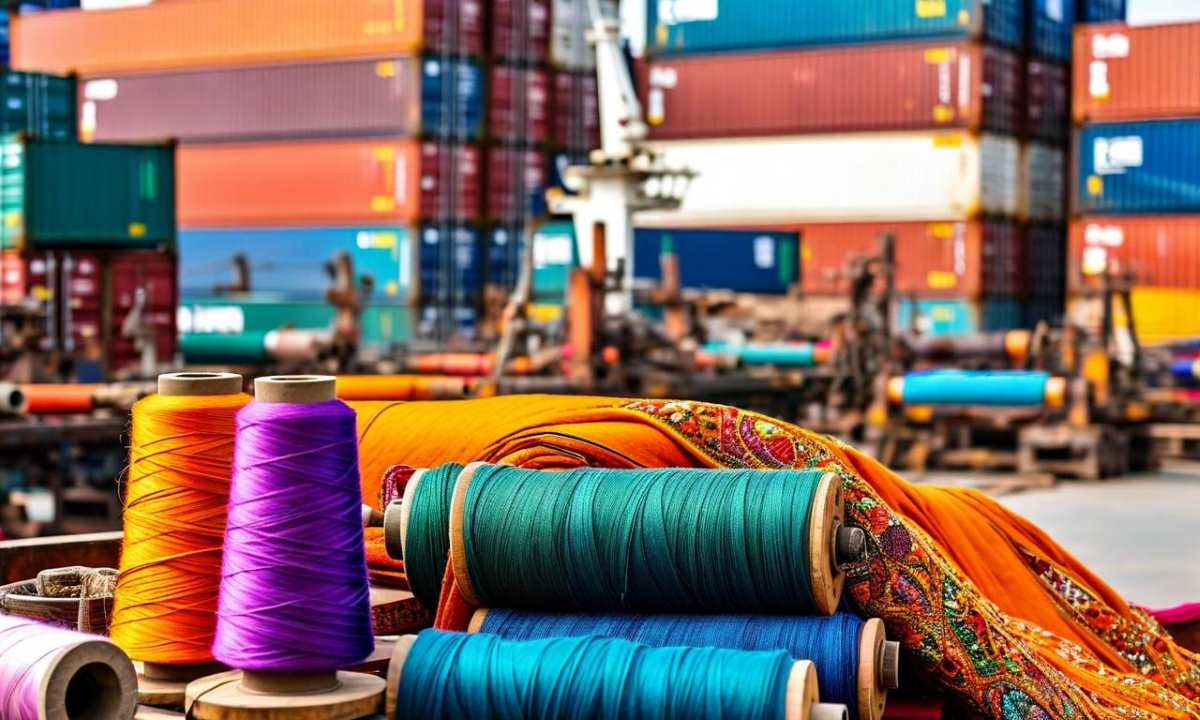
Pakistan’s textile exports dropped 16.1 per cent in July 2018 compared to shipments recorded in June. On a year-on-year basis, textile exports in July fell half a per cent compared to July 2017. Textile exports roughly make up 60 per cent of Pakistan’s total exports.
One reason for the dip is the reduction in tax rebates that made things unviable for textile producers. Right now the industry is operating at five per cent profitability. It is also a fact, though, textile exports tend to fall in July as exporters try to increase exports in the closing month of the earlier fiscal year, which is June.
Pakistan recently adjusted its exchange rate by letting the currency weaken, but it won’t impact national exports. Pakistan’s textile production faces high input costs due to imports, which dilutes the impact of the depreciation on the textile industry. High quality raw material is imported by brands. Chemicals are imported while energy requirement is also generally met by diesel imports.
The textile sector hopes for better exports in winter when consumption increases in the west due to the cold weather and Christmas. Exports are also sought to be hiked by improving localisation and quality of raw material as better brands import better quality cotton to meet their requirement.

- 1
- 2
- 3
- 4
- 5
- 6
- 7
- 8
- 9
- 10
India’s MMF push faces rising risk from China’s petrochemical dominance
India’s ambition to build a globally competitive synthetic textile industry is facing constraints as downstream capacity alone cannot solve: concentration... Read more
Shein’s Vietnam retreat exposes the limits of nearshoring
The global apparel industry has spent the past few years pursuing a straightforward strategy: reduce dependence on China by moving... Read more
Regional pavilions compete on fiber strengths and supply chain niches at Yarn Ex…
The trade floor at Yarn Expo Autumn 2026 in Shanghai, held between Aug 25-27, capitalizing on a sharp rebound in... Read more
Inside activewear's shift from stitched mesh to precision engineered textiles
The global functional apparel market, on track to touch $640 billion, is looking at a production shift as activewear manufacturers... Read more
Brazil’s cotton dominance puts Asian spinners on a new sourcing map
Brazil’s emergence as the world’s largest cotton exporter is no longer simply an agricultural success story. It has given a... Read more
Textile industry sees long-term growth but $100-bn export goal stays a stretch: …
India’s textile and apparel industry is entering a phase of optimism, but that confidence is tempered by a hard export... Read more
Apparel trade slumps as global textile mills move upstream
Global manufacturing is growing, but finished apparel is failing to capture that growth. United Nations Industrial Development Organization (UNIDO) data... Read more
Global apparel value chain converges in Shanghai as Intertextile Autumn 2026 ope…
The global apparel and textile community gathered in full force yesterday, August 25, 2026, as the Autumn Edition of Intertextile... Read more
Trade pacts, integrated manufacturing power India’s textile export ambitions
Global apparel sourcing is entering a new phase in which resilience, compliance and manufacturing depth matter as much as cost... Read more
Next-gen digital Indigo systems redefine textile manufacturing economics
The global textile sector is experiencing a structural shift as industrial-scale digital dyeing technologies replace traditional indigo vats in major... Read more