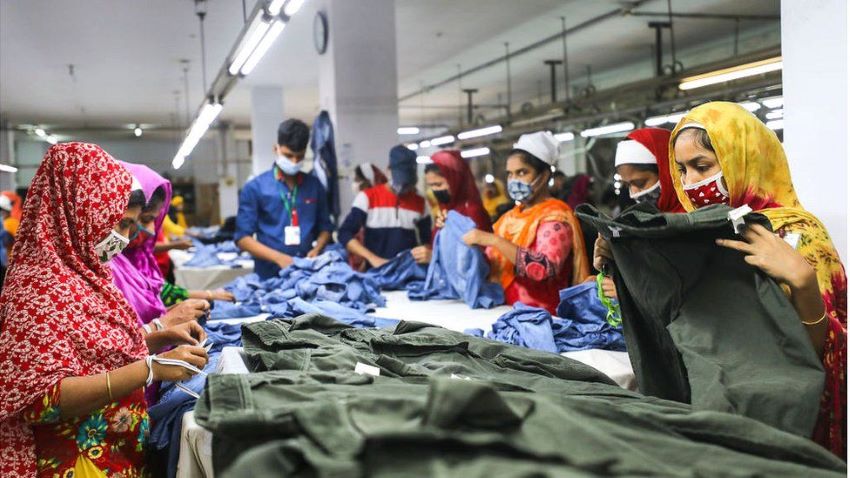
The textile industry in Pakistan have urged the government for subsidised gas and electricity rates and tax breaks. Exporters are unclear about the actual energy tariffs for the purpose of quoting prices of products. In September last year, gas supply to the industrial sector (exporters of the zero-rated section, including textile and jute, carpets, leather, sports and surgical) was revised from 28:72 to 50:50 for domestic gas and LNG respectively. The electricity tariff was fixed at a certain level without building other charges (quarterly adjustment, fuel price adjustment and various other surcharges) to the export industry which would be part of the subsidy claim to be picked up by the federal government. But the industry is now faced with an additional quarterly adjustment charged by distribution companies. The industry regrets that implementation of the decisions on reduced energy rates is selective, partial and subject to irrelevant and non-professional interpretations at the lower levels.
A special energy package was extended early this year to the erstwhile zero-rated industry to provide it a competitive energy tariff to expand and increase exports. These rates were notified in October last year but captive power plants were excluded from the ambit of the zero-rated industry. Later, captive power generation of these export units was also included in the same tariff.
- 1
- 2
- 3
- 4
- 5
- 6
- 7
- 8
- 9
- 10
India’s textile market nears Rs 15 lakh cr as domestic demand rewrites growth
India’s textile and apparel economy is no longer being driven merely by population growth or festive consumption cycles. It is... Read more
China Discounts, Bangladesh Bleeds: Inside Europe’s new apparel sourcing crisis
Europe’s fashion imports opened 2026 with a hard jolt. Fresh Eurostat-linked trade data for January shows the European Union’s apparel... Read more
Geopolitical volatility triggers sharp decline in global textile confidence: Sur…
The global textile industry is grappling with a sudden and severe downturn in sentiment as regional conflicts disrupt essential trade... Read more
India’s legacy buying houses confront existential challenge as FTAs reshape supp…
The Indian apparel sourcing is being reshaped with a a series of new Free Trade Agreements (FTAs). It is changing... Read more
ICRA sees apparel export recovery in FY27 as margin pressure eases, FTAs gain tr…
India’s apparel export sector is moving out of a year defined by tariff-led disruption and into one shaped by market... Read more
From Price to Purpose: India’s textile leaders chart a sustainable future at CMA…
The Indian textile industry is standing at a historic crossroads. For decades, the sector has been fueled by its reputation... Read more
Industrial automation and AI take center stage at Garment Technology Expo (GTE) …
The conclusion of the 39th Garment Technology Expo (GTE 2026) in Greater Noida has signalled a decisive shift in South... Read more
The End of Geographic Masking: Shein and peers reclaim Made in China as a strate…
The era of the corporate ghost is ending. For years, the world’s most aggressive retail disruptors operated under ambiguity, relocating... Read more
$120 Crude, Zero Margin: How India’s textile hubs are paying the price
For India’s textile clusters, the current West Asia crisis is no longer a distant geopolitical headline. In Surat’s polyester corridors... Read more
Luxury under pressure as stagflation and geopolitics redefine the winners’ circl…
The 2025 earnings for Europe’s listed luxury majors have delivered a verdict that has far more implications than the prevailing... Read more