The Government of Punjab is aggressively upgrading its textile value chain, placing high-tech dyeing and finishing infrastructure at the center of its latest industrial roadmap. Under the ‘Punjab Dyeing and Finishing Policy 2026,’ the state is courting both domestic and international capital to establish sustainable processing clusters near major manufacturing hubs like Ludhiana and Amritsar. This strategic intervention addresses the most fragmented segment of Punjab’s textile industry, where antiquated processing units have historically struggled to meet the stringent environmental and quality benchmarks mandated by global apparel retailers. By prioritizing common facilities such as Zero Liquid Discharge (ZLD) systems and Common Effluent Treatment Plants (CETPs), the state aims to convert its processing sector into a "green" differentiator in the northern Indian market.
Integrating digital logistics for trade efficiency
Complementing this industrial push, the state recently signed a landmark MoU with NICDC Logistics Data Services (NLDSL) on July 7, 2026. By integrating the Unified Logistics Interface Platform (ULIP) into its supply chain architecture, Punjab is digitizing the movement of textile goods to reduce operational overheads. This digital framework provides real-time visibility, enabling manufacturers to synchronize their production with global shipping schedules more effectively. The goal is to eliminate the friction that has traditionally hindered export-oriented MSMEs, noted a state commerce official, highlighting that transparent data flow is now as essential as machinery upgrades for maintaining a competitive edge in the global market.
Flexible incentives to drive large-scale investment
The processing initiative is a key pillar of the broader ‘Punjab Industrial and Business Development Policy 2026,’ which offers investors an unprecedented ‘pick-and-choose’ menu of up to 20 fiscal incentives. For textile players, this includes capital subsidies, electricity duty exemptions, and extended incentive periods reaching up to 15 years. Unlike the rigid, ‘fixed-menu’ policies typical of other Indian states, Punjab’s customizable framework allows firms to build bespoke incentive packages tailored to their specific scale and sustainability requirements.
With the state aiming to attract Rs 75,000 crore in total industrial investment this year, the focus on sustainable textile wet processing is a calculated effort to recapture value that has previously leaked to other manufacturing hubs.
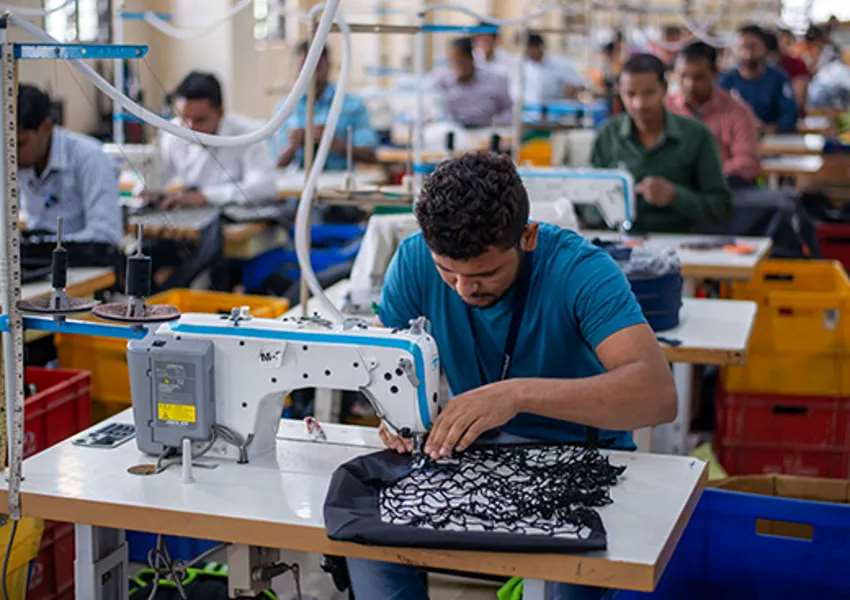
Punjab serves as a pivotal hub for India’s textile industry, specializing in high-quality spinning, knitting, and garmenting. The state’s apparel ecosystem supports a vast network of MSMEs and industrial units. Currently, the government is focusing on modernizing its processing infrastructure and digitizing supply chains to accelerate export growth and ESG compliance.