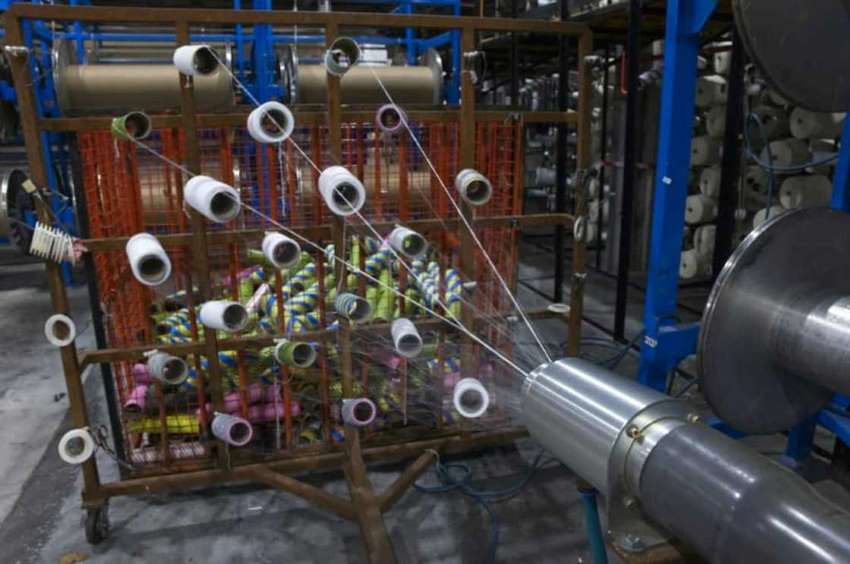
Global equipment deliveries contracted across downstream fabric manufacturing during 2025, while primary yarn production machinery recorded resilient expansion. According to the 48th annual International Textile Machinery Shipment Statistics released by the International Textile Manufacturers Federation (ITMF), short-staple spindle shipments grew to 6.11 million units, while open-end rotor deliveries expanded 3.5 percent to 645,000 units. Asian mill operators - pled by capital investments in China, India, and Vietnam - absorbed 94 per cent of worldwide rotor shipments, reinforcing regional dominance in primary fiber processing. Spinning mills are prioritizing fiber yield optimization and raw material flexibility to mitigate rising input costs, stated Dr Christian Schindler, Director General, ITMF.
Downstream fabric machinery contracts amid soft retail demand
In contrast, downstream capital deployment saw sharp contractions due to cautious ordering from Western retail brands. Global shipments of double-heater draw-texturing spindles fell by 22 per cent to 743,000 units, shuttle-less looms dropped 28 per cent to 164,000 units, and circular knitting machinery deliveries decreased by 13 per cent. Elevated borrowing costs and excess fabric inventory forced textile manufacturers to delay machinery upgrades in weaving and knitting, reallocating capital toward upstream yarn efficiency.
ITMF global value chain intelligence profile
Established in 1904, Zurich-based International Textile Manufacturers Federation (ITMF) serves as the primary international association for the textile value chain. Monitoring fiber, yarn, fabric, and machinery manufacturing across major global hubs, ITMF provides critical statistical benchmarks. Operating on member subscriptions, the federation expands trade transparency to navigate global supply chain shifts.