The Lenzing Group completed the second pilot production plant for its innovative filament yarn TENCEL Luxe. The new pilot production line, which was put into operation in the middle of December 2019, gives Lenzing sufficient capacity for commercial programs and further application development. Innovation in the eco-couture segment Thanks to TENCEL Luxe, Lenzing is able to embed the issue of sustainability in the premium luxury market in combination with superior aesthetics. The properties of the fine filament yarn can be compared to those of silk due to its airy feeling on the skin and the matte finish. At the same time, TENCEL Luxe also stands out because of its extensive strength and high level of environmental compatibility. It is perfectly suited for very fine fabrics and as a blending partner for silk, cashmere and wool. For example, the yarn is used for making blouses and shirts, dresses, scarves, ties and the inner lining of suits. “TENCEL Luxe opens up new markets for Lenzing and thus contributes to the successful implementation of our sCore TEN corporate strategy. At the same time, we are setting new standards in the luxury segment of the fashion industry with respect to sustainability”, says Stefan Doboczky, Chief Executive Officer of the Lenzing Group. “Many luxury brands have already realized what opportunities they would have by using this yarn made of the renewable raw material wood. The second pilot plant enables us to further press ahead with opening up new areas of application in collaboration with our customers”, Stefan Doboczky adds. Important basis for further growth, the new pilot production line will build upon the knowledge gained from operating the predecessor facility and leverage completely new and innovative automation models. The pilot plant developed by Lenzing and the knowhow acquired during the construction phase will comprise the basis for the company’s further expansion in the field of sustainable filament yarns. This will also comprise the starting point for the planned construction of a large commercial production plant at the Lenzing site.


- 1
- 2
- 3
- 4
- 5
- 6
- 7
- 8
- 9
- 10
Global textile regulation tightens, forcing realignment across fashion supply ch…
Global fashion and consumer goods supply chains are entering a decisive regulatory transition as Extended Producer Responsibility (EPR) frameworks for... Read more
Luxury’s new power axis, US dominance, China reset, Gulf surge
As the post-China luxury order takes shape, the US is emerging as the industry’s most dependable growth engine, while Japan,... Read more
India’s $9 Billion Landfill Blind Spot How trashed clothes hold the key to globa…

A massive economic windfall is sitting uncollected in India’s landfills, and the key to unlocking it lies in rethinking how... Read more
Red Sea crisis reshapes textile trade routes, challenges India’s export margins,…

Global apparel trade is now in a new operational phase where geopolitical stability and logistics reliability are as important as... Read more
EU’s textile waste rules enter enforcement phase, raising alarms across fashion …
Europe’s apparel and textile industry is approaching one of its most significant regulatory transitions in decades. As the European Union... Read more
Corporate fashion adopts reverse logistics to unlock the $367 bn resale market

Global fashion retailers are rapidly changing their business models around resale, repair, and textile recovery as the secondhand apparel market... Read more
Tariff Shock 2026: Forced-labor enforcement is repricing global fashion trade
Washington’s latest trade intervention signals a break in the global apparel sourcing patterns. The Office of the United States Trade... Read more
Circular Samvaad 2.0 aims to transform Indian textiles from linear waste to glob…
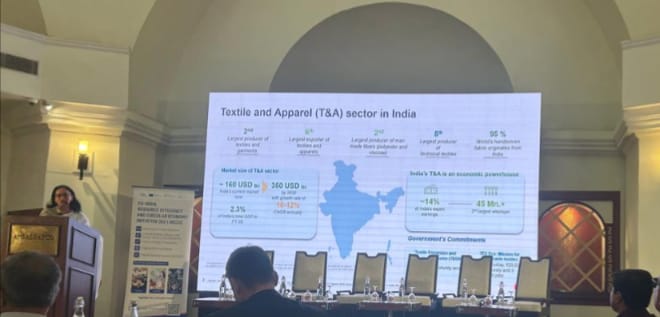
On the occasion of World Environment Day, industry leaders, policymakers, and international experts gathered in the capital yesterday for Circular... Read more
From Sentiment to Sustainability: How Mumbai’s ‘Mega Post Textile Waste Initiat…
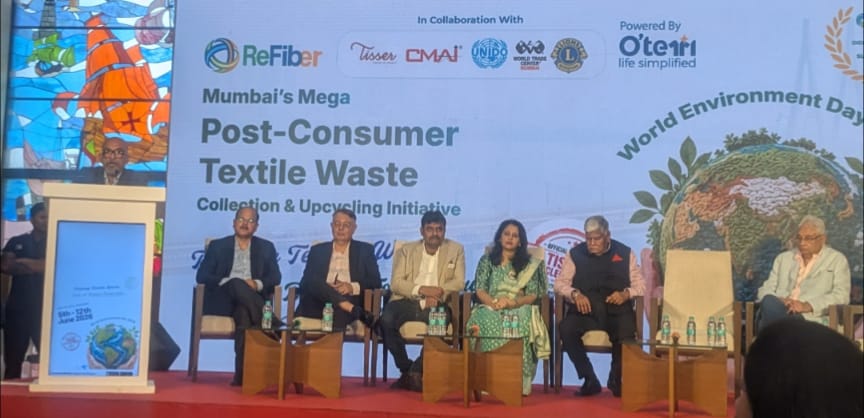
Walk into almost any Indian household, and you will find wardrobes harboring clothes that haven’t been worn in years. They... Read more
Trends-Fabrics (Denim-Kidswear) trends for Spring/Summer 2026-27 by Drapers
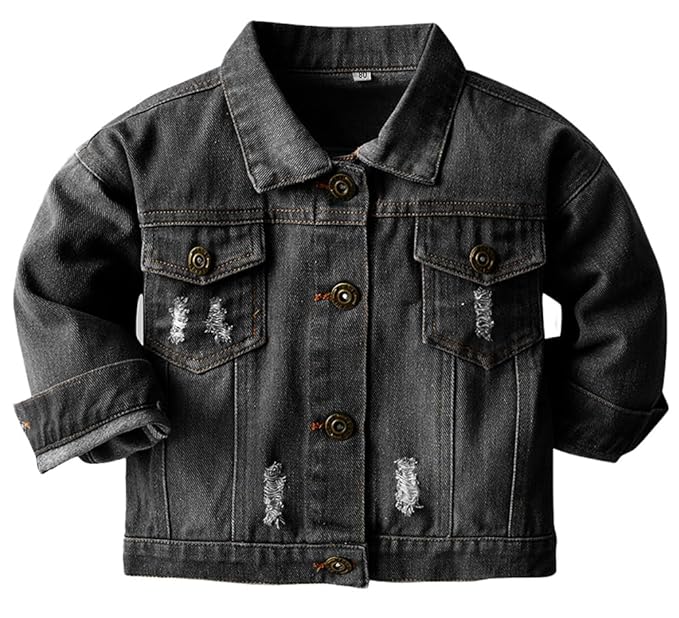
For the Spring/Summer 2026-27 season, the kidswear denim market is defined by a shift toward lightweight comfort, playful aesthetics, and... Read more

