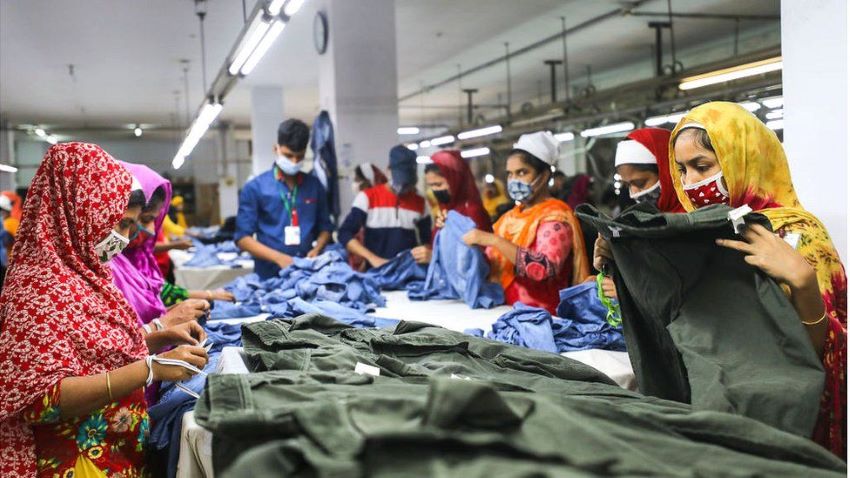
Social audit firms are responsible for a number of fatal accidents in the readymade garment sector in countries like Pakistan, Bangladesh, Vietnam and Malaysia, says a global worker rights group Clean Clothes Campaign. These firms protect the profit and reputation of brands but fail to protect garment workers’ safety and improve working condition in the supply chain. The audits stand in the way of more effective models that include mandatory transparency and binding commitments to remediation.
Examples are the Ali Enterprises factory fire in Pakistan in September 2012, in which over 250 workers died, unable to escape due to bars on exits and windows; the devastating collapse of the Rana Plaza building in Bangladesh in April 2013, which killed 1,134 workers and left thousands more injured and traumatised; and the July 2017 boiler explosion in the Multifabs factory in Bangladesh, killing and injuring dozens of workers. Each of these factories had been assessed and declared safe by auditing companies. In the case of both Ali Enterprises and Rana Plaza, accredited auditors had deemed these facilities safe just weeks or months before they were reduced to ruins. In the case of Ali Enterprises, this assessment was made by auditors who reportedly never even visited the building.
- 1
- 2
- 3
- 4
- 5
- 6
- 7
- 8
- 9
- 10
The Store as Stage: How fashion is crafting immersive consumer worlds
The North American fashion retail sector in 2026 is shedding its product-first identity and shifting towards a model that values... Read more
Turning the supply chain upside down, on-demand production reshapes apparel
The global fashion industry, long celebrated for its creativity and scale, is facing a structural reckoning. For decades, retailers and... Read more
Intertex Milano 2026 - A global nexus for textile innovation
Intertex Milano is set to return this summer, confirming its status as a premier international destination for the textile and... Read more
Primark at crossroads as AB Foods weighs spin-off amid digital and Lefties press…
The long-standing supremacy of Europe’s budget fashion champion, Primark, is facing a test. As of February 2026, Associated British Foods... Read more
Vietnam, Bangladesh, Cambodia drive US apparel imports in 2025
The 2025 year-end data for the US apparel sector reveals an industry in structural flux. Despite aggressive tariff measures and... Read more
The New Dress Code: Sportswear’s takeover of modern wardrobes
For much of the last decade, fashion retail has been defined by volatility. Trends have shortened, discount cycles have intensified... Read more
Hemp finds its moment in India’s $500 billion American trade calculus
In the grand arithmetic of India’s expanding trade engagement with the US, the headlines usually gravitate toward oil cargoes, aircraft... Read more
EU PET spunbond imports under scrutiny, misclassification sparks regulatory and …
The European nonwovens and technical textiles sector is facing an unprecedented compliance crisis as a rise of customs misclassification threatens... Read more
From atelier to algorithm, Gucci is redefining premium marketing
As Milan welcomes the Primavera 2026 fashion calendar, the spotlight is fixed not just on the runway but on Gucci,... Read more
America’s Store Split: Why discount retailers are winning as department stores s…
By early 2026, the American retail industry no longer resembles a single marketplace moving in one direction. It feels more... Read more