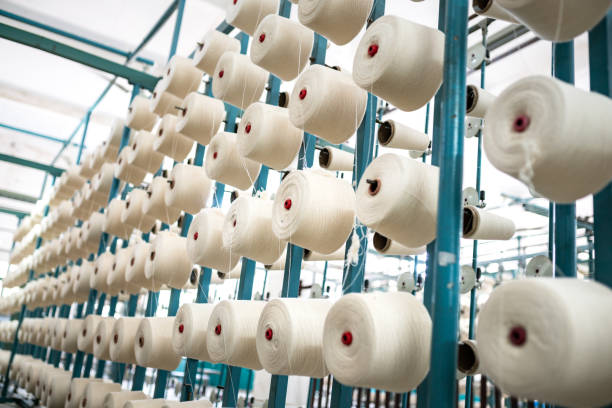
While cotton growing and ginning is a top agricultural export industry in Tanzania, the sector has been struggling for the past 50 years. Two main factors have led to the stagnation in productivity in the cotton sector. One problem is a general lack of knowledge about how to best operate within the global industry, the other is a lack of cohesiveness between sector groups. Small cotton ginning operations compete with each other from year to year. This competition makes them unwilling to contract farmers for the long-term. Contract farming for the cotton sector in Tanzania has gained popularity. Contracts would give the farmers the training and knowledge needed to improve practices and output. Better agricultural practices, including the correct use of pesticides and improved cotton seeds, can significantly increase annual cotton production. This increase will improve the livelihoods of individual farmers and the industry overall.
A three-part contract farming model was developed within the past few years, involving local government, farmers and ginners. Each district helps farmers negotiate with ginners, advocating for the interests and needs of farmers. Farmers then make arrangements to supply one ginner with cotton and, in turn, the ginners provide training and other services to the farmers.
- 1
- 2
- 3
- 4
- 5
- 6
- 7
- 8
- 9
- 10
The second life economy gets a boost as resale outgrows traditional apparel reta…
For decades, resale existed in the margins of the apparel economy, thrift stores, peer-to-peer marketplaces, and charity bins quietly absorbing... Read more
Rising polyester costs shake India’s textile manufacturing hubs
India’s synthetic textile industry is confronting a sudden and destabilizing price shock that is reverberating across its vast manufacturing ecosystem.... Read more
Cotton markets hold firm as tariffs, higher supply reshape global fiber economic…
In a year marked by tariff escalations, geopolitical brinkmanship and a recalibration of global trade flows, the international cotton market... Read more
Beyond Cotton How Kapok could redefine sustainable insulation in textiles
In the lush, humid heart of Southeast Asian rainforests stands a giant, a silent sentinel of the forest canopy. Growing... Read more
Bharat Tex 2026: Redefining the global textile value chain
Union Minister of Textiles, Giriraj Singh, has officially unveiled Bharat Tex 2026, signaling a significant leap in India’s influence over... Read more
Intertextile Shanghai Spring 2026: A hub for global textile innovation
The textile industry’s pulse is quickening as Intertextile Shanghai Apparel Fabrics – Spring Edition prepares to open its doors from... Read more
Moscow Fashion Week 2026: Blending sustainable innovation with timeless glamour
Scheduled to run from March 14-19, 2026 in Moscow, Russia, the Moscow Fashion Week (MFW) is cementing its status as... Read more
The Store as Stage: How fashion is crafting immersive consumer worlds
The North American fashion retail sector in 2026 is shedding its product-first identity and shifting towards a model that values... Read more
Turning the supply chain upside down, on-demand production reshapes apparel
The global fashion industry, long celebrated for its creativity and scale, is facing a structural reckoning. For decades, retailers and... Read more
Intertex Milano 2026 - A global nexus for textile innovation
Intertex Milano is set to return this summer, confirming its status as a premier international destination for the textile and... Read more