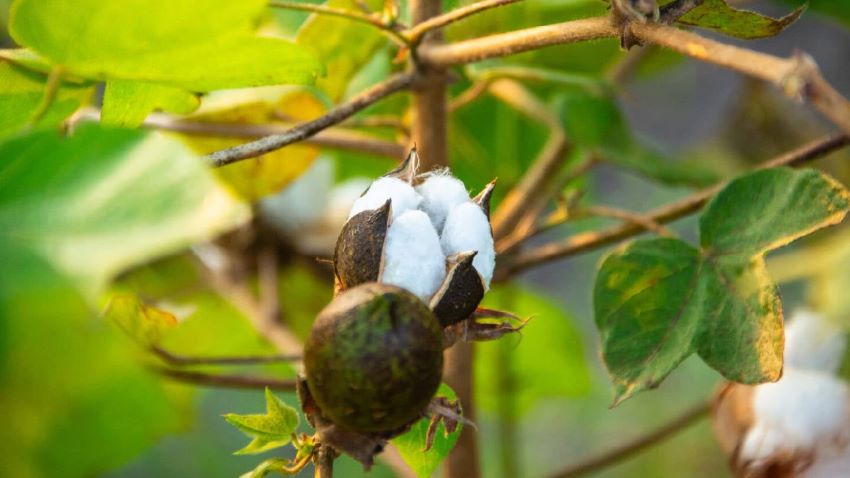
Zimbabwe’s cotton output will be lower than expected this year. The country was expecting a yield of at least 1,00 000 ton of the commodity but the actual output could be between 70, 000 and 75,000 tons. Above normal rains received during the 2016-17 season made chemicals less effective, exposing the cotton crop to pests, particularly bollworms. Some cotton farmers diverted large portions of inputs such as fertilisers to production of food crops such as maize given that the country was coming out of a drought season.
In some areas, where cotton was planted late, the crop is now under threat from livestock such as cattle and goats because some villagers have stopped tending to their animals. Production will suffer from moisture related downgrades. Abuse of cotton inputs remained rife as farmers diverted cotton inputs to other or more lucrative crops, such as tobacco. Coming from a drought year, many farmers only took seed so that they could have access to fertilisers, which they used in maize production.
Excessive rains in some areas destroyed the crop and also made pest control difficult. Yield per unit area was significantly affected. Cotton buyers from Mozambique also took advantage of prevailing cash shortages in the country. They offered cash to growers while local firms were largely paying using mobile platforms.
- 1
- 2
- 3
- 4
- 5
- 6
- 7
- 8
- 9
- 10
Cotton markets hold firm as tariffs, higher supply reshape global fiber economic…
In a year marked by tariff escalations, geopolitical brinkmanship and a recalibration of global trade flows, the international cotton market... Read more
Beyond Cotton How Kapok could redefine sustainable insulation in textiles
In the lush, humid heart of Southeast Asian rainforests stands a giant, a silent sentinel of the forest canopy. Growing... Read more
Bharat Tex 2026: Redefining the global textile value chain
Union Minister of Textiles, Giriraj Singh, has officially unveiled Bharat Tex 2026, signaling a significant leap in India’s influence over... Read more
Intertextile Shanghai Spring 2026: A hub for global textile innovation
The textile industry’s pulse is quickening as Intertextile Shanghai Apparel Fabrics – Spring Edition prepares to open its doors from... Read more
Moscow Fashion Week 2026: Blending sustainable innovation with timeless glamour
Scheduled to run from March 14-19, 2026 in Moscow, Russia, the Moscow Fashion Week (MFW) is cementing its status as... Read more
The Store as Stage: How fashion is crafting immersive consumer worlds
The North American fashion retail sector in 2026 is shedding its product-first identity and shifting towards a model that values... Read more
Turning the supply chain upside down, on-demand production reshapes apparel
The global fashion industry, long celebrated for its creativity and scale, is facing a structural reckoning. For decades, retailers and... Read more
Intertex Milano 2026 - A global nexus for textile innovation
Intertex Milano is set to return this summer, confirming its status as a premier international destination for the textile and... Read more
Primark at crossroads as AB Foods weighs spin-off amid digital and Lefties press…
The long-standing supremacy of Europe’s budget fashion champion, Primark, is facing a test. As of February 2026, Associated British Foods... Read more
Vietnam, Bangladesh, Cambodia drive US apparel imports in 2025
The 2025 year-end data for the US apparel sector reveals an industry in structural flux. Despite aggressive tariff measures and... Read more