FW
Modefabriek cancels July edition
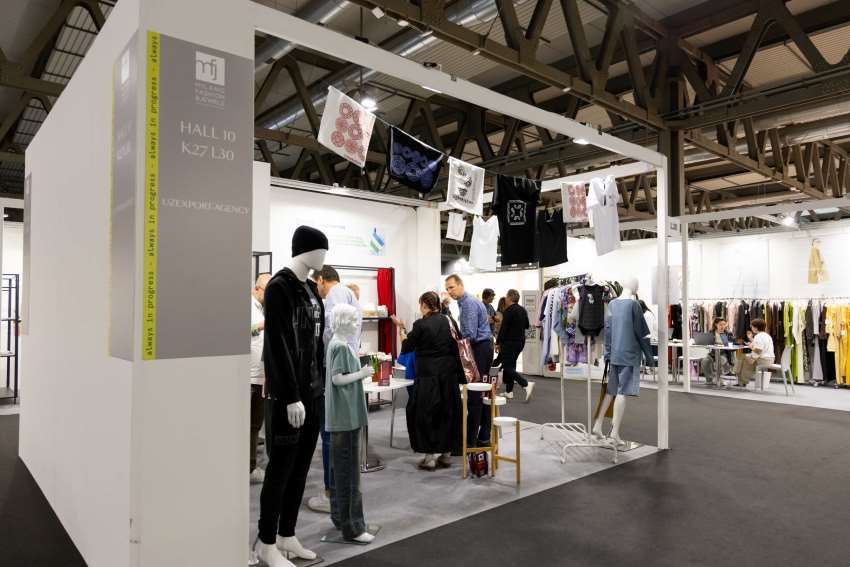
Modefabriek, an Amsterdam event scheduled to be held between July 5 -6, is the latest fashion event to be cancelled due to the coronavirus outbreak.
The organizers of the show said in a statement: “The decision to cancel the upcoming summer edition of Modefabriek regrettably proved to be unavoidable. The Corona pandemic has had an enormous impact on everything that we hold dear, and we realise that it is now impossible for our event to go ahead as planned.”
Looking forward, they would continue to develop the show for upcoming editions. “Here at Modefabriek, we were already developing a broader platform for our branch – in addition to our live event. To offer online and offline solutions, to be a contact point and connector,” the organisers further added.
Global major PVH, Brands and clothing companies close stores in Europe, North America
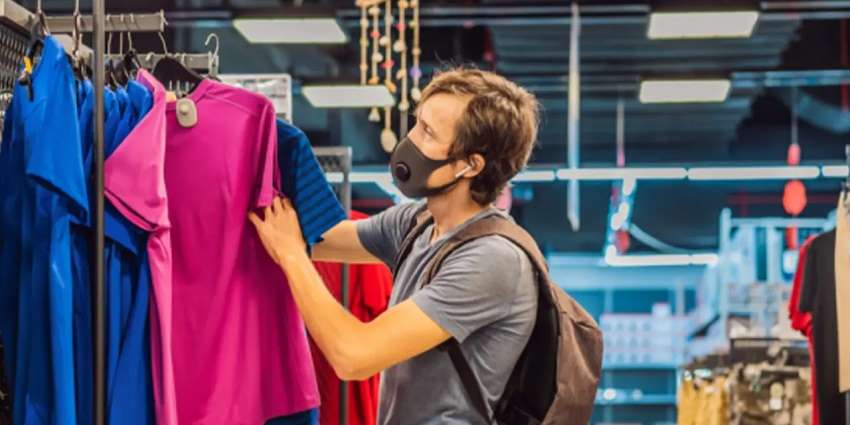
With the increasing uncertainty, increasing numbers of retailers are temporarily closing their stores in response to the COVID-19 outbreak.
PVH has closed all company operated stores in Europe and North America, VF Corporation has closed all company operated retail stores in North America, while H&M Group, John Lewis, Primark, New Look and Debenhams are just a few of the companies which have closed their stores in the UK.
Bangladesh reaches out to EU, US for export loss concern
Bangladesh government has initiated discussions with major importing countries sharing their concern for the loss being incurred from the coronavirus spread.
BGMEA (Bangladesh Garment Manufacturers and Exporters Association), the leading association estimates around two billion dollars as their export losses due to coronavirus.
“We are in discussion with the EU, the US and G7 countries. We have informed them about our situation and are trying to offset the loss,” Foreign Minister Dr AK Abdul Momen said in a video briefing on Tuesday.
The minister, however, mentioned that local enterprises are producing corona preventive gears and already countries like the USA has requested Bangladesh to supply the gears.
He also informed that the corona preventive equipment from China will arrive in the country on Thursday by a special flight.
WRAP offers to fund textiles projects
UK-registered charity organisation , The Waste & Resources Action Programme (WRAP), is offering grants upto £1.5 million to support textile projects that provide innovative ways for textile waste to be recycled or re-used, keeping it out of landfill or incineration so that it remains a valuable resource.
The grants, of between £20,000 and £170,000, are available to organisations of any size, both commercial and not-for-profit. The money is for capital expenditure only; either for equipment or technologies (excluding software and apps) those enable recycling or re-use of clothing or linen waste textiles.
The aim of this grant fund is to address the need for increased capacity, sorting, handling, and reprocessing textiles from municipal sources. The money is part of the department for environment, food and rural affairs’ £18 million Resource Action Fund, set up to support key priority policy areas.
WRAP works with governments, businesses and citizens to create a world in which we source and use resources sustainably.
Gerber Technology sets taskforce for Personal Protective Equipment
Gerber Technology, based on its successful initiative in China, announced the creation of the Gerber PPE Task Force and Resource Team to support their global customers and partners as they work to increase their production or transition to manufacturing personal protective equipment (PPE).
In a global context where COVID-19 inexorably continues to spread, the global shortage of masks and other personal protective equipment needed to keep healthcare workers safe is a concern of everyone.
Gerber has helped several customers transition into producing protective masks and other much needed medical supplies including Taglio Marchesini (Italy) and Shanghai Challenge Textile Co. Ltd.
“In what’s an unprecedented global emergency, all of us in the manufacturing industry need to work together to protect those fighting COVID-19 on the front lines,” Mohit Uberoi, CEO of Gerber Technology, as quoted.
Covid-19 :South Africa enters national collective agreement
South Africa's first Covid-19 lockdown national collective agreement for the clothing and textiles industry was expedited and ratified by the end of March 23.
The primary focus of the agreement sets out several safeguards for workers within the industry. The agreement was formulated by the National Bargaining Council for the Clothing Manufacturing Industry in South Africa. And, the signatories to the clothing industry agreement are the Southern African Clothing & Textile Workers’ Union, the Apparel & Textile Association of South Africa and the South African Apparel Association.
Agreement also sets out to reinforce a belief that all South Africans, their organisations and institutions develop cooperation between themselves and government during this period of national crisis. It also hopes to spur affected parties to “dig deep” to develop support programmes to address issues arising from the threat of Covid-19.
Guarantees of full payments of salaries to 80 000 clothing workers for the lockdown period is also a primary concern highlighted in the agreement.
The establishment of a clothing industry Covid-19 Lockdown Rapid Response Task Team will also be developed to manage immediate practical implementation matters arising from the conclusion of the agreement.
India: Confusion continues over continuance of current FTP policy
Exporters are in dark over whether the government will go ahead with the scheduled announcement of the new Foreign Trade Policy (FTP) 2020-25 on April 1. Many feel that FTP shall be postponed due to the uncertainties unleashed by the Covid-19 pandemic and a shut-down of government offices.
The Commerce & Industry Ministry, however, has not yet made any official announcement on whether the new FTP will be unveiled on April 1 or delayed.
The Apparel Export Promotion Council has sought a special package for the apparel sector, including creation of a corpus fund for exporters, as it expects uncertainty to linger for at least next two months impacting shipments worth $1 billion that would affect 13 million direct workers and their families.
“There is no point in announcing a new FTP policy on April 1 if there is not much to be announced in terms of schemes and measures,” pointed out Ajay Sahai, Director-General, Federation of Indian Export Organisations (FIEO).
Earlier government had said that the popular Merchandise Export from India Scheme (MEIS) for exporters will be replaced with the new Remission of Duties and Taxes on Exported Products (RoDTEP) scheme in phases after sectoral discussions over the next few months, there was no need to announce a new FTP in a hurry.
Under the MEIS scheme, exporters are assured of a minimum incentive for their exports while there is no guarantee what the new RoDTEP scheme will have to offer as it still needs to be deliberated upon.
It is felt that it woul be better for the government to wait and have proper deliberations with the industry on special packages before finalising the FTP for the next five years.
India’s goods exports during April-February 2019-20 dipped 1.5 per cent to $292.91 billion compared to the same period last year, although exports increased 2.91 per cent to $27.65 billion in February 2020, for the first time in seven months.
Toppling Bangladesh, Vietnam to lead global RMG exports
 Though, Bangladesh has become the second-largest garment exporter worldwide by grabbing 6.4 per cent market share, the country is soon likely to be overtaken by Vietnam, whose exports have been rising rapidly and the country expects its apparel shipments to cross $40 billion by the end of the year. However, to achieve this, Vietnam needs to maintain export growth at 11-12 per cent for the rest of the year.
Why Bangladesh slowed down
During the first eight months of the current fiscal, Bangladesh exported garment worth $21.84billion. However, as per Export Promotion Bureau figures, exports declined by 5.53 per cent year-on-year. Revenues too declined by 13.45 per cent during these eight months to $25.24 billion. Between July and February, the country recorded $10.89 billion from its shipment of knitwear products and $10.94billion from the woven product shipments.
Exports of knitwear and woven products declined 5.17 per cent and 5.88 per cent respectively during the year. If the country’s shipments do not rise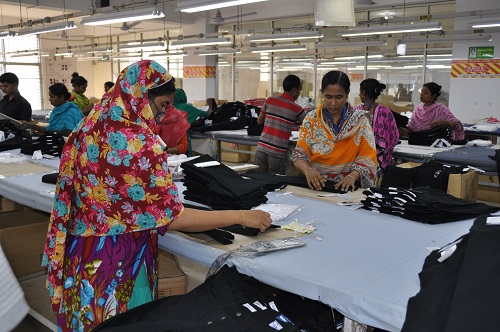 abnormally, Bangladesh might not achieve its target of exporting $38.20billion worth of garment by the end of this fiscal. The country’s garment exports have been declining due to the closure of nearly 200 small garment factories over the last few years. It also reflects falling competitiveness of RMG industry whose exports dipped by 7.74 per cent during July-November of FY2019-20.
Some major reasons behind the slowdown are: policy incentives by competitor countries which enable them to get more business by lowering prices; increase in production cost fueled by a minimum wage increase in December last year; poor efficiency and relatively higher cost of doing business and over concentration of the industry to a few product items and over-concentration of markets.
Vietnam takes the lead
In contrast, Vietnam has been performing strongly as it recently signed the landmark Free Trade Agreement (FTA) with the EU, which allows them to enjoy zero-duty benefit to the largest trading bloc of the world. Also, geographically, Vietnam is closer to the EU and other Western countries. This allows garment manufacturers to ship goods with lower lead time. They can ship their goods with airliners at lower costs. Another big advantage is its abundant Chinese investment and higher factory productivity. Many Chinese investors have factories in Vietnam in addition to those they run in Mainland China. As a result, the benefit of product development in China also trickles down to Vietnam. This makes the job of sourcing by buyers easier in Vietnam. This is the main reason why Vietnam is doing so well in RMG exports in recent times.
Latest ‘Ease of Doing Business’ shows, Vietnam is a better choice for investment than Bangladesh as the country is concentrating on product diversification. In contrast, Bangladesh still manufactures basic apparels. Almost 75 per cent of its shipments consist of T-shirts, trousers, sweaters, formal shirts and jackets though the country is slowly graduating to value-added and high-end garment items for upscale customers in the Western world.
Bangladesh also lags in the production of technical and smart clothing items, which prevents it from tapping the global market for hospital clothing, school uniforms and armed forces, worth billions of dollars.
Another advantage for Vietnam is its government’s support to the entrepreneurs through food subsidy to workers, social benefits, medical benefits and housing assistance. Also, Vietnamese workers are known to be more efficient than Bangladeshi workers as they have an improved supply of gas and electricity, working environment and infrastructures.
Indonesia: TPT protests against import relaxation
Textile and textile product (TPT) entrepreneurs strongly reject import relaxation as the productivity of textile factories is under pressure from the corona virus pandemic (COVID-19). Deputy Chairman of the Indonesian Trade Association (API) of the Domestic Trade Sector, Chandra Setiawan said that in the midst of these conditions the government must provide opportunities for domestic producers to keep the national economy running.
If there is relaxation of imports, the textile industry from upstream to downstream will be hit. Given the textile production has a long and sustainable process. Chandra hopes that people will increasingly love domestic products so that textile production continues to run and can be a way to create jobs in Indonesia. It urges the industry to launch a movement to love domestic products because this is the only import substitution as an effort to create employment. At present, the smallest employment creation will be very meaningful in the current conditions
Tamil Nadu garment exporters to stop production
Garment exporters in Tiruppur and home textile exporters in Karur have decided to stop production. Tiruppur has over 1,200 exporters and thousands of supporting units. Together the industry employs nearly six lakh workers. The entire chain, including industries supplying to the domestic market, will come to a halt from tomorrow.
Industries are facing severe financial crisis. The market is also not accepting the goods. The District Administration has given orders to stop all trading activities in the district, he added. It is estimated that the goods worth ₹750 crore will not be produced from Tuesday for eight days.
M Nachimuthu the president of Karur Exporters’ Association revealed that about 500 exporting units that employ nearly two lakh workers in Karur have decided to stop production from March 24 to 31. The units will pay wages to the workers for these days. The annual export turnover of Karur is nearly Rs 5,000 crore. Just 20 per cent of the buyers are willing to take the orders placed. However, exporters face challenges in sending these goods too, he said.
Many industries of the Southern India Mills’ Association has communicated have suspended their operations and shut down the units till March 31 or till normalcy is restored to prevent the spread of COVID-19. Those units that are not in a position to operate the mills are advised to provide lay off to the workers. But, in the case of lay off, 50 per cent of the wages need to be paid, till suspension is revoked.