FW
Fashion retailers halt operations; diversify production
Since the last few days, several fashion companies have halted operations entirely, as states’ new stay-at-home and shelter-in-place orders mean many also can’t fulfill e-commerce orders. They’ve been forced to close distribution and fulfillment centers, and at the same time, they’ve closed their online stores.
Reformation closed its Los Angeles factory and distribution center, as a result of California’s “Safer at Home” mandate. The company will also not ship its online orders until distribution centers reopen. New York-based Marysia closed its online store while The Frankie Shop also suspended its online operations in compliance with New York Governor Cuomo’s mandate.
Among retail chains that have closed their e-commerce sites are TJX Companies, Inc,’s TJ Maxx, Marshalls and HomeGoods. The company has closed its distribution and fulfillment offices. The company operates distribution centers in several states with current business restrictions, including California, New Jersey, Pennsylvania, Connecticut and Georgia.
American fashion companies have switched production to essential products. Taking a cue from LVMH, which plans to start producing hand sanitizer in its fragrance and makeup factories, Los Angeles Apparel, Aviator Nation and Citizens of Humanity have offered up their factories for mask production. Luxury brand Christian Siriano’s sewers have also gone to work making masks.
Other e-commerce closures are been driven by international restrictions. They include Victoria’s Secret and Pink, which rely on factories in India and Sri Lanka, where factories have increasingly announced shutdowns. Beyond local restrictions, these clothing manufacturers are facing a shortage of raw materials from China and declining orders from western brands.
GHCL plans to demerge textile business
GHCL plans to demerge its textiles business. The chemical maker’s inorganic chemicals and textiles businesses will be separately listed companies, after the National Company Law Tribunal approves the scheme of arrangement, according to an exchange filing.
The demerged textile business will be listed on the exchanges at a later stage with its currently-listed business being the chemicals, the filing said. The textile business will cease to be the company’s subsidiary after the restructuring.
Textiles constitute 35.5 percent to the chemical maker’s total revenue, as per its FY19 earnings. It consists of manufacture and sale of textiles including, but not limited to, yarn manufacturing along with weaving, processing, cutting and sewing of home textiles products.
The restructuring will maximise value for all stakeholders, leading to a better focus on the demerged business.
Mango joins the Sustainable Apparel Coalition
As a part of its commitment to progress towards more sustainable fashion, Mango, as, has joined the Sustainable Apparel Coalition (SAC), a leading organisation in the textile sector which aims to promote good practices in the supply chain and measure the environmental and social impact of brands.
Signing up to this initiative is a part of the company’s ambitious plan to implement over the next few years in order to fulfill one of its strategic goals: the sustainable transformation of the firm.
The firm is also a member of the Better Cotton Initiative, which aims to transform the global production of cotton, based on the three pillars of sustainability: the environment, social factors and economic factors.
In this regard, a few weeks ago, Mango announced its intention to increase the proportion of sustainable fibers in its collections, establishing that 100 per cent of the cotton used in its garments will be of sustainable origin by 2025. The company also plans to increase the use of recycled polyester in its garments to 50 per cent by 2025, and for 100 per cent of the cellulose fibers it uses to be of controlled origin by 2030.
H&M to cut thousands of jobs due to coronavirus
Fast-fashion retailer H&M plans to layoff tens of thousands of workers worldwide temporarily, as it works through interruptions to its business from the COVID-19 pandemic. The Swedish brand has also canceled plans for dividends.
H&M, one of the world’s largest apparel retailers, has shut all of its stores in its several of its biggest markets, including Germany and the U.S. All iyd stores in the U.K. were closed last weekend. The brand closed 3,441 of its 5,062 stores worldwide. Faced with slumping sales, H&M is reviewing its business and looking for ways to cut costs. It is considering terminating some of its employees due to the negative impact of the corona situation on the business.
The brand is repurposing its supply chain to help make personal protective equipment, such as masks, to be used in hospitals that are in dire need.
Companies move supply chain out of China
Retail analyst Forester predicts, most apparel companies aren’t in a state of emergency yet. They started moving business out of China a decade ago because of increasing costs and, in the last couple of years, because of the trade war. Those changes are paying off even more now that supply from China is at risk.
The fact that these companies often do have diversified supply chains enables them to shift some of the production where possible. Asia has a hold on the apparel market, with Vietnam and Bangladesh coming in after China. And according to Julie Hughes, president of the U.S. Fashion Industry Association, more companies are moving production to Africa. What about American factories stepping in
U.S. factories can’t compete with Asia’s quick churn. And, China is still the place to make complicated pieces like sweaters and difficult-to-make fabrics like cashmere and silk.
For Adelman, the production slowdown in China isn’t affecting what’s on shelves now, but what’s coming down the line a few months from now.
AEPC urges for an anmesty scheme for fulfillment of export obligations
AEPC has urged the Indian government to come out with an amnesty scheme in case there is non-fulfillment of export obligations as traders are facing issues with raw material supply because of the COVID-19 pandemic. As India’s apparel trade is deeply integrated with the global value chain, it has been affected by the disruption in both imports and exports, his letter said.
Under some export promotion schemes like Advance Authorisation and Export Promotion Capital Goods schemes, import of machines and raw materials used to make exportable products is allowed at zero duty but with an export obligation. Exporters are of the view that in such a scenario, meeting these obligations would be a bit difficult for them, according to a news agency report.
Uncertainties are developing over timely deliveries of imports of raw materials like fabric, and accessories supplies, and exporters are facing a tough situation with regard to export orders as global buyers are asking for deferment of consignments.
What is needed is to “bring out an amnesty scheme for non-fulfilment/short-fulfilment of exports under various export obligation schemes, especially in a force-majeure (unforeseeable circumstances that prevent someone from fulfilling a contract) situation such as the present one,” he said.
These uncertainties, coupled with a weak demand position in major markets, have started affecting the order position, production schedules, inventory pile up, working capital and export realisations,
CMAI urges for government help to deal with coronavirus crisis
In the wake of the current Coronavius outbreak, CMAI has made certain representations to the government on all the issues confronting the apparel industry. The association has requested the government to postpone all statutory dues such as income tax, advance tax, GST, etc.
It has also requested for a minimum of 180 days moratorium on repayment of all bank loans, and disbursement of 25 per cent additional working capital loans on 0 per cent interest to tide over the current liquidity shortfall caused by the closure of most shopping Malls and markets.
In addition, CMAI has requested the Government to provide some wage subsidy, so that there are no job losses in this sector, and creation of a special Factor Fund for MSMEs to discount their bills immediately. All of the above will enable the Industry to ensure that the payment cycle to and protect the two weakest sections – the workers and the vendor base, which is essentially in the MSME Sector.
CMAI is hopeful that the government will pay heed to the requests of the apparel sector, which employs almost 25 million people, largely women, between its manufacturing and retailing segments.
ILO note calls for urgent, large-scale measures to deal with Convid -19
According to a new assessment by the International Labour Organisation (ILO), titled ‘COVID-19 and the world of work: impacts and responses’, calls for urgent, large-scale and coordinated measures across three pillars: protecting workers in the workplace, stimulating the economy and employment, and supporting jobs and incomes. The assessment notes that the economic and labor crisis created by the COVID-19 pandemic could increase global unemployment by almost 25 million.
These measures include extending social protection, supporting employment retention (i.e. short-time work, paid leave, other subsidies), and financial and tax relief, including for micro, small and medium enterprises. In addition, the note proposes fiscal and monetary policy measures, and lending and financial support for specific economic sectors.
The ILO note warns that certain groups will be disproportionately affected by the jobs crisis, which could increase inequality. These include people in less protected and low-paid jobs, particularly youth and older workers and women and migrants as well. The latter are vulnerable due to the lack of social protection and rights, and women tend to be over-represented in low-paid jobs and affected sectors.
Post Convid 19, denim industry to revaluate operations, focus on quality
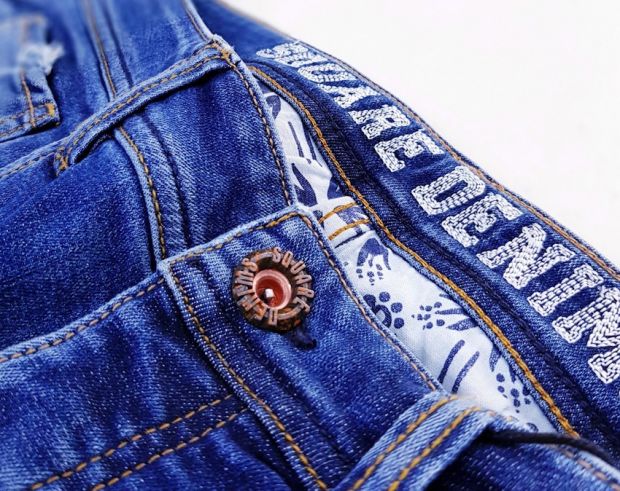 The global spread of Coronavirus (COVID-19) is continuously impacting the fashion industry. Besides other consequences the pandemic is having on the market, one major impact is on the development of new fabrics, styles and sales models. For instance, China-based jeans wear maker, Advance Denim recently introduced bio-antibacterial and environmentally safe denim fabrics.
Increase in online sales
“As traditional offline sales or the sales without features are likely to be bleak in the first half of 2020, brands are implementing a variety of online sales methods,” said Amy Wong, General Manager, of Advance Denim in an interview to Sportswear International. Brands are using technology-based solutions such as video and teleconferencing to mitigate the effects of this pandemic. “We have stopped our domestic and international travels and are conducting all our meetings through digital platforms,” added Tolga Ozkurt, Deputy General Manager-Sales & Marketing of the Turkey-based brand Calik.
In an exclusive interview to MFfashion, Renzo Rosso, Founder of Diesel says, "All this will pass but will leave many problems behind and we must all have the energy and the will to come back and do something incredible.”
Changing delivery schedules
Delivery timings are changing according to the single factory situation. “Wuhan is the most affected as restrictions on logistic have affected deliveries in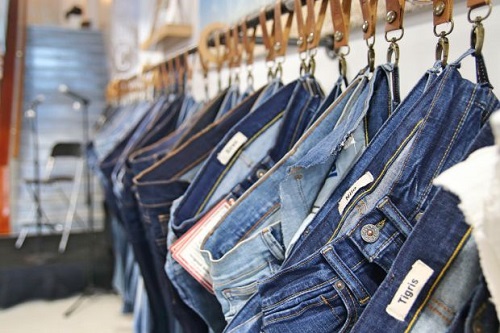 the city. However, the impact on fashion, clothing and denim clothing is lesser in Guangdong and Zhejiang,” explained Wong.
Even though none of its workers or family members has been affected by the virus, Italian denim maker Candiani Denim is faced with increasing worker absences. “This is obviously affecting our production and partially impacting deliveries,” quoted Alberto Candiani in Sportswear International from the brand which is trying to be transparent about its current situation as “we need our customers to know what is happening and how we can deal with this together.”
To safeguard the health of workers, Italian denim brand Canclini 1925 has made some immediate changes in its organisation. “We have organised and implemented all procedures necessary to safeguard the health of our workers and, at the same time, guarantee the respect of planned deliveries we shared with all our clients these new guidelines and reassured them that we will be able to meet their industrial and production plans, and deliveries,” Simone Canclini, CEO of the brand was quoted as saying.
Shifting production out of China
The outbreak is compelling brands to move their production from China to Africa and Eastern Europe. Many global retailers are also shifting their orders from China to Bangladesh. “Retailers who depend heavily on China for sourcing their garments and other fashion products are desperately looking for alternative sources, which include Bangladesh,” notes Aryan Mahbub, Designer of the Bangladeshi brand Square Denims which is already receiving requests from Western buyers to create some space for additional orders. Manufacturers who earlier depended too much on China for raw materials such as fabrics, yarn, etc are placing orders with other countries to cut their dependence on China. Disruption in global supply chains This global issue is impacting everyone. The fashion world is likely to lose its entire season’s sales as shops are closed and showrooms aren’t offering new collections; closed textile companies are not producing; people don’t go out and don’t shop clothing.
“This outbreak is disrupting the global supply chain, taking a toll in particular on China's economy, which produces one-third of the world's apparel. It has also started to disrupt supply chains for more mid-market apparel, with retailers and fashion brands expressing concern about whether Chinese factories will be able to deliver f/w collections as planned,” explains Aydan Tüzün, Executive Director, global sales and marketing, Naveena Group, Pakistan.
Need to reflect on priorities, needs
Rosso says in China, "where in the last week we have returned to full capacity, but in fact, we have never stopped in the three months of the crisis thanks to smart working," he explains anticipating that investment is increasing in that market, while Japan and Korea are giving oxygen.
In fact, brands hope things to return to normalcy soon. However, once all this is over, everyone will need to reflect on their priorities and needs. They will need to produce with care and responsibility and not only aimed at quantity and price.
“We will have to re-evaluate small local shops and emphasise on the quality control of our products without depending on just neither number/volumes nor prices,” Paolo Gnutti the R&D head of Italian denim brand PG Denim opines.
And as Rosso sums up, “We must take advantage of this moment when most of us are at home to recharge and have the energy to start again and change everything.”
Global cotton trade on decline amidst COVID-19
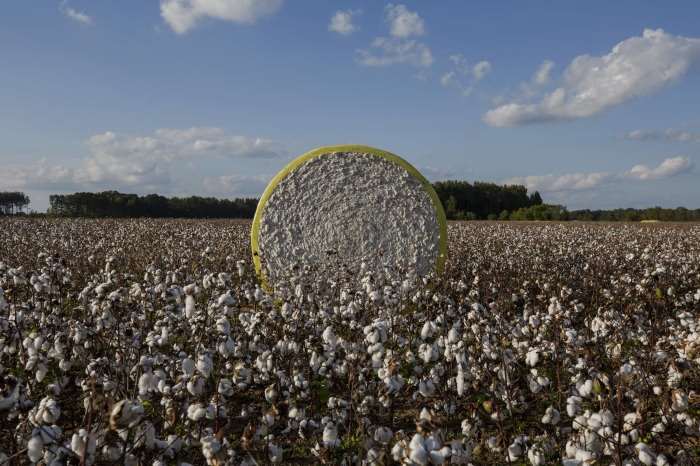
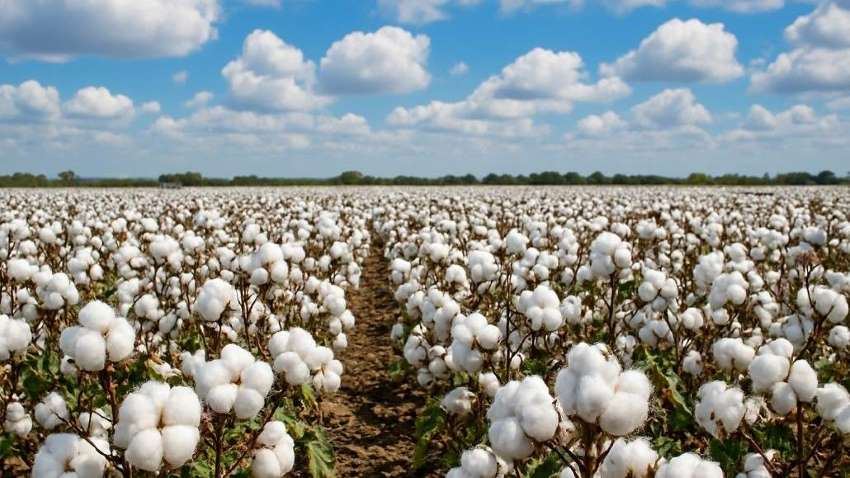
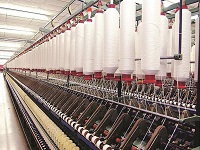 Uncertainty over the control of COVID-19 has led to a decline in trading in various industries as buyers are refraining from making new purchases. Especially cotton is nearing its lows of early December 2019, after a rally in January. Though in the last few weeks, sale and shipments of cotton have seen strong business in the US, however, the pace is likely to be impacted because of the epidemic. As per USDA’s early projection, the US cotton planted acreage in 2020 is likely to decline by 9 per cent to 12.5 million acre.
Besides Coronavirus, other factors that are likely to contribute to the uncertainty regarding acreage decisions for 2020 include: production issues and results during 2019, the effects of the Phase One trade agreement with China and the impact of the coronavirus on cotton demand. The final look at projected acreage for 2020 comes with USDA’s Prospective Plantings report on March 31, based on a survey of producer planting intentions to be conducted in early March.
US cotton sales decline by 33 per cent
The net sales of cotton variety 235,300 RB declined for 2019/2020 declined by 33 per cent from the previous week and 30 per cent from the prior 4-week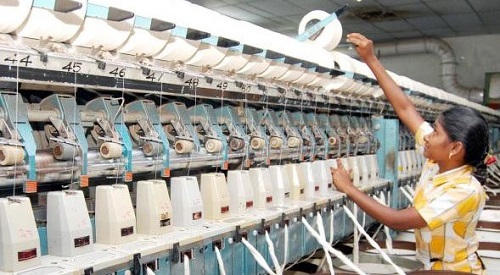 average. Similarly though exports of 375,700 RB declined by 6 per cent from the previous week, but increased by 5 per cent from the prior 4-week average. These exports were primarily directed to countries like Pakistan (97,100 RB), Vietnam (85,200 RB), China (46,400 RB), Turkey (31,400 RB), and Indonesia (21,100 RB). Exports of 57,300 RB, including 700 RB switched from Japan to Vietnam and 400 RB switched from Taiwan. Exports of 57,200 RB to Pakistan decreased while the export of 46,600 RB and 7,300 RB switched from Vietnam to Turkey.
International recognition to cotton through HIRA
In India, the Cotton Corporation of India (CCI) launched ‘HIRA or High in Reliable Attributes’ a brand of Indian cotton with specific quality parameters. Having less than 1.7 per cent of trash, low moisture, better grade, etc, this initiative will help Indian cotton get international recognition. CCI also supports Indian cotton farmers by purchasing best possible quantity and quality at MSP price. Both CCI and Maharashtra Cotton Federation jointly can buy more than 10 million cotton bales for the season 2019-20, which would be nearly 25-30 per cent volume of estimated crop for the season 2019-20. This would support the Indian spinning industry as well if CCI sells its cotton when the industry needs it, at real prices, and an actual premium for quality cotton. Indian physical cotton market has not yet achieved the ratio of 1:1 with international cotton prices as seed cotton prices are higher due to MSP support and they trade at its lower level with lower cotton lint prices. Most ginning factories have reduced production to reduce losses, thus resulting in low availability of quality cotton (bales) in the market.
Till February 2020 -end, around 26-26.50 million bales of cotton bales are likely to grow in India. Farmers still have good amount of quality cotton in view of better prices in near future.
In the current month, MCX cotton is trading at lower prices than the physical cotton prices in open market. As of now Indian currency is one of the most stable currencies, trading within narrow range limiting currency risk to market. It would be interesting to see how CCI will move ahead to sell its cotton in this international bearish sentiment due to COVID-19.