FW
Bangladesh hosts, Garmentech, attracts pioneers in segment
The just concluded Garmentech fair in Chittagong, irrespective of its small scale, was able to draw a decent crowd, which included decision makers and heads of garment factories. The fair held from August 29 to 31, 2019 hosted around 50 exhibitors and catered to the needs of the garment industry with products such as sewing machines, finishing equipment, CAD, boilers, servo motors and ERP.
Shirt automation pioneer Maica showed its automatic buttonhole indexer MA04. The machine, with its patented suction system, precisely ensures the buttonhole linearity and sews the front plackets of shirts of different widths. Japanese finishing company Naomoto was present with its basic irons, tables and steam generators. Naomoto has developed irons that reduce electricity consumption based on how customers use it.
As manufacturers are bracing up to eliminate productivity woes and cost challenges due to mismanagement in supply chain, they are receiving substantial support from ERP providers. One such company which participated, Skylark Soft, has created a cloud-based software to track real-time garment production from cutting to finishing. This is a fully Bangladesh company with a desire to fill in the information gap and improve data accuracy for the readymade garment sector. Its software has been adopted by some of the biggest garment manufacturers in the country.
Bangladesh fears impact of global recession
A global recession can hit Bangladesh’s export income and remittances, two life lines of the country’s economy. Recession can hurt Bangladesh’s export diversification as nearly 16 per cent of the country’s exports consist of non-readymade garment products. If there is a recession many companies in the Middle East would be out of business in which a good number of Bangladesh workers are employed. These workers can lose their jobs, having an adverse impact on the country’s remittances.
The recent slowdown in the US economy, dismal German economic performances, lowest ever industrial production growth in China in recent times, and a contraction in the economies of Argentina, South Africa and Iran are warning signs of a possible global economic meltdown.
Though Bangladesh is getting some benefits from the US-China trade war, economic diversification can help Bangladesh avoid the impact of a possible economic recession. However such diversification needs investments. Value addition is one way out and being sustainable is another. The country has to take initiatives to capture more low-end apparel manufacturing relocation from China. Bangladesh exports low-end garment products. Apparel exports contribute 84 per cent to the country’s total export earnings. Bangladesh has already witnessed double-digit growth during the July-May period of the current fiscal year.
Lack of knowledge hampers growth of plus-size market
"Miniscule in size as of now, plus size start-ups are searching for venture capitalists who can change the dynamics of their business by providing them adequate funds. However, Nadia Boujarwah, Cofounder of the plus-size personal styling service Dia&Co, notes investors usually try to match their current opportunities with previous successes which works against the startups as they still have to prove their capabilities. Also, the fact that only 10 per cent of decision makers in the segment are women compounds matters further."
 Miniscule in size as of now, plus size start-ups are searching for venture capitalists who can change the dynamics of their business by providing them adequate funds. However, Nadia Boujarwah, Cofounder of the plus-size personal styling service Dia&Co, notes investors usually try to match their current opportunities with previous successes which works against the startups as they still have to prove their capabilities. Also, the fact that only 10 per cent of decision makers in the segment are women compounds matters further. Of these, none are plus size. In order to raise funds therefore, the segment needs to hire a plus-size person who can understand and empathise with the problems faced by plus size shoppers.
Investors seek proofs of success
Boujarwah points out, though the market always presents huge opportunities, investors seek proofs for their success. To prove them, Boujarwah and co-founder Lydia Gilbert invested their own money in to their firms. After exhausting their funds, they approached friends and family. It was only in December 2015 that their company could secure a $3 million in seed funding from Rebecca Kaden, a partner at the venture capital firm Union Square Ventures. This brought their company’s entire capital to date to $95 million.
Involving fans as business partners
On the other hand, Haber Jones had already built a community through her plus-size fashion blog The Pear Shape by the time she started pitching Part & Parcel to potential investors. She launched a successful campaign for a pair of wide-calf leather riding boots that came in four widths; and was an executive at Poshmark, leading growth and expansion. Despite her fashion bona fides, though, Jones was looking for investment partner who would understand her vision for the company.
Jobes initiated the "plus to plus" model, a sort of souped-up referral program that allows fans of the brand to sign up as "partners" and earn a 20 per cent to 30 per cent commission by evangelizing the products within their networks—the impetus for which was the rampant workplace discrimination that plus-size women still face. The brand also offers dimension sizing which provides an option to add extra room in the bust or biceps for a more tailored fit. The entire concept added up to something unique.
Brands need to expand their size range
Also spear heading the plus-size revolution are Waldman and Polina Veksler, founder and co-founder of Universal Standard who are trying to eliminate the difference between the "plus" and "straight sizes" To achieve this, the founders bootstrapped the company from their savings at first, which gave them a valuable degree of freedom. The company’s first round of investment—$1.5 million led by Red Sea Ventures—gave it a short runway from which to start ramping up the business, after which they got to work raising their Series A.
The second round of investment compromising $7 million, which closed in February 2018, was led by Imaginary, the venture capital firm founded by Net-a-Porter founder Natalie Massenet and investor Nick Brown, and joined by Red Sea Ventures, Gwyneth Paltrow, MatchesFashion's Tom and Ruth Chapman, Toms' Blake Mycoskie, SoulCycle's Elizabeth Cutler, and Sweetgreen's Jonathan Neman and Nicolas Jammet.
However, Waldman believes the investors still underestimate the potential of the plus-size market. According to her the biggest barrier is the lack of knowledge and understanding on the investment side. To combat this, established brands need to keep expanding their size ranges to prove that the market is there to meet the supply.
The circular fashion movement to shape core value system in future
"Around 60 per cent of Indian textile industry, projected to grow $223 billion by next few years, is cotton-based. Cotton cultivation consumes around 25 per cent of the world’s pesticides which is fast becoming a major cause of concern for the industry. Textile is the one of the biggest contributors of both dry and wet waste in the industry. Wet processing of textiles generates an enormous quantity of waste sludge and chemically polluted waters. Rising awareness about the challenges is compelling global and Indian brands and manufacturers to adopt the circular fashion movement."
 Around 60 per cent of Indian textile industry, projected to grow $223 billion by next few years, is cotton-based. Cotton cultivation consumes around 25 per cent of the world’s pesticides which is fast becoming a major cause of concern for the industry. Textile is the one of the biggest contributors of both dry and wet waste in the industry. Wet processing of textiles generates an enormous quantity of waste sludge and chemically polluted waters. Rising awareness about the challenges is compelling global and Indian brands and manufacturers to adopt the circular fashion movement.
Leading players are building a global circular fashion industry which not only eliminates substances that cause concern but also increases the durability of clothes, encourages recycling and uses available resources efficiently. This has been achieved through the introduction of many industry-led initiatives such as the Sustainable Apparel Coalition, a group of leading brands, retailers, manufacturers, non-governmental organisations, academic experts, and government organisations who developed the Higg Index.
New technologies, practices for fashion circularity
Local environmental challenges along with the global adoption of the principles of have brought Indian leaders on the brink of circular innovation. Organisations are experimenting and innovating towards the circular textile economy goals. New emerging start ups are inspiring the introduction of new technologies and business practices. For instance, Mumbai-based Boheco is reducing and replacing the use of cotton in textiles with hemp fiber. Similarly Chennai-based Trustrace is using blockchain technology to improve transparency and traceability in the supply chain. Two other start-ups Lionise and Kiabza are experimenting with new retail models of rental and second-hand clothing respectively.
Startups and stakeholders complement each other
Partnerships between stakeholders and startups are becoming common as corporations require large-scale organisational innovation to make an impact, while startups are agile and can respond to challenges with individual or small scale innovation.
Collaborations between the startups and corporations are becoming popular for the impact they have on the circularity agenda of these brands. Enablers are now identifying and driving ‘unlikely alliances’ between the two. The circularity movement is thus influencing the textile industry in a big way and is likely to shape its entire core value system in the next few years.
US-China trade war an opportunity for India to increase global trade: Study
"A new research report by DBS Bank’s economist Radhika Rao, says the US-China trade conflict is a golden opportunity for India to increase its trade footprint particularly in categories on which Washington has imposed tariffs on Beijing. The report lists various ways the trade war can benefit India."
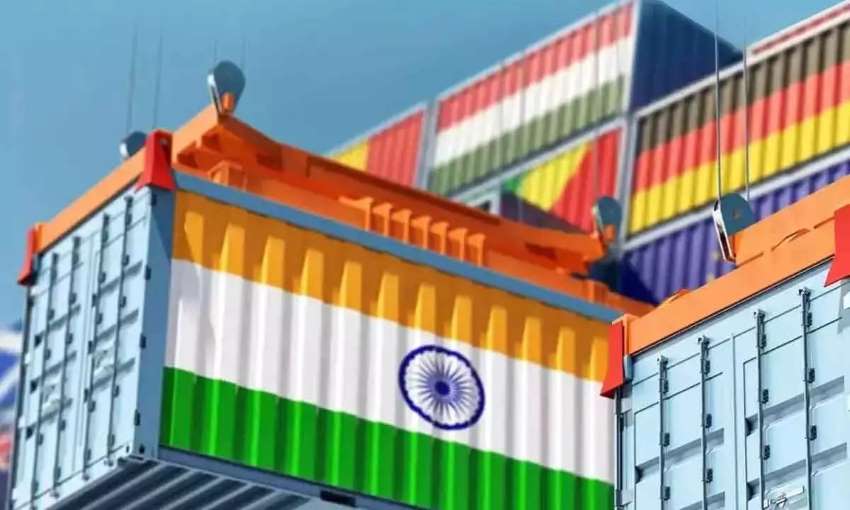
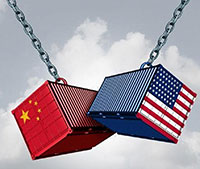 A new research report by DBS Bank’s economist Radhika Rao, says the US-China trade conflict is a golden opportunity for India to increase its trade footprint particularly in categories on which Washington has imposed tariffs on Beijing. The report lists various ways the trade war can benefit India.
It debunks the narrative that the trade war does not affect India directly as it says the conflict gives a major fillip to Indian exports. As past regressing data suggests, for every one percentage point increase in global exports, India’s shipments tend to rise by half that much and vice versa.
Moreover, even though India is more exposed to the US, its overall trade balance is in deficit, led by a sizable gap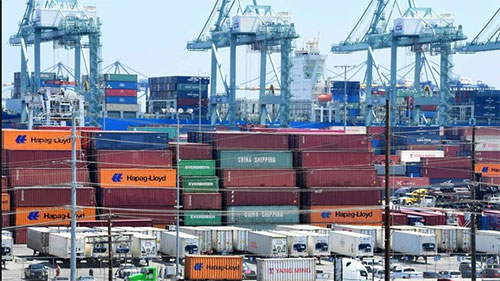 with China. The trade war gives India an opportunity to increase its trade footprint in midst of the US-China trade conflict, particularly under categories on which US has imposed tariffs on China. US’s investment in India accounted for 6 per cent of total investment flows in 2019. The country has also received more investments from China. As the country eases its FDI regulations, it can now expect larger gains from China.
With no GSP, India faces highest trade restrictions
The US and China have been involved in a trade war since President Donald Trump imposed heavy tariffs on imported steel and aluminum items in March last year. President Donald Trump last week announced an extra 5 per cent duty on around $550 billion of Chinese goods after China unveiled its retaliatory tariffs on $75 billion worth of US products.
The US has initiated protectionist action against India, as the latter runs a trade surplus with the US. The nation also withdrew the favorable treatment meted under the Generalised System of Preferences (GSP) on India earlier this year. As the data from the Global Trade Alert database highlights, India is amongst the top few countries with the highest number of restricted trade practices, even after adjusting for liberalising measures.
Indian sectors most affected by the trade war
The top five sectors that have faced tightening measures in India include basic organic chemicals with over 100 interventions, followed by products of iron and steel, basic inorganic chemicals, wearing apparel, and other fabricated metal products, amongst others.
On the policy front, India has been hesitant to join multilateral trade agreements. More recently, this includes the Regional Comprehensive Economic Partnership (RCEP) – comprising of 10 ASEAN countries and their six free trading agreement partners – India, China, Australia, New Zealand, Japan and South Korea.
After a stable 1H19, the Indian rupee has weakened more than 4 per cent vs US$ in 3Q, under pressure from broad US dollar gains. It is therefore, the right time for India to exploit the situation to its advantage.
Vietnam hopes for higher exports to the EU post FTA
The free trade agreement with Europe is expected to help Vietnam increase its apparel exports. By signing a FTA deal with the European Union, Vietnam has become the first developing country in Asia to receive tariff reductions on 99 per cent goods from the 28-member bloc. Almost 11 per cent of Vietnamese apparel exports to the EU will get complete duty waiver at the time of enforcement of this agreement. The European Union is Vietnam’s second largest export market after the United States, with the main exports being garment and footwear products. Vietnam is the sixth largest readymade garment exporting nation to EU, having four per cent of the total market. After the ratification of the agreement, Vietnam won’t have to pay the 12 per cent duty anymore on garment exports to the EU.
However, Vietnam’s exporters have to comply with regulations if they have to increase their market share in the EU – and that includes meeting rules of origin as well as focusing on environmental safety and information transparency related to labor and the production environment. For the first six months of 2019, Vietnam’s textile and apparel industry grew by 8.6 per cent.
US tariffs on Chinese imports come into force
More than 90 per cent of Chinese apparel imports into the US will be hit with 15 per cent tariffs beginning September. This is also true of 68.4 per cent of Chinese home textile imports into the US and 52.5 per cent of footwear imports.
A sudden 15 per cent tariff on apparel from China will also trigger cost increases from other major suppliers, either by forcing costs up as companies shift to other countries and run into capacity constraints or by giving suppliers in those other countries a pricing advantage.
Companies are trying to lessen the number of products that will be affected by the September tariffs. For example, T-shirts that are less than 70 per cent silk will be hit with tariffs. Knowing this, companies can ask factories to start making their T-shirts completely out of silk. Companies also timed shipments to arrive earlier to evade the deadline. People ordered early and some products landed in August. Another strategy is for retailers to move factories, suppliers or vendors out of China. But even this will be difficult due to capacity limitations in other countries and the need to build new relationships to ensure compliance with various product safety and labor regulations.
Tees are top exports for Bangladesh
Despite the fact that China remains a key global centre for the T-shirt production, it is gradually shifting to other countries in Asia. Bangladesh’s earnings from T-shirt exports continued to rise due to a shift in orders to following rising production costs in China. Most knitters produce cotton T-shirts but many have opted for artificial fibers following the demand for non-cotton products. Value addition is putting a positive impact on the overall export performance. The China-plus move of buyers is helping makers bag better work orders. Earnings are increasing with value addition.
T-shirts, trousers, jackets, sweaters and shirts account for around 73 per cent of Bangladesh’s earnings from exports of readymade garments. In 2016, the volume of global T-shirt exports grew four per cent from previous year. While the economically mature markets of the US, Canada, and Western Europe are close to their saturation point in terms of T-shirt consumption, emerging economies, such as China, India, Russia, and Brazil, are far from saturated. They share a few similar characteristics, including a rising population, an improved economic situation, rising disposable incomes, and urbanization. T-shirt consumption is set to maintain an upward growth trend in the immediate term.
Three day Spinexpo opens door in Shanghai
Spinexpo China opened doors today and will be on till September 5, 2019. This is a global flagship event for spinners and knitwear manufacturers. The event is aimed at knitwear brands, flat-bed and circular knit manufacturers, weavers, sporting goods manufacturers, hand-knitting wool distributors and all yarn and knitwear users. Exhibitors showcase technically innovative collections each season, thanks to a partnership between machine manufacturers, spinners and knitwear and sporting goods manufacturers. This edition is exploring the topic of disruption: recycling colors and stitches. The focus is on a mix of different styles inspired by a modern-day rural nomadism, a hodgepodge of combinations, multicultural details and different forms, a desire for daily protection that allows us to live our day-to-day lives. Paper yarns, linen yarns, heather yarns, natural fibers are combined with synthetic fibers. The combinations merge to create a range of surface finishes, a selection of resolutely trans-seasonal products. Polyesters and nylons become the foundation for new blends with other fibers.
Among other trends, soft wools and cashmeres together with thermoplastic settings and 3D finishing create textures, which blend comfort and durability. Padding and blistered patterns are knitted with finishes that have been developed to be used as outerwear, alluding to the idea of fabrics for survival and protection. Colors are bold, with intense depth and intrigue.
Paris to host Premiere Vision to present new materials
Première Vision Paris will be held in Paris from September 17 to 19, 2019. The event will present new materials and creative stimuli for the autumn/winter 2020-21 season. This major event for all fashion industry players brings together, twice a year, the six principal activities in the upstream sector: yarns, fabrics, leathers, designs, accessories and clothing. The September 2019 edition is particularly interested in how clothes are used to protect against the elements.
The show will present the best of Class, its projects and initiatives, as well as its partners’ collections which have cutting edge sustainable yarns, fabrics, materials and processes. Class is a global resource for smart material innovation, education, marketing and communication. This is the platform for those looking for authentic and real examples of the most interesting materials and processes that can boost sustainability in a brand with no compromise in design and performance.
Premiere Vision will also present Co.Lab, a collaborative business model, smart platform and research lab with a sustainable mission to create a new generation of wardrobe. Co.Lab is the brand new supply chain system that goes from fiber up to garments delivering transparent and 100 per cent traceable production standards together with the new generation of responsible values.