FW
Miami sourcing show begins on May 28
Apparel Textile Sourcing Miami will be held from May 28 to 30, 2019. More than 10,000 fashion industry representatives will converge for a first-hand discovery of new developments and insights in the apparel and textile market — from concept to consumer. Among the key topics to be presented are latest updates on US trade policy, customs and imports, investment opportunities for apparel brands and retailers, industry trends and forecasts, and the future of fashion, technology and sustainability. The show will put together the most comprehensive sourcing seminars, expert panels and Q&A segments to arm representatives across all segments of the industry — brands, retailers, e-commerce sellers, designers, importers and buying offices — with the knowledge, tools and practical solutions they need to address current industry issues and navigate through the rapidly-transforming sourcing ecosystem.
There will be updates on latest developments in global trade, tariff and non-tariff barriers, and new sourcing opportunities. Navigating through the complex supply chain and other complicated issues associated with trade present a challenge for businesses, small and large. They can learn about ensuring compliance with current trade laws and policies surrounding imports, exports and customs, and reducing duty exposure. Global color authority Pantone will unveil trends for autumn/winter 2020/2021.
Kingpins Amsterdam to open next week
Kingpins Amsterdam will take place on April 10 to 11, 2019. The show will host 99 exhibitors. Different initiatives will be explored on the show floor. For this edition, initiatives by companies will be showcased. The most important attraction will once again be a mix of exhibitors and educational opportunities. The Kingpins Transformers area will return. New additions include installation of student work from a competition Kingpins supported earlier this year. Winning and runner-up collections will be displayed at the show. Avery Dennison will join Kingpins for the first time and highlight their products.
The show will ask denim spinners who exhibit to comply with, or exceed, current CSR regulations relating to environmental protection and the use of chemicals. The show’s goal is to become even more engaged in promoting environmental responsibility within the industry. Advise and support will be offered to exhibitors in order to help them transform their approach. Kingpins does not wish to introduce new certifications, but the organisers are keen to promote the strictest existing ones. Once they have drawn up a set of social responsibility specifications for exhibitors, they plan to share them with other textile shows, in order to promote collective change across the supply chain.
Intertextile Pavilion in July
Intertextile Pavilion will be held in China from July 4 to 6, 2019 in Shenzhen, China’s fashion capital. This is a sourcing show. Around 1000 leading exhibitors are expected to display a wide range of fabric product categories including manmade, knitted, silk, linen/ramie, wool, denim, sportswear/functional, lace and embroidery and swimwear/lingerie, as well as yarn and fiber and accessories. New product groups will be featured, including OEM, sewing equipment and textile additives.
The Taiwan Pavilion will feature knitted, jacquard, lace and embroideries, woven fabrics, functional and denim fabrics. The Korea Pavilion will display a wide range of women’s wear fabrics, such as manmade fashionable fabrics, knits, embroidery jacquard, tri-acetate woven and printed fabrics. Some members will also showcase functional fabrics and faux fur. The Japan Zone will cover a range of high-quality cotton and manmade fabrics for women’s wear as well as casual wear, with the ability to handle small order quantities, product-in-stock orders and quick delivery service.
Shenzhen has a 70 per cent share of China’s high-end women’s wear market with around 30,000 fashion designers and over 2,000 fashion retailers. It has a solid industry, from design to manufacturing.
Indorama enlarges business in India
Indorama Ventures has bought 30 per cent of Indo Rama Synthetics’ enlarged share capital.
Indo Rama Synthetics is a fiber manufacturing facility located in Maharashtra. This facility has a combined capacity of 6,05,000 tons per annum, consisting of polyester chips, fibers and filament yarns. This strategic investment provides Indorama Ventures entry into a large domestic market where local presence gives duty and logistic benefits. India is the largest textile market and Indo Rama Synthetics has a key position. The strategic investment is expected to grow shareholder returns. This market has a large, untapped potential that will be highly lucrative as it expands.
Indorama Ventures has already invested in India over three years in the PET business. India is the second largest polyester market in the world after China with consumption growing at about seven per cent per annum. India’s per capita consumption of polyester is about three kg, compared to 14 kg in China. This low level per capita consumption is expected to increase along with the rise in India’s per capita GDP, which will provide affluence-related consumption and opportunities for growing into more functional and high value-added products. Indorama Ventures is in a strong position to benefit from this evolving trend, backed by its strong R&D capabilities.
H&M Foundation gives €1 m grant to five innovative fashion start-ups
H&M Foundation, in its 2019 edition of the Global Change Awards awarded the €1 million grant to five winners, selected among some 6,000 projects. The Loop Scoop project by German company circular. fashion earned a €300,000 grant for providing information to designers on materials, cuts and production processes to optimise their work, also in terms of the products’ end-of-life management and recycling.
Swiss company Dimpora was awarded a €250,000 grant for its water-proof, biodegradable membrane made of minerals. The nettle farm project set up by Kenya’s Green Nettle Textile was awarded a grant of €150,000. The fourth Global Change Award winner Petit Pli also earned a €150,000 grant for its original approach to childrenswear. Finally, Peru-based company Le Gara was awarded a €150,000 grant for developing an alternative to leather.
The five winners will also benefit from a one-year mentorship, allowing them to interact with H&M staff and travel to New York and Hong Kong to learn about the expectations of the US and Chinese markets. They will also meet corporate experts, like those from Accenture, a partner of the award. A major opportunity for these innovative start-ups to foster their growth.
Replay clocks in positive growth in 2018
Fashion Box, the parent company of Replay, records 21 per cent jump in ebitda. Based in Italy, Fashion Box is the parent company of denim brand Replay. Exports account for 85 per cent of the company’s sales. The positive results in 2018 are the reward of a long-term strategy based on constant attention paid to the quality of the products and the company’s ability to generate a steady stream of innovative projects. This goes hand in hand with an effective distribution strategy, implemented directly and through carefully selected partners. Fashion Box will be aiming especially at the development of new markets, together with the strengthening of the existing ones in order to continue an organic and healthy growth.
International expansion will remain a key focus for business in 2019. Five new Replay stores opened in Brazil in 2018 and two launched in Colombia. Further five stores are planned for Colombia by 2022. An expansion of the wholesale business is planned in Eastern Europe. Eight mono-brand stores will open by 2021 across Bosnia and Herzegovina, Serbia, Kosovo, Macedonia, Montenegro and Romania. Last year, Fashion Box forged a partnership with Reliance Brands to distribute Replay in India. Two flagship stores are planned for this year, in Mumbai and Delhi.
EU decision to withdraw preferential trade access to hurt Cambodia
The EU may withdraw preferential trade access to Cambodia over Cambodia’s human rights record. Such a withdrawal would be nothing short of devastating for Cambodia’s garment industry, given the inherently low margins of the sector and the importance of demand from the EU.
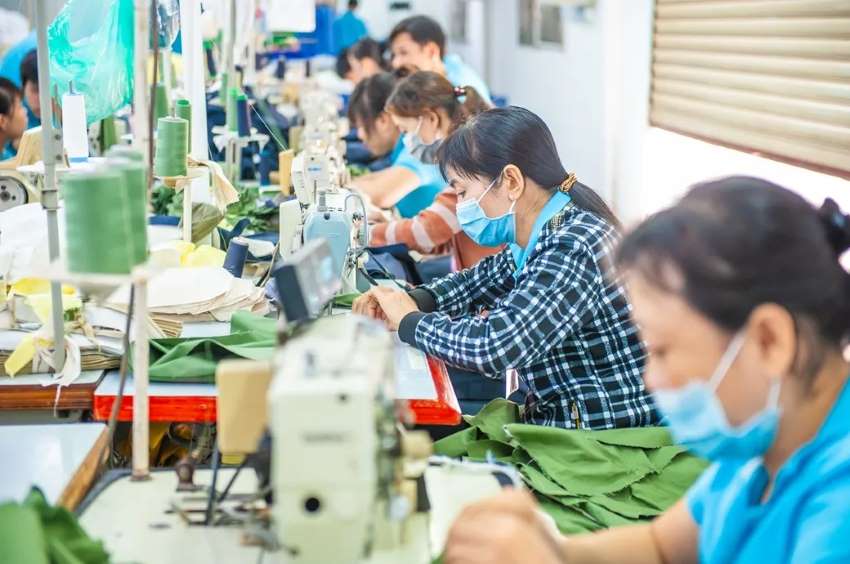
Cambodia is one of several developing countries granted duty-free and quota-free access to the EU for all exports, except arms and ammunition, under the Everything But Arms (EBA) trade agreement. The garment and footwear industry is one of the pillars of Cambodia’s economy. The sector has helped improve labor standards and workers’ living conditions, reduce poverty and promote sustainable growth. Cambodia’s garment sector employs some 7,00,000 workers, whose jobs could be in question if EBA is pulled. Brands depend on Cambodia for sourcing. Adidas, for instance, sourced about a quarter of its apparel volume last year from Cambodia, more than from any other country, including China and Vietnam.
For now, the EU is Cambodia’s largest trading partner, taking in nearly half of Cambodian exports, mostly textiles, footwear and agricultural products. Nearly all of these exports enter the EU market under EBA tariff preferences. Most of Cambodia’s exports to the EU would face 12 per cent customs without EBA.
CCI, Chen Wen, HW Textiles present denim collection at China Fashion Week
Cotton Council International (CCI) partnered with Chen Wen and HW Textiles to launch a denim fashion collection at China Fashion Week. Chen Wen is a denim designer in China. HW Textiles is a Hong Kong-based denim fabric manufacturer, whose US cotton-rich denim fabrics are woven with cutting-edge innovative technologies which provide a soft hand-feel, warmth and numerous functional features.
The denim fashion show had three collections, including recycled fashion, innovative fashion and retro fashion, which interpreted fashionable, passionate and functional aspects of US cotton-rich denim fabrics. Through three different collections, this denim fashion show represented a grand gathering of fashion creativity and technological innovation while showcasing high quality and sustainable US cotton fiber. The runway show aims at making traditional denim more fashionable and functional by integrating technological innovations and designer creativity.
Cotton USA is dedicated to providing the entire supply chain with networking opportunities, ongoing education, and the latest research and technological innovations. This is a platform that not only promotes close collaboration between upstream manufacturers with fashion designers, but also showcases denim fashion that combines art, technology and innovation through the creativity of designers.
This is the second time that Cotton USA partnered with Chen Wen and the Cotton USA licensee to launch US cotton-rich denim fashion collections during China Fashion Week.
Cone Denim launches Distilled Indigo denims
Cone Denim has launched eco-friendly Distilled Indigo denims made with Dystar’s Cadira denim dyeing process. Distilled Indigo fabrics are dyed using pre-reduced liquid indigo dyes which are the cleanest in the market, reducing chemicals and achieving energy and water savings. The collection combines Dystar indigo vat 40 per cent solution, the most eco-awarded indigo in the world, with the ecologically advanced reducing agent Sera Con C-RDA to create a salt- free dye that completely eliminates hydrosulphite. The Cadira process reduces water, waste and energy consumption, and results in strong effluent load reduction to better support mills, brands and retailers in their efforts to reduce the carbon footprint of their goods.
Cone Denim is a leader in sustainable denims. Cone Denim is bringing Dystar’s Cadira denim dyeing process to the Americas as part of its commitment to sustainable solutions and innovation. Cone is the first mill to introduce Cadira Distilled Indigo in the western hemisphere. Cone Denim’s partnership with Dystar reflects their shared commitment to sustainable products and continued innovation. Cadira Distilled Indigo fabrics are part of Cone Denim’s Modern Retro capsule, capturing the authentic spirit of denim, with the most sustainable ingredients and the highest standard of S Gene stretch performance.
Coats opens three innovation hubs
Coats the world’s leading industrial thread company, has opened three Innovation Hubs in EMEA and Asia. The Innovation Hub-EMEA in Bursa, Turkey was opened recently. It followed the opening of the Innovation Hub-Asia inShenzhen, China on March 28. The Innovation Hub-America the first of the series is in North Carolina, US and opened in October 2018.
These dedicated centres at key locations around the world enable Coats to collaborate with a range of innovation partners including customers, brands, suppliers, universities and start-ups. They will develop pioneering new products and processes in Apparel and Footwear and hi-tech products for end uses in automotive, Oil & Gas, protective wear and telecommunications by providing creative and inspiring spaces where an innovative idea can be developed collaboratively and rapidly worked up into a prototype design which is then manufactured in a stand alone pilot factory.