FW
Pakistani Exports to EU Decline in FY23
Pakistani exports to the European Union (EU) declined by more than 4.41% in the fiscal year FY23. The decline was attributed to decreased demand for Pakistani goods in key markets such as Germany and the Netherlands.
Despite the implementation of the Generalised System of Preferences Plus (GSP+) scheme, which provides preferential market access for Pakistani exports to the EU, the decline in exports persisted.
Some product categories, such as garments and hosiery, saw growth in exports, while others faced challenges.The United Kingdom was previously Pakistan's primary export destination, but after Brexit, exports to the UK dropped by 10.63%.
Germany took the lead as the top export destination for Pakistani goods in FY23, followed by the Netherlands, Spain, Italy, Belgium, France, Poland, Denmark, Sweden, and Ireland.
The decline in exports to the EU was a complex issue with multiple causes, and it is likely that the situation will continue to fluctuate in the coming years.
India-Bangladesh rupee trade a mixed bag for both sides, say experts

As India forges ahead towards becoming the world’s fifth largest economy it is ambitious about making it’s the rupee a global trading currency. With the aim to decrease US dollar dependency, so far 18 countries have been allowed by the Reserve Bank of India to trade in Indian rupees and Bangladesh has joined the group in July 2023.
India obviously gains with the Bangladesh joining as it marches ahead but many experts are not sure how exactly Bangladesh hopes to gain from this. The formal operations for this initiative commenced on July 11, with the virtual inauguration by the Governor of Bangladesh Bank, Abdur Rouf Talukder, and the Governor of the Reserve Bank of India, Shaktikanta Das. The State Bank of India handles the India trade side while Sonali Bank does the same for Bangladeshi.
After China, India is Bangladesh’s second-largest trading partner. Bangladesh exports products worth $2 billion annually, it imports products worth almost $14 billion per year an obvious large trade deficit.
Bangladeshi importers of Indian products gain
Businesses have their own take on rupee trade. Mohammad Hatem, owner of MB Knit Fashion, one of the largest garment factories in Bangladesh, believes they will be able to save at least 6 per cent of their costs because of direct transactions in Rupees. As his businesses largely imports raw material from India, he no longer is required to lose exchange fees to convert the Bangladeshi taka to dollars and then rupee. The governments of India and Bangladesh agree this deal circumvents loss through expensive foreign exchange and it also helps both nations in being less dependent on the US dollar.
Currently Bangladesh has been facing challenges with the dollar as the taka got devalued against the dollar by as much as 25 per cent and its dollar reserves are depleting fast. As CII National Committee on Exports and Imports Chairman Sanjay Budhia says, since all exports and imports and settlement of trade transactions under this arrangement may be denominated and invoiced in rupees, this would reduce dependence on the dollar and address situations like scarcity of forex reserves apart from strengthening regional currency and trade.
Skeptical about gains
One of the main concerns about the pact is the vision of being a global currency is India’s ambition and not Bangladesh’s. As the rupee has the tendency to fluctuate against the dollar, any loss due to the devaluation of the rupee against the dollar will be absorbed by Bangladeshi banks which may not be sustainable in the long run.
The former head of World Bank’s Dhaka office Zahid Hussain thinks the deal does not provide a reprieve for Bangladesh as it has to settle its trade deficit of $12 billion with India in dollars. Unless Indian exporters accept the taka as a form of payment, Bangladesh does not stand to gain. Hussain also explains there is no “loss” associated with this deal for Bangladesh, a friendly neighbour of India that wants to help India to push its rupee forward on international platforms. This deal does not cushion Bangladesh’s dollar reserves. The IMF has calculated Bangladesh’s global debt at $23.56 billion, down from $42 billion in 2022. The current debt is equal to Bangladesh’s four month import bills.
UK: Northumbria University leads £2m fashion impact project
The textile industry's environmental impact is gaining recognition, but its full extent remains unclear. A lack of a unified approach to measuring fashion's sustainability means consumers are unaware of their clothing's planet-harming effects.
To address this, Northumbria University is leading a £2 million project involving academics, manufacturers, major brands, and consumers. The initiative, funded by AHRC, NERC, and Innovate UK, seeks to transform the circular fashion sector.
The project spans Northumbria, King's College London, and Loughborough University, covering areas like pollution, design, and big data. Participants include global brands, sustainable companies, campaign groups, and local organizations.
Over two years, the collaborative effort aims to comprehensively assess fashion's environmental impact, going beyond carbon footprint to explore issues like microfiber shedding.
The project, titled "IMPACT+: Environmental Index Measures Promoting Assessment and Circular Transparency in Fashion," is part of UKRI's circular fashion and textile initiative. This aligns with UKRI's decadal vision for sector transformation, targeting net-zero goals by 2050.
The interdisciplinary collaboration underscores Northumbria University's commitment to effecting meaningful change in the fashion industry's sustainability.
It may be noted that the fashion industry is worth £21 billion to the UK economy, but globally contributes 8% of greenhouse gas emissions, 20% of wastewater, and more energy than aviation and shipping combined.
The project will use a variety of methods to assess fashion's environmental impact, including life cycle assessment, material testing, and consumer surveys. The findings of the project will be used to develop new tools and resources to help fashion businesses reduce their environmental impact.
Italy's trade balance surpasses expectations in June
Italy's trade balance surplus reached €7.7 billion in June 2023, surpassing market expectations of €6.5 billion. The increase was driven by a 0.4% increase in exports and a 3.3% decrease in imports.
Exports to the European Union rose 0.5%, while exports to non-EU countries rose 0.3%. Imports from the European Union rose 4.9%, while imports from non-EU countries fell 14.5%.
The trade balance surplus was also helped by a 9.8% decrease in import prices. Import prices in the euro zone fell 0.9%, while import prices in the non-euro zone fell 16.9%.
The strong trade balance performance was a positive surprise for economists, who had expected the surplus to narrow in June. The increase was attributed to a number of factors, including the weaker euro, which made Italian exports more competitive, and the decline in energy prices.
The strong trade balance performance is a positive sign for the Italian economy. It suggests that the economy is still exporting more than it is importing, which is helping to boost growth.
The trade balance surplus was the largest since July 2021.The increase in exports was driven by strong demand for Italian goods in the euro zone and non-EU countries. The decrease in imports was driven by the decline in energy prices and the weaker euro.The trade balance surplus is expected to remain strong in the coming months, as the euro continues to weaken and energy prices remain low.
Chinese exporters flood India with low-cost fiber
The looming implementation of a Quality Control Order (QCO) on textile input materials has raised concerns in the textile industry. Chinese exporters are suspected of flooding India with low-cost fiber and polyester ahead of the QCO's implementation.
Larger industry players view the QCO favorably, but micro, small, and medium enterprises (MSMEs) are struggling with a double whammy of declining exports and a new wave of industry standards.
The influx of substandard imports from China, which are up to ₹5-7 per kg cheaper than domestically produced polyester fiber, highlights this challenge. Chinese exporters are taking advantage of the regulatory transition period in anticipation of the government's standards taking effect on October 1.
There need for value-added quality control measures and urged attention to be paid to the cotton value chain, which is the foundation of the Indian textile sector. Despite India's status as a major cotton producer, a decline in both exports and production, attributed to decreased Western demand as a result of the protracted conflict in Ukraine, puts the country at risk of becoming a net importer of cotton.
The US Department of Agriculture (USDA) predicts that India's cotton exports will fall to a 19-year low in the current crop season (October 2022 to September 2023).
The industry's challenges are compounded by rising cotton prices, which have fluctuated between ₹55,000 and ₹65,000 per candy, with some instances exceeding ₹1 lakh.
Trade experts emphasize the importance of cotton, while the government focuses on garments and technical textiles, and urged a balanced approach to maintaining India's core textile expertise.
Ralph Lauren's sales forecast falls short amid U.S. luxury slowdown
Ralph Lauren has projected current-quarter sales below Wall Street predictions, attributing the decline to reduced demand for its premium clothing due to a broader decline in U.S. luxury spending. Affluent shoppers, previously indulgent, have cut back on luxury purchases due to high inflation and interest rates.
North America's Luxury Market Decline
Ralph Lauren witnessed a 10% revenue dip in North America, echoing other luxury brands like LVMH, Kering, and Canada Goose, which have also reported weaker demand in the region. Shrinking wholesale orders have further impacted the situation.
Cautious Outlook in North America
While Ralph Lauren's core higher-income customer base remains steady, North America's growing promotion-driven luxury sector. Nevertheless, she anticipates sequential market improvement in the current quarter.
China's Surging Sales Offset Luxury Sector Concerns
China's sales skyrocketed by over 50% in Q1 due to lifted COVID-19 restrictions, boosting Asia revenues by 13% to $378 million. However, a slower-than-anticipated recovery in China has raised worries about consumer spending, challenging the luxury sector's reliance on a robust Chinese rebound.
Challenging Landscape for Luxury Brands
Analyst Jessica Ramirez notes that slowed U.S. discretionary spending and China's uncertain recovery have contributed to cautious luxury brand forecasts for 2023's second half. Shares dipped slightly in early trading.
Ralph Lauren's Projections and Performance
Ralph Lauren predicts flat or slightly increased Q2 revenue YoY, contrasting with the estimated 3.3% rise by analysts. The company reaffirms its annual sales forecast. Q1 net revenue slightly rose to $1.50 billion, surpassing expectations for a marginal drop. Adjusted earnings of $2.34 per share also exceeded Refinitiv's estimated $2.13.
China's machinery industry sustains steady growth in H1 2023
Steady Revenue Increase
In H1 2023, China's machinery industry demonstrated unwavering growth, with firms collectively generating an operating revenue of 12.95 trillion yuan, reflecting a 5.44% YoY rise.
Value Addition Surge
The sector's value addition spiked by 9.7% during January to June compared to the previous year, a substantial gain according to the China Machinery Industry Federation (CMIF).
Emerging Sectors Flourish
Strategic emerging industries within the machinery sector flourished, with business revenue climbing by 10.4% and profits surging by 15.6%. Innovation emerged as a driving force, with 260 innovation platforms established by June, enhancing industrial stability.
Resilient Export Performance
The sector showcased resilience as total export volume surged by 10.41%, underlining its adaptability to changing conditions.
Expansion Credits Pro-Growth Measures
The federation attributes this expansion to a comprehensive pro-growth measures package implemented since the year's inception.
Coats Digital's FastReactPlan boosts Apparel Tech's productivity and on-time delivery
ApparelTech Co. Ltd., a prominent outdoor garment manufacturer, has achieved a 9% annual productivity gain and enhanced on-time delivery by 7% through Coats Digital’s FastReactPlan implementation. The solution streamlined planning, minimizing manual tasks and uniting planning data, allowing more focus on customer service and business expansion.
Leading Outdoor Garment Manufacturer Reaps the Benefits
ApparelTech, established in 2000, is renowned for expedition jackets and lifestyle garments for major brands including Columbia Sportswear and VF. With annual production exceeding 11.5 million pieces and a turnover surpassing $158 million, the company operates in South Korea, Vietnam, and Indonesia.
Challenges in Planning and Scheduling Overcome
Manual planning processes plagued ApparelTech prior to FastReactPlan adoption, causing data silos and inefficiencies. Outdated capacity plans hindered accurate decision-making. Jay Jung, Factory Managing Director, noted the difficulty in accessing and confirming vital information across departments and production lines.
Real-Time Insights and Optimal Decision-Making
FastReactPlan revolutionized ApparelTech's planning and scheduling, offering a centralized real-time information source. Enhanced visibility aided comparison of capacity plans, optimizing cost, efficiency, and delivery time selection.
CEO Applauds Impressive Results
J.W.KIM, CEO of ApparelTech, lauded FastReactPlan for bolstering productivity by 9% annually and enhancing delivery performance by 7%, driving profit margins. The solution facilitated predictive problem-solving, informed scheduling, and freed staff to engage in growth-focused initiatives.
FastReactPlan: Empowering Apparel Manufacturing
FastReactPlan, part of Coats Digital's Manufacturing Solution Suite, is a dynamic tool tailored for apparel manufacturers. It integrates capacity, materials, and critical path into a cohesive planning system, boosting efficiency and delivery times.
Coats Digital's Success in Action
Irene Won, Customer Success Manager at Coats Digital, expressed elation over ApparelTech's substantial gains. The solution fostered cross-departmental communication and problem-solving. Coats Digital is committed to sustaining ApparelTech's success in digitization across the Asia-Pacific region.
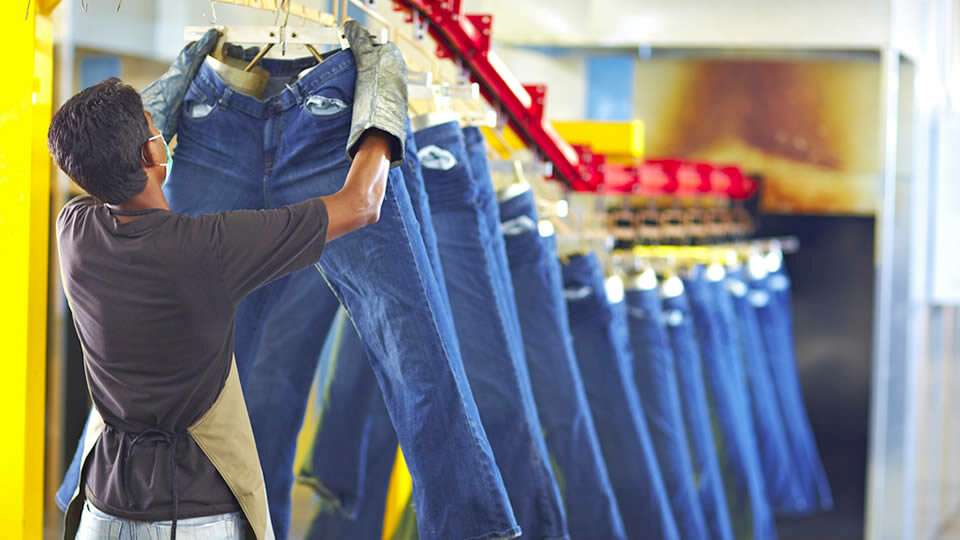
Denim brands seek full cotton sourcing disclosure, reveals Kingpins poll
A recent poll of 99 industry insiders by Kingpins, a denim trade show organizer, found that the denim industry is hungry for more transparency in cotton sourcing. All respondents were concerned about data and traceability of cotton origins, and they unanimously endorsed the idea of garment tags carrying comprehensive narratives about cotton sourcing.
The poll covered a range of topics related to cotton sourcing, including environmental data and sustainability aspects like CO2 emissions, water usage, and energy consumption. Approximately 75% of respondents believed it was their "human right" to understand cotton cultivation, especially within denim. Opinions were divided on whether pinpointing the exact plot of cotton cultivation was necessary, with roughly 52% deeming it unnecessary and about 48% expressing a desire for such specificity.
The poll's findings support Andrew Olah's long-standing advocacy for transparency in the denim industry. Olah, the founder and CEO of Kingpins, has been a vocal critic of the lack of transparency in the Better Cotton initiative, a sustainability program that promotes more sustainable cotton production. Olah believes that the denim industry needs to embrace full transparency by 2028.
The Transformers Foundation, a non-profit organization founded by Olah, is working to achieve this goal. The foundation is developing a platform that will allow denim brands and retailers to track the environmental and social impact of their cotton sourcing. The platform will also make it possible for consumers to learn more about the cotton used in their clothes.
The denim industry's desire for more transparency is a positive development. It shows that brands and retailers are taking sustainability seriously and that consumers are demanding more information about the products they buy. The Transformers Foundation's platform has the potential to revolutionize the denim industry and make it a leader in sustainability.
China's US imports hit 20-year low
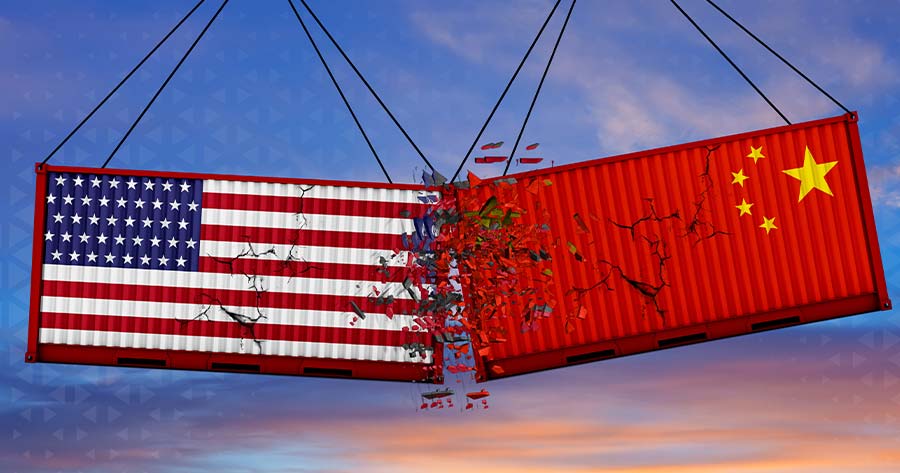
The trade war between the United States and China has led to a significant decrease in the share of Chinese goods in US imports. In the first half of 2023, China accounted for only 13.3% of US imports, down from 21.6% in 2017. This is the lowest level since 2003.
There are a number of factors contributing to this decline. One is the Trump administration's tariffs on Chinese goods. Another is the COVID-19 pandemic, which disrupted supply chains and led companies to look for alternative sources of goods. And finally, the Biden administration has continued to take a tough stance on China, which has made businesses more hesitant to rely on Chinese suppliers.
As a result of these changes, US buyers are now turning to other countries for their goods. Mexico, Europe, and Southeast Asia have all seen an increase in their share of the US import market. In particular, Mexico has become a major competitor to China as a source of electronics and machinery.
The decline in Chinese imports is good news for US businesses and consumers. It means that they have more options to choose from and that they are not as reliant on a single country for their goods. It also means that the US trade deficit with China is shrinking.
However, the decline in Chinese imports is bad news for China. It means that the country is losing out on export opportunities and that its economy is slowing down. It also means that China is losing its influence over the global economy.
China’s share of U.S. imports of apparel declined quickly after the Trump administration included the category in a round of tariffs in 2019. Sourcing has continued to shift to other Asian countries, including Vietnam, Bangladesh and Indonesia. And growing U.S. scrutiny of labor practices in the cotton-producing Chinese region of Xinjiang, as well as rising wages for Chinese workers, impacted imports significantly
The trade war between the United States and China is likely to continue for some time. It is unclear how long it will take for the two countries to reach a resolution. But in the meantime, the decline in Chinese imports is a sign that the world is changing.