FW
VIATT 2024 concludes, signaling strong growth for Vietnam's textile industry
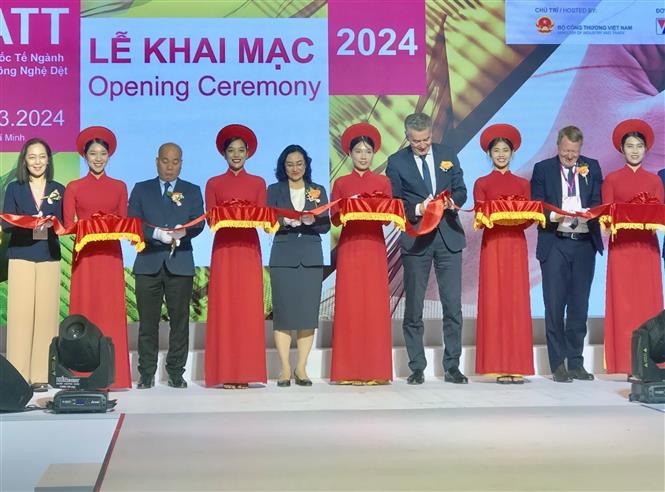
VIATT 2024, the inaugural edition of the Vietnam International Trade Fair for Apparel, Textiles, and Textile Technologies (VIATT) concluded, showcased the nation's rapidly expanding textile industry from February 28 to March 1 at the Saigon Exhibition and Convention Center (SECC). Organized by Messe Frankfurt and the Vietnam Trade Promotion Agency (VIETRADE), the event marked a significant milestone for Vietnam, offering a comprehensive platform covering three main product sectors: apparel fabrics, yarns and fibers, and garments; home textiles; as well as technical textiles and nonwovens, textile processing, and printing technology.
The expo, spanning 15,000 square meters, featured over 400 booths from 16 countries and territories worldwide, including the UK, Germany, the US, Switzerland, Japan, the Republic of Korea, China, Thailand, and India. One notable highlight was Vietnam's national brand pavilion, showcasing the strengths of domestic textile and garment brands with products ranging from apparel to home textiles, technical textiles, non-woven fabrics, and textile processing-printing technologies.
Detlef Braun, member of the Executive Board at Messe Frankfurt, emphasized VIATT's role as an event in the company's Texpertise Network, connecting over 500,000 people globally.
Economic Impact
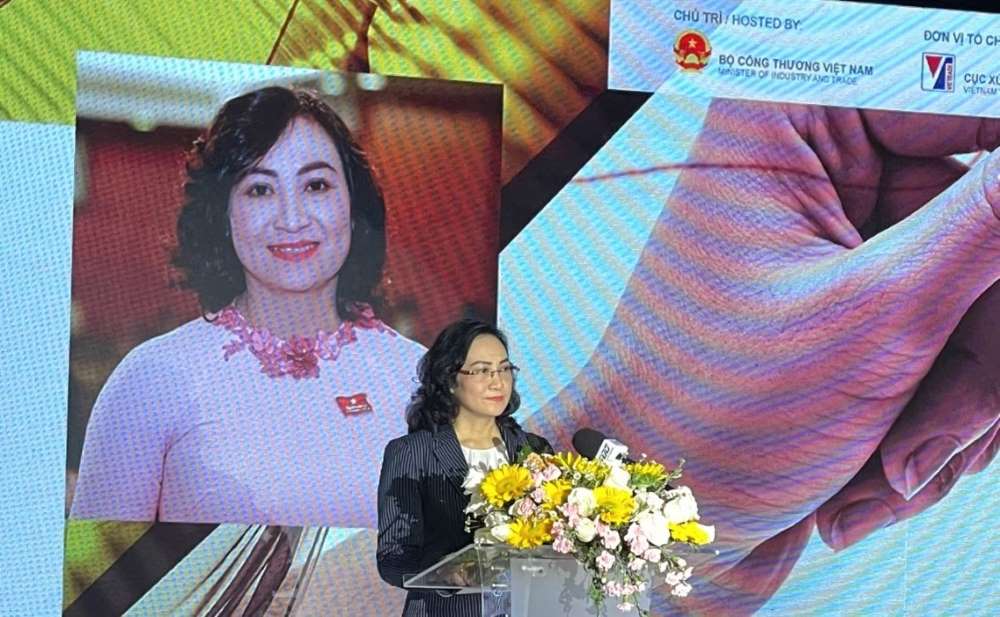
VIATT 2024 is expected to generate significant export orders for Vietnam's textile industry, further solidifying its position as a key player in the global textile supply chain. Deputy Minister of Industry and Trade of Vietnam Phan Thi Thang, remarked, "Events like VIATT are instrumental in propelling Vietnam's textile sector towards higher-value manufacturing and establishing the country as a reliable and sustainable sourcing destination. Among all current industrial export products, textile and garment is the industry with high export turnover and growth rate and is one of the key export industries, playing an important role in growth. of the economy, accounting for 12 - 16% of the country's total export turnover.”
During the inauguration, it was further highlighted the opportunity VIATT presented for businesses to seek partners, increase localization, meet diverse customer needs, enhance product value, and contribute to the development of Vietnam's textile industry in line with green and sustainable trends worldwide.

Knowledge Sharing and Inspiration
VIATT 2024 went beyond product showcasing by offering a comprehensive program of seminars featuring 14 symposiums where industry experts addressed critical topics such Sustainable Textile Production, The Future of Apparel Manufacturing in Vietnam and Leveraging Technology for Efficiency and Innovation among others, focusing on practical topics such as design and trends, market access strategies, and textile and non-woven fabric technologies. Participating major global brands were set to receive assistance in technology transfer and management experience to contribute to the development of supply chains in Vietnam.
Sustainability Takes Center Stage
The event emphasized sustainability in sourcing and production, with numerous exhibitors highlighting recycled materials and ethical manufacturing practices. VIATT 2024 placed a strong emphasis on sustainability, with over 100 exhibitors showcasing their commitment to sustainable sourcing that included the use of recycled materials and responsible sourcing practices and Ethical manufacturing, like fair labor practices and environmental consciousness were highlighted by many exhibitors.
This resonated strongly with international buyers, as H&M's Lisa Jones, Sourcing Manager, stated, "VIATT provided the ideal platform to connect with Vietnamese suppliers who align with our brand's commitment to sustainability."
The trade show facilitated on-site business deals, contributing to significant export orders for Vietnam's textile industry. VIATT 2024 showcased the country's commitment to sustainable practices, strengthening its position as an attractive sourcing destination in the global textile landscape. Nguyen Thi Mai, Director of a leading Vietnamese garment manufacturer, expressed satisfaction with Vietnam's growing reputation as a reliable and quality-conscious producer. International sourcing managers, such as one from a major European fashion label, commended VIATT as a platform aligning with their brand's sustainability goals.
Fashion Forward
The event culminated in a spectacular fashion show featuring the latest collections from renowned Vietnamese designers like Nguyen Minh Phuc and Tran Quynh Nhu. This showcase not only highlighted the creativity and talent within Vietnam's fashion scene but also served as a testament to the country's growing potential in the global fashion industry.
Looking Ahead
The success of VIATT 2024 signifies resurgence in Vietnam's textile industry, reflecting its growing global appeal, commitment to innovation and sustainability, and strengthening ties with international partners. With increased attendance, a focus on cutting-edge technologies, and a commitment to sustainable practices, VIATT 2024 positions Vietnam as a key player in the global textile market.
Bharat Tex 2024 concludes in New Delhi
India's largest global textile event, Bharat Tex 2024 concluded on 29th February 2024 in New Delhi, echoing the visionary 5F initiative championed by Prime Minister Narendra Modi. Inaugurated on 26th February, 2024 at Bharat Mandapam, the event marked a pivotal moment for the textile industry, drawing enthusiastic participation from both domestic and international stakeholders.
Organised by a consortium of 11 Textile Export Promotion Councils and supported by the Ministry of Textiles, Bharat Tex 2024 centered on the transformative journey from Farm to Fashion, resonating with the ethos of sustainability and innovation. Over the course of four days, the event emerged as a nexus for trade, investment, and collaborative dialogue, garnering attention from policymakers, CEOs, and trade visitors worldwide.
Spanning an expansive 2 mn sq ft, Bharat Tex 2024 showcased the entire spectrum of the textile value chain, accentuated by the captivating narrative of Vastra Katha, a curated exposition celebrating the rich heritage and contemporary dynamism of textiles. The event unfolded seamlessly across two cutting-edge venues, Bharat Mandapam and Yashobhoomi, both brimming with fervent participation and engagement.
Eminent global brands and retailers, including Coach, Tommy Hilfiger, Calvin Klein, and H&M, converged at the event, underscoring the international resonance of India's textile prowess. From fabric giants like Toray and Lenzing to retail titans like IKEA and Target, the event witnessed a convergence of diverse stakeholders committed to shaping the future of fashion sustainably.
On the domestic front, India's textile landscape was vividly represented by industry stalwarts such as Reliance, Aditya Birla, and Welspun, among others, epitomizing the country's vibrant textile ecosystem and entrepreneurial spirit.
With 3,500 exhibitors, 3,000 buyers from 111 countries, and over a lakh trade visitors, Bharat Tex 2024 emerged as a beacon of collaboration, innovation, and opportunity. Beyond its commercial significance, the event underscored India's commitment to fostering inclusive growth, empowering rural artisans, and advancing sustainable practices across the textile value chain.
Alif Industries to acquire two private sector businesses
Alif Industries, a composite textile company specialising in 100 per cent export-oriented knit and woven garments, has set forth an ambitious plan to acquire Royal Denim, a leading denim fabric exporter, and Diamond Dredging, aiming to expand its capacity and diversify its business portfolio.
Located in the Cumilla Export Processing Zone (EPZ), Royal Denim is renowned for its production of 100 per cent export-oriented denim fabrics, boasting a monthly capacity of 7.50 lakh yards. Meanwhile, Diamond Dredging engages in dredging activities.
Upon acquisition, these non-listed private sector businesses will operate under Alif Industries, a publicly listed firm and a subsidiary of the Alif Group. The objective behind these strategic acquisitions is to achieve vertical integration, strengthen market position, diversify product offerings, and increase value addition by up to 90 per cent.
Alif Industries is already in the process of merging two publicly listed entities; Alif Manufacturing Company, which produces cotton yarn of various counts, and C&A Textile, engaged in knitting, dyeing, printing, and manufacturing various types of ready-made garments. This amalgamation aims to create a fully integrated garment manufacturer, with all processes from knitting to garmenting being carried out in-house, except for raw cotton imports and accessory purchases.
Md Azimul Islam, Managing Director, Alif Industries, emphasised that achieving total vertical integration in woven denim fabrics through the acquisition of Royal Denim would significantly enhance the company's capabilities. This integration would facilitate the production of denim wear for export markets with a remarkable 90 per cent value addition.
The move towards vertical integration is not only aimed at increasing efficiency but also at mitigating challenges arising from the current dollar crisis in the market.
In terms of financial performance, Alif Industries reported revenue of Tk65 crore and a profit of Tk7.96 crore for the fiscal year 2022-23. It distributed a 17 per cent cash dividend to its shareholders for the fiscal year. Despite a slight decline in revenue to Tk36.92 crore in the July-December period of the current fiscal year, net profit increased to Tk4.78 crore.
Uniqlo launches for new T-shirt designs for Peace for All Charity project
Global retail giant Uniqlo continues to promote peace through its ongoing Peace For All charity T-shirt project, unveiling four captivating designs that symbolise a collective aspiration for harmony.
Set to release on March 18, 2024, the latest collection showcases a diverse array of designs from notable individuals. It comprises a heartfelt design featuring by renowned Japanese anatomist Takeshi Yoro, featuring a photograph of his cherished cat Maru, accompanied by the poignant phrase 'Hope means we can change.'
The late New York artist Jason Polan's whimsical illustration graces the pocket of another T-shirt, infusing it with playful charm. Legendary calligrapher Hakujyu Kuiseko presents a striking composition adorned with Japanese text conveying the profound message, 'If you expand the circle, it's a world. If you shrink it, it's an ego.' Afghan-born American novelist and UNHCR Goodwill Ambassador Khaled Hosseini, celebrated for his acclaimed work 'The Kite Runner,' contributes an elegant design emphasizing that 'Peace is our highest good.'
Under the umbrella of Fast Retailing, Uniqlo's parent company, 100 percent of profits generated from Peace For All T-shirt sales, equivalent to 20 per cent of the selling price, are allocated to three esteemed international aid organisations—UNHCR, Save the Children, and Plan International. These organisations tirelessly work towards alleviating the plight of individuals affected by poverty, discrimination, violence, and conflict.
Since its inception on June 17, 2022, featuring designs from 36 contributors, the Peace For All initiative has garnered remarkable success, with Uniqlo selling over 3.2 million T-shirts worldwide. By the end of January 2024, the initiative had raised an impressive sum of over JPY 970 million (approximately $6.45 million).
These substantial donations have facilitated a multitude of charitable endeavors, including emergency humanitarian assistance for displaced individuals, protection and support for children affected by conflict and disaster, and the global prevention of early marriage.
Through the Peace For All project, Uniqlo continues to embody its commitment to social responsibility, fostering a brighter, more compassionate world one T-shirt at a time.
Pakistan to organise conference on ‘Knowledge-Based Textiles’ in March 2024
Pakistan will organise the 3rd International Conference on 'Knowledge-Based Textiles' from March 05-06 at the esteemed National Textile University.
Hosted by the university, a pioneer in textile education, the event is supported by the Grand Challenge Fund Project (KnowTex), generously funded by the Higher Education Commission (HEC) of Pakistan. With a focus on evaluating the current state of value addition in textile products and strategising for sustainable growth in textile exports, the conference aims to foster scientific discussions and collaboration among academic scientists, research scholars, and industry experts.
Diverse topics ranging from textiles, composites, circular textiles, functional and smart textiles, to natural fibers and innovation in production processes will be explored during the conference. More than 30 speakers hailing from various corners of the globe including the USA, UK, China, and Qatar, among others, will enrich the event with their insights and experiences.
One of the highlights of the conference is a workshop on incorporating Circularity in Textile value chains, scheduled for March 5th, followed by the main conference on Knowledge-based Textiles. On March 6th, the Interloop Textile Innovation Exhibition and the Ceremony on Innovation Awards will take place, showcasing groundbreaking projects in circularity and sustainability from across the country.
The innovation competition promises to be a platform for over 250 delegations, featuring 40 innovative projects, and attracting the participation of 25 universities and 100 industries. Additionally, six textile associations including PHMA, PRGMEA, APTMA, APBUMA, CLOA, and the Dyes & Chemical Association will contribute to the rich tapestry of activities throughout the conference.
Two engaging panel discussions are also scheduled, addressing critical topics such as "Navigating the Global Fashion Landscape: Challenges and Opportunities for Textile Manufacturers" and "Charting the Path: Advancing Pakistan’s Textile Industry Through Circular Practices". These discussions will be moderated by esteemed academics Dr. Shahid Rasul from Northumbria University, UK, and Dr. Munir Ashraf from the National Textile University, Pakistan, respectively.
Textile up cycling deal signed between Textiles Committee, GeM and SCOPE at Bharat Tex 2024
In a groundbreaking move towards environmental sustainability, a memorandum of understanding (MoU) was inked at Bharat Tex 2024 between the Textiles Committee, the Government e-Marketplace (GeM), and the Standing Conference of Public Enterprises (SCOPE).
The agreement heralds a significant stride towards promoting the upcycling of textile waste and scrap, ushering in a new era of sustainable and circular textile practices.
At the core of this initiative lies upcycling, the process of transforming textile waste into products of heightened value and functionality. The Ministry of Commerce and Industry emphasized that upcycling not only prolongs material lifecycles but also drastically reduces energy, chemical, and water consumption compared to conventional recycling methods.
The MoU outlines a strategic partnership wherein GeM will collaborate closely with stakeholders in the upcycling ecosystem, particularly targeting underserved seller groups. The aim is to grant these groups direct market access in public procurement through GeM outlet stores, bypassing intermediaries. This initiative aligns seamlessly with the broader #VocalforLocal movement, striving to amplify the visibility and sales of upcycled textile products.
Furthermore, the partnership promises to engage stakeholders across the textile upcycling sector through a spectrum of activities, including advocacy, awareness campaigns, outreach programs, mobilisation, and capacity building for last-mile upcyclers. This holistic approach aims to nurture a robust upcycling ecosystem, facilitated by stakeholder consultations and the development of technical specifications for upcycled product catalogues, ultimately streamlining access for government buyers.
The signing ceremony witnessed the presence of Darshana Vikram Jardosh, Minister of State for Textiles and Railways, alongside senior officials from the Ministry of Textiles. PK Singh, CEO, GeM, also played a pivotal role, highlighting the collaborative spirit of the participating organisations. The MoU was formally signed by S P Verma, Secretary of the Textiles Committee, Ajit B Chavan, additional CEO, GeM, and SubhRatna, General Manager of SCOPE.
Birkenstock sales surge by 22% in Q3, FY23
Birkenstock Holding Plc’s latest earnings report showcased a resilient business model amid a challenging market landscape for casual footwear.
The company’s sales surged by 22 per cent Y-o-Y to €303 million ($328 million) for the quarter ending December 31, outperforming analyst estimates by a significant margin. Adjusted earnings before interest, taxes, depreciation, and amortization (EBITDA) stood at €81 million, surpassing expectations of €75.5 million.
Since its IPO in October, Oliver Riechert, CEO has emphasised Birkenstock's commitment to sustaining its impressive growth trajectory. The company's strategy focuses on maintaining its fashion appeal, expanding production capacity in Germany and Portugal, and penetrating new markets like China and India. Reichert underscores the company's resilience amid soaring demand, driven by its direct-to-consumer approach and full-price sales strategy.
Birkenstock acknowledges the need to enhance supply capacity to meet escalating consumer demand. Despite planned investments impacting short-term profitability, the company remains steadfast in achieving its gross profit margin target of over 60 per cent and adjusted EBITDA margin in the low thirties percent.
In contrast to sluggish performance from industry giants like Nike and Under Armour in North America, Birkenstock experienced double-digit revenue growth across all regions. The company’s revenues in the Americas grew by 19 per cent driven by strong consumer momentum, while revenues in Europe and the APAM surged by 33 per cent and 51 per cent, respectively.
Birkenstock's journey as a publicly traded company saw a shaky start on the New York Stock Exchange, followed by a remarkable recovery with shares climbing 11 per cent above the listing price. The company's fiscal year 2023 results, announced in January, marked its most successful year to date.
Sustainable fashion market witnessing transformative trends: Report
Driven by a heightened global concern for environmental and social impacts of the fashion industry, the sustainable fashion market is witnessing transformative trends.
As per the report titled, The Sustainable Fashion Market, the industry is supporting initiatives like the UN Fashion Industry Charter for Climate Action, further emphasising its commitment to reduce emissions. It is witnessing the emergence of several trends including the booming second-hand market, projected to reach $84 billion, fueled by eco-awareness and facilitated by platforms like Thrift and Depop.
The rental market, exemplified by platforms like Rent the Runway, offers access to designer fashion without ownership, although questions about transportation emissions arise.
Having dominated the sustainable fashion market in 2023, North America is expected to continue its dominance during the forecast period. North America's market expansion is driven by a surge in ethical consumerism, with the United States particularly emphasising sustainable practices in clothing, footwear, and accessories.
The Sustainable Fashion Market Report covers various aspects of the industry's sustainable practices and trends. It analysis includes the entire value chain, from raw material sourcing and production processes to distribution, consumption, and end-of-life considerations. The report digs into the evolving consumer preferences and increased awareness regarding environmental and ethical concerns, shaping the dynamics of the sustainable fashion market. It provides stakeholders with a holistic view of the sustainable fashion market by exploring its size, growth potential, challenges, and opportunities.
SIMA cautions against panic buying as cotton prices rise

The Indian textiles and clothing industry, primarily reliant on domestically grown cotton, faces a tumultuous period marked by surmounting challenges. Despite grappling with issues like high capital costs, tariff barriers, and soaring power expenses, the sector traditionally leveraged competitive domestic cotton prices against international counterparts. However, the tide turned following the removal of cotton from the Essential Commodities Act in February 2007 and its subsequent inclusion on the MCX cotton trading platform. This move ushered in an era dominated by multinational cotton traders, leveraging cheaper funds and hedging facilities abroad.
MSME spinning sector squeezed by supply shortages
India's MSME spinning segment, constituting over 85 per cent of the total spinning capacity, finds itself in a perennial struggle to secure cotton, especially during the peak season from November to March. Limited working capital, compounded by exorbitant interest rates and a mandatory 25 per cent margin, hamper procurement efforts. Consequently, to bridge the deficit during the off-season (April to October), spinners resort to trade purchases and imports. The existing 11 per cent import duty on all cotton varieties except ELS cotton further exacerbates dependence on traders during lean periods, particularly when market prices fall below the Minimum Support Price (MSP), necessitating intervention from the Cotton Corporation of India (CCI).
Global cotton dynamics: Oversupply looms
Internationally, Australia anticipates a cotton production of 4.7 million bales with arrivals expected from May 2024 onwards. Meanwhile, Brazil forecasts its largest-ever cotton harvest of approximately 14 million bales, positioning itself as the world's leading cotton exporter. With crop arrivals projected from June 2024 onwards, the global market is poised for a surplus post-July 2024.
Against this backdrop, fabric, garment, and made-ups segments, typically bound by three to four-month export contracts finalized in February and March, confront mounting challenges. Increased yarn prices, driven by speculative cotton pricing, impede their ability to meet export commitments. Addressing this recurring issue necessitates the implementation of a comprehensive "National Fibre Policy" ensuring raw material security and fostering harmony across the textile manufacturing spectrum. Such a policy framework would level the playing field among industry stakeholders, ensuring sustained growth and competitiveness.
Industry voices alarm: Cotton price surge
In press release, S K Sundararaman, Chairman of The Southern India Mills’ Association (SIMA), sounded the alarm over a sudden surge in cotton prices. Within a mere 15 days, cotton prices skyrocketed by 10 to 12 pr cent, sparking panic across the textile value chain. The price of Shankar-6 variety surged from Rs. 55,300 to Rs. 62,000 per candy, intensifying industry concerns.
Sundararaman of SIMA revealed that the Committee on Cotton Production and Consumption (CoCPC) forecasts the cotton crop size for the 2023-24 season at 316.57 lakh bales, with imports estimated at 12 lakh bales. Consumption is projected at 310 lakh bales, with exports at 25 lakh bales, leaving a closing stock of 57.65 lakh bales. He highlighted a surge in mill sector capacity utilization to 80 per cent to 90 per cent, up from 70 per cent to 75 per cent, with approximately 20 lakh bales already contracted for exports. Anticipating a decline in export demand as international cotton prices align with domestic rates, he assured of ample cotton availability owing to the high closing stock.
With 215 lakh bales of cotton already in the market by February 2024, daily arrivals surpassing a lakh bales, Sundararaman noted the influx of high-quality cotton this season. However, he cautioned that the sharp price hikes primarily benefit traders over farmers, posing a significant challenge for the industry. Considering the global cotton landscape, he foresaw increased availability post-July 2024 due to heightened production in Australia, Brazil, and other countries. Expecting a subsequent softening of Indian cotton prices, he advised spinning mills against panic buying, emphasizing the comfortable supply position globally and the need for cautious procurement amidst prevailing rumors.
Call for government intervention
In a bid to stabilize prices and bolster industry competitiveness, Sundararaman urged government intervention. He advocated for a return to CCI's price stabilization policy implemented in June 2016, along with temporary exemptions from the 11 per cent import duty on all cotton varieties during April to October. Such measures, he argued, would mitigate import parity pricing and enhance export competitiveness, facilitating sustainable growth across the textile value chain.
Amidst global production surges and domestic supply uncertainties, the Indian textile industry stands at a critical juncture, clamoring for proactive policy measures to navigate the storm and emerge resilient.
Brazil T&A enterprises report 19% productivity rise through SCORE methodology
Medium textile and apparel enterprises adopting the SCORE methodology witnessed a remarkable 19 per cent surge in productivity, while small enterprises experienced a commendable 15 per cent enhancement.
The initiative also yielded tangible improvements in operational efficiency. Medium enterprises reported a significant 58 per cent reduction in unnecessary movements, with small enterprises following suit with a commendable 9 per cent decrease. Moreover, rework rates saw a notable decline, with medium enterprises achieving a 21 per cent reduction and small enterprises making strides with a 12 per cent improvement. Concurrently, absenteeism rates dropped by 5 per cecnt, indicative of a more engaged and satisfied workforce.
Many enterprises established internal committees or revamped their hiring processes, leading to a noticeable uptick in LGBTQIAPN+ representation within their workforce.
The impact extended beyond individual enterprises. Brazil's premier training institution for the industry SENAI incorporated SCORE Brazil's methodology into its training programs. This integration solidified the ethos of responsible business practices within Brazil's vibrant apparel sector, setting a precedent for sustainable and inclusive growth in the region.
The Sustaining Competitive and Responsible Enterprises (SCORE) methodology was introduced jointly by the Brazilian Textile and Apparel Industry Association (Abit), the Brazilian Association of Textile Retail (ABVTEX), the National Service of Industrial Training (SENAI) São Paulo, and the International Labor Organization (ILO) Country Office for Brazil in 2023. This groundbreaking approach targeted Small and Medium Enterprises (SMEs) in the metropolitan area of São Paulo, Brazil's bustling industrial hub.
SCORE Brazil brought tailored modules—Work Cooperation and Responsible Enterprises—developed by the ILO to the forefront of the garment sector, customising them to suit the local landscape. Over the course of the initiative, 67 workers and managers from 15 SMEs participated in rigorous training activities.