


FW
Time for the emergence of the all-inclusive size range
"This relegation of sizes like plus and petite to specialty retailers springs from royal courts that dictated fashion based on the preferences of the king and the nobility got their garments made to order. Common people, made their own clothes, with lesser fabrics available to them. However, the industrial revolution changed the fashion culture with streetwear emerging as the most preferred trend."
 NPD Group's Consumer Tracking Service study shows, US teens who purchased plus-size clothing increased 34 per cent in 2015, compared to 19 per cent in 2012. Around two-thirds of US women consider themselves to be a special size defined as plus, petite, junior or tall. Out of these, one-third women identify themselves as being plus-size.
Streetwear emerges the new trend
This relegation of sizes like plus and petite to specialty retailers springs from royal courts that dictated fashion based on the preferences of the king and the nobility got their garments made to order. Common people, made their own clothes, with lesser fabrics available to them. However, the industrial revolution changed the fashion culture with streetwear emerging as the most preferred trend. It also changed conventional standards of beauty as women like Beyonce and Taylor Swift were accepted more for their talent than beauty. Lack of size standards, however, continues to isolate women that don’t fit into the industry's loosely established ranges.
The social media helped these plus size women put forth their demand for stylish apparel. Women beyond sizes 0 to 12, in age groups 15 to 65 are demanding stylish apparels that actually fit them. Although the millennials and Gen Z are at the forefront of this movement, ripples can be seen throughout the female population.
The new normal
Earlier merchandise for plus sizes was mostly relegated to dark corners of the store or had to be made on special orders. To make things worse, marketing plus-size clothing suggested shoppers wanted to hide their bodies or have an unsophisticated outlook. However, Alexandra Waldman, Founder and Chief Creative Officer of Universal Standard changed this trend by treating inclusive sizing as the new normal. The brand, since 2015, has been creating thoughtful, mindful design that allows apparel to be coveted.
Inadequate infrastructure makes business difficult
In the past, brands like J. Crew cited expense along with manufacture and design glitches as reasons for their limited sizing options. Although appearing to be fake, these production challenges are real. There is currently no infrastructure available for a truly size-inclusive brand for sizes ranging from 00 to 40. If these brands increase their sizes, it impacts their inventory costs and stock-outs, constrains floor space besides adding to complexity in SKUs, manufacturing instruments and logistics.
Consultation rather than shopping
To tackle this issue, retailers are resorting to customisation. However, they are also trying to maintain their production costs by creating an 'endless aisle'. Here, women can design clothes digitally and get them delivered at their homes, making the experience more of a fashion consultation
Online brands are spearheading this shift, but they face some obstacles. Universal Standard, Curvy Sense and online brand Showpo had to employ more models, human and otherwise, use more fabric for some items without charging more, grade patterns as sizes go up or down the scale and find factories that understand their needs.
Offering only a narrow size range is slowly becoming indefensible. It is now time for designers and retailers to work for all women. Any brand that decides to design for women of only a certain size is unacceptable as dressing is a basic right that all women need to enjoy.
KARL MAYER:A new machine is shaping the standard sector
The new TM WEFT for the standard segment is complementing the WEFTTRONIC® II HKS for the premium segment
KARL MAYER is transferring its successful two product line strategy to its Technical Textiles Business Unit and is supplementing its premium weft-insertion machine with a standard model. In addition to the WEFTTRONIC® II HKS, there will also be a TM WEFT in future. This new warp knitting machine with weft-insertion facility bears all the hallmarks of the high-end version in terms of its quality and reliability, but its optimised cost:benefit ratio targets a different market.
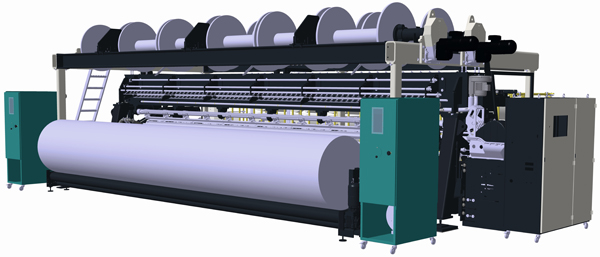
The TM WEFT
The right machine for every market segment
This new machine is a machine from Asia for Asia. “Our target market is China and the mid-range segment in particular”, explains Hagen Lotzmann, the Sales Manager of KARL MAYER Technische Textilien GmbH. To score points here, the TM WEFT delivers a 50% higher cost:benefit ratio than the WEFTTRONIC® II HKS. The considerable increase in speed has been achieved by completely redeveloping the machine and modifying the production logistics. The engineering know-how and the core areas of expertise for the TM WEFT are being provided by locations in Germany, and all the other work is being done by KARL MAYER (CHINA). This has led to the exceptional quality and operating reliability typical of all KARL MAYER’s machines, and also delivers an attractive performance package for producers of standard goods for the interlining market. With its fine gauge, the WEFTTRONIC? II HKS is still the number one machine for producing fine interlinings and high-quality automotive textiles, for use in e.g. sun protection.
Customised technical features
The TM WEFT is available in a gauge of E 24 and a working width of 247", which can be reduced by 62". Its features include two stitch-forming ground guide bars, the KAMCOS® 2 Single Speed and integrated Laserstop facility for the early detection of yarn breakages. Up to 24 wefts can be inserted at the same time during production. The yarn is delivered from a creel with yarn storage feeders. An electronically controlled, 4-roller system is responsible for fabric take-down, and the fabric is wound by stand-alone batching unit no. 64. It has friction drive, with control in line with the stitches.
An eagerly anticipated sales release
The TM WEFT was announced at ITMA ASIA + CITME 2018 in Shanghai and proved to be a hot topic of conversation. “Our customers are extremely interested in our new weft-insertion warp knitting machine, and are already looking forward to the official market release,” says Hagen Lotzmann. This sales expert is expecting that the first orders for this standard model, with its excellent cost:benefit ratio, will be placed this year. The sales release is scheduled for the second half of January 2019. An in-house show will also be held in January at KARL MAYER (CHINA) in Changzhou, where the TM WEFT will be demonstrating its features.
Shima Seiki assists in modernising Pakistani factories
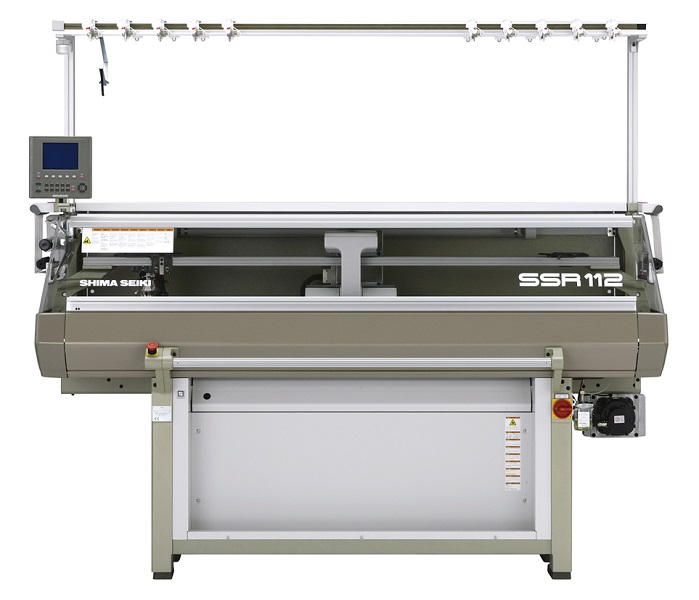
SR112-SV computerised flat knitting machine. © Shima Seiki
Leading Japanese computerised flat knitting machine manufacturer Shima Seiki will exhibit at the upcoming 12th International Exhibition for Garment, Textile Machinery and Accessories (IGATEX 2019) exhibition, which will be held in Karachi, Pakistan, later this month.
On display will be Shima Seiki’s SSR series computerised flat knitting machine. The company aims to assist in modernising Pakistani factories that continue to rely on dependable yet aging older-model Shima Seiki machines with the latest technology.
“Featuring industry leading innovations, such as the R2CARRIAGE, spring-type moveable sinker, DSCS Digital Stitch Control System, stitch presser and takedown comb, Made in Japan quality, reliability, productivity, user-friendliness and cost-performance combine to satisfy the high expectations of the world’s fashion industry,” the company reports.
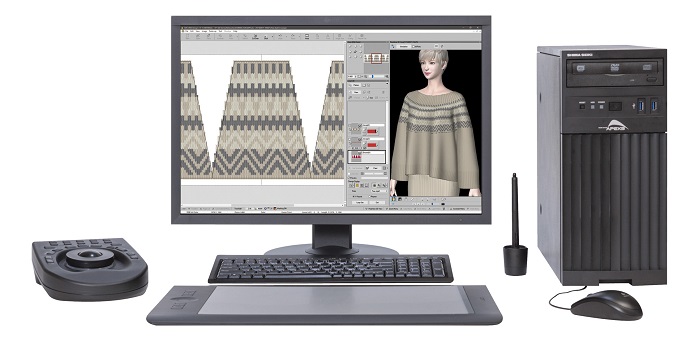
SDS-ONE APEX3 3D design system. © Shima Seiki
Demonstrations will be performed on the SDS-ONE APEX3 design system that is at the core of the Shima Seiki’s Total Knitting System concept. With comprehensive support of the knit supply chain, APEX3 integrates knit production into one smooth and efficient workflow from planning and design to machine programming, production and even sales promotion.
Photorealistic simulation capability allows for Virtual Sampling to minimise the need for actual sample-making, effectively reducing time, material and cost while increasing presentation quality in the sampling process. APEX3 also supports design and simulation in a variety of other industries in addition to flat knitting such as circular knitting, weaving, pile weaving and printing.
Exhibition details
Exhibition: 12th International Exhibition for Garment, Textile Machinery and Accessories (IGATEX 2019)
Date: 26-28 February 2019
Location: Karachi Expo Centre
Main University Road, GulshaneIqbal, Karachi, Pakistan
Tel: +922199232667
Organiser: F.A.K.T Exhibitions (PVT) LTD
Tel: +92213581063739
Booth No.: Hall 2, Booth A204
Exhibited technology:
SR112-SV 12G computerised flat knitting machine
SDS-ONE APEX3 3D design system
For more information please contact:
Mr Naoki Yamada
Shima Seiki
Tel: +81(0)734748210
Almurtaza Machinery
Tel: +922134543060
Email: This email address is being protected from spambots. You need JavaScript enabled to view it.
www.shimaseiki.com
Kornit names Andy Yarrow as president, Asia Pacific
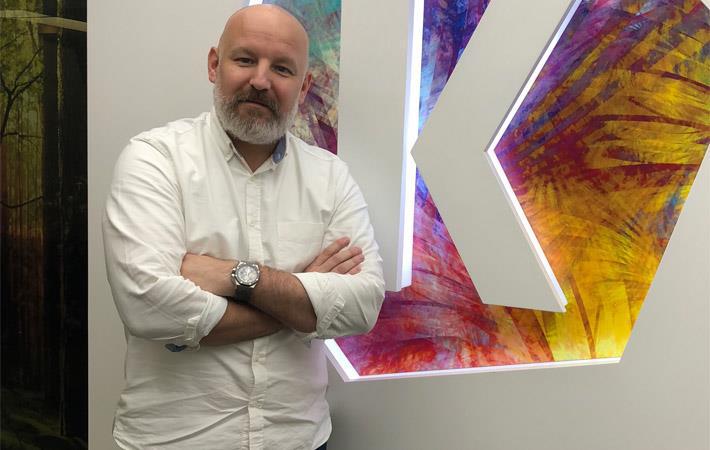
Kornit Digital, a global market leader in digital textile printing technology, has announced that Andy Yarrow has been appointed as the president of Kornit Digital’s Asia Pacific region, effective February 10, 2019. The company, based in Israel, develops and markets industrial digital printing technologies for the garment, apparel, and textile industries.
Yarrow joins Kornit from EFI, where he held several sales and management roles in Europe and Asia Pacific for the past twelve years, most recently in Hong Kong as the head of Asia Pacific Sales. Prior to moving to Hong Kong, Andy spent 2.5 years in Japan as head of EFI’s fiery and inkjet business in Asia Pacific, Kornit said.
Yarrow has been in the industry for 20 years and holds a Bachelor of Arts degree in creative imaging from the University of Huddersfield, United Kingdom. In his new capacity, Yarrow will oversee Kornit’s operations in the Asia Pacific region.
Andy Yarrow will focus on accelerating the company’s growth across Asia, as well as on optimising the team structure towards customer success and empowerment. He will focus on expanding Kornit’s footprint in the customised design segment, as well as expand the business in Asia by entering new segments such as the brands, private labels, promotional, and other leading screen printers and users of Kornit’s upcoming new technologies, such as printing on dark polyester.
“I welcome Yarrow on board as the new president of Kornit Digital Asia Pacific. He brings with him 15 years track record at various leadership levels, deep understanding of local and global markets as well as a sound industry background. He will steer Kornit Digital’s Asia Pacific business through the next phase of growth,” Gilad Yron, Kornit’s executive vice president of sales said.
“The era of self-expression has arrived, and consumers now want their products quickly and with a personal statement. The supply chain must find ways to adjust to meet these demands. Kornit is a global leader in digital textile printing. It offers cutting edge solutions to these complex supply chain and logistics issues by facilitating proximity manufacturing to reduce shipping times, eliminating inventory risk and enabling short runs. The market shift to on-demand retailing unfolds the opportunity for driving Kornit’s growth to the next level and I am looking forward to leading this exciting journey in Asia Pacific,” Yarrow said. (GK)
Roland DG launching desktop T-shirt printer
Wide format and promotional products printer supplier Roland DG is launching a desktop textile printer, the VersaStudio BT-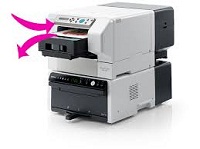 12, for printing directly onto cotton-based products, such as t-shirts, tote bags and textile interior decor.
It prints full colour A4-sized images directly onto cotton-based (at least 50 per cent) products, and has 1200dpi resolution. The BT-12 comes with an optional HB-12 heat press – that can sit underneath the printer – for fixing the printed ink onto the material.
RRP for the printer and fixer combination is $5710, or it can be rented for 60 months at $107 a week. It will be available in April.
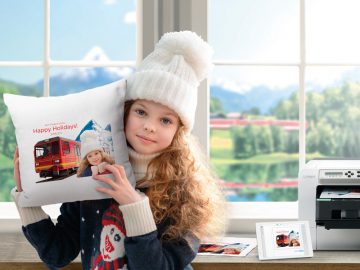 Roland DG says the BT-12 is capable of producing a fully-finished custom printed product in just a few minutes, and is designed for ease of use. It comes bundled with Roland Design Software, which features an intuitive user interface, the company says users can create designs with minimal training. Images can be captured and imported from smartphones. Cassettes hold the items for printing and finishing.
The printer unit requires little space, with dimensions of 399mm x 760mm, and the optional HB-12 finishing equipment stacks with the BT-12. This design significantly reduces the installation space that is typically required for a traditional direct-to-garment printer.
AnaJet, KITL Partner To Revolutionise DTG Printing
Partnership empowers users to save money, optimise their apparel printing business, and achieve higher quality prints
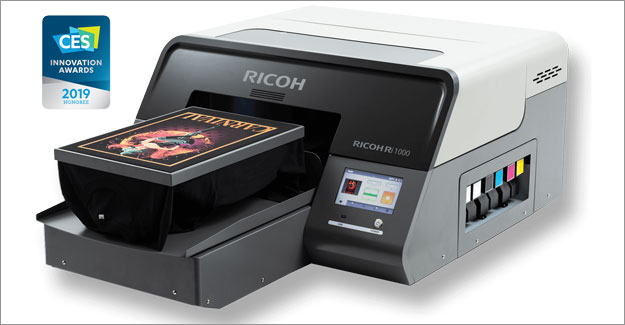
AnaJet, a Ricoh company and global leader in the direct to garment (DTG) industry, has partnered with fellow DTG industry leader Kothari Info-Tech to release Kothari Print Pro, a cutting-edge raster image processor (RIP) software configured exclusively for Ricoh DTG machines. This new software is available exclusively through AnaJet‘s online store for customers in the United States.
“We are incredibly pleased to integrate Kothari Print Pro into another printer platform,” said Sanjay Maheshwari, Director at Kothari Info-Tech (P) Limited. “With Kothari Print Pro’s high-performance capabilities we knew the RIP would be an excellent way to add functionality and additional value to the new RICOH Ri 1000 as well as to AnaJet’s RICOH Ri 3000 and Ri 6000 machines.”
All Ricoh DTG printers come with a free license for AnaRIP software, which provides excellent RIP functionality suitable for many applications. The new Kothari Print Pro RIP software, however, now provides a premium option with more advanced capabilities to accommodate power users’ needs.
“With their robust, industry-leading features, the Ricoh family of DTG printers deserve cutting-edge software,” explained AnaJet Inc. Marketing Director Paul Crocker. “Kothari produced a truly amazing RIP software that helps our customers save time and money while creating even higher quality prints than what was possible in the past.”
Kothari Print Pro optimises ink usage for black garment printing by employing a patented process that takes the garment’s colour into account when processing a printable image. When a set of standard sample images were tested using “White Highlight” mode with default settings, Kothari Print Pro reduced the average ink costs of a black t-shirt print by over 44% when compared to AnaRIP Software.
To improve overall performance, the RIP software delivers more print profiles that are better optimised for a wider range of garment colours and types. The software provides fine detail and subtle colour gradations, resulting in prints that display richer, brighter, and more accurate colour.
Unlike other RIP softwares, Kothari Print Pro also provides convenient options for directly editing the RIP image – load and position multiple image files or tweak colours on the fly. Kothari Print Pro is available for $1250 for the new RICOH Ri 1000 and $1800 for the industrial-level RICOH Ri 6000. Both versions are now available in AnaJet’s online store.
About Kothari Info-Tech (P) Ltd (KITL)
Since the company’s inception in 2001, KITL has taken pride in providing innovative solutions to the challenges faced by the digital inkjet printing industry. The company’s philosophy is to provide sustainable solutions to end users using a three-pronged approach: RIP and colour management software to optimise resources and reduce waste, the use of environmentally friendly water-based inks, and strategic partnerships with manufacturers to produce the best-quality prints possible.
About AnaJet
AnaJet has been a true pioneer in the direct-to-garment printing industry starting with the mass production of its first printer line in 2006. AnaJet became a Ricoh company in late 2016, and the two immediately united to begin research and development on the flagship RICOH Ri 3000/Ri 6000 printers. In 2018, AnaJet launched the ground-breaking Ri 100, which was named a 2018 CES Innovation Awards Honoree. In October 2018, AnaJet released the RICOH Ri 1000, a prosumer machine designed to round out the Ricoh family of DTG printers by offering a full feature set at an affordable price.
About Ricoh
For more than 80 years, Ricoh has been driving innovation and is a leading provider of document management solutions, IT services, commercial and industrial printing, digital cameras, and industrial systems.
Konica Minolta announces first steps for drupa 2020
Friday 15. February 2019 - Konica Minolta will have a major presence at drupa in Düsseldorf, Germany, from 16-26 June 2020, the worlds largest print fair. It will showcase latest innovations in printing and applications in a customer-centric approach.
Real-value business opportunities for customers in Konica Minolta’s extensive commercial and industrial printing portfolio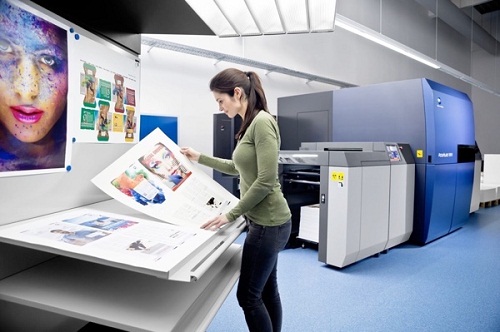 including markets such label and packaging, as well as consultancy, marketing automation and services – will be at the heart of its stand in Hall 8b. The stand will feature live demonstrations as well as customer testimonials and numerous presentations.
Charles Lissenburg, General Manager, Professional Print Division, Konica Minolta Business Solutions Europe GmbH, said: “Given our heritage of being a world leader in commercial printing, we continue to expand into industrial printing solutions for our professional printing business across the world. Once again, drupa will provide us with the perfect platform to engage with our customers, as well as meet new ones.
“We have a sustained commitment to innovation and on our extensive stand in Hall 8b we will be demonstrating our unique approaches in the high-end commercial print and industrial markets. These enable us to help customers with expertise and business tools to capture new market opportunities and grow profitability through meaningful solutions. Ongoing dialogue with our customers at drupa will also help them to recognise change and developments in markets.”
Konica Minolta works in close partnership to openly explore the challenges and opportunities faced by customers to keep them ahead of the competition. Providing practical help and support, Konica Minolta anticipates customer needs and then turns them into innovative solutions in a collaborative, partnership approach.
Konica Minolta’s stand at drupa will be one of the largest at drupa.
Asian countries capture diverted exports
A new report from the United Nations Conference on Trade and Development (UNCTAD) shows, tariff-fueled trade war between the US and China impacted more than 50 per cent of two nations’ bilateral trade. As a result, a handful of countries, mostly Asian neighbors, have captured a bulk of the diverted exports.
As per UNCTAD, this effect could become more pronounced if the US follows through on the threat to increase tariffs to 25 percent on a range of goods on March 1 from the more narrow 10 percent duties already imposed.
UNCTAD estimates, which include the potential March hike, show that most US-China trade affected by the increased tariffs will divert to other countries and not just shift the bilateral balance of trade. The report said that of the $250 billion of Chinese exports subject to US tariffs, 82 per cent will be taken by firms in third countries, about 12 per cent will be retained by Chinese firms and just about 6 per cent will be kept by US companies.
UK fears retail price rise with Brexit
Uncertainty about the UK’s trading relationships with the European Union and the rest of the world continues. Price rises are likely in the event of a no-deal Brexit. If no deal is struck with the EU, UK companies will be forced into World Trade Organization (WTO) terms, which will put upward cost pressures on retailers, brands and suppliers. The impact of a no-deal Brexit would be significant. Tariffs alone represent about four per cent of sales for an average women’s wear retailer. Most retailers may increase pricing to mitigate this. The UK is due to leave the EU on March 29, 2019.
If tariffs increase overall costs by more than three per cent, then retailers can be expected to pay half and suppliers pay half. However, if it is a sustained increase in costs, then it will have to ripple through into retail prices. Retailers and suppliers will have to absorb the costs in the short term, but in the long term, consumers will be affected. In a no-deal scenario, the combination of increased tariffs, the burden of non-tariff barriers, and likely depreciation of the pound means retailers will face upward cost pressures.
Turkey to host Istanbul Yarn Fair next week
Istanbul Yarn Fair will be held February 28 to March 2, 2019. This event showcases products like knitted fabrics, cotton yarns, cotton blended yarns etc. in the textile, fabrics and yarns industry. Leading yarn manufacturers from Turkey and other countries will display their innovative and advanced technology products. The trade fair will see 308 companies and company representatives from 15 countries.
The Belarusian pavilion will present five leading petrochemical companies. Polotsk-Steklovolokno will present glass fiber-based products. These include electric insulation glass fabrics, basalt fiber, high-temperature silica materials, glass yarns and rovings used as electric insulation winding for wires and cables and in the fabrics and tapes production.
The largest Belarusian plant Naftan will promote acrylic fibers for the production of yarn, fur fabrics, knitted materials, carpeting, upholstery and nonwoven materials. One of the largest chemical producers in Europe Mogilevkhimvolokno will offer a wide range of polyester fibers, threads and harnesses, used in the manufacture of yarns, fillers and fur fabrics, and will provide polyester textiles for roofing materials and carpets manufacturing.
Woven and knitted fabric manufacturing suppliers, aimed at meeting the requirements of the market and competing in both domestic and foreign markets, have embarked on a quest for product range in yarn.











