FW
Messe Frankfurt announces dates for Heimtextil 2022
German trade fair and event organizer Messe Frankfurt has announced dates for its home and contract textiles trade fair Heimtextil 2022. The trade fair will be held in Frankfurt next year from January 11-14, 2022 featuring 1,600 exhibitors from 50 countries. In addition to the extensive spectrum of products, the fair will offer an attractive range of information services and events to help visitors discover the latest market developments in the sector. In particular, it will present the Heimtextil Trends to offer in-depth insights into tomorrow’s furnishing themes.
The interior, architecture and hospitality zones will spotlight offers for architects and hospitality experts. The Heimtextil Sleep & More Conference will be a meeting place for representatives of the specialist bed trade with a high-grade program of lectures, discussions and product presentations .Another important focal point at Heimtextil 2022 will be presentations by Trevira and DecoTeam.” The range of products and information at Heimtextil 2022 will be rounded off by a blend of digital services. For example, the complete spectrum of Heimtextil Trends will be available for the first time in digital form – richly illustrated and visualised with the latest colors, designer features and short films. The Future Materials Library is also online with a first-class selection of sustainable material innovations. Also in planning are videos on demand about many of the items on the program and tours of the fair via audio guides.
India: GST rates increase, a huge setback for the garment industry
Experts and businessmen believe, the government’s decision to increase GST on textile articles like yarn, fabric, cloth to 12 per cent from January 1, 2022 will lead to an increase in prices of garments and textile articles for end consumers. It will also hike the cost of investment for the businessmen, says NK Thamman, Tax Expert. Narinder Mittal, General Secretary, Ludhiana Business Forums opines, the GST increase will prove to be a big setback for the industry already facing severe fund crunch due to lockdowns.
Harish Kairpal, Finance Secretary, Knitwear Club, adds, the move will have serious repercussions on garment and textile manufacturers. Their cost of investment will rise steeply and retail consumers will also suffer as rates of garments and textile articles will be increased due to this tax difference.
Pakistan: Provide more incentives to textile processing units, urges APTMA
Sheikh Shahid Javaid, Regional Chairman, All Pakistan Textile Processing Mills Association (APTPMA) has urged the government to provide more incentives for the textile processing sector. Javaid said, previous governments had badly ignored the textile processing industry despite the sector earning huge foreign exchange for the country. However, the PTI government took pro-industry steps to revive this sector. It provided subsidized energy rates for the textile sector in addition to implementing the ‘inspector-less regime’ policy to stir its growth, he added.
The government also provided relief to the industrial sector and adopted smart lockdown policy to keep industrial wheel on moving during the COVID-19 period. It provided electricity on comparatively less rates to the textile sector, Javed observed. He added, COVID-19, has increased raw material prices manifold at global level due to cartelization, pushing the textile processing industry on the verge of total collapse.
Therefore, the government needs to take bold steps and provide more incentive to the sector by exchange rates, reversing freight rates on previous level and imposing zero rate policy on raw material imports, he added.
Sustainability pressures compel brands to relook raw material choices
 The pandemic has accelerated demand for clothes made from performance fabrics because of its moisture-wicking, anti-odor and cooling properties they offer. As per a Women’s Wear Daily report, consumers are seeking not just presentable but also versatile garments. This has created demand for fabrics with technical attributes, says Stephen Kerns, President, Schoeller USA. His company launched several products in June including ‘Drys’, a two-way stretch fabric made from recycled polyester and Ecorepel Bio, a moisture and abrasion-resistant technology that can be used in sports and lifestyle apparel.
The company also launched Schoeller Shape, a cotton blend made from recycled polyamide. Another launch is the Softight ripstop fabric made from recycled polyamide for making pants. Finished with Ecorepel Bio technology, these fabrics offer are water- and dirt-repellent besides being PFC-free and renewable raw materials-based. They can be used in bottoms, tops and jackets, says Kerns,.
Opportunity for stretch fabrics
Pandemic-prompted lifestyle changes have stepped up demand for stretch fabrics, opines Kerns. These fabrics enable consumers to retain their garments longer, explains Alexa Raab, Head-Global Brand and Communications, Sorona, a bio-based, high-performance polymer from DuPont. Sorona-blended fabrics not just offer long-lasting stretch but also feature wrinkle resistance and shape recovery properties that reduce bagging and pilling.
Certified through the company’s ‘Common Thread Certification Program’, these fabrics meet the key performance criteria of long-lasting stretch, shape recovery, easy care, softness and breathability. They are being used in home products and comforters. In February, Dupont teamed with Thindown to launch a blended material that provides warmth, lightness and breathability on top of Sorona’s softness, drape and stretch.
Owned by Milliken & Co, Polartec increased the use of performance fabrics in garments, Steve Layton, President notes, the brand introduced synthetic PolarFleece performance fabric in 1981as an alternative to wool. It also works with Moncler, Stone Island, Reigning Champ, Veilance and other fashion brands.
Blending appearance with comfort
Appearance plays an important role in garments made from performance fabrics, says Layton. One of the most popular performance fabrics offered by Ploartec is the PowerAir that retains warmth by reducing microfiber shedding. Polartech also eliminates PFAS (per- and polyfluoralkyl substances) across its line of performance fabrics. In future, the brand aims to use more bio-based fibers in its performance fabrics, Layton adds.
Growing demand for sustainable performance fabrics have been answered by Unifi which launched Repreve recycled polyester fiber. As Chad Bolick, Vice President says, these fibers can be used to create a variety of products ranging from apparel and shoes to home furnishings.
Growing demand for merino wool loungewear
Consumers also look to merino wool to meet their performance needs. Stuart McCullough, Managing Director, The Woolmark Company says, consumers are seeking innovative and eco-friendly solutions in performance fabrics. This is leading to increased demand for loungewear made from merino wool. To capitalize on this, Woolmark plans to increase the use of performance fibers in shoes such as APL’s technical knit runner.
McCullough believes demand for a sustainable system will drive the use of performance fabrics in future. Sustainability pressures are compelling brands and manufacturers to relook their material choices and opt for more eco-friendly fibers. Australian wool is emerging as a more eco-friendly option for development of sustainable textiles.
China’s CPTPP membership could create hurdles for US’ textile industry
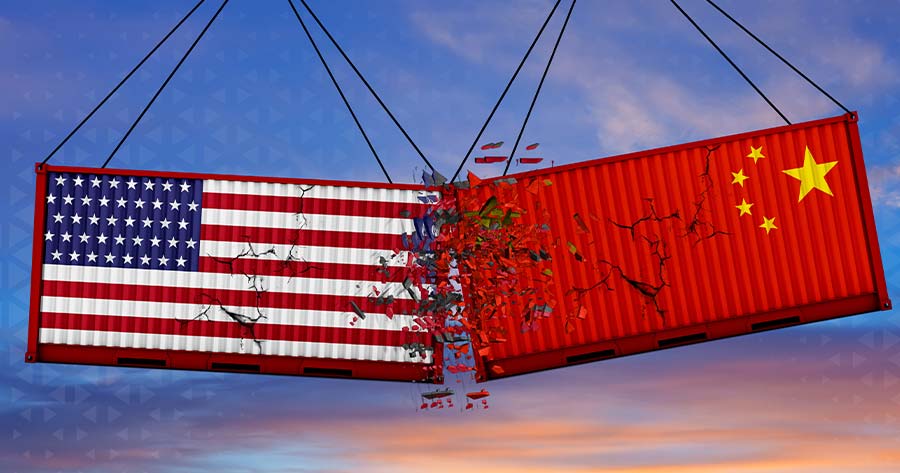
 Textile and apparel companies have been on a high alert ever since China submitted its application to join the 11-member Comprehensive and Progressive Agreement for Trans-Pacific Partnership (CPTPP). They believe China’s potential accession to the CPTPP could create unprecedented challenges for the Western Hemisphere textile and apparel supply chain that also involves the US textile industry.
In a signed article ‘China’s Membership in CPTPP Could Threaten the Survival of the US Textile Industry’ by Sheng Lu, Associate Professor, Department of Fashion & Apparel Studies, University of Delaware in Fash455, writes if China joins the CPTPP, tariff cuts could provide strong financial incentives to Mexico and Canada to use more Chinese textiles. This would increase China’s share in textile exports in these two countries more than that of the US.
Currently, US is the largest textile supplier to Mexico and Canada with share of 48.2 per cent and 32.7 per cent respectively in exports. They also serve as the largest export market for US textile producers, accounting for as much as 46.4 per cent of total US yarn and fabric exports in 2020. However, China has stepped up competition by offering a wider range at more competitive prices. It has strengthened its foothold in these two markets while US textile suppliers lost nearly 20 percentage points market shares from 2015-2019.
Potential threat to US’ export markets
If China becomes a CPTPP member, its textile exports would enjoy duty-free access to Mexico and Canada. Mexico’s reduction of import tariffs from 9.8 per cent to zero for China would make its textiles more price-competitive than the US’. This would cause the US textile industry to lose its most critical export market.
China’s CPTPP membership would also encourage Mexico and Canada to import textiles from there and export finished garments to the US duty-free. This would prove devastating for the US textile industry as it would decline US textile exports to its critical market comprising CAFTA-DR countries. US’ textile exports to CAFTA-DR countries mainly depend on the volume of garment exports by these members to the US. On the other hand, US’ apparel imports from Asia are free from dependence on US-made textiles. These imports are mainly made from Asian textiles. For instance, Vietnam imports 97 per cent of its textiles including yarns and fabrics from Asian countries including China, South Korea, Taiwan and Japan.
Increase in Vietnam’s competitiveness
China’s membership of CPTPP also threatens to make Vietnam a more competitive apparel exporter than the US. Already, Vietnam is the second-largest apparel exporter to the US, next only to China. US’ apparel imports from Vietnam increased by 131 per cent between 2010 and 2020. Its share of apparel exports from Vietnam also increased from 7.6 per cent in 2010 to 19.3 per cent in the first half of 2021. Its inclusion in the CPTPP could encourage China to make more investments in Vietnam and increase its competitiveness in apparel exports. China and Vietnam’s CPTPP memberships could also result in demand drop for US textiles, making the industry’s survival more difficult.
White Milano to be held as a physical trade show
The Milanese contemporary fashion trade show White will take place as a physical edition for the first time since the start of the pandemic. The show will take place September 23-26, 2021 in the Tortona area.
As per a Spin Off report, the show will host 290 exhibitors and will be set in an entirely renovated layout, according to a concept that aims to offer special content, entertainment and education. It will feature 18 events, including talks and meetings that will involve key personalities of the Made in Italy fashion scene.
Among the special projects on this edition there will be Secret Rooms, an initiative devised by White’s Bizzi and Beppe Angiolini, owner Sugar stores and counselor, Camera Buyer Italia.
Seven Italian brands will talk about seven inspiring values they consider important to ignite the restart of the fashion system to regain the new generations’ attention.
As part of this initiative, Bizzi and Angiolini, in collaboration with architecture studio Dimorestudio, have created seven emotional rooms presenting the seven founding values. The participating brands of the project are Kiton, Massimo Alba, Aspesi, Incotex, Tagliatore, Finamore and Borsalino and have also interpreted seven of the most important men’s wardrobe pieces to be worn by women underlining how men’s and women’s wardrobes are increasingly interchangeable.
Birkenstock opens first EBO in Gurugram
German lifestyle footwear brand Birkenstock opened its first exclusive brand outlet in the National Capital Region at Gurugram’s fashion hub – Ambience Mall. As per a Textile Value Chain report, the new K store follows the successful launch of the brand’s second mono-brand stores in Maharashtra and Tamil Nadu.
Located on the ground floor, Birkenstock Ambience Mall store design embodies the rich history of the brand and incorporates core materials including cork and leather to create a light, bright and naturally comfortable space.
The new store houses the much anticipated Fall/ Winter’21 collection from the brand featuring the most iconic styles like Big Buckle, Zermatt, Arizona, Kyoto and many more in a diverse range of matte colors, minimalist designs. A combination of comfort, function and style, the sense of home and warmth is the central theme of the Fall/ Winter’21 collection that is displayed at the store. As an additional highlight for the festive & holiday season ahead, Birkenstock will also present the Boston and Arizona Big Buckle in a festive avatar: for the first time ever when these classics get reinterpreted in an elegant dark red leather and Arizona and Mayari in luxe velvets in showstopping colors.
Bluesign Technologies announces phase-out plan for CMR solvents
Textile chemical management specialist Bluesign® Technologies has announced a management and phase-out concept for critical CMR (carcinogenic, mutagenic or toxic to reproduction) solvents.
Bluesign® expects to see a significant reduction in the use and emissions of CMR solvents when the concept is fully implemented by its system partners by the end of 2024.
The company already works with its system partner companies to restrict the use of volatile organic compounds (VOCs) for purposes such as polyurethane coating and laminating.
In addition to its existing approach to hazardous chemicals and volatile organic compounds (VOCs), Bluesign® is now introducing a solvent management and phase-out concept for CMR solvents in cooperation with stakeholders.
CMR substances are chemical substances of specific concern due to the long-term and serious impact they may have on human health.
These substances can be carcinogenic (having the potential to cause cancer), mutagenic (causing DNA mutations), or toxic for reproduction (affecting the fertility of adults).
The CMR solvent phase-out concept applies to all bluesign®® system partner companies manufacturing articles with such solvents.
Premiere Vision Paris takes the hybrid route
The current edition of Europe’s main textile and suppliers trade shows Première Vision Paris is being held in a hybrid format in France. The edition features six brands from Texbrasil (Internationalization Program for the Brazilian Textile and Fashion Industry) – the result of a partnership between Abit (Brazilian Textile and Apparel Industry Association) and Apex-Brasil (Brazilian Trade and Investment Promotion Agency).
The companies Natural Cotton Color, Savyon and Moltec are participating in the physical and digital versions, while Ecosimple, Oficina Caramelo and Sense Studio will be present only in the virtual edition that is being held from September 20-24, 2021..
The trade show is divided by thematic pavilions, including textiles, accessories, yarn, leather, designers, and smart creations, the latter more focused on technological and sustainable solutions.
The digital version, according to the event itself, will have 1,650 suppliers and more than 40,000 products. In addition, one of the highlights of the tradeshow is the trend analysis, which points out the colors, prints, fabrics, and other novelties to keep an eye on the 22/23 season.
Bangladesh garment and textile machinery imports decline in
Bangladesh Textile Mills Association (BTMA) plans to expand capacity as the work orders flow is increasing and the global economies are opening. The association expects garment and textile machinery imports to rise in the current fiscal, says Mohammad Ali Khokhon, President.
Last fiscal, Bangladesh’s garments and textile machinery imports declined by 15.80 percent.
According to Bangladesh Bank data, in the fiscal year 2020-21, Bangladesh imported garment and textile machinery of $609 million against $723.56 million in the previous year.
Imports of textile machinery recorded a 6.72 percent decline to $177.24 million, which was $190 million, reports Textile Today. Garment machinery imports fell by 19.02 percent to $432 million, which was $533 million in the same period a year ago.
However, the overall imports of capital machinery in the fiscal year 2020-21 plunged by 12.39 percent to $3.74 billion, which was $4.27 billion in the last fiscal year.
Exporters faced order cancellation and slower work order inflows. Production capacity remained unutilized. There was no new investment and expansion. As a result, imports of capital machinery declined.