FW
Abdul Rahim Nasir elected as APTMA’s new Chairman
The All Pakistan Textile Mills Association (APTMA) has elected Abdul Rahim Nasir as its new Chairman for the year 2021-22 while Jamil Qassim and Atta Shafi Tanvir Sheikh were elected as Senior Vice Chairman and Vice Chairman respectively.
Nasir assured that he would keep interacting with the government for continuation of regionally competitive energy tariff of electricity at 9 cents per kWh and gas at $6.5 per MMBTU during the fiscal year 2021-22 and onward. He expressed confidence that with incessant availability of energy and raw materials at regionally competitive rates, industry would put its best to achieve the lofty target of exports for the current year.
He urged the government to accelerate its pace in removing the remaining irritants in doing business for uplifting the economic activity in the country.
Pakistan’s textile exports registered an impressive growth during the outgoing fiscal year of 2020-21 by earning $15.4 billion, which is 23 percent higher than the previous year’s textile exports of $12.5 billion. Nasir pointed out that about 70 percent of textile exports from Pakistan were from value added sector which is a healthy sign for the country.
Innovations to help China’s luxe brands retain sheen despite official crackdown
 New rules by China’s State Administration of Market Regulation for technology firms have halted the bull run of Chinese luxury e-commerce players, who enjoyed uninterrupted growth over the past 18 months. Jing Daily reports, the new rules direct government to fine luxury players for anti-competitive practices. While these are unlikely to have any serious impact on China’s luxury giants, they will definitely compel players to work harder for future growth. To maintain competiveness, Alibaba, Tencent, Meituan, Pinduoduo, and JD.com plan to increase upgrade their platforms in coming year.
Regulations hurt new technology investments Beijing’s tech crackdown may also lead to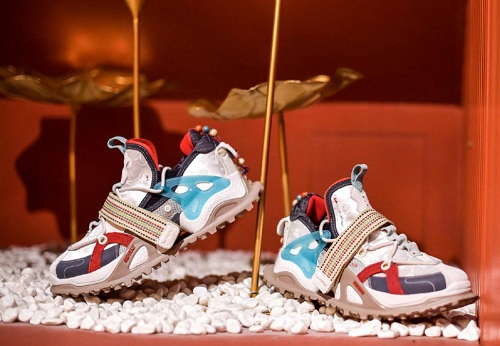 increased regulation of sectors in which luxury brands have made heavy investments such as livestreaming and gaming. This may curtail their creative freedom and force them to fashion their marketing initiatives according to official demands. Online influencers and celebrities play a big role in influencing Chinese consumers to make purchase decisions. However, with the new rules in force, international brands would henceforth have to choose their social media partners more wisely.
The government has also banned telecast of abnormal aesthetics on TV. The ban covers idol competition shows sponsored by noted global brands. Such shows have a strong influence China’s millennials and Gen Z audiences, and government crackdown indicates an attempt to stifle China’s rising fan culture. Recently, 14 of China’s biggest e-commerce platforms — including Weibo, Douyin, Bilibili, Kuaishou, Xiaohongshu, iQiyi, Tencent Video, and Youku —issued a joint declaration to promote a healthy online culture. This declaration threatens to derail brands’ growth plans leading to popular brand ambassadors Kris Wu, Zqhang Zhehan and Lucan Huang losing their annual contracts.
Augmented reality to the rescue
Luxury brands currently active in China have also expressed concerns over the crackdown on displays of luxury lifestyles. Designed to address problems like wealth flaunting and celebrity worship, these rules are likely to put high end brands in a sticky situation.
Toronto-based brand Canada Goose was recently fined RMB 450,000 (approximately $70,000) for allegedly misleading consumers about the materials it uses in popular down jackets. The move indicates the need for luxury brands to henceforth rephrase their marketing jargon as per official norms. Luxury brands can deal with this situation by investing more in virtual or augmented reality and brand films. Although this might make their marketing campaigns monotonous.
Viscose Traceability project traces over 23,000 products by Kering and Bestseller
The recently concluded Viscose Traceability Project was able to trace viscose in over 23,000 products produced by Kering and Bestseller. The project was developed by the sustainable fashion innovation platform Fashion for Good in collaboration with luxury retailer Kering. Bengaluru-based innovator, TextileGenesis designed traceability applications for the project across the entire textile value chain from fiber to finished goods. The company’s complex web of supply chains spans a wide variety of fashion businesses such as spinners, weavers, knitters, dye-houses, and garment makers, and is spread across eight countries.
As per Katrin Ley, Managing Director, Fashion for Good, TextileGenesis’ innovative platform used Fibercoins™ as their blockchain-based digital tokens to provide a “digital twin” for sustainable fibers. The platform allowed the brand’s supply chain players to transfer these digital coins in parallel to the production of textile products as they move through the supply chain. They were also able to create a fibre-to-retail traceability data protocol for the apparel ecosystem based on the GS1 framework – a global traceability standard used in the food and healthcare industry.
Kering was able to trace the origins of the viscose fiber and change the supply in case of violation of environmental laws. This helped the brand create a more sustainable supply chain and innovate alternative textiles, says Christian Tubito, Head-Materials Innovation. The brand supplied four garment styles to be traced for the pilot, with fibers sourced from three leading sustainable viscose producers.
Prana’s new president aims for a positive change in the brand
Monica Mirro, the newly appointed president of the Prana brand from Columbia Sportswear looks to infuse positive change through a consumer focused approach. Mirro has extensive experience in leadership roles building inspirational omni-channel brands, including Under Armour and Spanx. Her experience in go-to-market strategies, distribution channel diversification and success in achieving consumer brand loyalty will help the brand stir its future growth.
Headquartered in the US, Columbia Sportswear is a leading innovator in active outdoor apparel, footwear, accessories, and equipment. The company manufactures and distributes outerwear, sportswear, and footwear, as well as headgear, camping equipment, ski apparel, and outerwear accessories. It was founded in 1938 by Paul Lamfrom, the father of Gert Boyle. The company is headquartered in Cedar Mill, an unincorporated area in Washington County, Oregon, in the Portland metropolitan area near Beaverton. The brand Prana was acquired by the company in May 2014. It is a rapidly growing lifestyle apparel brand.
Welspun to expand home textiles, floorings business capacity in two years
Welspun India plans to expand the capacity its home textiles and flooring businesses with an investment of around Rs 800 crore over the next two years. The country's largest home textiles manufacturer will invest Rs 656.5 crore in its home textiles business expansion during FY'22-23. Its plans include augmenting its towel manufacturing capacity by 20 per cent to meet the growing demand from the overseas customers.
Welspun has also approved an additional investment plan for its Vapi, Valsad (Gujarat) based plant. The company aims to expand the capacity for rugs by 80 per cent with an investment of Rs 656.5 crore over FY22 and FY23. Besides, Welspun Flooring has also approved a capex of 143.6 crore for de-bottlenecking and rebalancing its facility at Telangana, including setting up of a 25 MW renewable energy power plant and to further the group's commitment towards ESG by embedding sustainability and circularity at every stage of its value chain.
Welspun has invested Rs 281 crore in capex in the current financial year and the total investment during FY'22 will be Rs 750 crore including the investment approved by the board on Saturday for the home textiles and flooring businesses. The company is a part of the Welspun Group, which has businesses interests in sectors including - line pipes, home textile products, infrastructure, warehousing, steel, oil & gas, advanced textiles and flooring solutions.
ROICA™ by Asahi Kasei to launch world’s first sustainable uniform for Scott Racing Team
Roica ™ by Asahi Kasei will launch the first sustainable uniform created for the Scott Racing Team at the Filo, the international fair of orthogonal weaving yarns for clothing and furnishings, circular knitwear and technical textiles on September 30, 2021. The uniform has been created in partnership with Rosti and Sitip. Rosti was responsible for the styling and manufacturing of the uniform while Sitip provided technical fabrics made from GRS certified recycled yarns including ROICA™ EF.
In the ‘Eseentials’ zone, Roica™ will showcase the Aurora line by Wolford holding two certificates Cradle to Cradle Certified™ at GOLD Level both for the biological and the technical cycles. All products contain ROICA™ V550 either in blend with the ECONYL® regenerated nylon yarn made by Aquafil or Lenzing Modal®, and infinito® by Lauffenmühle.
In ‘Style#Fit’ zone, Roica™ will showcase G-Star’s Jeans made with the Cradle to Cradle Certified® Gold denim fabric, whose chemistry presents zero risk for people and planet”. The collection features a 2 per cent of premium stretch fiber ROICA™ V550.
For ‘Legwear world’ Roica™ will present the brand-new Green Collection by Sarah Borghi of premium Italian socks & hosiery featuring features Amni Soul Eco®, the world's first biodegradable in anaerobic conditions polyamide 6.6 yarn that degrades in around 5 years after disposing of in landfill, developed by Solvay and produced and distributed by Fulgar and Roica™ V550.
The brand will also be protagonist of “The contemporary consumer: Stretch your imagination with Roica™ by Asahi Kasei smart innovation” speech on September 30, organized to tell its sustainable story, made of production and processes, performance, future goals and projects, product news and case histories explained through the fabrics of its partners.
PLI scheme will make Indian textile industry self-reliant
 Fuelling industrial growth since the pre-British era, Indian textile industry is likely to reach a value of $300 billion by 2035. Currently, textile and apparel exports account for 11 per cent of India’s overall merchandize exports. Export growth is being driven by the growing urbanization and rising income levels. India’s competitive advantage in this sector can also be attributed to the presence of the entire value—from fibre to fashion—within the country. This helps India stabilize its position in the world textile market.
However, the industry faces challenges. Its overall contribution to India’s industrial output is small. Secondly, the industry is fragmented, which makes production costly. Also, the industry is not globally competitive as it lacks certain facilities enjoyed by competitors like Bangladesh and Pakistan. India’s overdependence on cotton apparels also hinders its development as the rest of world has already migrated to MMF garments.
Incentivizing MMF production
To overcome these shortcomings the textile ministry recently launched the Production Linked Incentive (PLI) scheme. The scheme expands the textile ministry’s focus on the PPE production to make India the second-largest producer of PPE kits worldwide. The PLI Scheme incentivizes production of MMF fabric and apparel, and technical textiles in India. It transforms the processing and weaving segment and provides a strong base for apparel manufacturers. Making India one of the most prominent producers of technical textiles, the scheme also aims to unlock the huge application potential in other sectors like agriculture, infrastructure, water, defence, automobiles, and health and hygiene, wrote VK Singh, Additional Secretary, Ministry of Textiles in a signed article ‘Weaving economic progress’, in Financial Experss.
A boost to competitiveness
Another benefit of the PLI scheme is the Rs 19,000 crore investments it seeks to attract besides generating a cumulative turnover of over Rs 3 lakh crore, and additional direct employment opportunities for 7.5 lakh jobs. The scheme also aims to bring the centres of apparel production and labor supply closer by setting up garment factories in growing districts and Tier-III and IV towns.
The scheme also looks to enhance competitiveness in the industry by offering time-bound incentives. It does not aim to support the industry permanently, thus helping it become self-reliant. To reap full benefits of the scheme, stakeholders will need to collaborate with the state and central governments. They would have set up joint training projects in association with leading skill institutions, writes Singh. This would help them facilitate industry growth and boost India’s economic development.
AfCFTA to boost East Africa’s T&A exports
The African Continental Free Trade Area (AfCFTA) is set to boost Eastern Africa’s textile and apparel (T&A) exports by 100 percent, says Denis Karera, Vice-Chairman, East African Business Council (EABC).
Karera made the remarks during a webinar on the AfCFTA-Opportunities for the private sector, organized by the EABC in partnership with the United Nations Economic Commission for Africa (UNECA).
During the seminar, Karera urged the East African Community (EAC) member states to finalize and submit tariff offers under the AfCFTA to enable the EAC bloc to tap into the 1.3 billion continental market with a combined gross domestic product of $3 trillion.
GST Council’s decision will lessen tax burden on MMF sector: Chairman, AEPC
A Sakthivel, Chairman, Apparel Export Promotion Council (AEPC) says, GST Council’s decision to correct inverted duty structure on textiles from January 1, 2022 will lessen the tax burden on manmade fiber (MMF) fabrics and garments.
He said the inverted duty structure has been an issue with the apparel industry and that the council had made recommendations to the government for the elimination of this anomaly that has been resulting in input tax credit accumulation blocking crucial working capital for businesses.
Inputs into the MMF fabric segment (fibre and yarn) attract a GST rate of 18 per cent and 12 per cent whereas the GST rate on the MMF fabric is 5 per cent and that for the finished goods apparel is 5 per cent and 12 per cent, he said.
It creates a tax structure where the rate on inputs is higher than that on the outputs and this increases the effective rate of taxation of MMF fabrics and garments and violates the principle of fibre neutrality, Sakthivel said.
He also said that the GST Council''s decision to extend the validity of GST exemption on transport of goods by vessel and air from India to outside India till September 30, 2022, will partially help soften the impact of the current exorbitant freight costs.
Pakistan’s leather garment exports grow by 8.50% from July-Aug 2021
Pakistan’s leather garments exports grew by 8.50 per cent during the first two month of fiscal year of 2021-22 as compared to the exports of the corresponding period of last year.
As per a Daily Times report, from July-Aug 2021, Pakistan exported leather garments worth of $56,985,000 t as compared to the exports of $52,520,000 during the same period of last year.
Data released by the Pakistan Bureau of Statistics shows, the leather exports increased by 8.21 percent, worth $106,284,000 as compared to exports worth $98,218,000 during same period of last year.
Meanwhile, exports of leather Gloves also increased by 7.35 per cent as the exports during current fiscal year recorded at worth $46,272,000 as compared to the exports during the same period of last year which recorded $43,105,000.
During the period under review, other leather manufacturer exports increased by 16.74 per cent to $3,027,000 as compared to the exports of $2,593,000 during the same period of last year.