FW
Chargeurs*PCC Fashion Technologies to sponsor CFS +2021
Chargeurs*PCC Fashion Technologies has emerged as one of the Global Faashion Agenda’s supporting sponsors for CFS +2021.
Chargeurs*PCC has rolled out a series of innovations since the initial launch of its Sustainable 50 collection, including a line of circular-knit interlining products using an innovative, process patented by partner mill Weemeet that requires no water. At launch, the Chargeurs*PCC sustainable collection offered 50 items, but the range has now expanded to include more than 250 items. In addition, the company can now sustainably manufacture any base material from its catalogue of thousands of products, including nylon, polyester and cotton.
The manufacturer is holistically committed to sustainability and is the only supplier in its market segment to have both signed the UN Global Compact (the world’s largest corporate sustainability initiative, driving businesses towards supporting the 17 Sustainable Development Goals) and performed Sedex Members Ethical Trade Audits (SMETAs) on its facilities as well as those of its suppliers. The audits cover all aspects of responsible business practice across Sedex’s four pillars of labour, health and safety, environment, and business ethics.
Industry needs to take responsibility for the rise in fast fashion culture
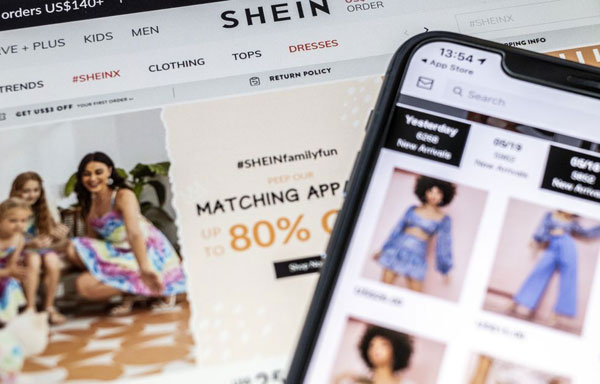
Whether it is for putting a swastika necklace up for sale or for the #BamaRush TikTok controversy, Chinese online fashion company, Shein has perpetually been in the eye of storm. The fast fashion brand has often been accused of issues ranging from environmental to ethical. One frequent accusations against Shein is the brand’s complete lack of transparency. Founded in 2008, the direct-to-consumer fashion brand is often criticized for transporting clothes overseas by planes, adding to its overall environmental footprint.
No evidence to prove legal and ethical compliance
As Sophie Hirsh writes in ‘Is Shein an Ethical Brand- A Look Into the Fast Fashion Empire’ in the Green Matters, though the company’s website emphasizes its focus on social responsibility and supply chain transparency, it does not elaborate on the Code of Conduct for suppliers. This makes it difficult for consumers to determine the brand partners’ involvement in forced labor. Also, the Code of Conduct, mentioned on the website, applies only to the brand’s partners not to Shein itself.
The website also declares Shein’s partners not only comply with local environmental laws but also adopt required measures to reduce the impact of their operations on environment. However, the company does not have a third party certificate to prove these claims. The brand lacks ethics completely, says Venetia La Manna, Fair Fashion Campaigner, Influencer and Co-founder, Remember Who Made Them, a campaign to support garment workers. It has no evidence to prove either the sustainability of its operations or adherence to fair wage practices, she adds. The e-commerce brand has also been accused of plagiarism by many other brands.
Complete ignorance of labor rights
Shein often posts endless videos of customers sharing their purchase hauls from the brand’s website. An advertising campaign, these videos inspire customers to buy clothes from the brand in bulk. Many of these videos are designed to explore the society’s fascination for newness and penchant for cheap prices. However, most of them ignore workers’ rights and environment in general, says La Manna.
The fashion industry, needs to completely overhaul its operation system, says La Manna. This involves narrowing the huge wealth gap between factory owners and garment workers, curbing excess production and dealing with inventory issues. Instead of blaming consumers, the industry needs to take complete responsibility for its actions for the rise in fast fashion culture.
Shein plans pop-up store in Paris
Chinese fashion e-tailer. Shein, has decided to open a temporary physical store in Paris during the forthcoming fashion week.
The Shein Studio store will be open between September 29 and October 2 at 13 rue Jean Beaussire. It will feature the latest fall/winter novelties in ready-to-wear, accessories, lingerie and beauty products, as well as the Curve collection (with sizes ranging from XL to 4XL), Shein's premium line Motf, and collaborations with influencer Stephanie Durant and French R&B singer Wejdene.
Before Paris, Shein will make an appearance in New York on September 26, where it will stage the ‘Rock the Runway’ show, featuring live music, dancing and fashion collections. A year ago, Shein staged a first digital show that was broadcast worldwide, and in 2019 it opened pop-up stores in Paris and Marseilles. The e-tailer is especially keen to highlight the design content of its range, and this year it has launched Shein X, a program to support emerging designers. According to Forbes, Shein’s annual sales are worth $10 billion, and the e-tailer, first set up in 2008, is gradually eroding the market share of traditional fashion retailers. For example, between March and May 2021,Shein overtook Kiabi to become the leading player on the women’s ready-to-wear market in France, as per data by Kantar.
IPF report urges UK fashion leaders to create a circular fashion ecosystem
The Circular Fashion Eco-system report led by the British Fashion Council’s Institute of Positive Fashion (IPF) with contribution from the UK Fashion & Textile Association (UKFT) calls on all those engaged in UK fashion to come together and create a circular fashion ecosystem for the UK.
The report seeks to address the industry’s impact on the planet through linear production models and defines the roles that all stakeholders, from academia to consumers, must play.
The report provides the fashion industry with three target outcomes which combined will allow for a viable, resilient and prosperous ecosystem – reduced volume of new physical clothing; maximized utilization and revaluation through product circularity; and optimized sorting methods and materials recovery. These outcomes are underpinned by 10 priority actions and 30 recommendations for an ecosystem of stakeholders who need to act collectively to succeed.
The priority actions involve efforts across many different parts of the fashion value chain. Each action area is equally important and has the potential to amplify the effects of the others – circular design; consumer empowerment; circular and sharing business models; demand for circular and sustainable fibres; post-use ecosystem; sortation and recycling; enhanced identification and tracking; ecosystem modelling; policy and regulation and infrastructure investment.
GII Apparel Group to buy European luxury brand Sonia Rykiel
G-III Apparel Group has signed an agreement to purchase European luxury fashion brand Sonia Rykiel.
G-III plans to accelerate the relaunch of the brand primarily in Europe, for the fall of 2022, with collections across multiple categories. The transaction is expected to close by the end of October 2021.
Morris Goldfarb, Chairman and Chief Executive Officer, G-III, says, there is significant opportunity to unlock the untapped potential of this brand. GII will leverage the existing executive management team and infrastructure based in Europe, as well as its supply chain expertise to scale and grow the Sonia Rykiel business across apparel, accessories and numerous other lifestyle categories.
Eric and Michael Dayan, Owners, Sonia Rykiel, adds G-III’s dominance in a diversified range of lifestyle categories, along with its well-established and broad range of retail partners, assures a bright future for the growth of the Sonia Rykiel brand.
French Connectiion receives takeover offer from second largest shareholder
Struggling UK fashion retailer French Connection has received a takeover offer from a group of bidders including its second-largest shareholder, sending its London-listed shares up by 15 per cent
The offer of 30 pence share from a group including Apinder Singh Ghura, Amarjit Singh Grewal and KJR Brothers values the once dominant player in British fashion at about 29 million pounds ($39.6 million).
Ghura is the company's second-largest shareholder with a 24.95 per cent stake, according to Refinitiv data, and with a 41.5 per cent stake, founder and CEO Stephen Marks remains its largest shareholder.
Talks with the consortium are ongoing. French Connection began seeking new suitors earlier this year after investment firms Spotlight Brands and Gordon Brothers pulled out of early talks to buy the company.
Once known for its provocative ‘FCUK’ brand of clothing, French Connection, has not been profitable in a decade and the COVID-19 pandemic has only hit sales harder.
Swiss fiber testing institute Testex completes 175 years
Focusing on a holistic approach, Testex offers complete sustainability solutions for the pandemic-hit industry. Founded in 1846, Testex is one of the oldest fiber-testing institutes in Switzerland. The organization recently completed 175 years of operations. Initially involved in determining the commercial weight of raw silk, Testex extended its testing to other fibers in the second half of the 20th century.
Testex joined the Oeko-Tex Association in 1993. The association and its founding institutes have spent almost three decades envisioning a sustainable textile industry and are pioneers in offering sustainability solutions. They offer a variety of modern testing equipment for both physical textile testing and analytical tests. Their most modern and up-to-date testing equipment and software allows laboratory staff to process their results competently at home and to control devices remotely.
PLI to make technical textiles India’s next sunshine industry: Texel Industries
The government’s new production linked incentive (PLI) scheme will make technical textiles the next sunshine industry for India Inc, believes Shailesh Mehta, Managing Director, Texel Industries in a report by ANI News. The industry will reach $5 billion in the next 3-5 years. It is working in partnership with different ministries, research institutions and focuses on quality, cost, economies of scale to excel in exports by creating economies of scale, adds Mehta.
The government on September 8 announced an incentive scheme for attracting private investments into the labor-intensive textiles sector including 10 technical textile products. Under the scheme, the government will offer incentives of around Rs 7,000 crore to man-made fibres and around Rs 4,000 crore for technical textiles. The announcement is expected to cover around 10 product categories in the technical textile category. An incentive of 3 to 11 per cent of the annual incremental revenues' for five years will be provided to existing as well as proposed investments in the sector.
Established in 1989, Texel Industries is the pioneer of tarpaulins and geomembranes in India. The company manufactures a wide range of geosynthetic textile products which includes tarpaulins and geomembranes. The manufacturing facility is located at Santej, Gandhinagar, with an installed capacity of 9,000 MT per annum.
US’ ban on Xianjiang cotton evokes mixed response from Japan’s apparel brands
The US ban on cotton originating from the Xinjiang region in China has evoked mixed responses from Japanese apparel makers. In April, a French nongovernmental organization supporting Uyghurs filed a complaint against Uniqlo’s unit in France, Inditex, the Spanish owner of the Zara apparel retail chain, and two other global apparel makers, claiming that they were benefiting from forced labor in Xinjiang.
In May, US blocked import of shirts for Uniqlo casual wear chain, alleging that they were made from Xinjiang cotton. The US Customs and Border Protection took the action against Uniqlo in January on suspicion of violating a US ban on the import of goods from the Chinese region, where forced labor is reportedly practiced. Uniqlo denied the allegations, saying the shirts were made from cotton produced outside China and sewn at its plant in the country. The clothing chain also said it had not confirmed any use of forced labor in the production process for the cotton it uses.
Ryohin Keikaku, the retailer and wholesaler of Muji- products, initially maintained a hands-off stance on the question of Xinjiang cotton However, in mid-April, the company admitted to the use of the cotton. Mizuno Corp, a comprehensive producer of sporting goods, announced a decision in May to stop using Xinjiang cotton, while underwear maker Gunze plans to adopt an alternative cotton for certain types of socks.
The new US rules require importers to prove that cotton they use was not made in Xinjiang. They are required to provide evidence that there has been no trade whatsoever with the Xinjiang Production and Construction Corps, a Communist Party of China-affiliated economic and paramilitary organization in the region, at any stage of the marketing channel after production.
EU extends GSP Plus status for Pakistan till 2022
The European Union (EU) has extended General System of Preferences (GSP) plus status for Pakistan, with six new Conventions. As per Business Recorder, Pakistan will continue to enjoy GSP plus status till 2022, after which the EU will announce new criterion to qualify for the scheme. The EU is Pakistan’s second most important trading partner, accounting for 14.3 per cent of Pakistan’s total trade in 2020 and absorbing 28 per cent of Pakistan’s total exports.
In 2020, Pakistan was EU’s 42nd largest trading partner in goods accounting for 0.3 per cent of EU trade. Pakistani exports to the EU are dominated by textiles and clothing, accounting for 75.2 per cent of total exports to the EU in 2020. Pakistan’s imports from the EU mainly comprise of machinery and transport equipment (33.5 per cent in 2020) as well as chemicals (22.2 per cent in 2020).
The EU and Pakistan have set up a Sub-Group on Trade to promote the development of two-way trade. Set up under the auspices of the EU-Pakistan Joint Commission, the new Sub-Group on Trade is the forum for discussions on trade policy developments more broadly and also aims to tackle individual market access issues which hamper trade between the two parties.