FW
Luxury brands urge UK government to rethink on VAT ban
The heads of 11 major firms, including Italy’s Gucci and Germany’s Hugo Boss, said the proposed ban on VAT-free shopping may make the UK the least competitive tax-free regime in Europe.
In an open letter to the UK government’s chancellor Rishi Sunak, these leaders warned the ban from January would cost the country billions of pounds in lost revenue as it would trigger a major slump in tourism.
The letter said the decision will cause the UK to lose billions of revenue as international shoppers will opt for other destinations to make their luxury purchases.The introduction of a 20 per cent tax will result in these visitors opting to spend their money elsewhere in Europe, rather than in the UK.
The government’s proposal, announced in September, comes at the worst possible time for luxury firms, which are feeling the international travel ban alongside widespread store lockdowns the hardest.
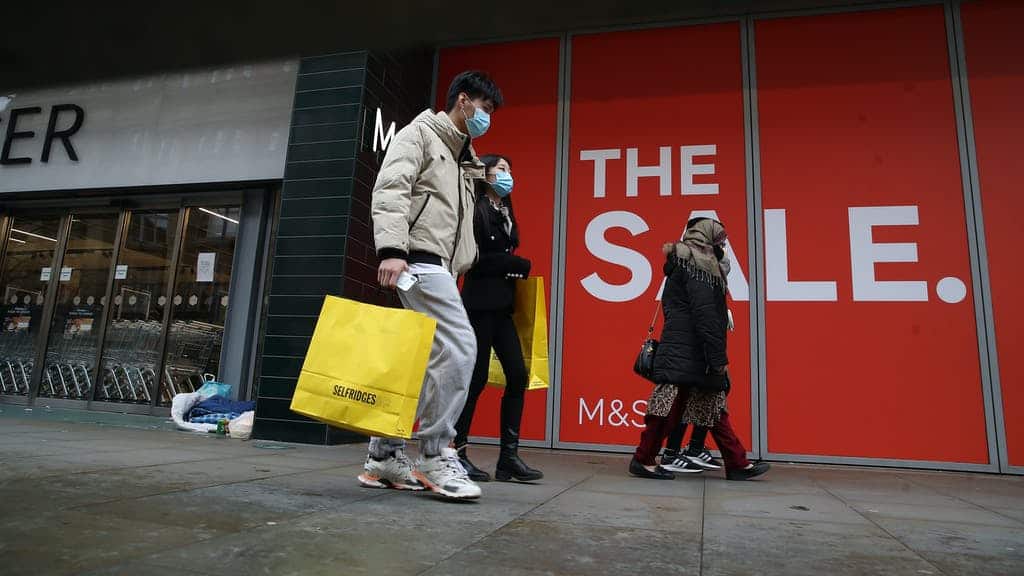
In London, Harrods and Selfridges can cater for up to around 80,000 visitors a day in peak season, selling a much bigger percentage of their overall offer to visitors from abroad.
Currently, the VAT Retail Export Scheme allows international shoppers visiting Britain to reclaim the 20 per cent VAT they pay on goods purchased but not consumed in the country. The Treasury claims the rule change would bring Britain in line with other nations after Brexit, and noted the current system is costly and susceptible to fraud.
But the withdrawal of the incentive could cause tourists to reconsider where they choose to shop on their travels. That would be a major blow to UK retail, particularly among luxury stores who rely on high-spending tourists for big slice of their revenues, as well hurting major tourist hotspots across the country as well as hitting airport retail hard.
Uniqlo posts Rs 64 crore net loss in FY19-20
As per an Economic Times report, Japanese casual clothing chain Uniqlo has posted net loss of Rs 64 crore with sales of Rs 129 crore during FY19-20.
The financial parameters of Uniqlo, that opened its first store in October last year, are better than several other apparel brands considering that it had four stores with many operational for just few weeks until the fiscal year end. During the financial year under review, the company allotted 30.63 lakh equity shares aggregating Rs 170 crore to its holding company, Fast Retailing, Japan on right basis, according to documents sourced from Altinfo, a data insights firm.
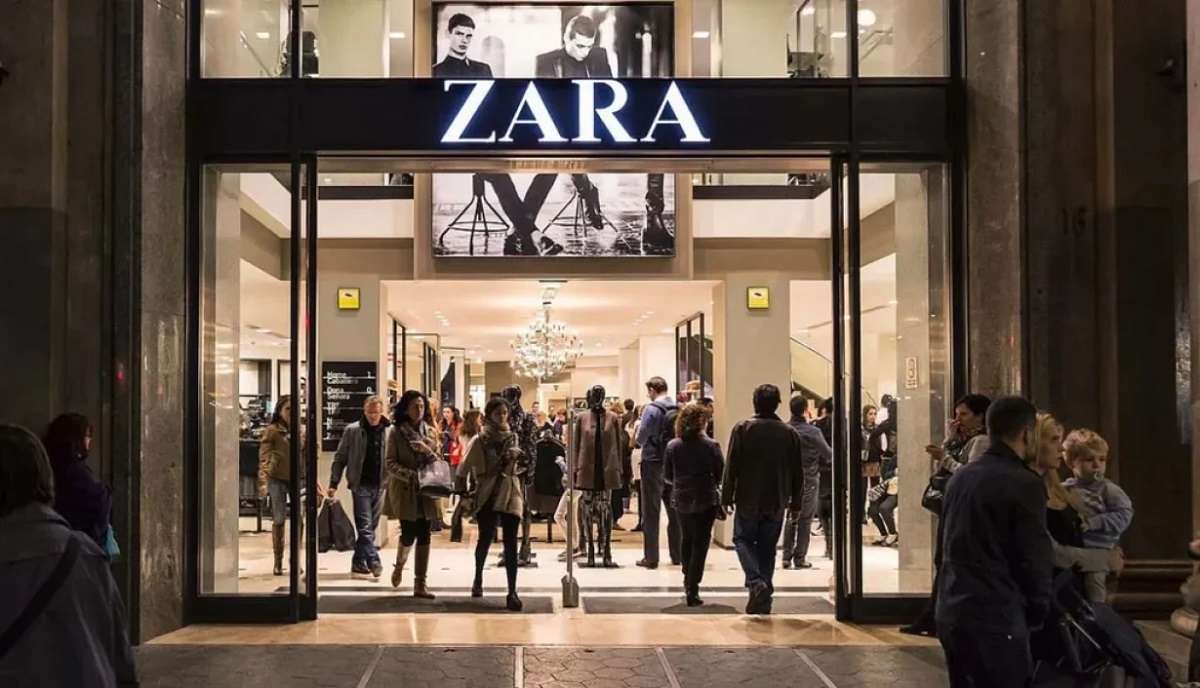
During their first year, H&M's Indian unit posted Rs 194 crore in sales in 2015, while Zara had clocked revenues of Rs149 crore in 2010. While both companies had opened their first store in October that year, reflecting six-month performance, the European rivals became profitable in their launch year.
Experts feel average price-tag by rivals is about 25–30% lower than Uniqlo, and the retailer needs to rationalize pricing strategy and tweak merchandise to suit Indian preferences.
Kornit Digital reports revenues of $57.4 million in Q3
Kornit Digital reported revenues of $57.4 million in its third quartercompared to $47.3 million, net of $2.4 million attributed to the non-cash impact of warrants in the prior year period.
The company posted a net profit of 21.4 percent year-over-year in the quarter. Its GAAP net income for the third quarter of 2020 was $3.9 million, or $0.09 per diluted share, compared to net income of $4.7 million, or $0.11 per diluted share, for the third quarter of 2019.
Non-GAAP net income for the third quarter of 2020 was $7.7 million, or $0.18 per diluted share, including $0.05 per diluted share attributed to the non-cash impact of warrants, compared to non-GAAP net income of $6.6 million, or $0.16 per diluted share, net of $0.05 per diluted share attributed to the non-cash impact of warrants, for the third quarter of 2019.
Large retailers expect apparel sales to normalize by April
At a webinar on, ‘Are consumers back with a vengeance?’, being held as part of Conversations, a series organized by The Hindu Group’s ‘Tamil Nadu Smiling’ campaign, large retailers hoped the industry to bounce back to normal by April.
Apparel growth is looking better than a lot of other industries. As a sign of recovery, the apparel industry is a great bellwether, said SuhailSattar, chairman, Chennai chapter, Retailers Association of India, and the Co-founder and Director, Hasbro Clothing.
CharathNarasimhan, Managing Director, Indian Terrain, opined, states like Tamil Nadu will bounce back faster as there are a series of potential triggers right through the next five months. By April, apparel exportswill touch pre-COVID levels as e-commerce has brought in a lot of new customers, he added.
Before the pandemic, almost 10 per cent of the sales was through e-commerce. In the last six months, it has increased to 35-40 per cent. As stores open up, it will settle down at around 20 per cent by the end of the year, and in the next year or two, it will be a quarter of a company’s business, he said.
Jeyasree Ravi, Founder,Palam Silks, added, since sales have been around 50-60 per cent of last year, exporters would do well from April onwards.
CLO Virtual Fashion partners with Jeanologiato speed up denim production for brands
CLO Virtual Fashion, leader in 3D garment simulation technology, has teamed up with Jeanologia, Spain-based company who specializes in finishing technology solutions for denim, to create a direct connection between CLO3D and eDesigner through the possibility of importing and exporting .jean files–Jeanologia’s proprietary file extension–directly into CLO.
With this new integration, brands and designers are able to apply a .jean file created in eDesigner directly onto CLO’s garments to visualize and render denim finishes, and then send it straight to a laser machine to begin production using eMark, Jeanologia’s software that is installed in the laser machine.
eDesigner is a digital tool customized exclusively for jean creation. It’s an end-to-end platform where users can design and visualize their washes, while CLO will be the application where they can visualize these designs in 3D both for design decisions and to generate digital products. With this integration, designers and brands are able to seamlessly toggle between the two applications. This will enable extraordinary collaboration between brands and their supply chain partners that share the tools. Creativity will emerge from every corner of the value chain and can be shared and collaborated upon to achieve great results.
This exciting new integration will be available in the latest version of CLO’s software which is set to be released this month. In order to test it, both eDesigner and CLO’s latest versions need to be installed.
A focused strategy to help China drive global growth post pandemic
 COVID-19 and subsequent lockdowns affected everyone from frontline staff to top executives. Though China is slowly recovering from the crisis, it is grappling with a new environment where digital tools have replaced traditional business models. To investigate this shift, McKinsey & Company collaborated with Oxford Economics to analyze over 100 million points-of-sale data on purchase behavior before, during, and after the COVID-19 crisis.
The findings of this data were collaborated in a special edition of the China Consumer Report under the title, ‘Understanding Chinese Consumers: Growth Engine of the World.’ The report highlights trends shaping the ‘next normal’ in post-pandemic China. The section, ‘Revving the engine,’ collates latest consumer insights to denote the acceleration of digitization and increasing prudence and health consciousness of Chinese consumers.
Consumer confidence boosts retail recovery
The report reveals how Chinese consumers continue to remain among the most optimistic in the world. Their confidence not only helped China recover retail sales in August but also displayed its potential to drive global growth. COVID-19 has reshaped all industries-from travel to luxury. The chapter on ‘Winning the future of grocery retail in China’ advises key players to make significant strategic changes in their retail behavior to keep pace with digital innovations in the sector. The report also looks at the lessons learnt from reopening China’s tourism industry and changing outlook for luxury goods companies. Exploring new growth areas
The section ‘Tuning up for maximum performance’ focuses on the growing digitization across Chinese industries. It explains how right business-to-business strategies can benefit from digitization, and how e-commerce platforms can grow their business. It also explains the importance of omnichannel capabilities in these uncertain times.
In its last section ‘Hitting top speed,’ the report identifies new pockets of growth. It reveals the secret to engage with China’s digital savvy consumers who are driving the next wave of consumption growth. It also details ways of achieving growth for consumer packaged goods (CPG) companies through revenue growth management. The report concludes by emphasizing the Chinese economy can drive global growth post pandemic by adopting a focused growth strategy.
SIMA welcomes PLI scheme
The Coimbatore textile industry has welcomed the Production Linked Incentive (PLI) scheme announced by the Central Government. According to the Southern India Mills Association (SIMA), the scheme provides incentives for manufacture and export of specific textile products made of man-made fibre (MMF).
The scheme will benefit the industry in attracting huge investments. About 40 HS lines in MMF garments and 10 HS lines in technical textiles account for nearly $ 180 billion global trade and, therefore, the scheme will encourage the industry to make investment in manufacture of these high value added products. Apparel Export Promotion Council chairman A. Sakthivel said the scheme would give a boost to exports, investments, domestic capacity and employment. This was a much-needed step as it would fuel the V-shaped recovery that had begun in many sectors, including the apparel sector.
The Indian Texpreneuers Federation convenor Prabhu Dhamodharan said the scheme would enable the apparel sector scale up capacities and also specialise in MMF products. The market for these products was about ₹3 lakh crore in the U.S. alone.
CEPA to introduce more flexible rules for textile products
The new UK-Japan comprehensive economic partnership agreement (CEPA) will introduce more flexible rules for textile products, allowing clothing producers to undergo a single process in the United Kingdom, the UK Fashion and Textile Association (UKFT) said recently. The UK department for international trade will publish joint guidance with Japan on the ‘importer’s knowledge’ article.
The guidance will offer greater clarity and predictability for companies on this provision. This change may allow high-value producers of goods including knitwear, suits, gloves and coats to increase their exports to Japan.
The UK and Japan have agreed to measures that make the UK-Japan CEPA easy and predictable to use. For example, the UK-Japan CEPA allows self-certification of origin, which means that UK and Japanese exporters do not need a certificate from their customs authority, UKFT said in a press release.
Under tariff preference, a clothing producer could sew together imported fabrics into a coat, and then export the final product to Japan under tariff preference, as long as 50 per cent of the inputs are sourced domestically. Under the EPA, clothing producers are required to undertake two or three processes in the United Kingdom, even if they sourced most of their inputs domestically.
This change may allow high-value producers of goods, including knitwear, suits, gloves and coats, to increase their exports to Japan.
Milan Fashion Week to be held digitally next year
Milan Fashion Week will be held digitally early next year. The men's shows will run from January 15 to 19, women's Fashion Week will be held from February 23 to March 1, the Italian Chamber of Fashion announced. Italy's second-largest manufacturing industry, Fashion has been hard hit by the fallout from the global pandemic. Fashion houses in the country are rethinking their marketing strategies and boosting their digital offering. Held in September, Milan’s last fashion week, which showcased 156 collected, resulted in 45 million views.
According to a survey by Confindustria Moda, the Italian fashion industry lost €29 billion ($34 billion) in global revenue in the first nine months of the year. In the third quarter, the companies surveyed recorded a 27 per cent drop in sales, following decreases of 39 and 36 per cent in the second and first quarters, respectively.
H&M Home to launch new interiors collection
H&M Home plans to launch a new collection in collaboration with US fashion designer Diane von Fürstenberg, next year. The collection encourages consumers to express their personal styles in their homes. Diane von Fürstenberg has always been known for her strong use of print and color and the new collection brings together some of her vast archive of fashion prints and signature shades. While the wider H&M Home collection has a number of standalone stores, the offer also features in regular H&M stores and therefore helps drive visitor traffic to fashion departments at a time when fashion footfall is extremely challenged.
H&M Home is a design-driven interior brand, offering fashion-forward decor and accessories for every room and style. The assortment ranges from high-quality bed linen and timeless dinnerware to stylish textiles, furniture and lamps; with contemporary style and attention to detail at its core. H&M Home was launched online as a home textile concept in 2009. It enables interior lovers across the world to create their dream homes.