FW
Mango to reduce greenhouse gas emissions by 30 per cent
To reduce greenhouse gas emissions by 30 per cent in next 10 years, Spanish clothing retail giant Mango has joined the United Nations Fashion Industry Charter for Climate Actions. The charter lays down 16 principles for the fashion industry to come and work together to bring down its effect on the environment. These principles aim to minimize greenhouse gas emissions in factories, in the supply chains as well as in logistics. Mango too will analyze its carbon footprint so as to set science-based targets all through 2021.
Known for women’s wear, menswear and kid’s wear, Mango has been committed in its efforts to sustainability for several years now. Earlier this year, the retailer had launched its sustainable capsule collection ‘Second Chances’, which was a hit. It now plans to increase the use of recycled polyester to 50 per cent by 2025.
Gerber Technology unveils digital cutting solution
Gerber Technology has unveiled its latest digital cutting solution known as the Gerber Atria Digital Cutter. As per a Sourcing Journal report, the solution offers an in-depth look at the machine and its main value drivers. The cutter can produce 50 per cent more. Its accuracy allows manufacturers to nest products closer and cut with zero buffer, resulting in less material waste. Also, Atria cutter’s consumables—its knives, stones and bristles, for example—last longer, saving on both the cost of the replacements and downtime. Using an IoT-based intelligent sharpening system, the cutter can reduce the cost of consumables by up to $2,000 per single shift. It enhances the knife life three to four times and the stone life as much as three times.
The Gerber Connect IoT system monitors more than 160 data parameters, allowing Gerber to resolve nearly 85 percent of issues remotely, also saving on time.
Though presented as an end-to-end solution for mass production, the Atria cutter also can take a personalized e-commerce order and produce a finished product in less than an hour.
Mango to reduce greenhouse gas emissions by 30 %
To reduce greenhouse gas emissions by 30 per cent in next 10 years, Spanish clothing retail giant Mango has joined the United Nations Fashion Industry Charter for Climate Actions. The charter lays down 16 principles for the fashion industry to come and work together to bring down its effect on the environment.
These 16 principles aim to minimize greenhouse gas emissions in factories, in the supply chains as well as in logistics. Mango too will analyze its carbon footprint so as to set science-based targets all through 2021.
Known for its womenswear, menswear and kidswear, Mango has been committed in its efforts to sustainability for several years now. Earlier this year, the retailer had launched its sustainable capsule collection ‘Second Chances’, which was a hit. It now plans to increase the use of recycled polyester to 50 per cent by 2025.
Furla files for Chapter 11 bankruptcy proceedings
Furla USA has filed a voluntary petition for relief under Chapter 11 in New York. According to Women’s Wear Daily, the company made this decision in the wake of the pandemic and lockdown, which forced it to temporarily shut retail operations in March. It now plans to return to the American market with a leaner and improved organization.
In filings in New York bankruptcy court, Furla USA detailed the conditions that led to the filings, and outlined its plans in bankruptcy court. The brand held factors like declining foot-traffic, particularly in locations in Indianapolis and Boston responsible for its downfall. It plans to close four of those locations during the bankruptcy.
Besides closing 14 locations in March, the retailer also furloughed 90 employees during the time. It currently has about 34 full-time employees and 17 part-time employees. It plans to renovate its flagship store in Fifth Avenue besides collaborating with storied department stores such as Saks Fifth Avenue and Bloomingdale’s.
Ethical business practices, local craftsmanship boost Tunisian fashion trade
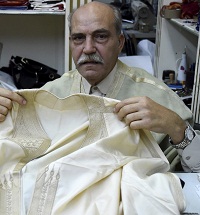 While the rest of the world is embracing fast fashion trends, Tunisian designers like Mechri are opting for environmentally conscious materials, reports Associated Press. They are ‘upcycling’ old or unwanted materials and incorporating high-quality fabrics into them. For instance, Mechri refurbishes old fabrics with local materials from Tataouine embroiderers. The designer says, fashion is an intelligent way to pay homage to local materials.
Hassen Ben Ayech, a 26-year-old former computer scientist, also values the importance of paying homage to one’s ancestry. Founder of the fledgling high-end brand Bardo, the designer aims to revive Tunisia’s heritage and traditional crafts to end the slow death of its culture in the face of globalization. The brand’s first collection is inspired by the famous Bardo palace and the rulers in the Tunisian monarchy that was abolished in 1957.
Weaving stories through organic materials
To expand the scale of sustainable fashion in Tunisia, Riad Trabelsi relaunched his French-Tunisian brand Basscoutur in 2018. The brand’s designs reflect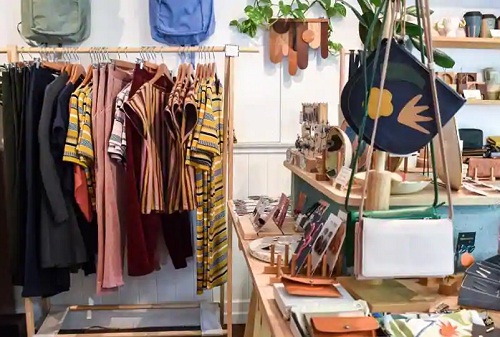 the complexity of modern Tunisian diaspora and see the sustainability concept become normative in the country. The brand has a growing client base in Japan and South Korea and plans to launch in Italy soon.
According to Sofia Guellaty, Founder, Mille World, an online platform spotlighting Arab youth culture, arts and fashion, Tunisian brands are using the concept of storytelling to make their garments stand out from the rest of the crowd. They are focusing on natural shapes and organic materials that are currently in demand in the international and local markets.
Flourishing textile trade to boost prospects
Though most Tunisian brands are not so eco-conscious, younger consumers are embracing sustainability to preserve their cultural identities. Tunisia has a flourishing textile industry which boosts businesses affected by the current pandemic. Balancing ethical industrial practices with community-driven craftmanship will reassure Tunisia of a better future.
Tough times for apparel exporters as second wave triggers another lockdown
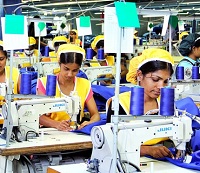 The impact of COVID-19 on Bangladesh was so severe that export earnings touched a record low of $0.52 billion in April, says an Apparel Resources report. Of this, apparel exports contributed to $0.37 billion. The complete breakdown of supply chains and order cancellations by brands and retailers complicated things, forcing BGMEA to blacklist brands that failed to pay for their orders.
After many discussions and deliberations, these retailers have finally agreed to accept their cancelled orders. The gradual reopening of outlets from June has rekindled recovery hopes amongst brands. However, for full recovery brands would have to wait till January of February next year, says Mahmud Hasan Khan Babu, Former Vice President, BGMEA. And while manufacturers wait for a recovery, new issues are plaguing. Europe is experiencing resurgence in number of new coranovirus cases.
Europe’s latest lockdown to last long
As per the European Centre for Disease Prevention and Control, more than half of European countries have reported over 10 per cent surge infections in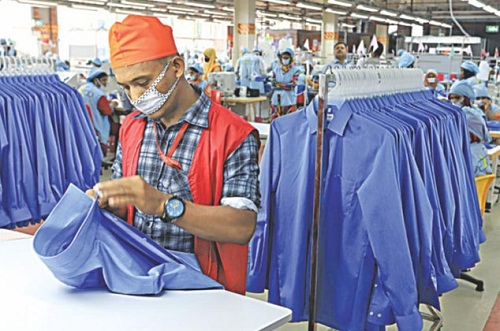 the past two weeks, stated Hans Kluge, Regional Director, World Health Organization Even countries like Czech Republic, that had remain unaffected by the first wave, are experiencing a rise in cases.
To control these, countries are introducing stricter regulations that are likely to remain in place for the entire winter. For example, the UK has announced new restrictions that could last six months. Spain has imposed partial lockdown in Madrid that allows only a maximum of six people allowed to meet in any setting. People are allowed to travel outside their home districts only for essential journeys.
Many countries are also opting for more localized approaches as nationwide lockdowns have crippling impacts on economies. They are not in favor of sweeping restrictions or protracted lockdowns like before as they have a significant impact on their exports, says Fazlul Hoque, Ex-President, BKMEA and Managing Director, Plummy Fashions
Though restrictions in the US were not as severe as in Europe, the election Joe Biden as new President might have a significant impact on apparel exports, says Wasim Zakariah, Managing Director, Posh Garments. Donald Trump’s election in 2016 had triggered the so-called ‘Trump trade’ policy uncertainty, which was not suitable for the development of trade and commerce.
Currently, many factors are affecting global apparel exports. The industry needs to collaborate more to address these issues.
Innovations rule denim world as brands launch fabrics and technologies
 With consumers rediscovering their love for denim during the lockdown, brands are focusing on technical innovations and upcoming trends in their upcoming Spring/Summer 2022 collection, says a Sportswear International report.
Innovations in fabrics and technologies
Denim manufacturer Isko has launched 360 degree stretch denim Isko Blue Skin. The denim is manufactured using advanced patented technology Isko Bluejym that delivers dynamic stretch and athletic performance, and patented woven technology Isko Future Face which is perfect for pieces that are faithful to a true denim image.
Similarly, Egyptian manufacturer Sharabati Denim has launched the Diversity group, a line of fabrics characterized by different weaves, and a selection of printed fabrics. Increasing its range of unisex denims, Calik Denim has developed new technologies such as Selfsized and Smart Stretch technology. These technologies along with the ultra-high elasticity and its cotton fabric enable the company to fit one single size jean multiple wearers perfectly. This significantly reduces the risk of buying wrong size jean.
Artistic Milliners has launched a new dyeing technology known as Purecolor which uses 100 per cent natural dyestuffs without adding any synthetic chemicals. The dyes are derived from Earth’s soils and their colors have been GOTS certified and meet the ZDHC MRSL Level 1 Certification Requirements. These dyes are lightweight and can withstand five home launderings.
Renewed focus on hemp
For their S/S ’22 collections, denim brands have increased their use of hemp fabrics which not only grows faster than cotton but also requires little water, no pesticides, is very resistant and lasts long. The fiber is being used in combination with other fibers to further enhance its particular characteristics. Some of the most prominent manufacturers of hemp denims are: Foison Denim, Iskur, Naveena, Orta, Sharabati and House of Gold.
Orta has launched a new collection called Here4good collection that focuses more on eco-engineered and climate friendly habits. Made with engineered hemp, its Gen H range offers stretch, durability and comfort besides incorporating CBD, Cannabidiol, a beneficial substance used in the beauty and wellness industry. Another denim manufacturer Naveena uses natural fibers including hemp, polyester and elastane. The company focuses on sustainable production processes that lead to the creation of a 100 per cent sustainable denim. Similarly, Cordura is developing a range of hemp blends which it plans to launch by early 2021. These blends will display hemp’s high-tenacity, strength, durability, versatility and sustainability characteristics to Cordura.
Defining denim future with new apps
Denim suppliers are also developing new apps to communicate directly with their consumers. Calik Denim has launched an updated version of its mobile app that has two new sections-Calik Denim Mobile App Blog and New Technologies & Innovations. Through these sections, app features some of the most important issues for the denim and fashion world every week besides publishing the contribution of some of the prominent editors and influencers.
With its new app, Cadida, the Italian label and packaging manufacturer has improved its services at Webshop B2B . The new Cadica App Collection enables customers to browse the company’s latest collections, examine all its labeling and packaging proposals, order samples, chat with its representatives and watch webinar explanations on materials and technics for each collection. It also offers an alternative for the insiders’ work.
Cadida, Orta has developed a special Orta Blu glossary application that enables specialized denim manufacturer to share their knowledge on denim manufacturing and sustainability with the industry. This app allows designers and consumers to evaluate the validity of their decisions in defining the future of the environment.
ITMF elects Ruizhe Sun new President
 At International Textile Manufacturers Federation’s (ITMF) Hybrid ITMF Annual Conference 2020 held on October 22, 2020, the Committee of Management of the Federation elected new board members for 2020-22. Ruizhe Sun, President, China National Textile and Apparel Council (CNTAC), was elected the new president of the federation. An engineering graduate with an EMBA degree, Sun started his career in 1985. Currently, he is a professor-level senior engineer and the Vice Chairman, International Textile Manufacturers Federation (ITMF), Chairman, Responsible Supply Chain Association (RSCA), CNTAC, and Director, China Textile & Garment Brand Strategy Promotion Committee.
Other appointments
K V Srinivasan from India and Juan Parès from Spain were elected new vice presidents. Ernesto Maurer (Switzerland) was elected as the new treasurer. The Netherlands-based Loek de Vries, Indonesia-based Michelle Tjokrosaputro and Egypt-based Mohammad Kassem were re-elected board members.
The Committee of Management elected Mustafa Denizer (Turkey), Uday Gill (Thailand/Indonesia), Salman Ispahani (Bangladesh), Suchita Jain Oswal (India), Taejin Kang (Korea Rep.) and Yingxin Xu (China) as the new board members. Rafael Cervone (Brazil), John Cheh (Hong Kong, China), Andrew Macdonald (Brazil) and Muharrem Kayhan (Turkey) were also co-elected as board members. Korean representative Kihak Sung (Korea Rep.) was elected honorary life member of the federation in recognition of his outstanding contribution as Vice President (2016-2018) and President of ITMF (2018-2020).
From cotton to multi-fiber industry
One of the oldest non-governmental organizations, International Textile Manufacturers Federation (ITMF) founded in 1904, it was initially named International Federation of Master Cotton Spinners and Manufacturers Association,’ and often referred to as the ‘International Cotton Federation.
Headquartered in Manchester, the federation represented and promoted the interests of global cotton spinning and manufacturing industries. The advent of man-made fibers broadened the raw material basis of the cotton industry. At the same time, vertical integration in textile enterprises changed the structure of the industry and broadened its scope to a multi-fiber, multi-process industry.
Myanmar exports garments worth $4.28 billion under CMP system
According to the Ministry of Commerce,Myanmar exported garments under the cut-make-pack (CMP) system worth $4.28 billion between October 1 and August 31 in fiscal 2019-20. However, following the novel coronavirus pandemic, some CMP garment factories have shut down due to lack of raw materials, leaving thousands of workers unemployed.
The export value of CMP garments was only $850 million in fiscal 2015-16, but has tripled over the last two fiscals. In 2016-17, about $2 billion was earned from such exports.
The figure increased to an estimated $2.5 billion in 2017-18Y and $2.2 billion in the 2018 mini-budget period (from April to September). It tremendously grew to $4.6 billion in the fiscal 2018-2019, the ministry said.
The CMP garment sector, which contributes 30 per cent to Myanmar’s export sector, is bracing for a downward trend owing to cancel of orders from European countries and suspension of trade by Western countries amid the pandemic, according to media reports in the country.
JC Penney to exit bankruptcy this month
JC Penney expects to exit bankruptcy by the end of this month and operate under a new owner.
The US Bankruptcy Court for the Southern District of Texas has approved the previously announced asset purchase agreement with mall operators Brookfield Asset Management Inc. and Simon Property Group as well as the retailer’s DIP and first lien lenders. Brookfield and Simon will acquire substantially all of JCPenney’s retail and operating assets through a combination of cash and new term loan debt.
The company will carry forward on implementing the “Plan for Renewal” it launched in 2019. Its key objectives include offering compelling merchandise, driving traffic, delivering an engaging experience, fueling growth and building a results-minded culture.