FW
India’s denim production grows at 15% CAGR
Denim production and consumption in India is increasing at a CAGR of 15 per cent, says a report by Business of Fashion and McKinsey. The pandemic has challenged the fashion sector in the nation. Executives from three Indian denim mills shared their views on the current denim industry at a Carved in Blue webinar recently.
AamirAkhtar, CEO, Arvind , noted that as brands still hold their spring inventory and plan to repurpose the same, they aren’t buying new. However, capacity at several mills still remains underutilized. Over the next six months, most Indian mills won’t surpass a capacity of 45-55 per cent, said AdityaGoyal, CEO and Managing Director, Anuhba Industries.
However, demand in rural areas has been increasing where denim is being purchased as a workwear essential. These individuals are able to sell their goods and have received support from the government. Meanwhile, cities are taking longer to bounce back and make denim purchases since workers are unemployed and businesses are struggling. Because of this, commoditized denim is rebounding at a greater rate than fashion denim.
Even though consumers’ stay-at-home lifestyles have caused denim sales to take a hit, denim mills expect demand for denim to bounce back soon. It cannot be challenged by anything but itself, asserted Subir Mukherjee, Business Head, Bhaskar Denim.
South African fiber industry hopes to regain lost glory
The South African fiber industry hopes to regain the glory of its golden days as international buyers and investors set their sights on sustainable fiber source Earlier in October, SA’s wool industry participated in Europe’s Torino Fashion Match for the first time. Cape Wools SA general manager Deon Saayman spoke at the event as part of a virtual Focus Africa segment with the aim of creating awareness of the sustainability of the South African wool clip and generating interest in beneficiation in the wool pipeline in South Africa. He said the move signaled a significant boost for the country’s wool sector.
Increasing the production and export of wool to Europe will be a game-changer for SA. An inclusive approach targeting global marketing on one end, as well as community upliftment on ground-level, is sought to strengthen the industry. The recent awarding of a R5m grant to the Free State’s Centre for Sustainable Agriculture, Rural Development and Extension (Censarde) hopes to empower communities to create a sustainable livelihood for communal wool farmers in the province in the long run.
NILIT’s Sensil fabrics help reduce viral activity by 99.85%
Sensil® BodyFresh Fabrics from NILIT, a manufacturer of innovative, customized nylon (polyamide) 6.6 solutions, has demonstrated a 99.85 per cent reduction in viral activity when tested according to ISO 18184:2019 criteria against Betacoronavirus 1 (OC43), an enveloped, positive-sense, single-stranded RNA virus.
The confirmation has been received from Microbe Investigations AG (MIS) – a microbiological testing services lab. The additives integrated into Sensil® BodyFresh yarn delivers long-lasting protection that does not deteriorate with laundering, indicating that the additive is not washed out of the fabric.
The use of the technology helps in controlling the microbial growth allowing fabric to stay fresher longer and require fewer launderings. Moreover, the Sensil® BodyFresh is responsibly made at NILIT’s water- and energy-optimized facilities and meets NILIT’s Total Product Sustainability guidelines.
Moda to hold digital edition in February 2021
The February 2021 physical edition of British trade fair Moda has been cancelled and the event will now be held digitally.
The event was originally planned to be held in September 2020, but – thanks to COVID-19 – it was pushed back to February 2021 to be held alongside organizer Hyve’s retail show Spring Fair.
However, witnessing the current situation of the pandemic, the company announced that it will no longer go ahead due to fresh lockdown and subsequent restrictions.
The virtual forum will take place on February 23, 2021, and will be open to both brands and buyers. It intends to allow fashion professionals to do business despite all pandemic-induced travel restrictions.
Messe Frankfurt France to organize an innovative event for fabric and clothing buyers
Messe Frankfurt France has introduced an innovative alternative solution for the fashion industry following the cancellation of its February 2021 trade fairs. The organizer will organize an event for fabrics and clothing buyers which will have a quite innovative format. Organzsed over one week, at the beginning of February, in the heart of Paris, it will allow buyers to discover, with absolute safety, the offer from selected exhibitors whose products will be grouped together in specific areas.
The event will be open to visitors by exclusive invitation and reservation, in order to show them the textiles and clothing collections selected from the exhibition offer. Organised around the traditional trend forum, several dedicated areas will group together by category the samples of fabrics and finished products from hundreds of textile companies and clothing manufacturers gathered by our selection committee.
The organizer has decided to cancel the February 2021 edition of its Apparel Sourcing, Avantex, Leatherworld, Shawls&Scarves, Texworld and Texworld Denim Paris shows.
Lenzing Group launches digital platform
The Lenzing Group has launched a digital platform for its Tencel and Lenzing Ecovero branded fibers. The platform provides customers and partners as well as consumers with an overview across the entire textile supply chain. This will provide consumers with the most sustainable and climate-friendly clothing and home textile products that are made of Tencel or Lenzing Ecovero branded fibers.
As a follow-up to a 12-month pilot program and field trials with four leading sustainable brands (H&M, ArmedAngels, Mara Hoffman and Chicks) and supply chain players from 10 countries in three regions, the global roll-out of Lenzing’s blockchain-enabled supply chain traceability platform will be conducted in phases. During the first phase, Lenzing’s supply chain partners based in South Asia (India, Bangladesh, Pakistan and Sri Lanka) will complete the onboarding process within Q4 2020. An estimated 300+ supply chain partners in China and Turkey will also join the program in Q1 2021. It is estimated that by Q2 2021, most eligible Lenzing supply chain partners will be onboarded into the platform, ensuring full supply chain traceability.
One of the core components of the platform powered by TextileGenesis is integration with the Lenzing E- Branding fabric certification system, which allows brands and retailers not only to access the full supply chain traceability for Tencel and Lenzing Ecovero branded fibres but also to view the results of forensic (physical) verification of fabric samples via the digitally signed Lenzing E-Branding fabric certificates.
Hyosung T&C to invest $52.9 million in Turkey plant
As per Kohan Textile Journal, Hyosung T&C plans to invest $52.9 million in the Cerkezkoy area near Istanbul, Turkey to more than double the size of its spandex production plant with an annual capacity of 15,000 metric tons by July next year.
The expansion would increase the spandex plant production capacity in Turkey to about 40,000 tonne. The firm’s decision came from Hyosung Chairman Cho Hyun-joon’s judgment that a preemptive investment in spandex was necessary, as the global apparel market has recently shown a full-fledged recovery, especially in the European market, according to Hyosung.
Hyosung T&C has been increasing its market presence in Europe through two additional expansions after establishing a production base in Turkey in 2008. The firm expects that this expansion will be able to meet the recovering global fiber demand of 750 trillion won.
According to US-based research firm Business Wire, global demand for spandex is growing at 6 to 7 percent per year. The growth rate of spandex is more than double that of general apparel fibers, which grow 2 to 3 percent annually. The demand for spandex in the global apparel market grows as consumers — who spend more time at home, such as working from home — seek more homeware and athleisure in the wake of the pandemic, the company said.
Denim players showcase innovations for Spring/Summer’22 at Kingpins24
At the recent Kingpins show, denim players across the supply chain presented the innovations and projects being developed for Spring/Summer ’22 last week.Sustainability was the key focus of most denim technology providers. Also, they showed a renewed focus on the practicality and function of garments and in how they are made.
Tonello lineup up with denim expert Piero Turk to make a collection of denim garments that display the capabilities of its new finishing process, The Laundry (R) Evolution.
By using laser finishing machines and Tonello’s water-saving washing operation, the All-in-One System concept optimizes the entire garment finishing process. Turk and Tonello used denim fabrics for the collection which was viewed by the Kingpins Show as the most sustainable.
While Artistic Milliners is constructing on the success of ‘Crystal Clear’ indigo dye technology. With Crystal Clear 3.0, a process that decreases 80% water consumption as a combined wet process that is also powered by G2 Dynamic ozone technology by Jeanologia. Artistic Milliners presented the concept in a collection called Reflection, which includes eight fabrics made with Tencel Refibra.
This new technology created by Lycra Company aids garments to maintain their appearance wash after wash.Also, Lycra highlighted its new Anti-Slip fiber, a denim seam slippage solution for applications in single-core spandex fabrics that require durable stretch and good recovery power.
To address comfort, cut down size-related returns, and prevent ill-fitting jeans from ending up in a landfill, Soorty introduced Re-Sync, a one-size-fits-all technology that allows jeans to adapt to the wearer’s body. The fabric sculpts the body with a 360-degree stretch comfort that enables the garments to “perform well” two sizes up to and two sizes down.
Calik Denim introduced E-Denim, a patent-pending process that allows the mill to incorporate higher recycled content in ring-spun yarn without compromising the quality and strength of the yarn by wrapping recycled core yarn with recycled cotton and recycled Tencel.
Sustainability, accountability can bridge the gap between fashion industries
 Recent import data published by the Center for Global Workers’ Rights and Workers Rights Consortium exposes the glaring economic imbalance between the fashion industry in Western countries and the rest of the world.
Faulty systems lead to industry fallout
The data indicates, since the pandemic hit earlier year, fashion companies across US and Europe have rejected over $16 billion worth of completed clothing orders. This has resulted in huge financial losses for suppliers in Cambodia, Myanmar, and Bangladesh who have had to either cut back operations or close them entirely. Lockdown measures have also resulted in huge drop in profits and a significantly low demand for new items, causing suppliers to disintegrate.
Working style needs to be reinvented
The current import system followed by the US and Europe puts the entire responsibility of paying employers,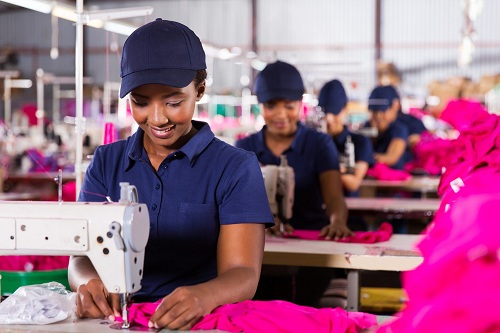 factories, materials and buyers on poorer countries. This often encourages top clothing brands, such as Kohl’s to cancel existing orders from Bangladeshi and Korean garment factories. Till date, several big labels have cancelled previously requested orders. As per the Guardian, brands like Topshop, Walmart, Urban Outfitters, and Mothercare have also refused to pay for completed orders.
This imbalance exposed by the pandemic isn’t sustainable for long-term future, especially as lockdowns and international disease emergencies are likely to become even more common. The fashion industry needs to reinvent its current operating style and force big brands and companies to honor their purchasing commitments
Introduce legal-binding contracts
Also, the industry needs to step up efforts to prepare for outbreaks like COVID-19. Supply chain control needs to be taken out of the hands of wealthiest Western companies as they are well equipped to deal with the economic fallout. The industry also needs to introduce renewed insurance policies or new legal binding contracts to secure finances for suppliers.
Consumers also need to encourage brands to honor their sustainability commitments and help suppliers rather than investors. A few big brands like GAP, H&M and Zara are indeed coming forward to the aid of these suppliers by honoring their commitments. However, rather than being self-motivated, these brands are acting under the pressure of worker organizations and media outlets. It’s high time, they start looking at the bigger picture and work for the industry’s well-being.
South Korea, Japan aim for stronger fashion ecosystems focusing on local talent
 The reopening of economies after COVID-19 induced lockdowns pushed fashion brands and event organizers across the globe to reinvent their working styles. Rumors of another wave of infections encouraged event organizers and attendees to remain attentive to changing market scenario. As a Business of Fashion report says Kaou Imajo, Director, Japan Fashion Week Organization (JFWO) prepared his organization for both a phygital and digital event. He also arranged for PPE and temperature checks at the exhibition venue.
Stepping up online operations
In Seoul, health restrictions forced Seoul Fashion Week Director Jeon Mi-kyung, to go virtual. With smaller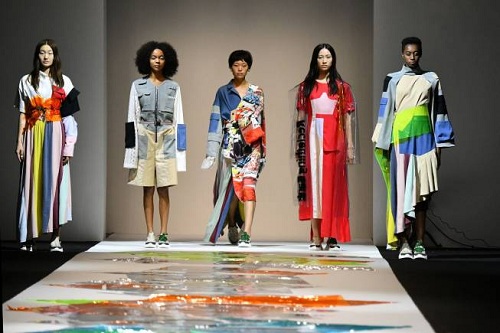 brands having trouble securing spaces for shows and presentations, designers were forced to go digital. The report further elaborates women’s wear label, EENK introduced the Virtual Reality experience for its customers. For this, EENK partnered with showroom agency Future Society and Dazed Korea for digital activations, while also hosting a physical presentation at multi-brand destination Boon the Shop.
Tokyo-based designer Masayuki Ino also explored the virtual reality concept for his label Doublet’s Halloween-themed show. The show provided attendees VR goggles to watch a 10-minute horror movie which featured zombie-like models in the brand’s signature streetwear collection. Both Tokyo and Seoul are stepping up efforts to increase online shows. Tokyo has explored the Virtual showroom Joor to bridge the gap between global buyers and designers, while Seoul opted for Le New Black. Jeon Mi-Kyung, Director, Seoul Fashion Week, plans to work with TV programs and Korean "super app" Naver to stream shows live. She plans to link up with WeChat to livestream shows and launch a sales program for buyers and consumers to target Chinese buyers and shoppers.
Lessons from China
This year, Shanghai Fashion Week was a complete homegrown affair with brands focusing on local retailers. Unable to travel abroad for appointments, local buyers used their budgets to support local talent. South Korean and Japanese brands have also placed a renewed focus on Chinese buyers, who have become the most in-demand in Asia.
According to Madame Lu, Secretary General, Shanghai Fashion Week, the feedback from brands and showrooms that participated in the Shanghai Fashion Week indicates the industry has largely recovered from the challenges faced earlier this year. The event’s WeChat index peaked at 1,162,290, outpacing Paris Fashion Week’s 240,914, points to its growing cache among local consumers. Hence, organizers plan to focus on retail innovation as well as supply chains and sustainability, which Lu hopes will become increasingly significant to shoppers in China.
Following China’s footsteps, Tokyo and Seoul will focus on local talent and becoming stronger fashion ecosystems in their own right. In June, Japan Fashion Week Organization planned to move its Rakuten Fashion Week from October to August in 2021. This will not only buy Tokyo’s designers time to meet buyers and produce wares but will also enable more buyers and press members to attend the show.
Exploring Japanese history and culture
Rakuten Fashion Week will focus on Tokyo’s strong suits. It will be one of the most original and attractive shows, says Yohei Oki, half of the design duo Shoop, which hosted its live runway show on October 17. Tokyo-based designer Mame Kurogouchi who frequently holds shows in Paris, believes, the event will be center of the junction and offer more than runway shows. She advises organizers to focus on quality and take advantage of Tokyo’s historic sites for showcases.
Imajo plans to tap into Japan’s soft power by introducing more cultural events around music and food. With brands like Sacai and those under the Comme des Garçons umbrella opting to show in Tokyo this season, a new homecoming trend could start in Japan.